
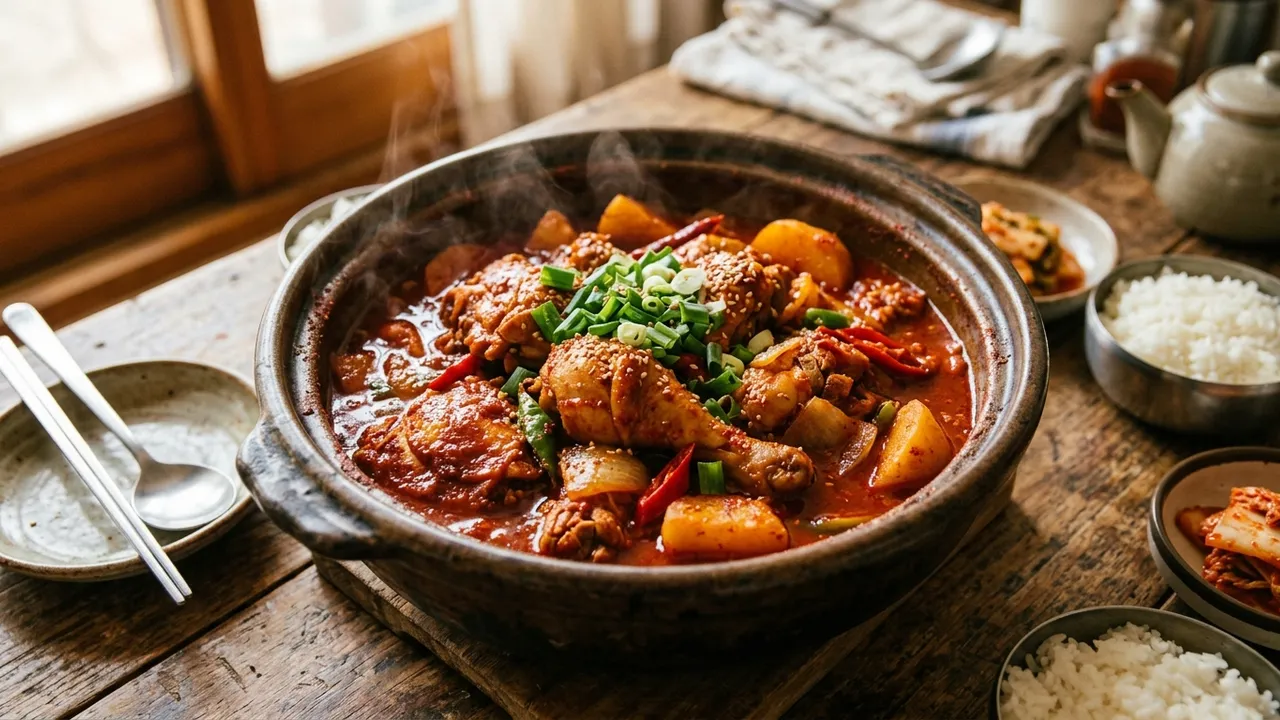
Budget Dakbokkeumtang (닭볶음탕) Recipe
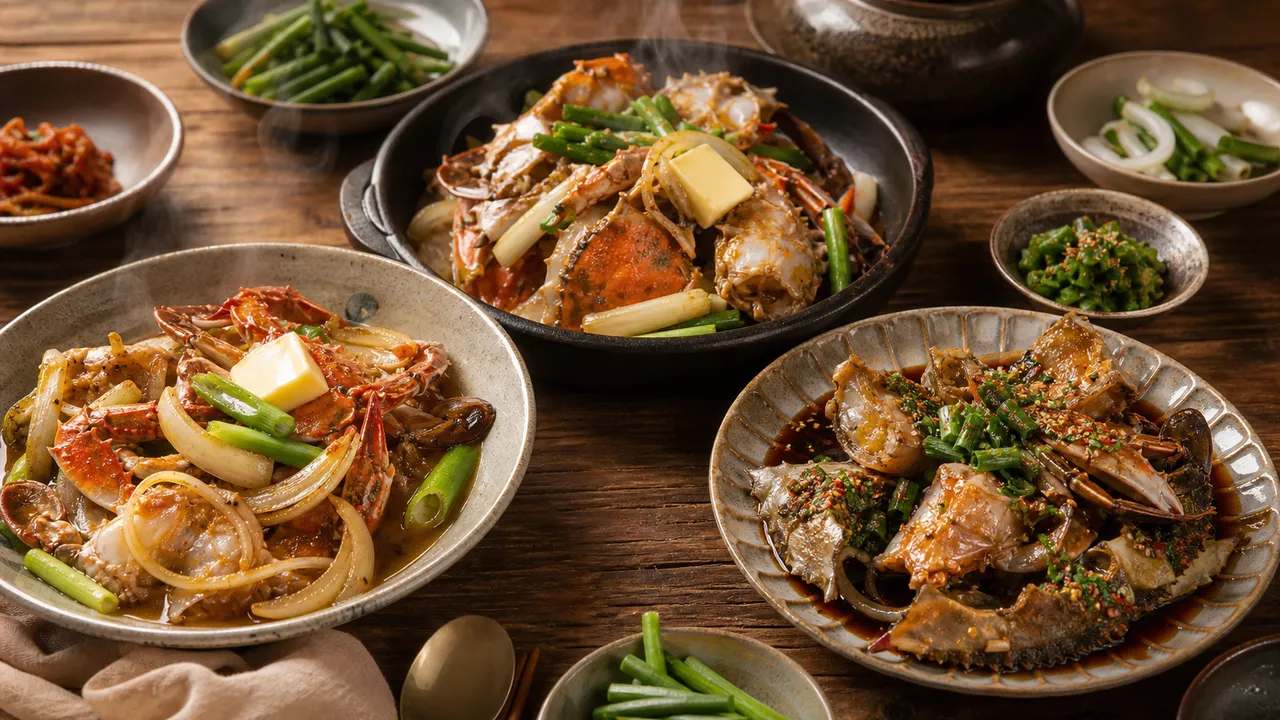
* 이미지는 AI가 생성한 참고 이미지로, 실제 조리 결과물과 다를 수 있습니다.
This recipe for Budget Dakbokkeumtang (닭볶음탕) uses a sauce more delicious than store-bought, enhanced with ssamjang (쌈장) for rich flavor.
📝 Editor's Notes
The Budget Dakbokkeumtang (닭볶음탕) is a homemade recipe that boasts a deeper and richer flavor than store-bought sauces.
Its characteristic feature is the addition of ssamjang (쌈장) to further elevate the umami and richness.
The chili oil rendered from searing the chicken creates a deeply flavored broth.
The difficulty level is low-medium, meaning even beginners can successfully make it by following a few key points.
It's a perfect warm and hearty meal for chilly weather or an excellent dish for entertaining guests.
This spicy yet savory flavor will delight the whole family. 📝
🛒 Ingredient Tips
For delicious Dakbokkeumtang (닭볶음탕), remember these ingredient selection tips!
🥕 First, it's best to choose a fresh whole chicken pre-cut for stew (dakbokkeumtang).
Look for chicken with firm skin and springy flesh.
For potatoes, select firm ones without blemishes; new potatoes are even better.
Their moderate starch content helps to thicken the broth.
Lastly, for ssamjang (쌈장), choose a store-bought brand that isn't too salty and has a good savory flavor to enhance the depth of the dakbokkeumtang.
🔄 Substitution Guide
If you don't have certain ingredients or want to try different flavors, here are some substitutions.
🔁 Instead of a whole chicken (cut for stew), you can use boneless chicken thighs to reduce cooking time and enjoy a more tender texture.
However, you might need to add a little more cooking oil as boneless thighs render less fat.
If ssamjang (쌈장) is unavailable, you can mix doenjang (된장) and gochujang (고추장) in a 1:1 ratio.
The savory taste will be similar, but the unique deep flavor of ssamjang might be slightly less pronounced.
For less spiciness and added aroma, try using shishito peppers (꽈리고추) instead of Cheongyang chili peppers (청양고추).
🥘 Ingredients
👨🍳 Cooking Points
Here are three key cooking points for successful Dakbokkeumtang (닭볶음탕)!
🍳 First, removing gamey odor during chicken preparation is crucial.
Thoroughly wash chicken giblets, bone fragments, and blood under running water.
Leaving the tail fat is key for enhancing flavor.
Second, when searing the chicken, place it skin-side down over high heat and absolutely do not flip it!
Sear for about 3 minutes until golden brown to prevent water from forming and ensure it cooks through.
It's also important not to add all pieces at once to maintain pan temperature.
Third, boost umami by boiling the soy sauce (진간장) until it slightly caramelizes, then add gochugaru (고춧가루) and sugar over medium heat, stir-frying carefully to prevent burning.
👨🍳 Directions
Rinse the chicken for dakbokkeumtang under water and remove any attached giblets. Thoroughly wash away any stagnant blood and bone fragments to eliminate gamey odor. Do not remove the tail fat.
Peel 2 potatoes and slice them into 1cm (approx. 0.4 inch) thick pieces.
Slice 1 stalk of green onion into 1cm (approx. 0.4 inch) thick rounds.
Slice 1 onion into thick strips.
Slice 4 Cheongyang chili peppers (청양고추) into rounds.
Preheat a deep skillet or sauté pan over high heat. Place the prepared chicken pieces, skin-side down (where there's more fat), one by one. Sprinkle with 3 pinches of salt and sear for 3 minutes. Do not flip the chicken to prevent water from forming.
Once enough oil has rendered from the chicken, add 1 tbsp minced garlic and the sliced green onion, and sauté.
Add 8 tbsp soy sauce and boil it vigorously until it slightly caramelizes, enhancing umami and flavor. Then reduce to medium heat, add 4 tbsp gochugaru (고춧가루) and 3 tbsp sugar, and stir-fry evenly.
Once enough chili oil has rendered, add 1 L water and 1 heaping tbsp ssamjang (쌈장), and bring to a boil over high heat.
Once the water starts boiling, close the lid and boil over high heat for 10 minutes.
After 10 minutes, check the consistency of the broth. Add the sliced potatoes, onion, and Cheongyang chili peppers (청양고추) around the edges, then close the lid and simmer for another 15 minutes over medium heat.
After checking if the potatoes are cooked through, garnish with any remaining vegetables (such as red chili peppers) and black pepper for an elegant finish. Your Budget Dakbokkeumtang (닭볶음탕) is now complete!
💡 Tips
When preparing the chicken, thoroughly remove any giblets and wash away stagnant blood and bone fragments to eliminate gamey odors. Do not remove the tail fat.
When searing the chicken, do not put all pieces in at once. Place them one by one, starting with the fatty skin side, to prevent the pan temperature from dropping and ensure a golden sear. Sear for 3 minutes without flipping (if water forms during searing, the chicken will steam and lose flavor). If your chicken has less fat, drizzle 1 tbsp of cooking oil.
Boiling the soy sauce vigorously until it slightly caramelizes significantly enhances the umami and flavor. Gochugaru (고춧가루) and sugar can burn, so reduce to medium heat before adding them and stir-frying. Adding gochugaru directly to water will leave a raw chili powder smell for a long time.
Ssamjang (쌈장) adds a rich and deep flavor (body) to the dakbokkeumtang, making the taste much smoother and more complex. Adjust the spiciness with Cheongyang chili peppers (청양고추) and sweetness with sugar to your personal preference.
Slice potatoes 1cm (approx. 0.4 inch) thick and add them towards the end of cooking to prevent the broth from becoming cloudy. Since they are thinly sliced, they will cook quickly.
📦 Storage & Reuse
Store leftover Dakbokkeumtang (닭볶음탕) in an airtight container in the refrigerator for 2-3 days.
🧊 While freezing is possible, it's not recommended as potatoes can become mushy.
If you do freeze it, it's best to remove the potatoes first.
When reheating, warm slowly over low heat, and if the broth is too thick, add a little water to adjust the consistency.
The leftover broth can also be used to stir-fry rice or enjoyed with ramen or udon noodles for another delicious meal.
🥢 Who This Is For
Thanks to its spicy and savory flavor, this Budget Dakbokkeumtang (닭볶음탕) is a perfect dish for the whole family to enjoy.
It's especially ideal for a warm and hearty meal on a chilly evening, and it's also excellent for entertaining guests.
👨👩👧👦 Recommended side dishes to complement Dakbokkeumtang include a mild steamed egg (gyeran-jjim), refreshing soybean sprout soup (kongnamul-guk), or a crisp cabbage salad.
These help to balance the spicy flavor and create a well-rounded meal.
Don't forget to stir-fry rice with the leftover sauce at the end!
🔥 Nutrition Info
Estimated nutritional information per serving for Budget Dakbokkeumtang (닭볶음탕), based on 4 servings.
🍎 Each serving is approximately 500 kcal, with an estimated 50g protein, 16g fat, and 20g carbohydrates.
Chicken, the main ingredient, is a high-quality protein source, while potatoes provide carbohydrates, potassium, and vitamin C.
Onions, green onions, and Cheongyang chili peppers (청양고추) supply dietary fiber and vitamins A and C, which help boost immunity.
However, since soy sauce (진간장) and ssamjang (쌈장) are used, the sodium content can be somewhat high, so it's advisable to use minimal salt when seasoning.
💬 Frequently Asked Questions
- Q. What ingredients do I need for Budget Dakbokkeumtang (닭볶음탕)?
- Main ingredients include Whole chicken, cut for stew, Potatoes, Green onion, Onion, Cheongyang chili peppers (청양고추). For delicious Dakbokkeumtang (닭볶음탕), remember these ingredient selection tips! 🥕 First, it's best to choose a fresh whole chicken pre-cut for stew (dakbokkeumtang). Look for chicken with firm skin and springy flesh. For potatoes, select firm ones without blemishes; new potatoes are even better. Their moderate starch content helps to thicken the broth. Lastly, for ssamjang (쌈장), choose a store-bought brand that isn't too salty and has a good savory flavor to enhance the depth of the dakbokkeumtang.
- Q. What are the key tips for making Budget Dakbokkeumtang (닭볶음탕)?
- Here are three key cooking points for successful Dakbokkeumtang (닭볶음탕)! 🍳 First, removing gamey odor during chicken preparation is crucial. Thoroughly wash chicken giblets, bone fragments, and blood under running water. Leaving the tail fat is key for enhancing flavor. Second, when searing the chicken, place it skin-side down over high heat and absolutely do not flip it! Sear for about 3 minutes until golden brown to prevent water from forming and ensure it cooks through. It's also important not to add all pieces at once to maintain pan temperature. Third, boost umami by boiling the soy sauce (진간장) until it slightly caramelizes, then add gochugaru (고춧가루) and sugar over medium heat, stir-frying carefully to prevent burning.
- Q. How should I store leftover Budget Dakbokkeumtang (닭볶음탕)?
- Store leftover Dakbokkeumtang (닭볶음탕) in an airtight container in the refrigerator for 2-3 days. 🧊 While freezing is possible, it's not recommended as potatoes can become mushy. If you do freeze it, it's best to remove the potatoes first. When reheating, warm slowly over low heat, and if the broth is too thick, add a little water to adjust the consistency. The leftover broth can also be used to stir-fry rice or enjoyed with ramen or udon noodles for another delicious meal.
- Q. How many calories are in Budget Dakbokkeumtang (닭볶음탕)?
- Estimated nutritional information per serving for Budget Dakbokkeumtang (닭볶음탕), based on 4 servings. 🍎 Each serving is approximately 500 kcal, with an estimated 50g protein, 16g fat, and 20g carbohydrates. Chicken, the main ingredient, is a high-quality protein source, while potatoes provide carbohydrates, potassium, and vitamin C. Onions, green onions, and Cheongyang chili peppers (청양고추) supply dietary fiber and vitamins A and C, which help boost immunity. However, since soy sauce (진간장) and ssamjang (쌈장) are used, the sodium content can be somewhat high, so it's advisable to use minimal salt when seasoning.
- Q. Can I substitute ingredients in Budget Dakbokkeumtang (닭볶음탕)?
- If you don't have certain ingredients or want to try different flavors, here are some substitutions. 🔁 Instead of a whole chicken (cut for stew), you can use boneless chicken thighs to reduce cooking time and enjoy a more tender texture. However, you might need to add a little more cooking oil as boneless thighs render less fat. If ssamjang (쌈장) is unavailable, you can mix doenjang (된장) and gochujang (고추장) in a 1:1 ratio. The savory taste will be similar, but the unique deep flavor of ssamjang might be slightly less pronounced. For less spiciness and added aroma, try using shishito peppers (꽈리고추) instead of Cheongyang chili peppers (청양고추).
💬 Comments
No comments yet. Be the first to comment!