
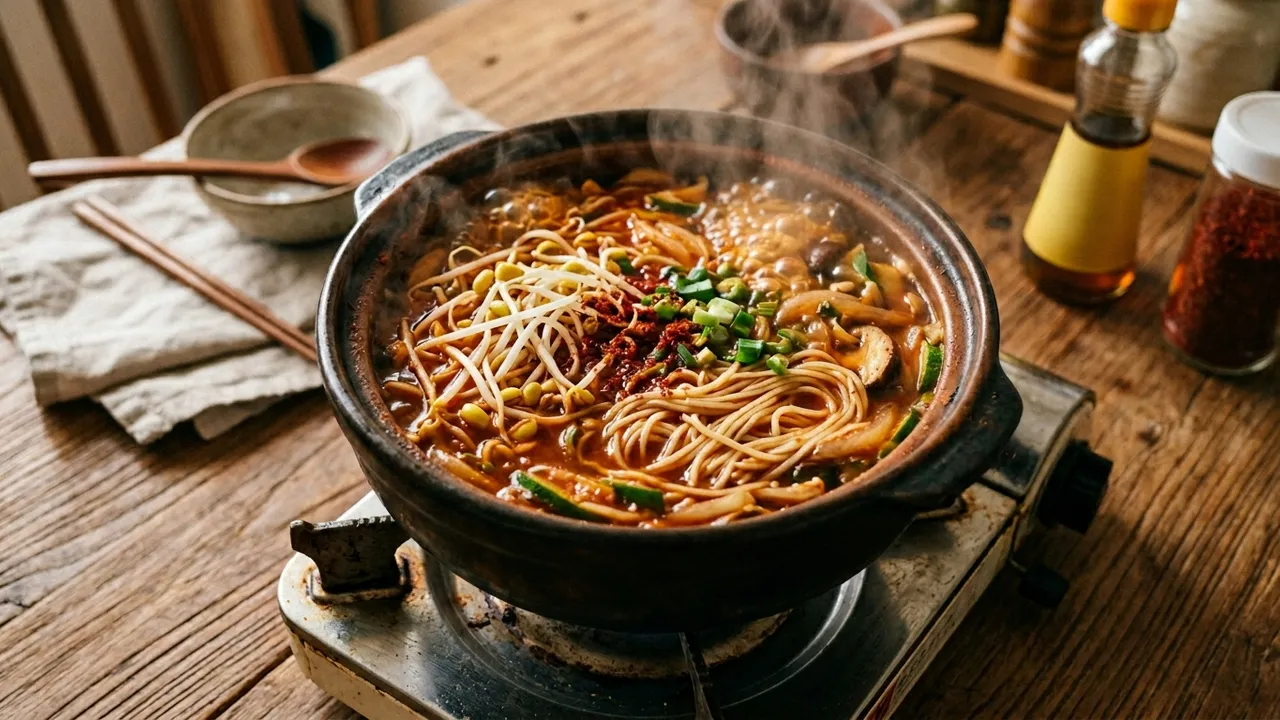
Refreshing and Spicy Kimchi Noodles Recipe
* 이미지는 AI가 생성한 참고 이미지로, 실제 조리 결과물과 다를 수 있습니다.
A recipe for Kimchi Noodles, renowned for its refreshing and spicy flavor.
📝 Editor's Notes
This Kimchi Guksu (김치국수) is a soul food for Koreans, offering an excellent refreshing and spicy flavor.
The harmonious combination of a deeply cleansing broth and chewy somen noodles stands out.
With a medium difficulty level, you can easily enjoy a delicious meal at home.
It's an especially perfect dish when you need a hangover cure or crave a warm broth on a rainy day.
Hidden simple techniques yield a profound flavor, making it a special meal that the whole family will love.
🛒 Ingredient Tips
The key to delicious Kimchi Guksu (김치국수) is, of course, the 'kimchi (김치)'.
Using well-fermented, sour kimchi (김치) will make the broth much deeper and richer in flavor.
If you don't have sour kimchi (김치), you can add a touch of vinegar to slightly fermented kimchi (김치) to enhance its acidity.
For somen noodles, it's important to choose a product that doesn't clump together in boiling water and maintains a firm, chewy texture.
Select bean sprouts that are plump, crispy, and have intact heads and roots for a fresher taste.
Great ingredients are essential for creating a magnificent dish.
🔄 Substitution Guide
Instead of somen noodles, you can use Kalguksu (칼국수) (knife-cut noodles) or Jungmyeon (중면) (medium-thick wheat noodles).
Kalguksu noodles offer a chewier texture, while Jungmyeon noodles are thicker than somen, providing a heartier feel.
If you wish to avoid wheat noodles, using rice noodles is also a good option.
If you don't have dried anchovy and sand lance broth powder, you can make a flavorful broth by boiling 15 dried anchovies for broth with 7g of kelp.
If you dislike spicy food, you can omit Cheongyang chili peppers (청양고추) or substitute them with regular chili peppers, and adjust the spiciness by varying the amount of gochugaru (고춧가루).
Even with substitutions, you'll still be able to fully enjoy the authentic spicy and refreshing taste of Kimchi Guksu (김치국수).
🥘 Ingredients
👨🍳 Cooking Points
There are three crucial cooking points in this recipe.
First, always skim off any foam that rises when boiling the broth.
This step is the secret to a clear and clean broth.
Second, remember to leave the lid open when adding and boiling the bean sprouts.
This allows the unique 'beany' smell of the sprouts to dissipate, leaving only a refreshing taste.
Third, the key is to cook the noodles separately, rinse them in cold water, and then add them to the kimchi (김치) broth, rather than cooking them directly in the broth.
This prevents the broth from becoming cloudy and ensures the noodles remain chewy.
Keep these three points in mind, and you'll be able to make delicious Kimchi Guksu (김치국수) flawlessly.
👨🍳 Directions
Prepare somen noodles for 2 servings. Kalguksu (칼국수) (Korean knife-cut noodles) can be used as a substitute. Wash all ingredients thoroughly before preparation.
Thinly slice 1 stalk of green onion. For those who prefer a spicier taste, slice 2 Cheongyang chili peppers (청양고추) and set aside.
Remove the inner filling from 320g of kimchi (김치) and slice it thinly. There's no need to squeeze out the kimchi juice.
In a pot, pour 1.2 L of water and 100 ml of kimchi juice. Add 1 tbsp of Dried Anchovy and Sand Lance Broth Powder, 2 tbsp of anchovy fish sauce (멸치액젓), 2 tbsp of sake (청주), and 1 tbsp of minced garlic.
Cover the pot and bring the broth with seasonings to a rolling boil. Skim off any foam that rises to the surface during boiling to keep the broth clean.
Once the broth is boiling vigorously, add 150g of bean sprouts, the sliced kimchi (김치), green onion, and Cheongyang chili peppers (청양고추). Leave the lid open and continue to boil.
Add about 1/2 tbsp of gochugaru (고춧가루) (up to 1 tbsp depending on preference), and sprinkle 5 dashes of ground black pepper. Taste and adjust seasoning to your liking.
In a separate pot, pour plenty of water and bring it to a rolling boil. Add the somen noodles, stirring to prevent them from clumping together, and cook.
Once the somen noodles are cooked through and transparent, turn off the heat. Rinse them thoroughly in cold water to cool them down, drain, and place them in a serving bowl.
Pour the hot kimchi (김치) broth over the noodles in the bowl. Briefly pour out the broth and then pour it back in to warm the noodles.
💡 Tips
If you don't have dried anchovy broth powder, you can make your own broth by boiling 15 dried anchovies for broth and 7g of kelp.
When boiling bean sprouts, it's important to leave the lid open to prevent any raw or 'beany' smell.
If you cook the noodles directly in the kimchi (김치) broth, the broth will become starchy. For a cleaner and more delicious taste, cook the noodles separately, rinse them in cold water, and then add them to the broth.
📦 Storage & Reuse
Kimchi Guksu (김치국수) is best enjoyed immediately after preparation as the noodles can become soggy.
If you have leftover broth, remove the noodles and store only the broth in an airtight container in the refrigerator for up to 3-4 days.
When reheating, warm the broth and add freshly cooked somen noodles to enjoy the original taste.
Leftover kimchi (김치) or bean sprouts can be used in other dishes or stored separately.
Sliced green onions can be frozen for convenient use in future cooking.
🥢 Who This Is For
This refreshing and spicy Kimchi Guksu (김치국수) is excellent as a hangover cure when your stomach feels upset after heavy drinking the night before.
It's also perfect for enjoying with family on a rainy day when you crave warm soup, or when you're in the mood for something spicy.
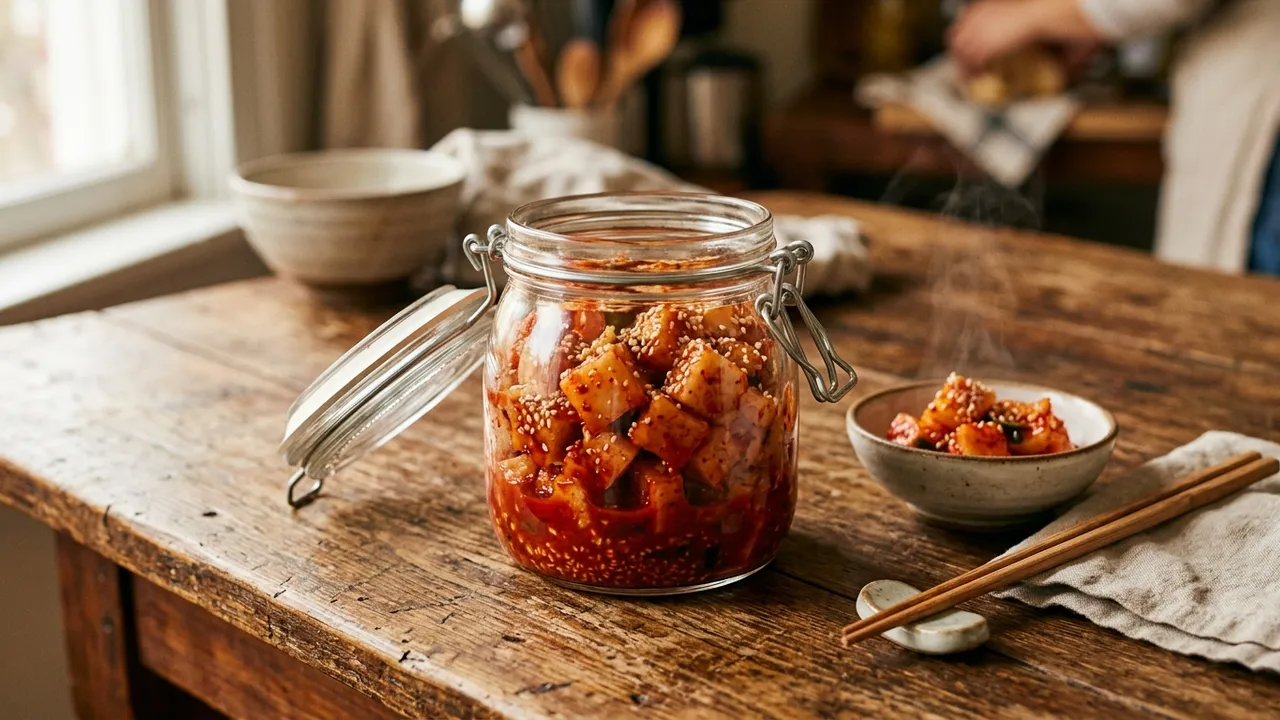
For side dishes, we recommend cool Kkakdugi (깍두기) (diced radish kimchi), Danmuji (단무지) (pickled radish), or soft steamed eggs.
You can also mix rice into the broth for a hearty and satisfying meal.
🔥 Nutrition Info
One serving of this Kimchi Guksu (김치국수) is estimated to be approximately 400-450 kcal.
Carbohydrates, primarily from the somen noodles, will provide about 80-90g, serving as the main energy source.
You can expect to consume about 15-20g of protein from the noodles and bean sprouts.
The fat content is quite low, making it a light and enjoyable meal.
While the abundant lactic acid bacteria and vitamin C in kimchi (김치), along with the asparagine in bean sprouts, can aid in fatigue recovery, please note that the sodium content might be relatively high due to the anchovy fish sauce (멸치액젓) and kimchi (김치).
This dish, prepared with fresh vegetables and healthy noodles, will be a nutritionally balanced meal.
💬 Frequently Asked Questions
- Q. What ingredients do I need for Refreshing and Spicy Kimchi Noodles?
- Main ingredients include Somen noodles, Kimchi (김치), Cheongyang chili peppers (청양고추), Bean sprouts, Green onion. The key to delicious Kimchi Guksu (김치국수) is, of course, the 'kimchi (김치)'. Using well-fermented, sour kimchi (김치) will make the broth much deeper and richer in flavor. If you don't have sour kimchi (김치), you can add a touch of vinegar to slightly fermented kimchi (김치) to enhance its acidity. For somen noodles, it's important to choose a product that doesn't clump together in boiling water and maintains a firm, chewy texture. Select bean sprouts that are plump, crispy, and have intact heads and roots for a fresher taste. Great ingredients are essential for creating a magnificent dish.
- Q. What are the key tips for making Refreshing and Spicy Kimchi Noodles?
- There are three crucial cooking points in this recipe. First, always skim off any foam that rises when boiling the broth. This step is the secret to a clear and clean broth. Second, remember to leave the lid open when adding and boiling the bean sprouts. This allows the unique 'beany' smell of the sprouts to dissipate, leaving only a refreshing taste. Third, the key is to cook the noodles separately, rinse them in cold water, and then add them to the kimchi (김치) broth, rather than cooking them directly in the broth. This prevents the broth from becoming cloudy and ensures the noodles remain chewy. Keep these three points in mind, and you'll be able to make delicious Kimchi Guksu (김치국수) flawlessly.
- Q. How should I store leftover Refreshing and Spicy Kimchi Noodles?
- Kimchi Guksu (김치국수) is best enjoyed immediately after preparation as the noodles can become soggy. If you have leftover broth, remove the noodles and store only the broth in an airtight container in the refrigerator for up to 3-4 days. When reheating, warm the broth and add freshly cooked somen noodles to enjoy the original taste. Leftover kimchi (김치) or bean sprouts can be used in other dishes or stored separately. Sliced green onions can be frozen for convenient use in future cooking.
- Q. How many calories are in Refreshing and Spicy Kimchi Noodles?
- One serving of this Kimchi Guksu (김치국수) is estimated to be approximately 400-450 kcal. Carbohydrates, primarily from the somen noodles, will provide about 80-90g, serving as the main energy source. You can expect to consume about 15-20g of protein from the noodles and bean sprouts. The fat content is quite low, making it a light and enjoyable meal. While the abundant lactic acid bacteria and vitamin C in kimchi (김치), along with the asparagine in bean sprouts, can aid in fatigue recovery, please note that the sodium content might be relatively high due to the anchovy fish sauce (멸치액젓) and kimchi (김치). This dish, prepared with fresh vegetables and healthy noodles, will be a nutritionally balanced meal.
- Q. Can I substitute ingredients in Refreshing and Spicy Kimchi Noodles?
- Instead of somen noodles, you can use Kalguksu (칼국수) (knife-cut noodles) or Jungmyeon (중면) (medium-thick wheat noodles). Kalguksu noodles offer a chewier texture, while Jungmyeon noodles are thicker than somen, providing a heartier feel. If you wish to avoid wheat noodles, using rice noodles is also a good option. If you don't have dried anchovy and sand lance broth powder, you can make a flavorful broth by boiling 15 dried anchovies for broth with 7g of kelp. If you dislike spicy food, you can omit Cheongyang chili peppers (청양고추) or substitute them with regular chili peppers, and adjust the spiciness by varying the amount of gochugaru (고춧가루). Even with substitutions, you'll still be able to fully enjoy the authentic spicy and refreshing taste of Kimchi Guksu (김치국수).
💬 Comments
No comments yet. Be the first to comment!