
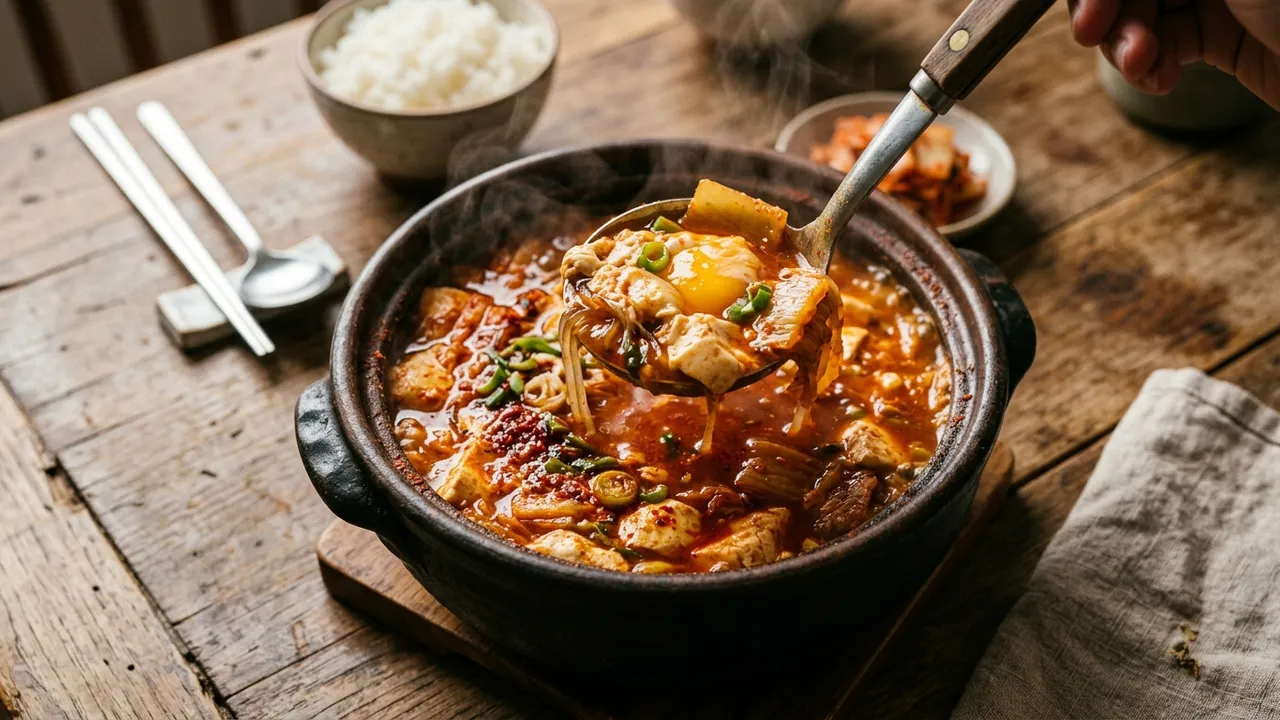
Spicy Egg Soup Recipe
* 이미지는 AI가 생성한 참고 이미지로, 실제 조리 결과물과 다를 수 있습니다.
A hearty and refreshing spicy soup made quickly with eggs and glass noodles (dangmyeon), perfect as a hangover cure.
📝 Editor's Notes
Spicy Egg Soup is a hearty and refreshing spicy soup that can be made quickly with eggs and glass noodles (dangmyeon).
Sautéing green onions (scallions) and onions thoroughly enhances the savory umami, and stir-frying red pepper flakes (gochugaru) brings out a rich spicy flavor.
The soft, fluffy eggs and springy glass noodles create a satisfying meal, while the addition of bean sprouts contributes to its refreshing quality, making it an excellent hangover remedy.
The cooking process is straightforward, making it easy for beginner cooks to try.
It's also a perfect dish for chilly days when you crave a warm, spicy broth, or as a simple late-night snack.
🛒 Ingredient Tips
The key ingredients that determine the flavor of this Spicy Egg Soup are eggs, glass noodles (dangmyeon), and fresh vegetables.
It's important to choose fresh eggs; select those that don't make a sound when shaken, have a rough shell, and have a good expiry date.
Use dried glass noodles (dangmyeon), and ensure you sufficiently remove their starch during the soaking process to prevent the broth from becoming cloudy and to keep the noodles springy.
For green onions (scallions), choose ones with plenty of white part and a firm texture to extract a richer green onion oil aroma.
For bean sprouts, select ones with unblemished heads and tails and crisp stems for a refreshing and fresh taste.
Remember that good ingredients make good flavors.
🔄 Substitution Guide
Here are some ingredient substitutions if you're missing something or prefer a different flavor.
If you don't have glass noodles (dangmyeon), you can use rice noodles, udon noodles, or thin wheat noodles (somyeon) after soaking them.
Keep in mind that rice noodles offer a softer texture, udon noodles are chewier, and somyeon tends to absorb more broth.
Instead of tuna sauce (chamchiaek), you can use anchovy sauce (myeolchi-aekjeot) or sand lance sauce (kkanari-aekjeot) for a similar umami flavor, but they might have a stronger fermented fish aroma.
If you substitute bean sprouts with mung bean sprouts (sukju-namul), you'll get a similar crunchy texture with a slightly different flavor.
For egg allergies, adding soft tofu (sundubu) in a soft, custardy consistency can provide a similar smooth texture.
🥘 Ingredients
👨🍳 Cooking Points
There are a few key cooking points for achieving the deep flavor of Spicy Egg Soup.
First, it's crucial to thoroughly make green onion (scallion) oil.
Start on high heat, then reduce to medium once the oil sizzles, and sauté until golden without burning the green onion.
The aroma of the green onion must fully infuse into the oil for a savory broth.
Second, when adding red pepper flakes (gochugaru), reduce the heat to low and stir-fry them gently with the aromatics.
Be careful not to burn the red pepper flakes; this creates a beautiful chili oil and deepens the spicy flavor.
Third, when pouring the whisked eggs into the broth, do so slowly in a thin stream while the broth is boiling vigorously, and absolutely do not stir.
This ensures the eggs cook into a soft, fluffy texture.
Remembering these three points will help you make a delicious egg soup every time.
👨🍳 Directions
Soak 2.5 oz (70g) dried glass noodles (dangmyeon) in lukewarm water for 20 minutes until fully softened. (This removes excess starch, preventing the broth from becoming cloudy and keeping the noodles springy.)
Crack 3 large eggs into a bowl and whisk well. (For stew, it's not necessary to completely remove the chalazae.)
Chop 1 medium stalk of green onion (scallion) into rounds. Slice 2.5 oz (70g) onion (1/4 large or 1/2 small) into thin strips.
Heat 2 tbsp cooking oil in a non-stick pot over high heat.
Add the chopped green onion (scallion) and sauté until thoroughly coated in oil. Once the oil starts to sizzle, reduce heat to medium and continue to cook to extract the green onion flavor. (Too high heat will burn the green onion and lessen the flavor extraction.)
When the green onion (scallion) feels softened, add the sliced onion and sauté briefly until slightly wilted. (The order of sautéing is important; proper sautéing enhances the savory depth of the broth.)
Add 1 tbsp minced garlic and sauté briefly, then add 2 tbsp red pepper flakes (gochugaru). Reduce the heat further to low and mix well, ensuring the red pepper flakes are thoroughly coated with the aromatics and oil. (Garlic burns quickly, so add it towards the end.)
Once the chili oil starts to sizzle and bloom, add 3.4 cups (800ml) of water and bring to a boil over high heat.
Add 2 tbsp tuna sauce (chamchiaek) and 1 tbsp soup soy sauce (guk-ganjang), then bring to a rolling boil.
Taste the boiling broth to check the seasoning. (It's delicious as is, but you can adjust the seasoning later.)
Add 1 handful of bean sprouts and the soaked glass noodles (dangmyeon), then boil vigorously for 5 minutes. (This ensures the bean sprouts and glass noodles are well cooked.)
Gently pour the whisked eggs into the vigorously boiling broth in a thin stream. Do NOT stir at this point. (This will make the eggs soft and fluffy.)
Once the eggs appear soft and cooked, gently stir once or twice without breaking them up too much.
Finish by adding a small amount of green onion (scallion) and 3 shakes of black pepper.
Finally, taste and add salt to your preference if needed.
💡 Tips
Using a non-stick pot helps prevent ingredients from burning when making chili oil.
When making green onion (scallion) oil, start on high heat. Once the oil begins to sizzle, reduce to medium heat to properly extract the flavor without burning the green onion.
When adding the whisked eggs to the broth, pour them in slowly while the broth is vigorously boiling, and do not stir until the eggs are softly set to maintain a tender texture.
For extra spiciness, add Cheongyang chili peppers (cheongyang-gochu) to your preference. If the soup is bland, adjust the seasoning with salt.
📦 Storage & Reuse
While Spicy Egg Soup is best enjoyed immediately, leftovers can be refrigerated.
Store it in an airtight container in the refrigerator for 2-3 days.
However, glass noodles (dangmyeon) tend to absorb a lot of broth and swell over time, so it's recommended to cook them separately and add them when reheating, if possible.
Freezing is not recommended as it can alter the texture of the eggs and noodles.
When reheating, warm gently over low heat, and if the broth has reduced, add a little water or stock and adjust the seasoning.
The leftover broth can also be used to make a savory porridge by adding rice.
🥢 Who This Is For
I highly recommend this Spicy Egg Soup to anyone who enjoys a spicy and refreshing broth.
It's especially excellent as a hangover remedy after a night of drinking, or as a simple yet satisfying meal or warm late-night snack on a chilly evening.
Its ease of preparation makes it even more appealing for those living alone or beginner cooks.
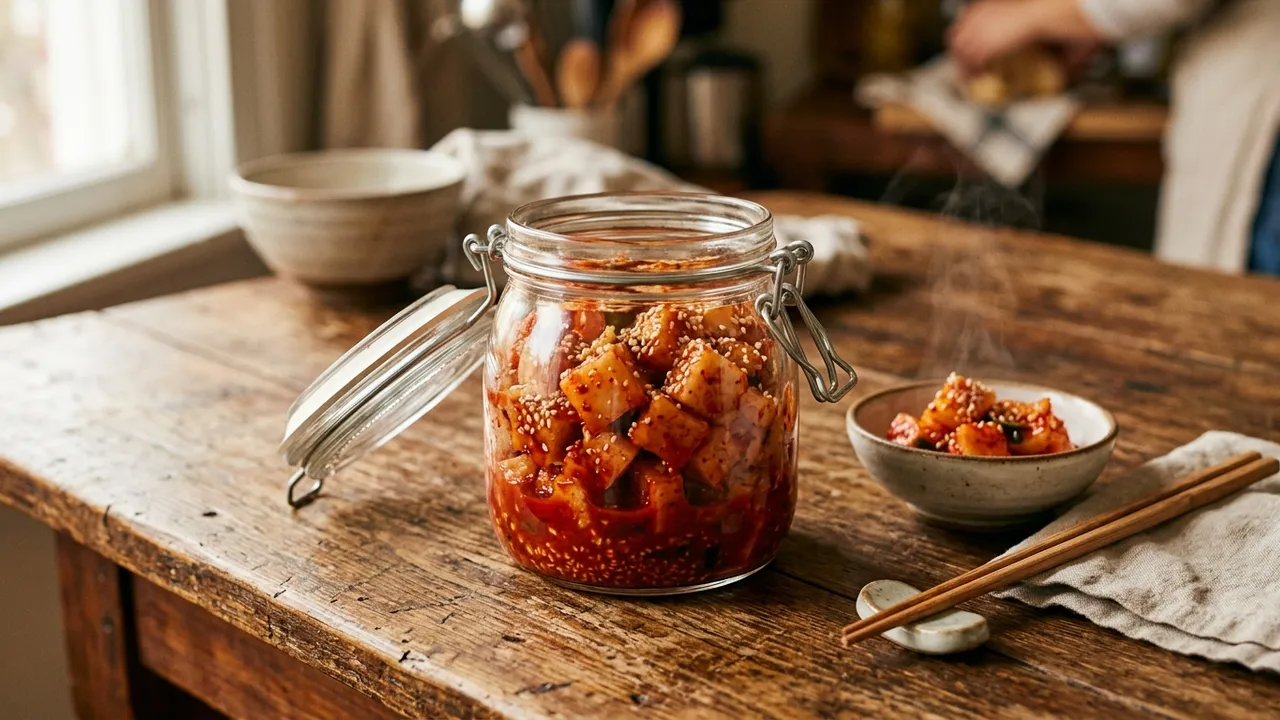
It's incredibly delicious served generously over hot white rice, and it pairs perfectly with crunchy radish kimchi (kkakdugi) or well-fermented kimchi.
Enjoying it with these side dishes will make for an even more satisfying meal.
🔥 Nutrition Info
This Spicy Egg Soup, based on a 2-serving portion, is estimated to contain approximately 350-400 kcal.
The main nutrients are as follows: Three eggs provide about 18g of protein and 15g of healthy fats.
2.5 oz (70g) of dried glass noodles (dangmyeon) offer approximately 60g of carbohydrates, contributing to a satisfying fullness.
2 tbsp of cooking oil adds about 27g of fat.
Vegetables like green onion (scallion), onion, and bean sprouts are rich in vitamins, minerals, and dietary fiber, aiding in gut health.
However, due to the tuna sauce (chamchiaek), soup soy sauce (guk-ganjang), and salt, the sodium content might be relatively high, so those who prefer less salt should adjust the seasoning.
Overall, it's a well-balanced one-bowl meal that provides comprehensive nutrition.
💬 Frequently Asked Questions
- Q. What ingredients do I need for Spicy Egg Soup?
- Main ingredients include Eggs, Dried glass noodles (dangmyeon), Green onion (scallion), Onion, Bean sprouts. The key ingredients that determine the flavor of this Spicy Egg Soup are eggs, glass noodles (dangmyeon), and fresh vegetables. It's important to choose fresh eggs; select those that don't make a sound when shaken, have a rough shell, and have a good expiry date. Use dried glass noodles (dangmyeon), and ensure you sufficiently remove their starch during the soaking process to prevent the broth from becoming cloudy and to keep the noodles springy. For green onions (scallions), choose ones with plenty of white part and a firm texture to extract a richer green onion oil aroma. For bean sprouts, select ones with unblemished heads and tails and crisp stems for a refreshing and fresh taste. Remember that good ingredients make good flavors.
- Q. What are the key tips for making Spicy Egg Soup?
- There are a few key cooking points for achieving the deep flavor of Spicy Egg Soup. First, it's crucial to thoroughly make green onion (scallion) oil. Start on high heat, then reduce to medium once the oil sizzles, and sauté until golden without burning the green onion. The aroma of the green onion must fully infuse into the oil for a savory broth. Second, when adding red pepper flakes (gochugaru), reduce the heat to low and stir-fry them gently with the aromatics. Be careful not to burn the red pepper flakes; this creates a beautiful chili oil and deepens the spicy flavor. Third, when pouring the whisked eggs into the broth, do so slowly in a thin stream while the broth is boiling vigorously, and absolutely do not stir. This ensures the eggs cook into a soft, fluffy texture. Remembering these three points will help you make a delicious egg soup every time.
- Q. How should I store leftover Spicy Egg Soup?
- While Spicy Egg Soup is best enjoyed immediately, leftovers can be refrigerated. Store it in an airtight container in the refrigerator for 2-3 days. However, glass noodles (dangmyeon) tend to absorb a lot of broth and swell over time, so it's recommended to cook them separately and add them when reheating, if possible. Freezing is not recommended as it can alter the texture of the eggs and noodles. When reheating, warm gently over low heat, and if the broth has reduced, add a little water or stock and adjust the seasoning. The leftover broth can also be used to make a savory porridge by adding rice.
- Q. How many calories are in Spicy Egg Soup?
- This Spicy Egg Soup, based on a 2-serving portion, is estimated to contain approximately 350-400 kcal. The main nutrients are as follows: Three eggs provide about 18g of protein and 15g of healthy fats. 2.5 oz (70g) of dried glass noodles (dangmyeon) offer approximately 60g of carbohydrates, contributing to a satisfying fullness. 2 tbsp of cooking oil adds about 27g of fat. Vegetables like green onion (scallion), onion, and bean sprouts are rich in vitamins, minerals, and dietary fiber, aiding in gut health. However, due to the tuna sauce (chamchiaek), soup soy sauce (guk-ganjang), and salt, the sodium content might be relatively high, so those who prefer less salt should adjust the seasoning. Overall, it's a well-balanced one-bowl meal that provides comprehensive nutrition.
- Q. Can I substitute ingredients in Spicy Egg Soup?
- Here are some ingredient substitutions if you're missing something or prefer a different flavor. If you don't have glass noodles (dangmyeon), you can use rice noodles, udon noodles, or thin wheat noodles (somyeon) after soaking them. Keep in mind that rice noodles offer a softer texture, udon noodles are chewier, and somyeon tends to absorb more broth. Instead of tuna sauce (chamchiaek), you can use anchovy sauce (myeolchi-aekjeot) or sand lance sauce (kkanari-aekjeot) for a similar umami flavor, but they might have a stronger fermented fish aroma. If you substitute bean sprouts with mung bean sprouts (sukju-namul), you'll get a similar crunchy texture with a slightly different flavor. For egg allergies, adding soft tofu (sundubu) in a soft, custardy consistency can provide a similar smooth texture.
💬 Comments
No comments yet. Be the first to comment!