
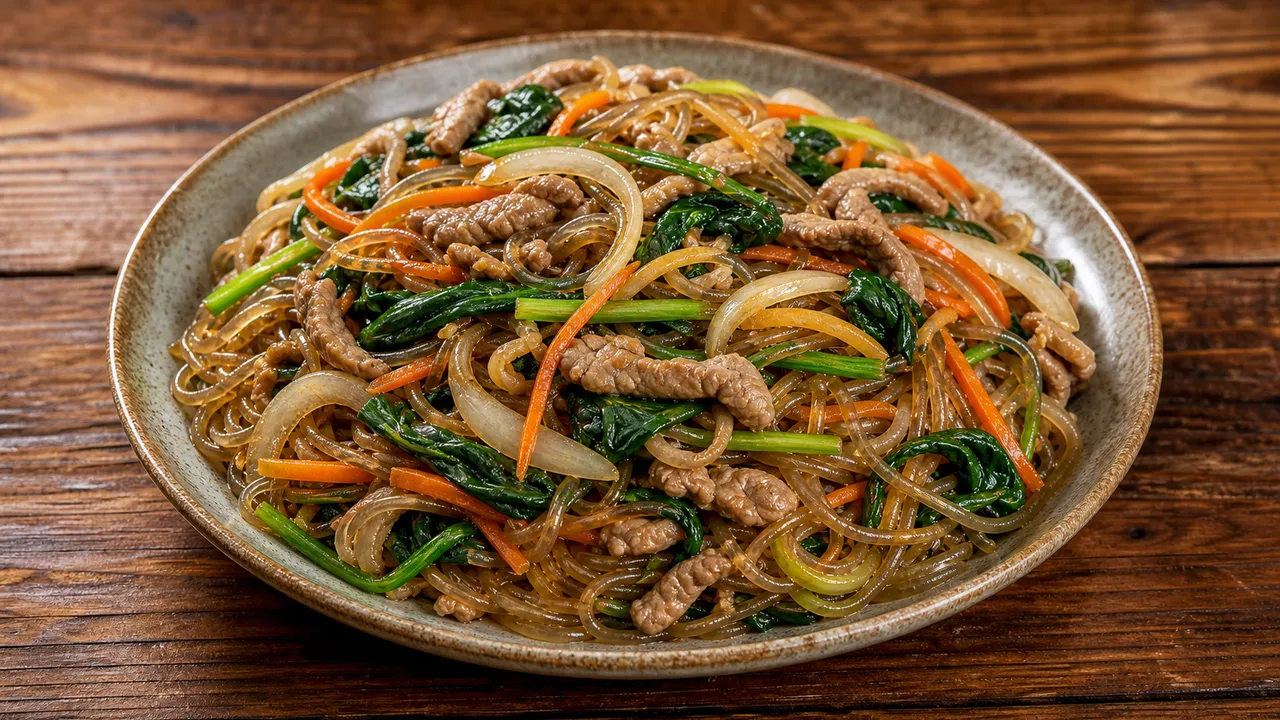
Korean Deli-Style Japchae Recipe (Large/Small Batch)
* 이미지는 AI가 생성한 참고 이미지로, 실제 조리 결과물과 다를 수 있습니다.
Introducing an easy Korean deli-style japchae recipe, cooked by boiling glass noodles directly in the sauce without pre-soaking, available in both large and small batch versions.
📋 2 recipes — Select to view
This is a large batch recipe for Japchae, typically made at a Korean deli (banchan shop).
📝 Editor's Notes
This banchan-style japchae recipe is characterized by being designed for easy enjoyment in small quantities at home.
It offers a sweet, savory, and umami-rich dish with a harmonious blend of various vegetables, chewy glass noodles, and savory pork.
The cooking process is not complicated, making it easy for beginners to try, and since it's a small-batch recipe, you can make it without pressure.
It's a perfect dish for entertaining guests on special occasions, bringing new life to everyday home meals, or as a lunchbox side dish.
🛒 Ingredient Tips
For the glass noodles, a key ingredient that determines the taste of japchae, choose those made from 100% sweet potato starch for the best chewy texture.
For the pork, use thinly sliced cuts suitable for japchae, and choosing leaner cuts will result in a lighter flavor.
For spinach, choose those with vibrant red roots, fresh leaves, and a firm texture.
Seasonal spinach is sweeter and more nutritious.
Prepare a variety of fresh, brightly colored vegetables to enhance the visual appeal and add a crisp texture to your japchae.
🔄 Substitution Guide
For a more luxurious taste, you can use thinly sliced beef (like for bulgogi) instead of pork for japchae.
Beef is leaner than pork, offering a lighter flavor, but it may be a bit more expensive.
If you don't have spinach, lightly blanched bok choy or chives can be used.
While the texture and aroma will be slightly different, they will serve a similar role as a green vegetable.
If you dislike glass noodles or prefer a gluten-free diet, you can substitute them with konjac noodles or mung bean vermicelli, but remember that sweet potato noodles offer the best chewiness.
You can also add or substitute other ingredients like Korean zucchini, fish cakes, or mung bean sprouts instead of the bell peppers or oyster mushrooms in the recipe.
🥘 Ingredients
👨🍳 Cooking Points
The most important cooking point of this recipe is how to boil the glass noodles.
While noodles are usually boiled separately and then mixed with seasoning, this recipe calls for boiling the noodles in water with the sauce ingredients for 10 minutes.
This ensures the noodles are well-seasoned, prevents them from getting soggy, and helps maintain their chewy texture.
Don't forget to stir once or twice in between to prevent sticking.
Another important aspect is stir-frying the vegetables and pork: quickly stir-fry vegetables over high heat to preserve their crisp texture, and it's important to cook the pork thoroughly over low heat so the marinade doesn't burn.
Spinach should also be blanched briefly for about 30 seconds in boiling water with salt, then immediately rinsed in cold water to keep its vibrant color and prevent it from becoming soft.
👨🍳 Directions
Prepare the ingredients: Marinate 400g of pork for japchae with 1 tbsp sesame oil, 1.5 tbsp soy sauce, and 1.5 tbsp mirin, mixing well. Julienne the onion, carrot, yellow and red bell peppers, and imitation crab sticks. Rehydrate the wood ear mushrooms, then remove any tough parts near the stem. Trim the ends of the oyster mushrooms and tear them by hand. Trim the spinach roots in a cross shape or as desired.
Pour 2 liters of water into a pot. Add all the sauce ingredients (1 cup soy sauce, 1 cup cooking oil, 6 tbsp mirin, 10 tbsp corn syrup, 2 tbsp oyster sauce) and bring to a boil.
Once the sauce starts boiling, add 500g of dried sweet potato noodles and cook for 10 minutes. Stir occasionally to prevent sticking.
Stir-fry other ingredients: In a pan with a little cooking oil, stir-fry the onion and oyster mushrooms for about 2 minutes, then add a pinch of seasoned salt and stir-fry a little more. In the same pan, add the carrot, a pinch of salt, and stir-fry. Add the wood ear mushrooms and lightly stir-fry with soy sauce seasoning, adding 2 tbsp of the noodle-cooking water as you go. Add the imitation crab sticks and yellow/red bell peppers, a pinch of salt, and stir-fry lightly for about 30 seconds, just enough to heat them through. Finally, add the marinated pork and stir-fry over medium heat, taking care not to burn it. Gather all the stir-fried ingredients in a large mixing bowl.
Blanch the spinach in boiling water with 1 tbsp salt for about 30 seconds. Immediately rinse the blanched spinach in cold water 2-3 times, then squeeze out the water tightly and set aside.
Drain the noodles cooked for 10 minutes in a colander, shaking off as much water as possible. Add them to the mixing bowl with the pre-stir-fried vegetables and pork, toss once, and let cool slightly.
Meanwhile, season the squeezed spinach with a pinch of fine sea salt and 1 tbsp sesame oil, mixing well.
Once the japchae has cooled down a bit, add the seasoned spinach, a generous amount of toasted sesame seeds, and 5 tbsp sesame oil. Toss everything together once more to finish.
💡 Tips
Vegetables in japchae can be substituted or added according to preference, such as cabbage, bean sprouts, or fish cakes.
After rehydrating wood ear mushrooms, be sure to remove any tough or dirty parts near the stem.
When blanching spinach, add a little salt, don't overcook it, and immediately rinse it in cold water to keep its vibrant color and prevent it from becoming soggy.
When stir-frying pork, it's important to cook it over medium heat, taking care not to burn the marinade, as high heat can cause it to burn before it's cooked through.
Adding soy sauce and cooking oil when boiling the glass noodles helps them absorb flavor, prevents them from getting mushy, and keeps them chewy.
📦 Storage & Reuse
Store finished japchae in an airtight container in the refrigerator for 2-3 days.
Since the noodles can become soggy or stiff over time, it's best to consume it as soon as possible.
To reheat cold, stiff japchae, add 1-2 tbsp of water or cover with a damp paper towel before microwaving to maintain moisture.
When reheating in a frying pan, lightly oil the pan over low heat, add a little water, and sauté it as if you were stir-frying to enjoy it as chewy as if it were freshly made.
Leftover japchae is also excellent when stir-fried with kimchi to make japchae-bap (japchae rice) or used as a filling for dumplings.
🥢 Who This Is For
This japchae is perfect as a main dish for special occasions like housewarmings or birthdays, or as an elegant side dish when entertaining guests.
Since it's a small-batch recipe, it's also great for when you suddenly crave japchae and want to make it without much hassle.
It's excellent as a side dish for rice, delicious mixed with warm white rice, and also great as a topping for mandu-guk (dumpling soup) or tteok-guk (rice cake soup).
Pairing it with a light bukeo-guk (dried pollock soup) or clear kongnamul-guk (bean sprout soup) will make for an even more satisfying meal.
🔥 Nutrition Info
When considering this small-batch Japchae recipe for 2 servings, the estimated calories per serving are approximately 800 kcal.
Carbohydrates are estimated at about 89g, fat at about 38g, and protein at about 18g.
The main ingredient, glass noodles, is a source of carbohydrates, while pork provides quality protein and B vitamins.
Various vegetables such as spinach, bell peppers, and carrots are rich in vitamins, minerals, and dietary fiber, helping to balance nutrition.
However, since seasonings like cooking oil, corn syrup, and oyster sauce contain sugar and fat, it is advisable to consume them in moderation.
💬 Frequently Asked Questions
- Q. What ingredients do I need for Korean Deli-Style Japchae Recipe (Large/Small Batch)?
- Main ingredients include Dried glass noodles (dangmyeon), Pork for japchae, julienned, Spinach, Onion, Carrot, sliced. For the star of japchae, glass noodles (dangmyeon), choose a 100% sweet potato starch product for a chewier and more translucent texture. For pork, it's best to choose thinly julienned cuts suitable for japchae; look for fresh, rosy meat with a good sheen. For spinach, choose bunches with red roots and fresh, firm leaves. Seasonal spinach adds a sweeter flavor to japchae. For other vegetables, select fresh ones with vibrant colors and no signs of wilting, which will enhance both the appearance and flavor of the japchae.
- Q. What are the key tips for making Korean Deli-Style Japchae Recipe (Large/Small Batch)?
- The biggest secret to this recipe is 'boiling the glass noodles (dangmyeon) directly in the sauce.' By adding water and all sauce ingredients to a pot, bringing it to a boil, then adding dried glass noodles and cooking for 10 minutes, the noodles will naturally absorb the seasoning, resulting in a chewy texture and deep flavor. It's crucial to stir occasionally to prevent sticking. The second point is 'sautéing each vegetable separately.' Since vegetables cook at different rates, sautéing them separately helps maintain their texture and vibrant colors. Especially for spinach, blanch it in boiling salted water for just 30 seconds, then immediately rinse in cold water to preserve its bright color and crisp texture. Finally, when mixing the sautéed ingredients with the cooked glass noodles, stir once while the noodles are hot, then let them cool slightly before mixing again to prevent the noodles from breaking and ensure even seasoning. Don't forget!
- Q. How should I store leftover Korean Deli-Style Japchae Recipe (Large/Small Batch)?
- Once prepared, store the japchae in an airtight container in the refrigerator for 2-3 days for best flavor. As glass noodles (dangmyeon) can become soggy or expand over time, it's recommended to consume them as soon as possible. Freezing is not highly recommended as it can significantly alter the texture of the glass noodles, but if you have a large amount left over, you can portion it and freeze it for consumption within 1-2 weeks. After thawing, you can reheat it in the microwave or stir-fry it in a pan with a little cooking oil over low heat to partially restore its original chewy texture. Adding 1-2 tbsp of water or broth at this point will help keep the noodles moist. Leftover japchae is also excellent stir-fried with rice to make japchae-bap, or used as a filling for dumplings.
- Q. How many calories are in Korean Deli-Style Japchae Recipe (Large/Small Batch)?
- This Korean deli-style japchae, based on 4 servings, is estimated to contain approximately 950-1100 kcal per serving. The calorie content is on the higher side due to glass noodles (dangmyeon), cooking oil, and corn syrup (mul-yeot) in the seasoning. Protein is estimated at about 25g per serving based on 400g of pork, carbohydrates at over 150g per serving from 500g of glass noodles and corn syrup, and fat at about 30-40g per serving from 1 cup of cooking oil and pork. Various vegetables like spinach, carrots, and bell peppers provide vitamins A and C, as well as dietary fiber, while pork supplies minerals like iron and zinc. It's a hearty and nutritionally balanced meal, but since it's high in calories, it's advisable to watch your portion size when eating it with other side dishes.
- Q. Can I substitute ingredients in Korean Deli-Style Japchae Recipe (Large/Small Batch)?
- The ingredients for this japchae recipe can be varied or added according to your preference. If you don't have pork for japchae or have an allergy, you can use bulgogi-style beef or thinly sliced chicken breast. Beef will give a richer flavor, while chicken breast offers a lighter, cleaner taste. In addition to the vegetables in the recipe, adding cabbage, bean sprouts, or zucchini can provide a richer texture and more nutrients. If you don't have oyster sauce, you can slightly increase the amount of soy sauce (jin-ganjang) and add a little more sugar to compensate for the umami, or add a hint of anchovy sauce for extra depth of flavor. Fish cakes can be used instead of crab sticks (mat-ssal) for a different savory taste. Feel free to experiment with ingredients based on what you have in your fridge!
💬 Comments
No comments yet. Be the first to comment!