
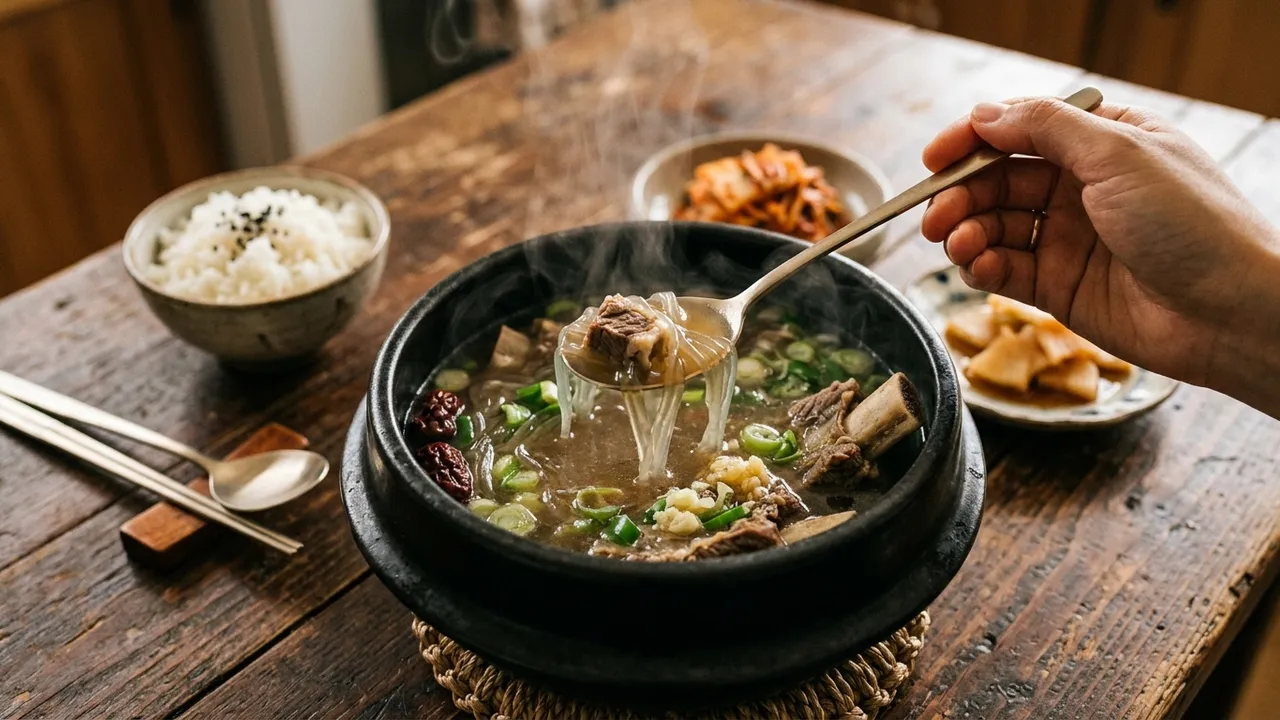
Hearty Galbi-tang (갈비탕) with Costco Beef Rib Fingers (15 Ser
* 이미지는 AI가 생성한 참고 이미지로, 실제 조리 결과물과 다를 수 있습니다.
This Galbi-tang (갈비탕) recipe, designed for 15 servings, uses Costco beef rib fingers for a rich and clear broth without the need for elaborate meat preparation. It's a large-batch recipe that can be made in advance and frozen for convenient enjoyment.
📝 Editor's Notes
This is a large-batch Galbi-tang (갈비탕) recipe for 15 servings, made with Costco beef rib fingers, requiring minimal preparation.
It is characterized by a rich and deep flavor from long simmering, yet offers a clean and light broth through the fat removal process.
Preparing and portioning it in advance makes it a very practical solution for a hearty meal on busy days.
The difficulty level is moderate; it requires dedication but the process is not overly complicated, making it approachable for beginners.
It's an excellent nourishing dish for the whole family on chilly days, or a perfect menu item for entertaining guests.
🛒 Ingredient Tips
The key ingredient in this recipe is 'Costco Beef Rib Fingers'.
A major advantage is that they are already pre-cut to a suitable size, allowing you to use them directly without the tedious process of removing silverskin or soaking out blood.
Choose rib fingers with moderate marbling for a more tender and savory taste.
Select radishes that are sweet and firm inside; ones with fresh green tops and smooth surfaces are best.
You can choose broth tablets according to your preference: beef broth tablets add a rich and robust umami flavor, while anchovy broth tablets create a clear and refreshing homemade taste.
🔄 Substitution Guide
Instead of Costco beef rib fingers, you can use bone-in short ribs or beef stew meat from a regular butcher.
However, regular short ribs will require additional steps like soaking to remove blood, and trimming silverskin and fat, which will increase cooking time.
If you don't have broth tablets, you can make a sufficiently deep broth from scratch using kelp (dashima (다시마)), dried anchovies (myeolchi (멸치)), radish, and large green onions.
For anchovies, stir-fry them in a dry pan first to remove any fishy smell, and be careful not to boil the kelp for too long.
You can also substitute potatoes for radish, but this might reduce the refreshing and clean taste of the broth, leading to a starchier flavor.
🥘 Ingredients
👨🍳 Cooking Points
The first key to delicious Galbi-tang (갈비탕) is 'pre-boiling' the meat.
This is a secret to effectively removing impurities and excess fat from the meat, resulting in a clear and clean broth, so confidently discard the water after boiling for about 10 minutes.
The second is 'fat removal.' You must cool the broth sufficiently and skim off the solidified fat to prevent the broth from becoming greasy and ensure it is light and clean.
This step is essential for a truly clear Galbi-tang.
Finally, 'sufficient simmering time' is crucial.
For a regular pot, simmering over medium heat for about 1 hour is necessary to tenderize the meat and draw out the deep flavor of the broth.
It's also important to check the meat's tenderness during cooking.
👨🍳 Directions
Boil water in a pot. Add approximately 2 kg (one pack) of Costco beef rib fingers and boil for about 10 minutes, then remove the meat. Let the first batch of boiled water cool down to remove oil before discarding, to prevent damage to pipes.
Rinse the removed meat thoroughly under water, as there might be bone fragments. Cut it into half or smaller bite-sized pieces suitable for Galbi-tang. (When stewing for a long time, unlike grilling, there's no need to remove the silverskin.)
Prepare 1/4 of a Korean radish, 1 stalk of large green onion, 1 onion, 10 cloves of whole garlic, and 5-6 small pieces of kelp (dashima (다시마)). (The radish, onion, and green onion should be left in large chunks, and the kelp in pieces.)
Pour 3.5-4 L of fresh water into the pot and bring it to a boil. Add the prepared meat and broth ingredients (radish, large green onion, onion, garlic).
Add 20 whole black peppercorns, 3 broth tablets, and 1 tbsp of salt. (Choose beef or anchovy broth tablets according to your preference.)
Close the lid, reduce the heat to medium, and simmer thoroughly. For a pressure cooker, simmer for 40-50 minutes; for a regular pot, simmer for about 1 hour. Check if the meat is tender and adjust cooking time accordingly.
After simmering, remove the meat and set it aside in a separate container. Strain the broth and discard the used ingredients (radish, large green onion, onion, garlic, kelp, whole black peppercorns).
Turn off the heat and let the broth cool completely. Once the fat solidifies, skim it off to create a clear and light broth.
After the broth has cooled, cut the reserved meat into bite-sized pieces again. Divide the broth and meat into portions. Refrigerate portions to be consumed within 3-4 days, and freeze the rest. (Frozen Galbi-tang is recommended to be consumed within one to two months.)
For frozen Galbi-tang, place it in a pot, thaw, and bring to a boil. Season to taste with white soy sauce (baek-ganjang (백간장)) (or soup soy sauce (guk-ganjang (국간장)), or salt).
If you like glass noodles, add pre-soaked glass noodles (soaked for at least 30 minutes) and simmer. Finish by adding a handful of chopped green onions.
Mix soy sauce and vinegar in a 1:1 ratio, add a little mustard, and make a dipping sauce for the meat.
💡 Tips
Costco beef rib fingers become chewy and flavorful even when simmered for a long time without removing the silverskin, so no separate preparation is needed.
If you want a clear and clean broth, cool the broth and skim off the solidified fat. If you prefer a richer flavor, you don't need to remove it.
For a rich and hearty flavor, choose beef broth tablets. For a clear and refreshing homemade style, choose anchovy broth tablets.
If you want to eat the radish that was boiled in the broth, it's best to remove it halfway through cooking to prevent it from becoming too soft.
Finished Galbi-tang can be portioned and stored in the refrigerator or freezer for convenient use on busy days, holidays, or when entertaining guests. Leftover meat and broth can also be used for miyeok-guk (미역국 - seaweed soup), tteokguk (떡국 - rice cake soup), or yukgaejang (육개장 - spicy beef soup).
📦 Storage & Reuse
It's crucial to cool the finished Galbi-tang completely before portioning and storing.
For refrigeration, store it in an airtight container and consume within 3-4 days for the freshest and best taste.
For long-term storage, divide it into single servings and freeze.
When frozen, it is recommended to consume within one to two months.
To reheat frozen Galbi-tang, thaw it and then gently simmer in a pot over low heat.
If there isn't enough liquid, you can add a little more water or broth.
Leftover broth can also be used to make tteokguk (떡국 - rice cake soup) or mandu-guk (만둣국 - dumpling soup), or even mixed with rice to create a porridge-like dish for a wonderful meal.
🥢 Who This Is For
This Galbi-tang (갈비탕) is an excellent hearty meal for the whole family.
Especially for busy dual-income couples or those living alone, it can be a fantastic meal prep option to cover a week's worth of meals.
When served for holidays or guests, it creates a generous and thoughtful spread.
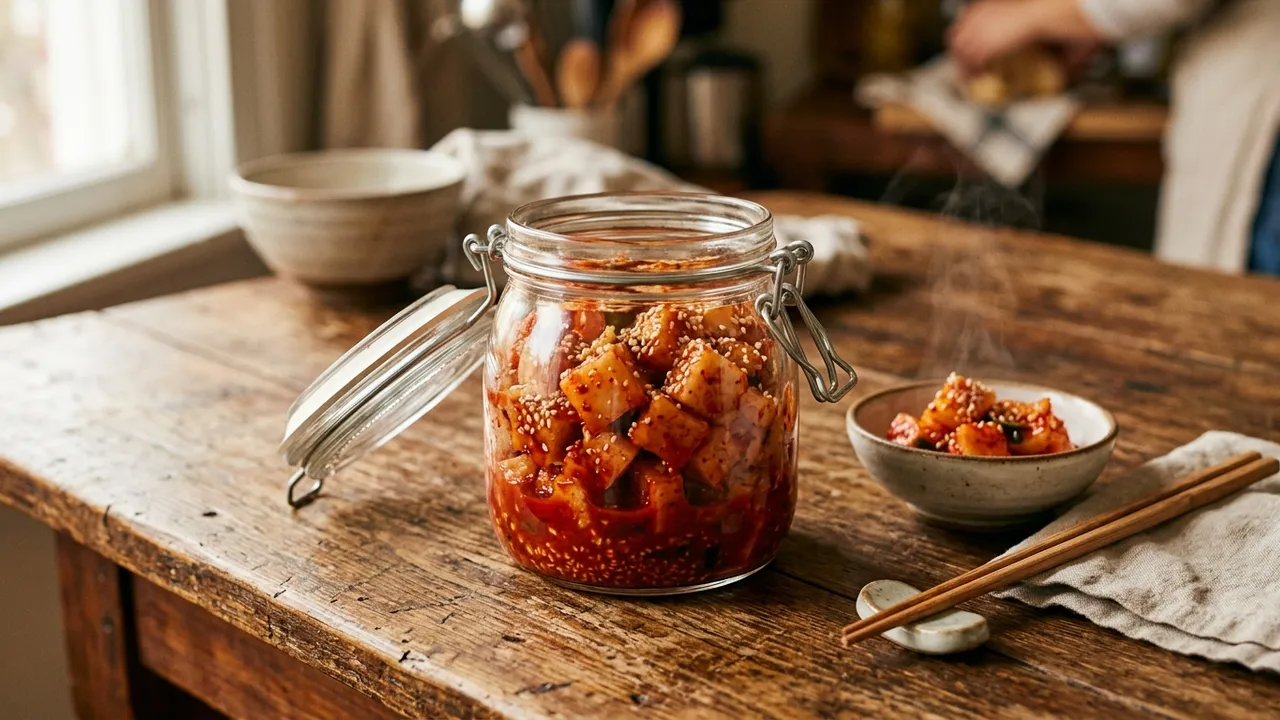
It's even more delicious when enjoyed with warm rice and refreshing, crispy kimchi like kkakdugi (깍두기 - cubed radish kimchi) or baechu kimchi (배추김치 - napa cabbage kimchi).
Depending on your preference, spicy gochujang-jangajji (고추장아찌 - pickled chili peppers) or tangy onion jangajji (양파장아찌 - pickled onions) also make great accompaniments.
🔥 Nutrition Info
Estimated to be approximately 250-350 kcal per serving.
Using 2 kg of Costco beef rib fingers, each serving provides about 20-30g of high-quality protein, which is beneficial for muscle maintenance.
Even after fat removal, approximately 15-25g of fat may still be present, so be mindful of excessive consumption.
A small amount of carbohydrates (about 5-10g) can be obtained from vegetables.
Beef is rich in iron, zinc, and vitamin B12, which are good for preventing anemia and strengthening immunity, while vegetables provide dietary fiber and vitamin C, supplementing a balanced nutrition.
💬 Frequently Asked Questions
- Q. What ingredients do I need for Hearty Galbi-tang (갈비탕) with Costco Beef Rib Fingers (15 Servings)?
- Main ingredients include Costco Beef Rib Fingers, Water, Korean Radish, Large Green Onion, Garlic. The key ingredient in this recipe is 'Costco Beef Rib Fingers'. A major advantage is that they are already pre-cut to a suitable size, allowing you to use them directly without the tedious process of removing silverskin or soaking out blood. Choose rib fingers with moderate marbling for a more tender and savory taste. Select radishes that are sweet and firm inside; ones with fresh green tops and smooth surfaces are best. You can choose broth tablets according to your preference: beef broth tablets add a rich and robust umami flavor, while anchovy broth tablets create a clear and refreshing homemade taste.
- Q. What are the key tips for making Hearty Galbi-tang (갈비탕) with Costco Beef Rib Fingers (15 Servings)?
- The first key to delicious Galbi-tang (갈비탕) is 'pre-boiling' the meat. This is a secret to effectively removing impurities and excess fat from the meat, resulting in a clear and clean broth, so confidently discard the water after boiling for about 10 minutes. The second is 'fat removal.' You must cool the broth sufficiently and skim off the solidified fat to prevent the broth from becoming greasy and ensure it is light and clean. This step is essential for a truly clear Galbi-tang. Finally, 'sufficient simmering time' is crucial. For a regular pot, simmering over medium heat for about 1 hour is necessary to tenderize the meat and draw out the deep flavor of the broth. It's also important to check the meat's tenderness during cooking.
- Q. How should I store leftover Hearty Galbi-tang (갈비탕) with Costco Beef Rib Fingers (15 Servings)?
- It's crucial to cool the finished Galbi-tang completely before portioning and storing. For refrigeration, store it in an airtight container and consume within 3-4 days for the freshest and best taste. For long-term storage, divide it into single servings and freeze. When frozen, it is recommended to consume within one to two months. To reheat frozen Galbi-tang, thaw it and then gently simmer in a pot over low heat. If there isn't enough liquid, you can add a little more water or broth. Leftover broth can also be used to make tteokguk (떡국 - rice cake soup) or mandu-guk (만둣국 - dumpling soup), or even mixed with rice to create a porridge-like dish for a wonderful meal.
- Q. How many calories are in Hearty Galbi-tang (갈비탕) with Costco Beef Rib Fingers (15 Servings)?
- Estimated to be approximately 250-350 kcal per serving. Using 2 kg of Costco beef rib fingers, each serving provides about 20-30g of high-quality protein, which is beneficial for muscle maintenance. Even after fat removal, approximately 15-25g of fat may still be present, so be mindful of excessive consumption. A small amount of carbohydrates (about 5-10g) can be obtained from vegetables. Beef is rich in iron, zinc, and vitamin B12, which are good for preventing anemia and strengthening immunity, while vegetables provide dietary fiber and vitamin C, supplementing a balanced nutrition.
- Q. Can I substitute ingredients in Hearty Galbi-tang (갈비탕) with Costco Beef Rib Fingers (15 Servings)?
- Instead of Costco beef rib fingers, you can use bone-in short ribs or beef stew meat from a regular butcher. However, regular short ribs will require additional steps like soaking to remove blood, and trimming silverskin and fat, which will increase cooking time. If you don't have broth tablets, you can make a sufficiently deep broth from scratch using kelp (dashima (다시마)), dried anchovies (myeolchi (멸치)), radish, and large green onions. For anchovies, stir-fry them in a dry pan first to remove any fishy smell, and be careful not to boil the kelp for too long. You can also substitute potatoes for radish, but this might reduce the refreshing and clean taste of the broth, leading to a starchier flavor.
💬 Comments
No comments yet. Be the first to comment!