
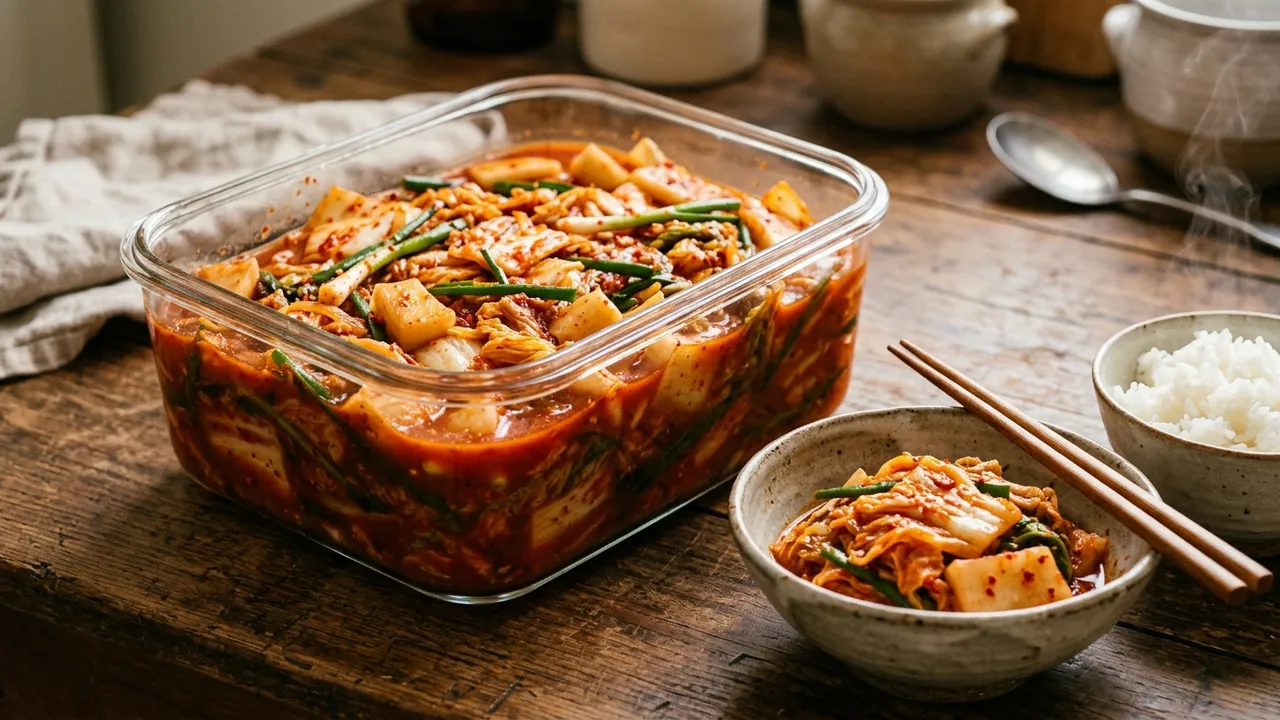
Refreshing and Clean Nabak Kimchi (나박김치) Recipe
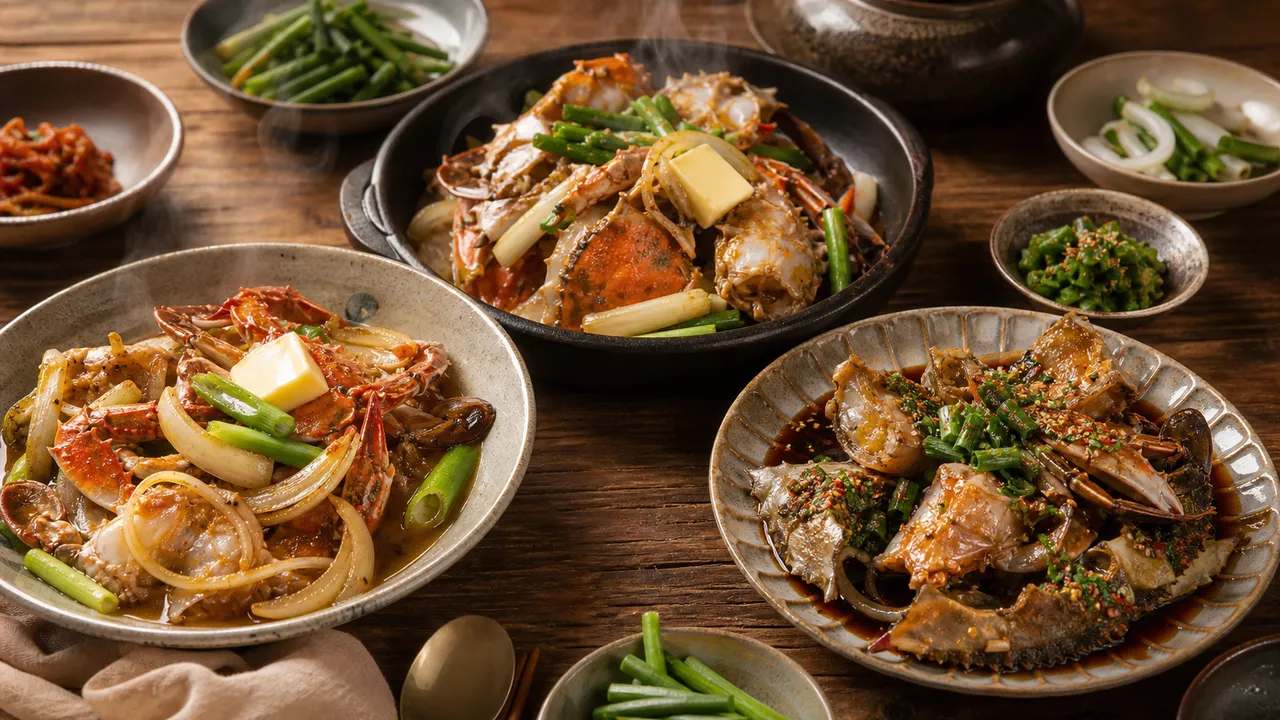
* 이미지는 AI가 생성한 참고 이미지로, 실제 조리 결과물과 다를 수 있습니다.
This is a recipe for refreshing and clean nabak kimchi (나박김치), perfect for cutting through the richness of Lunar New Year holiday foods.
📝 Editor's Notes
This nabak kimchi recipe is characterized by its refreshing and clean taste, perfect for cutting through the richness of Lunar New Year holiday foods.
The key is to soak Korean chili powder (gochugaru) in water and strain it, then blend Korean pear, apple, and bell pepper to create a clear and deep-flavored broth.
The meticulous use of New Sugar (artificial sweetener) to prevent the broth from becoming cloudy is a notable feature.
The difficulty level is low-to-medium; while ingredient preparation, brining, and broth making are the main steps, they are not overly challenging, making it suitable for beginners.
It's especially good for holidays, entertaining guests, or simply when you want a refreshing dish.
It's great year-round, but particularly well-suited for hot weather when a cool broth is desired.
🛒 Ingredient Tips
The key ingredients that determine the taste of nabak kimchi are 'small napa cabbage' and 'Korean radish'.
For the small napa cabbage, choose one with yellow inner leaves, not-too-thick outer leaves, and fresh, firm outer leaves.
A fresh one will have soil on the root and feel heavy.
For the Korean radish, choose one that is firm, has a smooth surface, and a vivid green color at the top.
Selecting a crisp radish that isn't 'wind-blown' (hollow or dry inside) will maximize the refreshing taste.
For Korean pear and apple, using seasonal fruits will yield a sweeter and more refreshing flavor, so choose fresh ones.
Always remember that good ingredients are the foundation of delicious kimchi!
🔄 Substitution Guide
If green onions (scallions) are unavailable, you can chop and add a handful of minari (미나리 - water dropwort).
Minari will add an aromatic flavor, making the nabak kimchi even more refreshing, though the subtle sweetness unique to green onions might be reduced.
If you don't have Korean pear or apple, you can use a small amount of other seasonal fruits for sweetness (e.g., persimmon) or add a little extra sugar to compensate.
However, this may differ from the refreshing, natural sweetness provided by the fruits.
Instead of sweet rice flour paste, you can use a small amount of all-purpose flour paste or blended cold rice, but sweet rice flour paste is recommended for the cleanest and deepest flavor.
🥘 Ingredients
👨🍳 Cooking Points
The first key point to determining the taste of nabak kimchi is 'brining the ingredients'.
The Korean radish and small napa cabbage must be brined precisely for 20 minutes with New Sugar (artificial sweetener) and 3 tbsp coarse sea salt to ensure a crisp texture and proper seasoning.
Brining for too long can make them soggy, while not long enough can result in a bitter taste, so be sure to adhere to the time.
The second point is 'making a clear broth'.
The Korean chili powder (gochugaru) must be sufficiently soaked in water for 30 minutes and then strained through a sieve to create a clean broth with a beautiful color.
Straining the blended ingredients through a sieve once more will result in an even clearer nabak kimchi.
Finally, be sure to add 'sweet rice flour paste' as it aids in fermentation and enhances the flavor!
👨🍳 Directions
Cut 1 large Korean radish (approx. 2.6 lbs / 1.2 kg) into 3 segments, each about 4 cm (approx. 1.5 inches) long. Then, slice each segment into thin, rectangular pieces (nabak-썰기) about 3-4 mm thick.
Make a cut about one-third of the way up from the root end of 1 small napa cabbage (approx. 1.8 lbs / 800 g), then tear it by hand. Trim off the very end of the root, leave the inner leaves whole, and cut the outer leaves in half before slicing them into 3-4 cm (approx. 1.2-1.5 inches) pieces. Wash the small napa cabbage once beforehand.
Place the sliced Korean radish and washed small napa cabbage in a large bowl. Add 1/2 cup (100 ml / approx. 3.4 fl oz) water, 1/3 tbsp New Sugar (artificial sweetener), and 3 tbsp coarse sea salt. Mix well and brine for 20 minutes.
Place 5 tbsp Korean chili powder (gochugaru) in a sieve. Pour in 1 liter (5 cups / approx. 42 fl oz) water, stir slowly, and let it soak for 30 minutes.
Remove the seeds from 1/2 Korean pear and 1/2 apple for blending. Peel the pear and cut both fruits into small pieces so they blend easily.
Slice 1 red bell pepper, 1 Cheongyang chili pepper (청양고추), 10 cloves of garlic, and 1 piece of ginger into small pieces suitable for blending. Add them to the blender along with the pear and apple from step 5.
Add 1/2 cup (100 ml / approx. 3.4 fl oz) sweet rice flour paste and 3 cups (600 ml / approx. 20 fl oz) water to the blender ingredients. Cover and blend for 50 seconds.
Strain the soaked Korean chili powder liquid through a sieve and pour it into a kimchi container. Put the blended ingredients into the sieve. Pour a little water into the blender to rinse out any remaining ingredients, shake, and then strain this liquid again into the kimchi container.
Pour the brined Korean radish and small napa cabbage, including their liquid, directly into the kimchi container.
Chop a handful of green onions (scallions) into 3 cm (approx. 1.2 inches) pieces and add them to the kimchi container.
Taste the nabak kimchi broth. If needed, add 1 tbsp coarse sea salt. If the broth seems insufficient, add more water as appropriate to reach a total of 3.2 liters (approx. 13.5 cups / 3200 ml).
Close the lid and ferment for 3 days.
After 3 days of fermentation, remove the seeds from the remaining 1/2 apple and 1/2 Korean pear. Peel the pear and slice both fruits into 4-5 mm (approx. 0.16-0.2 inches) thick pieces. Garnish the nabak kimchi with these slices. (If there are any browned parts, trim them off before use.)
💡 Tips
Wash the small napa cabbage once before brining it for nabak kimchi.
It's best to use New Sugar (artificial sweetener) instead of regular sugar for brining to prevent the nabak kimchi broth from becoming cloudy or thick.
Soaking the Korean chili powder (gochugaru) in water beforehand is essential for creating a flavorful nabak kimchi broth.
Adding sweet rice flour paste helps to speed up the fermentation of nabak kimchi and enhances its flavor.
Adding red bell pepper makes the broth's color more appetizing.
To prevent browning and maintain freshness, it's best to slice and add the apple and Korean pear garnishes after 3 days of fermentation.
Instead of green onions (scallions), adding a handful of minari (미나리 - water dropwort) can impart a refreshing flavor.
📦 Storage & Reuse
Once finished, store the nabak kimchi in a kimchi container in the refrigerator.
For a deeper flavor, you can let it ferment at room temperature for half a day before refrigerating.
Nabak kimchi, with its excellent refreshing broth, is best refrigerated rather than frozen, and is most delicious when consumed within 1-2 weeks.
If it becomes too sour over time, you can use it as a base for cold noodle dishes (e.g., naengmyeon broth) or enjoy it like dongchimi (동치미) noodles.
The leftover broth can also be a delicious addition to bibimbap (비빔밥).
🥢 Who This Is For
🍽️ This refreshing nabak kimchi is an excellent accompaniment to greasy holiday foods or meat dishes, perfectly cutting through their richness.
Be sure to include it on your holiday table, especially with galbi-jjim (갈비찜 - braised short ribs), jeon (전 - savory pancakes), or fried dishes.
Its mild and refreshing taste can be enjoyed without discomfort by children and seniors who are not fond of spicy foods.
It's also delicious with a spoonful of warm rice, or enjoyed with ice floating in the broth for a truly refreshing experience.
Serving it alongside tteokguk (떡국 - rice cake soup) or mandu-guk (만둣국 - dumpling soup) will add even more depth to their flavor.
🔥 Nutrition Info
This nabak kimchi recipe makes a large quantity for multiple servings; per serving, it's estimated to be around 50-80 kcal.
Primarily composed of vegetables and fruits, it's rich in carbohydrates and dietary fiber, aiding digestion.
Protein and fat content are very low.
Small napa cabbage and Korean radish are rich in Vitamin C, boosting immunity, while fruits like Korean pear and apple provide natural sweetness along with various vitamins and minerals.
The refreshing broth of nabak kimchi is especially excellent for hydration.
As a healthy and light fermented food, it also plays a beneficial role in gut health.
💬 Frequently Asked Questions
- Q. What ingredients do I need for Refreshing and Clean Nabak Kimchi (나박김치)?
- Main ingredients include Small Napa Cabbage, Korean Radish, Water, New Sugar (artificial sweetener), Coarse Sea Salt. The key ingredients that determine the taste of nabak kimchi are 'small napa cabbage' and 'Korean radish'. For the small napa cabbage, choose one with yellow inner leaves, not-too-thick outer leaves, and fresh, firm outer leaves. A fresh one will have soil on the root and feel heavy. For the Korean radish, choose one that is firm, has a smooth surface, and a vivid green color at the top. Selecting a crisp radish that isn't 'wind-blown' (hollow or dry inside) will maximize the refreshing taste. For Korean pear and apple, using seasonal fruits will yield a sweeter and more refreshing flavor, so choose fresh ones. Always remember that good ingredients are the foundation of delicious kimchi!
- Q. What are the key tips for making Refreshing and Clean Nabak Kimchi (나박김치)?
- The first key point to determining the taste of nabak kimchi is 'brining the ingredients'. The Korean radish and small napa cabbage must be brined precisely for 20 minutes with New Sugar (artificial sweetener) and 3 tbsp coarse sea salt to ensure a crisp texture and proper seasoning. Brining for too long can make them soggy, while not long enough can result in a bitter taste, so be sure to adhere to the time. The second point is 'making a clear broth'. The Korean chili powder (gochugaru) must be sufficiently soaked in water for 30 minutes and then strained through a sieve to create a clean broth with a beautiful color. Straining the blended ingredients through a sieve once more will result in an even clearer nabak kimchi. Finally, be sure to add 'sweet rice flour paste' as it aids in fermentation and enhances the flavor!
- Q. How should I store leftover Refreshing and Clean Nabak Kimchi (나박김치)?
- Once finished, store the nabak kimchi in a kimchi container in the refrigerator. For a deeper flavor, you can let it ferment at room temperature for half a day before refrigerating. Nabak kimchi, with its excellent refreshing broth, is best refrigerated rather than frozen, and is most delicious when consumed within 1-2 weeks. If it becomes too sour over time, you can use it as a base for cold noodle dishes (e.g., naengmyeon broth) or enjoy it like dongchimi (동치미) noodles. The leftover broth can also be a delicious addition to bibimbap (비빔밥).
- Q. How many calories are in Refreshing and Clean Nabak Kimchi (나박김치)?
- This nabak kimchi recipe makes a large quantity for multiple servings; per serving, it's estimated to be around 50-80 kcal. Primarily composed of vegetables and fruits, it's rich in carbohydrates and dietary fiber, aiding digestion. Protein and fat content are very low. Small napa cabbage and Korean radish are rich in Vitamin C, boosting immunity, while fruits like Korean pear and apple provide natural sweetness along with various vitamins and minerals. The refreshing broth of nabak kimchi is especially excellent for hydration. As a healthy and light fermented food, it also plays a beneficial role in gut health.
- Q. Can I substitute ingredients in Refreshing and Clean Nabak Kimchi (나박김치)?
- If green onions (scallions) are unavailable, you can chop and add a handful of minari (미나리 - water dropwort). Minari will add an aromatic flavor, making the nabak kimchi even more refreshing, though the subtle sweetness unique to green onions might be reduced. If you don't have Korean pear or apple, you can use a small amount of other seasonal fruits for sweetness (e.g., persimmon) or add a little extra sugar to compensate. However, this may differ from the refreshing, natural sweetness provided by the fruits. Instead of sweet rice flour paste, you can use a small amount of all-purpose flour paste or blended cold rice, but sweet rice flour paste is recommended for the cleanest and deepest flavor.
💬 Comments
No comments yet. Be the first to comment!