
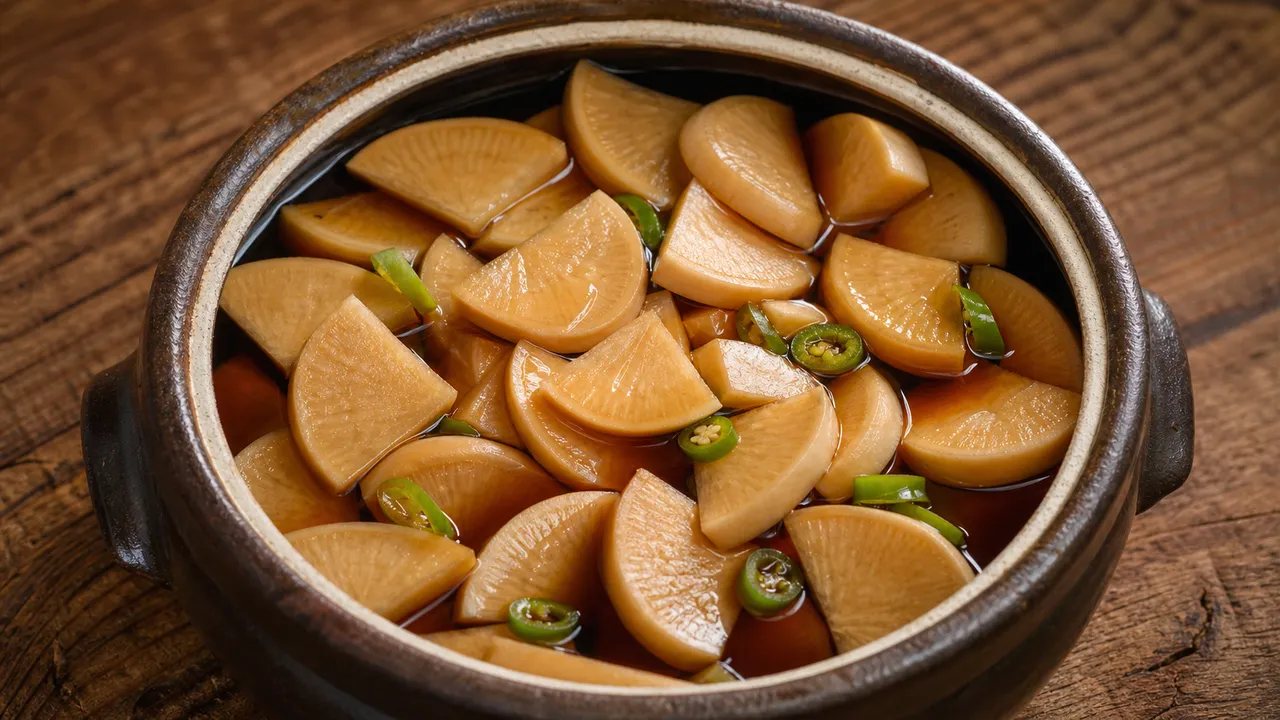
Korean Radish Pickles (Mu Jangajji) Recipe (2 & 5 Servings)
* 이미지는 AI가 생성한 참고 이미지로, 실제 조리 결과물과 다를 수 있습니다.
A recipe for Mu Jangajji, a pickled Korean radish dish that's perfect to make before winter ends and enjoy for a long time.
📋 2 recipes — Select to view
A delightful and essential winter side dish, this Mu-jangajji (Korean Pickled Radish) recipe serves two.
📝 Editor's Notes
Mu-jangajji is a quintessential Korean home dish, beloved for its crispy radish texture and a perfect balance of sweet, sour, and savory flavors.
This 2-serving recipe allows you to prepare a hearty side dish that can be enjoyed for several days.
The preparation is straightforward, making it an easy recipe for beginner cooks to try.
It's especially delightful when served with rich or oily foods, as it wonderfully cleanses the palate.
Enjoyable year-round, it pairs wonderfully with warm rice or as a side for noodle dishes.
Its refreshing and crisp taste will surely invigorate your dining table.
🛒 Ingredient Tips
To make delicious Mu-jangajji, selecting a good quality radish is key.
Look for a radish that is firm, has a smooth surface, and feels heavy when lifted.
Specifically, a radish with a greenish hue where the greens were attached indicates higher sweetness and freshness, so keep that in mind.
Choose Cheongyang chili peppers that are vibrant green and firm.
If you dislike spicy food, you can reduce the amount or substitute with milder peppers like shishito peppers (kkaeoli-gochu).
The core of this recipe lies in maintaining a 1:1:1:1 ratio for the base sauce ingredients: soy sauce, vinegar, sugar, and water.
If you adhere to this ratio, you'll successfully make delicious jangajji every time.
🔄 Substitution Guide
If Korean radish (mu) is unavailable or if you prefer a different texture, you can make jangajji using cucumbers or onions as a substitute.
Cucumbers offer a crisp and refreshing taste, while onions provide a sweeter nuance, each presenting a unique appeal.
However, keep in mind that the distinct cool and slightly pungent flavor of radish may be reduced.
To adjust the spiciness, instead of Cheongyang chili peppers, you can use shishito peppers (kkaeoli-gochu), omit them entirely, or add a few dried chili peppers for a hint of heat.
For sugar substitutes, you can use oligosaccharide or xylitol, but oligosaccharide offers a slightly less intense sweetness, and xylitol has a distinct cooling sensation, which may subtly alter the taste and texture.
Adjust according to your preference and enjoy!
🥘 Ingredients
👨🍳 Cooking Points
Here are three crucial cooking tips for this Mu-jangajji recipe: First, when julienning the radish, use the thickest setting on your mandoline slicer or slice it somewhat thickly with a knife.
If sliced too thinly, the crisp texture of the radish might be lost, affecting the overall taste.
Second, the jangajji sauce must be brought to a rolling boil after combining all ingredients.
Boiling ensures the sugar fully dissolves, flavors meld, and provides a sterilizing effect, extending its shelf life.
Third, it is crucial to pour the hot, boiled sauce directly over the julienned radish.
The hot sauce gently cooks the radish's cells, allowing flavors to penetrate better and preserving its crisp texture – this is the secret.
Keep these three points in mind, and you'll successfully make delicious Mu-jangajji every time.
👨🍳 Directions
Julienne the Korean radish.
Place all the julienned radish into a container suitable for pickling.
Slice a few Cheongyang chili peppers and place them on top of the radish.
Combine 1.5 cups each of soy sauce, vinegar, sugar, and water in a pot and bring the sauce to a boil.
Pour the hot boiled sauce over the julienned radish in the container.
Allow it to marinate at room temperature for one day.
Refrigerate for 3 more days, and your Mu-jangajji is ready to serve!
💡 Tips
If using a mandoline slicer, slicing the radish into the thickest possible strips yields the best flavor and texture.
Prepare the sauce ingredients in a 1:1:1:1 ratio.
Pour the sauce over the radish while it's still hot.
📦 Storage & Reuse
Once prepared, Mu-jangajji must be stored in the refrigerator.
After pouring the sauce, allow it to marinate at room temperature for one day, then refrigerate for an additional three days for optimal flavor.
Stored in an airtight container in the refrigerator, it will stay fresh for approximately 2 to 3 weeks.
Over time, the radish will absorb the flavors more deeply, offering a delightful evolution in taste.
Mu-jangajji is typically served chilled, so there's no need to heat it.
Leftover Mu-jangajji can be finely chopped and mixed with rice, or used as an ingredient for gimbap (김밥), adding a unique touch.
It's a very practical side dish that can be enjoyed for an extended period.
🥢 Who This Is For
This Mu-jangajji is highly recommended for anyone needing a reliable and substantial side dish in their busy daily life.
It's easy to make and store, allowing you to enjoy it deliciously for over ten days once prepared.
It's an excellent accompaniment to rich meat dishes like samgyeopsal (pork belly) or galbijjim (braised short ribs), and fried foods, as it cuts through the greasiness, preventing satiety and encouraging you to eat more.
When added to simple meals like bibimbap (mixed rice), janchi-guksu (feast noodles), or ramen, it plays a wonderful supporting role, enhancing the overall flavor.
Thanks to its crisp texture, children often enjoy it too, making it a perfect dish for the whole family.
🔥 Nutrition Info
Based on this 2-serving recipe, one serving of Mu-jangajji is estimated to be around 250-300 kcal.
The calorie count primarily comes from carbohydrates due to the sugar content.
Protein and fat content are very low.
Radish is rich in vitamin C and digestive enzymes like amylase and diastase, aiding digestion and promoting gut health.
Capsaicin in Cheongyang chili peppers boosts metabolism and is also rich in vitamin C.
However, due to the significant amount of soy sauce, sodium content can be high.
Individuals with high blood pressure should be mindful of their intake or consider using low-sodium soy sauce.
It's important to enjoy in moderation as part of a healthy diet.
💬 Frequently Asked Questions
- Q. What ingredients do I need for Korean Radish Pickles (Mu Jangajji) Recipe (2 & 5 Servings)?
- Main ingredients include Korean radish (mu), Cheongyang chili pepper (cheongyang-gochu), soy sauce (jinganjang), vinegar, sugar. The key to delicious Mu Jangajji is the Korean radish (mu) itself. It's best to choose a radish that is firm, heavy, and has a smooth surface. A clean radish without blemishes ensures freshness and a crisp texture. Winter radishes, in particular, are sweet and firm, making them ideal for jangajji. For Cheongyang chili peppers, choose ones that are vibrant green and not withered. If you like more spice, you can add more; if you prefer a milder flavor, you can substitute with regular green chilies or reduce the quantity. Good ingredients make delicious jangajji!
- Q. What are the key tips for making Korean Radish Pickles (Mu Jangajji) Recipe (2 & 5 Servings)?
- There are two crucial points for this recipe. First, the 'thickness' of the sliced radish. If using a mandoline, slice it to the thickest setting; if hand-slicing, aim for a consistent thickness of about 0.5 cm to 1 cm. This ensures the radish stays crisp for longer, as thin slices tend to become soggy. Second, pouring the pickling sauce 'hot'. After boiling the soy sauce (jinganjang), vinegar, sugar, and water in a 1:1:1:1 ratio, pour the sauce directly over the radish while it's still hot. This process softens the radish while preserving its crispness and helps it absorb the seasoning well. Also, be sure to adhere to the fermentation times: one day at room temperature and three days in the refrigerator.
- Q. How should I store leftover Korean Radish Pickles (Mu Jangajji) Recipe (2 & 5 Servings)?
- Store the finished Mu Jangajji in an airtight container in the refrigerator. While it's good to eat right after fermentation, its flavor deepens after a few more days in the fridge. When refrigerated, it can be enjoyed fresh for about 2-3 weeks. Using clean chopsticks or tongs to serve will help preserve it longer. Don't discard the leftover pickling liquid; dilute it with water to pickle other vegetables or use it as a salad dressing. It's best served chilled for the crispiest and most delicious experience.
- Q. How many calories are in Korean Radish Pickles (Mu Jangajji) Recipe (2 & 5 Servings)?
- One serving of Mu Jangajji (approximately 50-70g) is estimated to be around 80-120 kcal. While Korean radish (mu) itself is very low in calories and rich in dietary fiber, the sugar and soy sauce (jinganjang) in the pickling liquid increase the carbohydrate and sodium content. Protein and fat are present in trace amounts, with carbohydrates primarily acting as the energy source. Radish is naturally rich in vitamin C and digestive enzymes like amylase, though some may be lost during cooking. Due to the savory taste from soy sauce, it's advisable to be mindful of sodium intake. We recommend enjoying it in moderation as a side dish rather than consuming large quantities.
- Q. Can I substitute ingredients in Korean Radish Pickles (Mu Jangajji) Recipe (2 & 5 Servings)?
- If you want to use other vegetables instead of Korean radish (mu), cucumbers or kohlrabi can be good alternatives. Cucumbers offer a nice crunch, but they contain more water than radish, so be aware that more liquid might be produced during the pickling process. Kohlrabi has a similar firmness and crispness to radish, making it an excellent choice for jangajji. If you don't like spicy food, you can substitute Cheongyang chili peppers with regular green chilies or omit them entirely. Adding red chilies can also make it visually appealing. For sugar, you can use oligo-saccharide or allulose to reduce sugar intake, but there might be subtle differences in taste and consistency. Using low-sodium soy sauce (jinganjang) can help reduce sodium intake.
💬 Comments
No comments yet. Be the first to comment!