
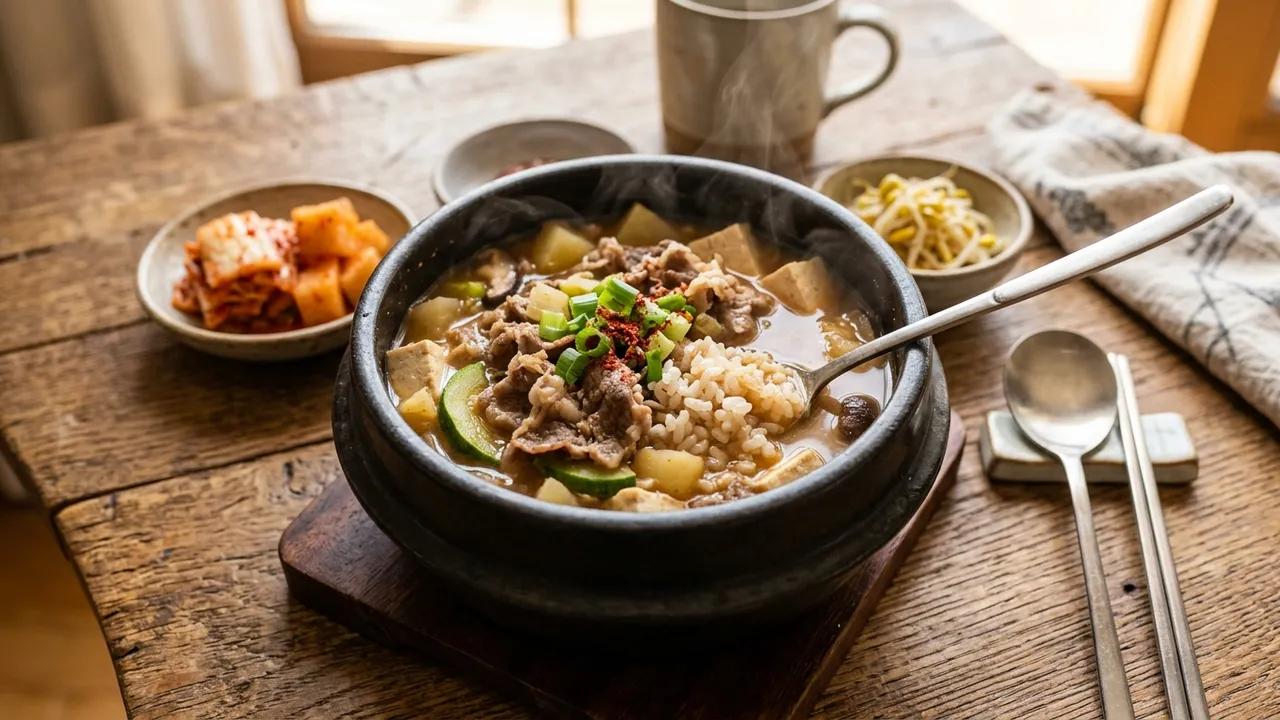
Chef Jeong Ho-young's Super Simple 'Rice Thief' Chadol Doenj
* 이미지는 AI가 생성한 참고 이미지로, 실제 조리 결과물과 다를 수 있습니다.
A perfect 'rice thief' dish that will have you asking for more, served hot over a bowl of rice!
📝 Editor's Notes
Chef Jeong Ho-young's super simple Chadol Doenjang Sulbap truly lives up to its nickname, 'rice thief.' This dish boasts a deep and rich broth, harmonizing the savory beef brisket, earthy doenjang (된장), and the spicy kick of gochujang (고추장) and gochugaru (고춧가루).
With the added complex umami flavors from oyster sauce and tuna sauce (참치액), you won't be able to stop at just one bite.
The cooking process is straightforward, making it easy for even beginner cooks to follow.
It's a hearty and warming meal, perfect for a cold day, and a wonderful dish for the whole family to enjoy. 🍚
🛒 Ingredient Tips
The key ingredients that determine the flavor of this recipe are beef brisket point and doenjang (된장).
For beef brisket point, choose fresh cuts with a bright pink color and clear, white marbling.
The savory fat rendered from good quality brisket will deepen the flavor of the doenjang sulbap.
For doenjang, opt for a traditional doenjang or a store-bought brand with a rich, deep flavor.
Since the unique umami of doenjang forms the base of this dish, using good quality doenjang will result in a more flavorful stew. 🥬
🔄 Substitution Guide
If you wish to use alternative ingredients for beef brisket point, consider thinly sliced beef for bulgogi or thinly sliced pork belly (daepae samgyeopsal).
Bulgogi beef is leaner than brisket point, offering a milder flavor, while pork belly provides a similar rich, savory fat but with the unique flavor of pork.
If you don't have tuna sauce (참치액), you can substitute it with Korean soy sauce (guk-ganjang) or fish sauce, but the deep umami flavor unique to tuna sauce may be somewhat reduced.
Oyster sauce can be replaced by a mix of soy sauce and a little sugar, or simply omitted, but keep in mind that the overall umami might be slightly less pronounced.
Remember that substituting ingredients can subtly alter the taste, aroma, and texture of the dish. 🔄
🥘 Ingredients
👨🍳 Cooking Points
There are three main points to make this Chadol Doenjang Sulbap even more delicious.
First, dry-fry the beef brisket point without oil to fully render its own fat.
This process maximizes the savory flavor of the meat.
Second, it's crucial to stir-fry the doenjang (된장) and gochujang (고추장) in the beef brisket fat to bring out their savory aroma, much like stir-frying chunjang for Jajangmyeon.
Lastly, when adding gochugaru (고춧가루) to create chili oil, always stir-fry it over low heat to prevent burning.
If the heat is too high, the gochugaru can burn and develop a bitter taste.
Gently stir-frying it for about a minute over low heat will create a fragrant chili oil, resulting in a spicier and more appetizing doenjang sulbap. 🔥
👨🍳 Directions
Cut the tofu into bite-sized cubes.
Slice the Korean zucchini into half-moon or cube shapes.
Chop the onion and green onion into bite-sized pieces.
In a pot, dry-fry 200g of beef brisket point without oil.
Once the beef brisket is lightly cooked, add 1 tbsp of minced garlic and continue to stir-fry together.
When some oil renders from the brisket, add 2 tbsp of doenjang (된장) and 1 tbsp of gochujang (고추장), and stir-fry them in the oil.
Reduce heat to low, add 2 tbsp of Korean chili flakes (gochugaru), and stir-fry to create chili oil.
Pour in 500ml of water, then add 1 tbsp of oyster sauce and 1 tbsp of tuna sauce (참치액) to season.
Add the onion, Korean zucchini, and green onion, then bring to a boil over medium heat.
Once the stew comes to a boil, add the tofu and simmer until slightly reduced.
Serve hot over rice.
💡 Tips
Dry-frying the beef brisket allows its natural fat to render, creating a deeper, richer flavor.
When stir-frying gochugaru to make chili oil, it's important to keep the heat low to prevent it from burning and turning bitter.
Adding more vegetables enhances the flavor and texture of the stew.
The stew might appear thick before boiling, but as it simmers, moisture from the vegetables will release, achieving the right consistency.
📦 Storage & Reuse
The prepared Chadol Doenjang Sulbap is best stored in an airtight container in the refrigerator for 2-3 days.
If you want to keep it longer, portion it out and freeze for up to a month.
To reheat frozen doenjang sulbap, thaw it and then gently warm it in a pot over low heat.
If the broth has reduced too much, you can add a little water or broth to adjust the consistency.
Leftover doenjang sulbap can also be enjoyed as a different delicacy by mixing it with rice, shredded seaweed, and sesame oil. 🧊
🥢 Who This Is For
This Chadol Doenjang Sulbap is highly recommended for anyone looking for a hearty and warm meal.
It's a fantastic dish for the entire family, from kids who love meat to older adults.
It's also perfect as a weekend treat or for entertaining guests.
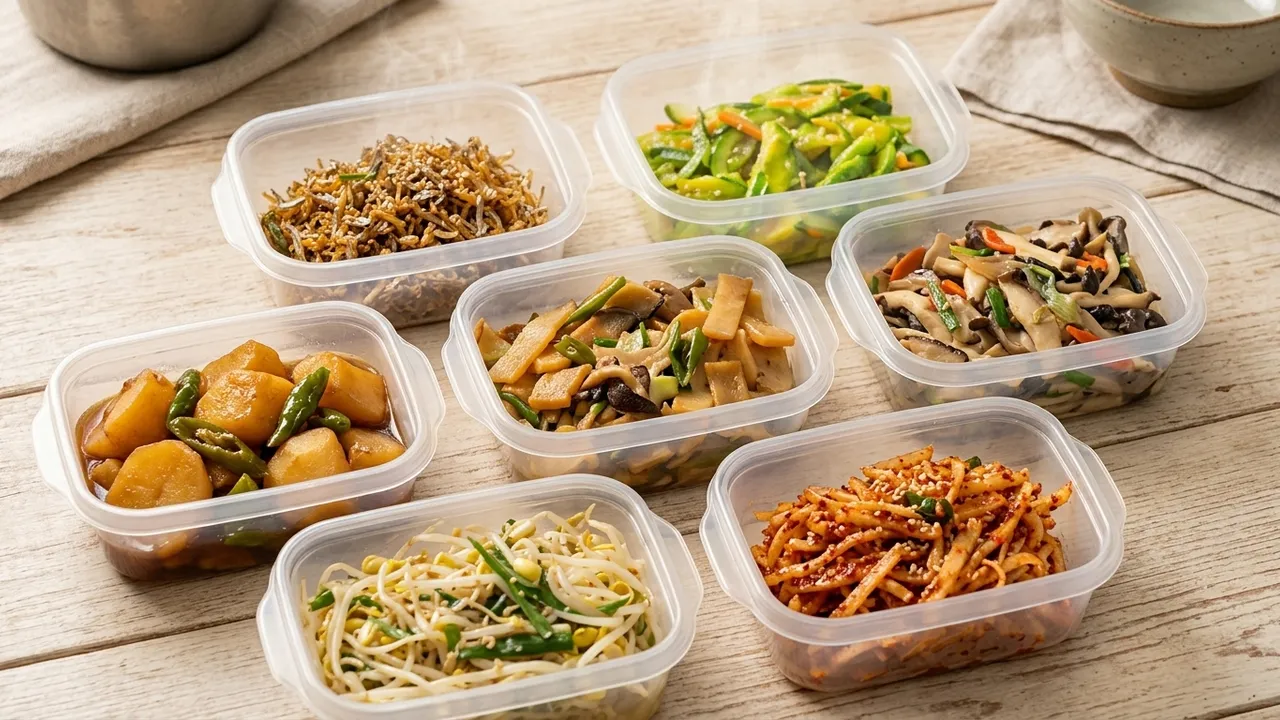
For side dishes, refreshing options like soybean sprout salad (kongnamul muchim) or crispy cucumber salad (oi muchim) pair wonderfully.
Even a simple plate of well-fermented kimchi is enough to have you easily finishing a whole bowl of rice. 👨👩👧👦
🔥 Nutrition Info
Based on 2 servings, one serving of this Chadol Doenjang Sulbap is estimated to provide approximately 580 kcal.
You can expect about 30g of protein mainly from beef brisket and tofu, around 37g of fat primarily from beef brisket, and approximately 27g of carbohydrates from vegetables, doenjang (된장), gochujang (고추장), and other ingredients.
Beef brisket is rich in iron and B vitamins, while tofu provides plant-based protein and isoflavones.
Vegetables like Korean zucchini, onion, and green onion add vitamins and dietary fiber, helping to balance the nutrition.
However, due to seasonings like doenjang, gochujang, tuna sauce (참치액), and oyster sauce, the sodium content may be a bit high.
If you are mindful of your sodium intake, adjusting the amount of seasoning is a good option. 💪
💬 Frequently Asked Questions
- Q. What ingredients do I need for Chef Jeong Ho-young's Super Simple 'Rice Thief' Chadol Doenjang Sulbap (Beef Brisket Doenjang Stew)?
- Main ingredients include Beef Brisket Point (Chadolbagi), Tofu, Korean Zucchini, Onion, Green Onion (Scallion). The key ingredients that determine the flavor of this recipe are beef brisket point and doenjang (된장). For beef brisket point, choose fresh cuts with a bright pink color and clear, white marbling. The savory fat rendered from good quality brisket will deepen the flavor of the doenjang sulbap. For doenjang, opt for a traditional doenjang or a store-bought brand with a rich, deep flavor. Since the unique umami of doenjang forms the base of this dish, using good quality doenjang will result in a more flavorful stew. 🥬
- Q. What are the key tips for making Chef Jeong Ho-young's Super Simple 'Rice Thief' Chadol Doenjang Sulbap (Beef Brisket Doenjang Stew)?
- There are three main points to make this Chadol Doenjang Sulbap even more delicious. First, dry-fry the beef brisket point without oil to fully render its own fat. This process maximizes the savory flavor of the meat. Second, it's crucial to stir-fry the doenjang (된장) and gochujang (고추장) in the beef brisket fat to bring out their savory aroma, much like stir-frying chunjang for Jajangmyeon. Lastly, when adding gochugaru (고춧가루) to create chili oil, always stir-fry it over low heat to prevent burning. If the heat is too high, the gochugaru can burn and develop a bitter taste. Gently stir-frying it for about a minute over low heat will create a fragrant chili oil, resulting in a spicier and more appetizing doenjang sulbap. 🔥
- Q. How should I store leftover Chef Jeong Ho-young's Super Simple 'Rice Thief' Chadol Doenjang Sulbap (Beef Brisket Doenjang Stew)?
- The prepared Chadol Doenjang Sulbap is best stored in an airtight container in the refrigerator for 2-3 days. If you want to keep it longer, portion it out and freeze for up to a month. To reheat frozen doenjang sulbap, thaw it and then gently warm it in a pot over low heat. If the broth has reduced too much, you can add a little water or broth to adjust the consistency. Leftover doenjang sulbap can also be enjoyed as a different delicacy by mixing it with rice, shredded seaweed, and sesame oil. 🧊
- Q. How many calories are in Chef Jeong Ho-young's Super Simple 'Rice Thief' Chadol Doenjang Sulbap (Beef Brisket Doenjang Stew)?
- Based on 2 servings, one serving of this Chadol Doenjang Sulbap is estimated to provide approximately 580 kcal. You can expect about 30g of protein mainly from beef brisket and tofu, around 37g of fat primarily from beef brisket, and approximately 27g of carbohydrates from vegetables, doenjang (된장), gochujang (고추장), and other ingredients. Beef brisket is rich in iron and B vitamins, while tofu provides plant-based protein and isoflavones. Vegetables like Korean zucchini, onion, and green onion add vitamins and dietary fiber, helping to balance the nutrition. However, due to seasonings like doenjang, gochujang, tuna sauce (참치액), and oyster sauce, the sodium content may be a bit high. If you are mindful of your sodium intake, adjusting the amount of seasoning is a good option. 💪
- Q. Can I substitute ingredients in Chef Jeong Ho-young's Super Simple 'Rice Thief' Chadol Doenjang Sulbap (Beef Brisket Doenjang Stew)?
- If you wish to use alternative ingredients for beef brisket point, consider thinly sliced beef for bulgogi or thinly sliced pork belly (daepae samgyeopsal). Bulgogi beef is leaner than brisket point, offering a milder flavor, while pork belly provides a similar rich, savory fat but with the unique flavor of pork. If you don't have tuna sauce (참치액), you can substitute it with Korean soy sauce (guk-ganjang) or fish sauce, but the deep umami flavor unique to tuna sauce may be somewhat reduced. Oyster sauce can be replaced by a mix of soy sauce and a little sugar, or simply omitted, but keep in mind that the overall umami might be slightly less pronounced. Remember that substituting ingredients can subtly alter the taste, aroma, and texture of the dish. 🔄
💬 Comments
No comments yet. Be the first to comment!