
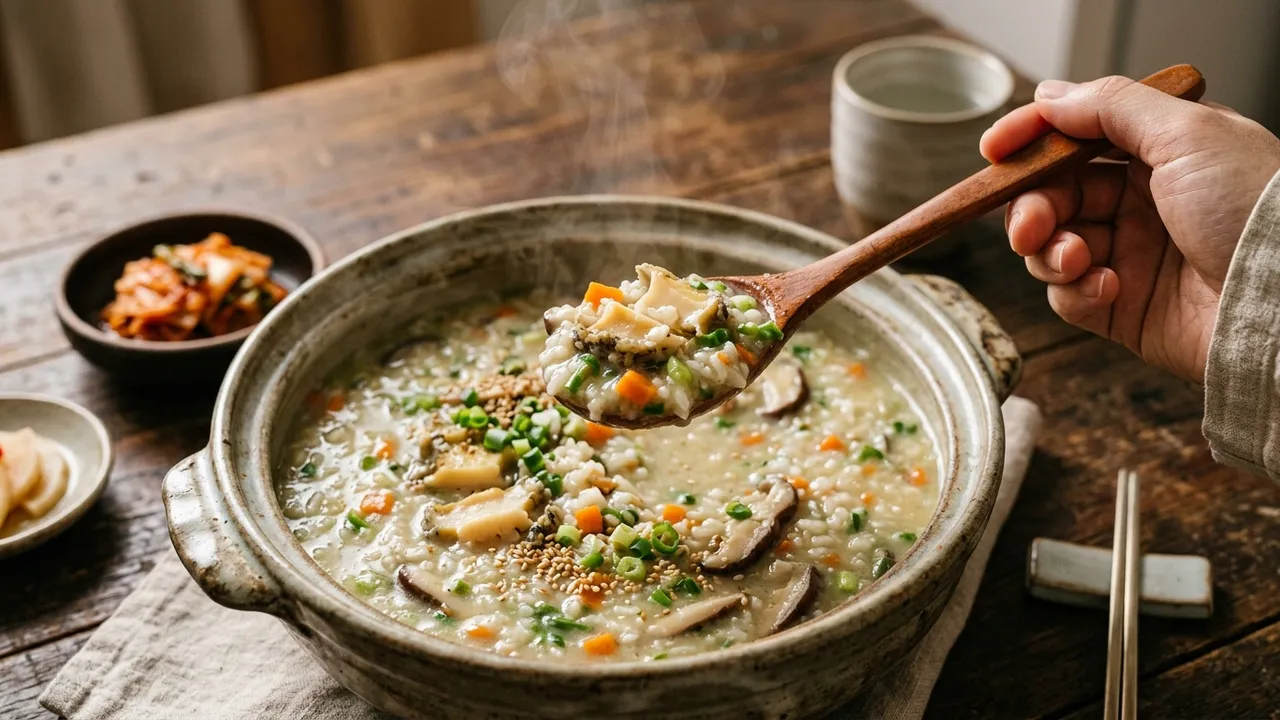
Abalone Porridge Recipe
* 이미지는 AI가 생성한 참고 이미지로, 실제 조리 결과물과 다를 수 있습니다.
Chef Kim Dae-seok reveals his 31 years of expertise. Today, I'll share an abalone porridge recipe perfect for a hearty breakfast or for boosting your stamina.
📝 Editor's Notes
This abalone porridge recipe, embodying Chef Kim Dae-seok's 31 years of expertise, is a specialty dish renowned for its savory richness and deep umami flavor.
The key secret lies in thoroughly sautéing the rice and abalone in sesame oil, then cooking it with water added in two stages.
This method yields a porridge that is incredibly smooth and full of flavor.
A crucial characteristic of this recipe is using the abalone entrails instead of discarding them, allowing you to fully experience the abalone's inherent deep taste and nutrition.
The difficulty level is moderate; while it requires some time, the process itself is not difficult, making it perfectly achievable at home.
It's an excellent choice for a hearty breakfast or a nourishing meal when you need to boost your energy.
Especially during seasonal changes or when feeling unwell, a warm bowl of this porridge will bring warmth to both body and mind.
🛒 Ingredient Tips
Choosing fresh abalone is the first step to delicious abalone porridge.
Select live abalone that firmly adheres to its shell when lightly moistened with water.
It's best to choose active ones with plump flesh.
Since the entrails are used and not discarded, freshness is even more important.
The recipe uses a mix of short-grain rice and glutinous rice; short-grain rice adds softness, while glutinous rice adds stickiness, enhancing the porridge's texture.
Soaking the rice for at least 2 hours before cooking ensures the grains soften properly and are easier to digest.
Dried shiitake mushrooms have a much stronger aroma, so choose good quality ones and use their soaking water to deepen the umami flavor of the porridge.
🔄 Substitution Guide
If abalone is difficult to find or too expensive, you can substitute it with shrimp, chicken breast, or other shellfish like clams.
Shrimp offers a tender texture and a slightly sweet flavor, while chicken breast provides a plain and hearty taste, though the distinct deep sea aroma and umami of abalone may be reduced.
For rice, instead of short-grain and glutinous rice, you can use a mix of grains like brown rice or oats.
However, the texture might be coarser, and the cooking time longer, so be sure to soak them sufficiently.
If you don't have glutinous rice, using only short-grain rice is acceptable, but note that the porridge may be less sticky.
You can use fresh shiitake mushrooms instead of dried ones, but their aroma might be weaker, and you won't be able to utilize the umami-rich soaking water.
Substituting with other mushrooms (such as king oyster or oyster mushrooms) will alter the overall flavor.
🥘 Ingredients
👨🍳 Cooking Points
There are three crucial cooking points for this recipe.
First, when preparing the abalone, the key is to clean the shells thoroughly with a toothbrush, separate the flesh with a spoon, remove only the tooth, and *not* discard the entrails.
The entrails do not contain a sandbag, so you can use them with confidence.
Second, heat a pan with 1 tbsp of sesame oil, then thoroughly sauté the sliced abalone flesh, minced entrails, and soaked rice for about 2 minutes.
This step is the secret to maximizing the abalone porridge's savory aroma.
Third, instead of adding all the water at once, divide it into two additions for cooking.
First, add 2 ½ cups of water and simmer over medium-low heat for 15 minutes.
Then, add another 1 ¼ cups of water and simmer for an additional 15 minutes over low heat.
This method ensures the rice grains are evenly cooked, and the porridge achieves a much smoother and deeper consistency.
Don't forget to stir occasionally to prevent the porridge from sticking to the bottom.
👨🍳 Directions
Lightly moisten 3 medium-sized abalones with water, sprinkle 1 tbsp of coarse sea salt, and scrub the shells clean with a toothbrush. Rinse thoroughly under cold running water.
Insert a spoon from the thinner side of the shell to separate the flesh from the shell, then scrape the back side with the spoon to fully detach.
Using a knife, cut and remove the abalone's triangular-shaped tooth. The entrails do not contain a sandbag, so do not discard them.
Lightly rinse the abalone entrails and flesh once under running water.
Slice the abalone flesh to your desired size, and finely mince the entrails.
Heat a pan, add 1 tbsp of sesame oil, then add the sliced abalone flesh, minced entrails, ½ cup of short-grain rice (soaked for 2 hours), and ⅓ cup of glutinous rice (soaked for 2 hours). Sauté thoroughly for about 2 minutes.
After sautéing, pour in 2 ½ cups (1st addition) of water. Once it boils, reduce heat to medium-low and simmer for 15 minutes.
After 15 minutes, if the water has reduced, add 1 ¼ cups (2nd addition) of water, 1 dried shiitake mushroom (soaked in 1 cup of water for 30 minutes), and 40g of carrot. Stir once.
Add 1 tbsp of guk-ganjang (국간장), ½ tbsp of myeolchi-aekjeot (멸치액젓), and ⅓ tbsp of salt. Mix well to season.
Reduce the heat to the lowest setting and simmer for another 15 minutes.
After simmering for a total of 30 minutes, slice 5 strands of chives and add them for the final touch.
💡 Tips
Sautéing the rice and abalone in sesame oil first before cooking the porridge makes it significantly more savory and delicious.
Instead of adding all the water at once, dividing it into two additions when cooking makes the abalone porridge much more flavorful.
Abalone entrails do not contain a sandbag, so do not discard them; use them together in the porridge.
Adjust the final seasoning to your preference.
📦 Storage & Reuse
Once prepared, allow the abalone porridge to cool, then store it in an airtight container in the refrigerator for 2-3 days to enjoy fresh.
For longer storage, it's recommended to portion it into single servings and freeze.
When frozen, it's best consumed within 1-2 weeks.
To reheat, microwave it or warm it gently in a pot over low heat, stirring occasionally.
If the porridge becomes too thick, you can add a little water or broth to adjust the consistency, making it as smooth as when it was first made.
If you have leftover abalone, you can clean and freeze it to use for abalone butter grill or abalone jang (seasoned abalone).
If there's leftover porridge, you can make an 'abalone porridge pancake' by mixing in an egg, or enjoy it like a risotto by adding cheese – both are delicious variations.
🥢 Who This Is For
This abalone porridge is highly recommended for those feeling fatigued or in need of recovery.
It's also an excellent nutritional meal for the elderly or a restorative dish for growing children.
Even those with delicate digestion can enjoy its smooth texture.
It makes for a perfect hearty and warm breakfast.
For side dishes, refreshing and clean dongchimi (동치미) or baek-kimchi (백김치) pair wonderfully.
They will enhance the inherent flavor of the abalone porridge while stimulating your appetite.
You can also add a touch of soy sauce seasoning according to your preference, but the porridge itself is flavorful enough that it might not be necessary.
🔥 Nutrition Info
One serving of this abalone porridge (based on approximately 2 servings per recipe) is estimated to be around 440 kcal.
It contains approximately 58g of carbohydrates, 18g of protein, and 13g of fat.
Abalone is highly nutritious, often called the 'ginseng of the sea.' It is particularly rich in taurine, which aids in fatigue recovery and liver function improvement, and arginine, which is beneficial for boosting immunity.
It also contains various minerals such as B vitamins, calcium, and iron, making it very effective for restoring energy.
Rice provides carbohydrates, the main energy source, while shiitake mushrooms add dietary fiber and vitamin D for a balanced nutritional profile.
Sesame oil contributes healthy fats and a savory aroma.
💬 Frequently Asked Questions
- Q. What ingredients do I need for Abalone Porridge?
- Main ingredients include Abalone, Coarse sea salt, Short-grain rice, Glutinous rice, Water (1st addition). Choosing fresh abalone is the first step to delicious abalone porridge. Select live abalone that firmly adheres to its shell when lightly moistened with water. It's best to choose active ones with plump flesh. Since the entrails are used and not discarded, freshness is even more important. The recipe uses a mix of short-grain rice and glutinous rice; short-grain rice adds softness, while glutinous rice adds stickiness, enhancing the porridge's texture. Soaking the rice for at least 2 hours before cooking ensures the grains soften properly and are easier to digest. Dried shiitake mushrooms have a much stronger aroma, so choose good quality ones and use their soaking water to deepen the umami flavor of the porridge.
- Q. What are the key tips for making Abalone Porridge?
- There are three crucial cooking points for this recipe. First, when preparing the abalone, the key is to clean the shells thoroughly with a toothbrush, separate the flesh with a spoon, remove only the tooth, and *not* discard the entrails. The entrails do not contain a sandbag, so you can use them with confidence. Second, heat a pan with 1 tbsp of sesame oil, then thoroughly sauté the sliced abalone flesh, minced entrails, and soaked rice for about 2 minutes. This step is the secret to maximizing the abalone porridge's savory aroma. Third, instead of adding all the water at once, divide it into two additions for cooking. First, add 2 ½ cups of water and simmer over medium-low heat for 15 minutes. Then, add another 1 ¼ cups of water and simmer for an additional 15 minutes over low heat. This method ensures the rice grains are evenly cooked, and the porridge achieves a much smoother and deeper consistency. Don't forget to stir occasionally to prevent the porridge from sticking to the bottom.
- Q. How should I store leftover Abalone Porridge?
- Once prepared, allow the abalone porridge to cool, then store it in an airtight container in the refrigerator for 2-3 days to enjoy fresh. For longer storage, it's recommended to portion it into single servings and freeze. When frozen, it's best consumed within 1-2 weeks. To reheat, microwave it or warm it gently in a pot over low heat, stirring occasionally. If the porridge becomes too thick, you can add a little water or broth to adjust the consistency, making it as smooth as when it was first made. If you have leftover abalone, you can clean and freeze it to use for abalone butter grill or abalone jang (seasoned abalone). If there's leftover porridge, you can make an 'abalone porridge pancake' by mixing in an egg, or enjoy it like a risotto by adding cheese – both are delicious variations.
- Q. How many calories are in Abalone Porridge?
- One serving of this abalone porridge (based on approximately 2 servings per recipe) is estimated to be around 440 kcal. It contains approximately 58g of carbohydrates, 18g of protein, and 13g of fat. Abalone is highly nutritious, often called the 'ginseng of the sea.' It is particularly rich in taurine, which aids in fatigue recovery and liver function improvement, and arginine, which is beneficial for boosting immunity. It also contains various minerals such as B vitamins, calcium, and iron, making it very effective for restoring energy. Rice provides carbohydrates, the main energy source, while shiitake mushrooms add dietary fiber and vitamin D for a balanced nutritional profile. Sesame oil contributes healthy fats and a savory aroma.
- Q. Can I substitute ingredients in Abalone Porridge?
- If abalone is difficult to find or too expensive, you can substitute it with shrimp, chicken breast, or other shellfish like clams. Shrimp offers a tender texture and a slightly sweet flavor, while chicken breast provides a plain and hearty taste, though the distinct deep sea aroma and umami of abalone may be reduced. For rice, instead of short-grain and glutinous rice, you can use a mix of grains like brown rice or oats. However, the texture might be coarser, and the cooking time longer, so be sure to soak them sufficiently. If you don't have glutinous rice, using only short-grain rice is acceptable, but note that the porridge may be less sticky. You can use fresh shiitake mushrooms instead of dried ones, but their aroma might be weaker, and you won't be able to utilize the umami-rich soaking water. Substituting with other mushrooms (such as king oyster or oyster mushrooms) will alter the overall flavor.
💬 Comments
No comments yet. Be the first to comment!