
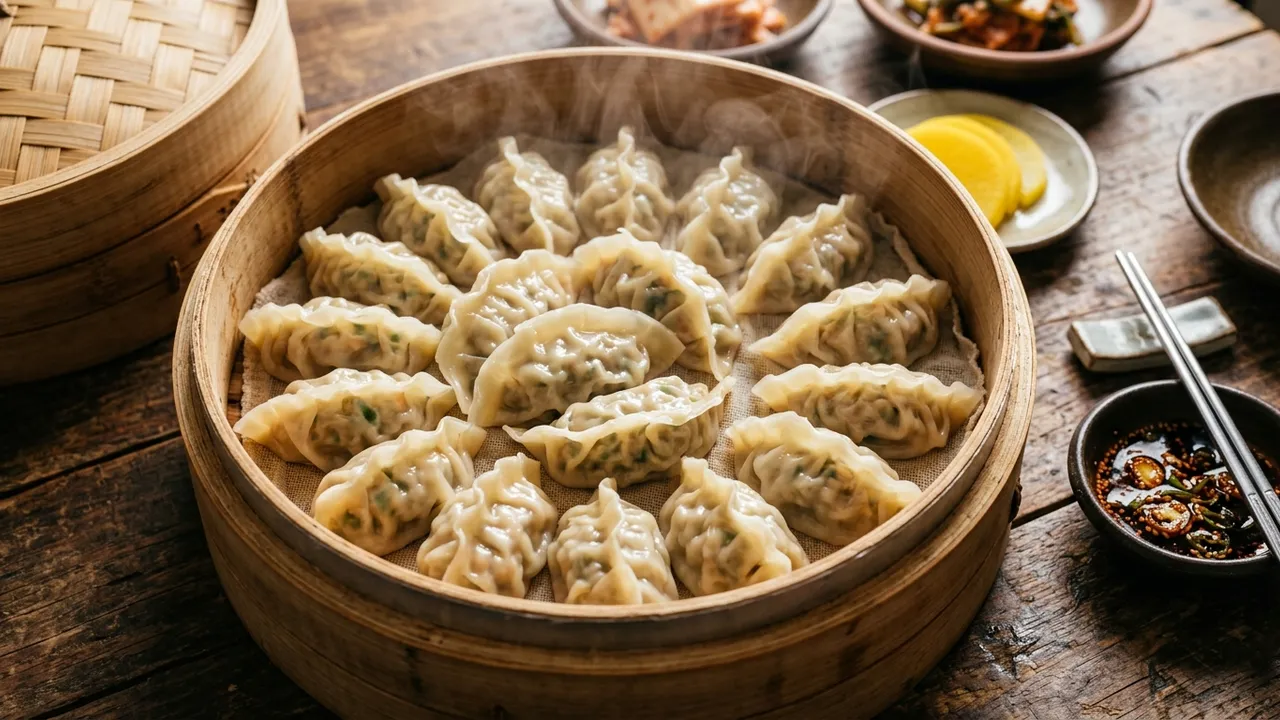
Meat Mandu (Korean Holiday Dumplings) Recipe
* 이미지는 AI가 생성한 참고 이미지로, 실제 조리 결과물과 다를 수 있습니다.
This is a recipe for meat mandu that the whole family can enjoy during the holidays. Try making these delicious, juicy dumplings.
📝 Editor's Notes
This meat mandu recipe, enjoyable for the whole family, is a warm dish that truly brings out the holiday spirit.
Using both ground pork and beef creates a deep, rich juiciness and an exquisite savory flavor.
Glass noodles, mung bean sprouts, tofu, and various vegetables come together, adding a delightful chewiness.
While it takes a bit of effort, the process of the whole family gathering to make mandu together will create cherished memories.
The difficulty level is intermediate, a recipe that requires dedication rather than special techniques.
🛒 Ingredient Tips
Selecting the right ingredients is crucial for making delicious mandu.
First, choose ground pork and beef with an appropriate fat-to-lean meat ratio to create a juicy and savory mandu filling.
Adding beef, in particular, deepens the umami flavor and enhances the overall richness.
For tofu, we recommend using firm, savory handmade tofu sold in traditional markets.
Its low moisture content and crumbly texture prevent the mandu filling from becoming soggy and add a savory taste.
Choose fresh vegetables and prepare them cleanly.
🔄 Substitution Guide
If ingredients are difficult to source or if you wish to avoid certain ingredients, several substitutions are possible.
Instead of ground pork and beef, you can use ground chicken for a lighter and lower-calorie mandu, but be aware that it might reduce the juiciness.
If you don't have glass noodles or want to reduce carbohydrate intake, you can finely chop konjac noodles or tofu noodles.
However, the unique chewy texture of glass noodles might be lost.
Mung bean sprouts can be substituted with soybean sprouts, but soybean sprouts have a stronger crunchier texture than mung bean sprouts, which might reduce the overall softness of the mandu filling.
Tofu plays a crucial role in enhancing the cohesiveness and adding savoriness to the mandu filling, so we recommend using it as is if possible.
🥘 Ingredients
👨🍳 Cooking Points
There are three key cooking points for this recipe.
First, never overcook the glass noodles and mung bean sprouts.
Glass noodles should be soaked, then boiled until transparent and soft, while mung bean sprouts should be added to boiling water, flipped once, and immediately removed once it boils again to retain their crisp texture and prevent them from becoming mushy.
Second, squeezing as much water as possible from the tofu using a cheesecloth is crucial.
Completely removing the water from the tofu ensures the mandu filling isn't watery and achieves a clean, savory taste.
Third, when combining all ingredients for the mandu filling, knead it thoroughly and evenly by hand.
This ensures all ingredients are well-incorporated and don't separate, resulting in a firm and delicious filling when steamed.
This is the secret to delicious mandu!
👨🍳 Directions
Boil water. Soak 100g glass noodles for 30 minutes in advance, then boil in the hot water until transparent and soft. Drain and set aside. (Do not discard the noodle water.)
In the same noodle water, add 350g mung bean sprouts. Flip once and as soon as it comes to a boil, remove immediately and drain thoroughly. (Overcooking will make them mushy and tasteless.)
Place 500g tofu in a cheesecloth or kitchen towel, knead until crumbled, then squeeze out as much water as possible.
Finely chop the drained mung bean sprouts.
Finely mince half an onion.
Remove the stems and clean the dirt from 2 shiitake mushrooms. Thinly slice and then finely mince them.
Finely chop 100g Korean chives into small pieces.
Finely chop 1 stalk green onion.
Pat dry 400g ground pork and 400g ground beef with a paper towel to remove excess blood.
Add 1 tbsp sesame oil to the cooked and cooled glass noodles, then mix well to separate. If any noodles are still tangled, cut them with scissors.
In a large bowl, combine the drained ground pork and ground beef. Add 1 tbsp cooking rice wine (Cheongju), ½ tbsp ginger syrup, 2 tbsp soy sauce, 1 tbsp oyster sauce, 1 tbsp allulose, and 5 grinds black pepper. Mix well by hand to season the meat.
To the seasoned meat, add the prepared glass noodles, tofu, shiitake mushrooms, onion, mung bean sprouts, Korean chives, green onion, 2 tbsp minced garlic, 3 eggs, 3 tbsp potato starch, 2 tbsp sesame oil (for mandu filling), and ½ tbsp salt. Knead and mix everything thoroughly until well combined.
Lightly moisten the edges of a dumpling wrapper with water, place 1 tbsp of mandu filling in the center, and fold into your desired dumpling shape.
Fill a steamer with plenty of water and line with a cheesecloth. Once ample steam rises, arrange the dumplings in the steamer, ensuring they don't touch each other. Close the lid and steam thoroughly for 15 to 20 minutes until they are transparent and cooked through.
💡 Tips
Mixing ground beef with ground pork instead of using only pork enhances the savory flavor.
Using firm, savory handmade tofu from a traditional market prevents the filling from becoming watery and results in a fluffy texture.
When making the mandu filling, knead all ingredients thoroughly so they are well combined and don't separate.
After steaming and cooling the mandu, you can freeze them for easy reheating whenever you want to eat them.
📦 Storage & Reuse
Carefully prepared mandu can be stored well and enjoyed deliciously for a long time.
After shaping, steam the mandu, let them cool down, then freeze them for 1-2 months of storage.
For freezing, arrange the mandu on a tray and freeze until firm, then transfer them to a freezer bag, ensuring they don't stick together.
To thaw, steam them or cook them in mandu-guk (dumpling soup).
Any leftover mandu filling can be shaped into small patties and pan-fried like donggeurang-ttaeng (Korean meat patties), or used as an ingredient for fried rice, both are very delicious.
For refrigerator storage, place in an airtight container and consume within 2-3 days.
🥢 Who This Is For
This meat mandu is an excellent dish for the whole family to gather, make, and share during holidays like Seollal (Lunar New Year) or Chuseok (Korean Thanksgiving).
Its flavor is loved by everyone, from children to seniors, making it perfect for family gatherings or housewarming parties.
Enjoying them in a warm mandu-guk (dumpling soup) or tteok-mandu-guk (rice cake and dumpling soup) makes for a hearty meal.
They are even more delicious when served with a clear broth or refreshing dongchimi (radish water kimchi).
Dipping them in a spicy sauce is also a delightful treat.
🔥 Nutrition Info
This meat mandu is a hearty food rich in protein and various nutrients. Based on one mandu (approx.
50g), the estimated calorie count is around 70-90 kcal, and a serving (5 pieces) would be approximately 350-450 kcal.
Protein is estimated to be about 15-20g, fat around 15-20g, and carbohydrates around 20-25g.
You can get high-quality protein, iron, and B vitamins from pork and beef, and supplement with plant-based protein from tofu.
Vegetables like mung bean sprouts, Korean chives, and onions provide dietary fiber, vitamins, and minerals, helping to balance nutrition.
💬 Frequently Asked Questions
- Q. What ingredients do I need for Meat Mandu (Korean Holiday Dumplings)?
- Main ingredients include Ground Pork, Ground Beef, Dumpling Wrappers, Glass Noodles, Mung Bean Sprouts. Selecting the right ingredients is crucial for making delicious mandu. First, choose ground pork and beef with an appropriate fat-to-lean meat ratio to create a juicy and savory mandu filling. Adding beef, in particular, deepens the umami flavor and enhances the overall richness. For tofu, we recommend using firm, savory handmade tofu sold in traditional markets. Its low moisture content and crumbly texture prevent the mandu filling from becoming soggy and add a savory taste. Choose fresh vegetables and prepare them cleanly.
- Q. What are the key tips for making Meat Mandu (Korean Holiday Dumplings)?
- There are three key cooking points for this recipe. First, never overcook the glass noodles and mung bean sprouts. Glass noodles should be soaked, then boiled until transparent and soft, while mung bean sprouts should be added to boiling water, flipped once, and immediately removed once it boils again to retain their crisp texture and prevent them from becoming mushy. Second, squeezing as much water as possible from the tofu using a cheesecloth is crucial. Completely removing the water from the tofu ensures the mandu filling isn't watery and achieves a clean, savory taste. Third, when combining all ingredients for the mandu filling, knead it thoroughly and evenly by hand. This ensures all ingredients are well-incorporated and don't separate, resulting in a firm and delicious filling when steamed. This is the secret to delicious mandu!
- Q. How should I store leftover Meat Mandu (Korean Holiday Dumplings)?
- Carefully prepared mandu can be stored well and enjoyed deliciously for a long time. After shaping, steam the mandu, let them cool down, then freeze them for 1-2 months of storage. For freezing, arrange the mandu on a tray and freeze until firm, then transfer them to a freezer bag, ensuring they don't stick together. To thaw, steam them or cook them in mandu-guk (dumpling soup). Any leftover mandu filling can be shaped into small patties and pan-fried like donggeurang-ttaeng (Korean meat patties), or used as an ingredient for fried rice, both are very delicious. For refrigerator storage, place in an airtight container and consume within 2-3 days.
- Q. How many calories are in Meat Mandu (Korean Holiday Dumplings)?
- This meat mandu is a hearty food rich in protein and various nutrients. Based on one mandu (approx. 50g), the estimated calorie count is around 70-90 kcal, and a serving (5 pieces) would be approximately 350-450 kcal. Protein is estimated to be about 15-20g, fat around 15-20g, and carbohydrates around 20-25g. You can get high-quality protein, iron, and B vitamins from pork and beef, and supplement with plant-based protein from tofu. Vegetables like mung bean sprouts, Korean chives, and onions provide dietary fiber, vitamins, and minerals, helping to balance nutrition.
- Q. Can I substitute ingredients in Meat Mandu (Korean Holiday Dumplings)?
- If ingredients are difficult to source or if you wish to avoid certain ingredients, several substitutions are possible. Instead of ground pork and beef, you can use ground chicken for a lighter and lower-calorie mandu, but be aware that it might reduce the juiciness. If you don't have glass noodles or want to reduce carbohydrate intake, you can finely chop konjac noodles or tofu noodles. However, the unique chewy texture of glass noodles might be lost. Mung bean sprouts can be substituted with soybean sprouts, but soybean sprouts have a stronger crunchier texture than mung bean sprouts, which might reduce the overall softness of the mandu filling. Tofu plays a crucial role in enhancing the cohesiveness and adding savoriness to the mandu filling, so we recommend using it as is if possible.
💬 Comments
No comments yet. Be the first to comment!