
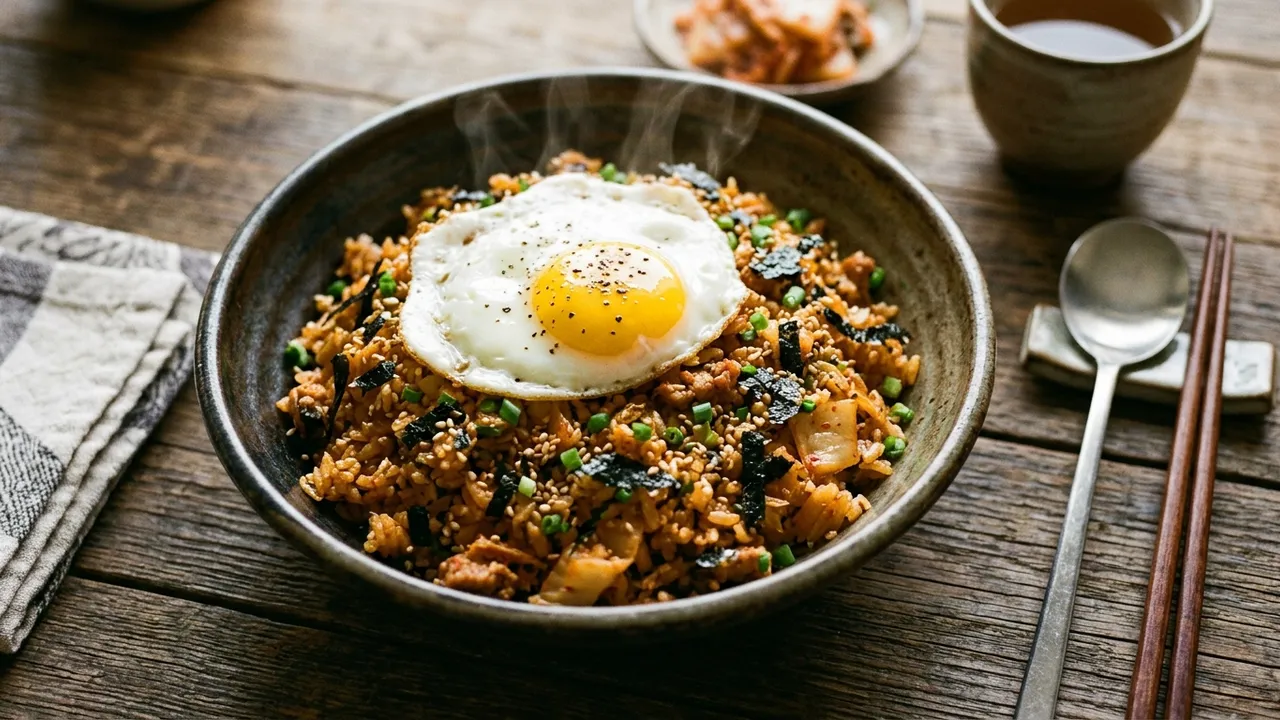
Simple Kimchi Fried Rice Flavored with Scallion Oil and Soy
* 이미지는 AI가 생성한 참고 이미지로, 실제 조리 결과물과 다를 수 있습니다.
This is a simple kimchi fried rice recipe that achieves a deep flavor using just kimchi (김치), thanks to two key elements: fragrant scallion oil and savory soy sauce.
📝 Editor's Notes
This recipe maximizes the flavor of kimchi fried rice with two key techniques: scallion oil and soy sauce.
It's a big advantage that anyone can make it easily and deliciously, achieving a deep, savory flavor without complex ingredients.
The sourness of well-fermented kimchi (김치), the fragrance of scallion oil, and the umami of soy sauce combine so perfectly that you'll automatically exclaim, 'This is the taste!' after just one spoonful.
It's a versatile dish perfect for a simple meal, weekend brunch, or late-night snack.
Especially the harmony between the fluffy stir-fried rice grains and the crunchy onion texture is excellent.
🛒 Ingredient Tips
Kimchi (김치) is the star of this recipe, so it's important to use well-fermented, sour kimchi.
Rather than being overly fermented and intensely sour, a moderately sour kimchi is ideal.
Don't discard the kimchi (김치) juice; save a little to adjust the color and flavor of the fried rice for a deeper taste.
Use both the white and green parts of the large green onion (scallion); fresh, firm ones with vibrant green color have the best aroma.
Choose onions with smooth, firm skins and no sprouts.
Remember to add them later to maintain their crunchy texture.
🔄 Substitution Guide
If you don't have sour kimchi (김치), you can add about 1/2 tbsp of vinegar to less-fermented kimchi to compensate for the sourness.
However, it's difficult to substitute kimchi (김치) itself as it's a core ingredient.
You can use chives or garlic chives instead of large green onions, but note that large green onions (scallions) provide the best deep aroma for scallion oil.
Chives have a milder flavor, and garlic chives tend to soften when cooked.
Adding 1 tbsp of oyster sauce instead of soy sauce can enrich the umami and sweetness for a different flavor.
However, oyster sauce can be saltier than soy sauce, so it's advisable to reduce other seasonings.
🥘 Ingredients
👨🍳 Cooking Points
The core of this kimchi fried rice lies in two techniques.
First is the 'scallion oil.' Sauté the large green onion (scallion) in a generous amount of cooking oil over medium-high heat until golden brown and fragrant.
The fragrant aroma of the scallions will infuse the oil, significantly enhancing the overall flavor of the fried rice.
Second is 'caramelizing the soy sauce.' Push the ingredients to one side, add 1 tbsp of soy sauce to the empty space, and let it bubble vigorously.
This brings out the unique smoky and umami flavors of the soy sauce, upgrading the taste of the fried rice.
The key is to add the onion later, after stir-frying the kimchi (김치), to maintain its crispy texture.
When adding rice, stir-fry quickly over medium-high to high heat to achieve fluffy fried rice.
👨🍳 Directions
Finely chop 1/4 of a small onion.
Finely chop half of a large green onion (scallion).
Finely chop the kimchi (김치) to yield about 1 cup (the amount of one bowl of rice).
Heat a generous amount of cooking oil in a thick-bottomed frying pan over medium-high heat.
Add the chopped green onion and make scallion oil.
Once the scallion oil is fragrant, add the kimchi (김치) and a small amount of sugar, and stir-fry well for 1 minute.
After stir-frying for 1 minute, add the finely chopped onion and continue to stir-fry.
Once the ingredients are well stir-fried, push them all to one side of the pan. Pour 1 tbsp of soy sauce into the empty space, let it bubble vigorously, then mix it with the other ingredients.
Once everything is mixed, add 1 bowl of cooked rice and stir-fry over medium-high to high heat.
Once the rice and kimchi (김치) are well combined, turn off the heat.
Finish by adding 1 tbsp of sesame oil and 1 tbsp of sesame seeds, then mix everything well.
💡 Tips
Making scallion oil before stir-frying significantly enhances the flavor and aroma, making the kimchi fried rice even more delicious.
A small amount of sugar helps to balance the sourness of the kimchi (김치), making it more enjoyable.
Adding the onion later helps maintain its crispy texture.
For a deeper flavor, you can add gochugaru (고춧가루) or kimchi (김치) juice to your preference.
📦 Storage & Reuse
Store the finished kimchi fried rice in an airtight container in the refrigerator for 2-3 days.
If you want to store it longer, it's a good idea to portion it into individual servings and freeze.
When frozen, it's recommended to consume within 1-2 weeks.
To reheat refrigerated fried rice, you can microwave it for a moist texture, or stir-fry it again in a frying pan for a fluffy and crispy texture.
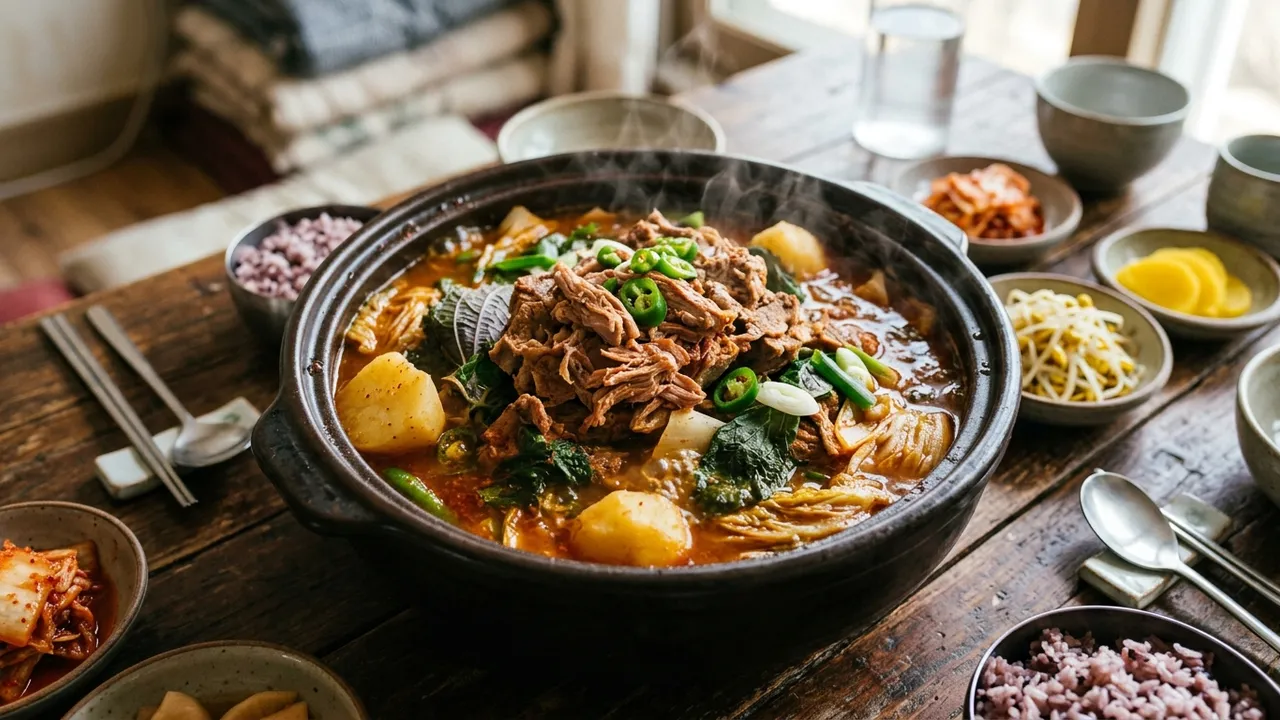
Leftover kimchi (김치) or vegetables can be used in kimchi jjigae (김치찌개) or other stir-fried dishes.
🥢 Who This Is For
This kimchi fried rice is highly recommended for those seeking a simple yet hearty meal in a busy daily life.
It's great for students living alone or cooking beginners as it's easy to follow.
If you like spicy food, feel free to add gochugaru (고춧가루) or kimchi (김치) juice.
For a side, top with a warm fried egg or sprinkle with crispy shredded seaweed for even more flavor.
It pairs perfectly with refreshing soups like kongnamul-guk (콩나물국) or eomuk-tang (어묵탕).
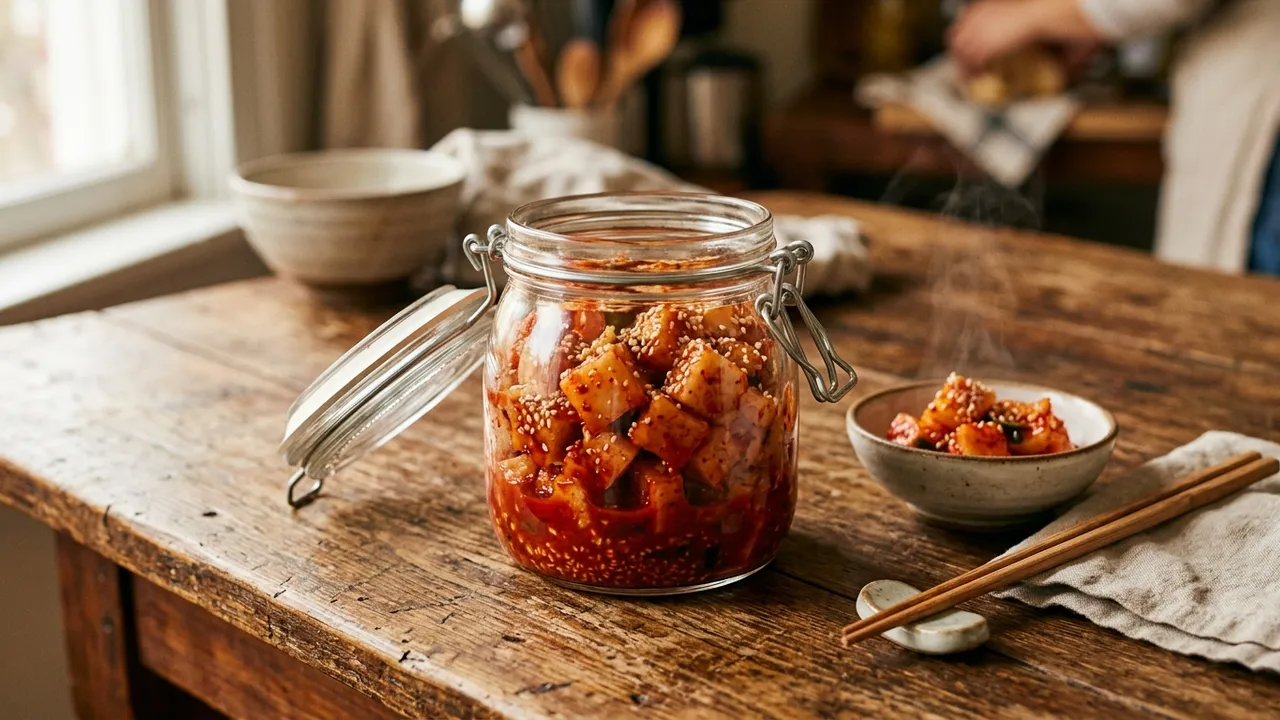
It also goes very well with crunchy danmuji (단무지) or kkakdugi (깍두기).
🔥 Nutrition Info
One serving of this kimchi fried rice is estimated to be around 700-800 kcal.
It's relatively high in calories due to one bowl of rice, generous cooking oil, and sesame oil.
The main nutrients are estimated to be around 80g of carbohydrates, 45-50g of fat, and about 5g of protein.
While vegetables like kimchi (김치), green onion, and onion provide dietary fiber and Vitamin C, the sodium content might be somewhat high due to soy sauce and kimchi.
If you are health-conscious, it's recommended to reduce the amount of cooking oil or add chicken breast or a fried egg for protein.
💬 Frequently Asked Questions
- Q. What ingredients do I need for Simple Kimchi Fried Rice Flavored with Scallion Oil and Soy Sauce?
- Main ingredients include Small onion, Large green onion (scallion), Kimchi (김치), Cooking oil, Sugar. Kimchi (김치) is the star of this recipe, so it's important to use well-fermented, sour kimchi. Rather than being overly fermented and intensely sour, a moderately sour kimchi is ideal. Don't discard the kimchi (김치) juice; save a little to adjust the color and flavor of the fried rice for a deeper taste. Use both the white and green parts of the large green onion (scallion); fresh, firm ones with vibrant green color have the best aroma. Choose onions with smooth, firm skins and no sprouts. Remember to add them later to maintain their crunchy texture.
- Q. What are the key tips for making Simple Kimchi Fried Rice Flavored with Scallion Oil and Soy Sauce?
- The core of this kimchi fried rice lies in two techniques. First is the 'scallion oil.' Sauté the large green onion (scallion) in a generous amount of cooking oil over medium-high heat until golden brown and fragrant. The fragrant aroma of the scallions will infuse the oil, significantly enhancing the overall flavor of the fried rice. Second is 'caramelizing the soy sauce.' Push the ingredients to one side, add 1 tbsp of soy sauce to the empty space, and let it bubble vigorously. This brings out the unique smoky and umami flavors of the soy sauce, upgrading the taste of the fried rice. The key is to add the onion later, after stir-frying the kimchi (김치), to maintain its crispy texture. When adding rice, stir-fry quickly over medium-high to high heat to achieve fluffy fried rice.
- Q. How should I store leftover Simple Kimchi Fried Rice Flavored with Scallion Oil and Soy Sauce?
- Store the finished kimchi fried rice in an airtight container in the refrigerator for 2-3 days. If you want to store it longer, it's a good idea to portion it into individual servings and freeze. When frozen, it's recommended to consume within 1-2 weeks. To reheat refrigerated fried rice, you can microwave it for a moist texture, or stir-fry it again in a frying pan for a fluffy and crispy texture. Leftover kimchi (김치) or vegetables can be used in kimchi jjigae (김치찌개) or other stir-fried dishes.
- Q. How many calories are in Simple Kimchi Fried Rice Flavored with Scallion Oil and Soy Sauce?
- One serving of this kimchi fried rice is estimated to be around 700-800 kcal. It's relatively high in calories due to one bowl of rice, generous cooking oil, and sesame oil. The main nutrients are estimated to be around 80g of carbohydrates, 45-50g of fat, and about 5g of protein. While vegetables like kimchi (김치), green onion, and onion provide dietary fiber and Vitamin C, the sodium content might be somewhat high due to soy sauce and kimchi. If you are health-conscious, it's recommended to reduce the amount of cooking oil or add chicken breast or a fried egg for protein.
- Q. Can I substitute ingredients in Simple Kimchi Fried Rice Flavored with Scallion Oil and Soy Sauce?
- If you don't have sour kimchi (김치), you can add about 1/2 tbsp of vinegar to less-fermented kimchi to compensate for the sourness. However, it's difficult to substitute kimchi (김치) itself as it's a core ingredient. You can use chives or garlic chives instead of large green onions, but note that large green onions (scallions) provide the best deep aroma for scallion oil. Chives have a milder flavor, and garlic chives tend to soften when cooked. Adding 1 tbsp of oyster sauce instead of soy sauce can enrich the umami and sweetness for a different flavor. However, oyster sauce can be saltier than soy sauce, so it's advisable to reduce other seasonings.
💬 Comments
No comments yet. Be the first to comment!