
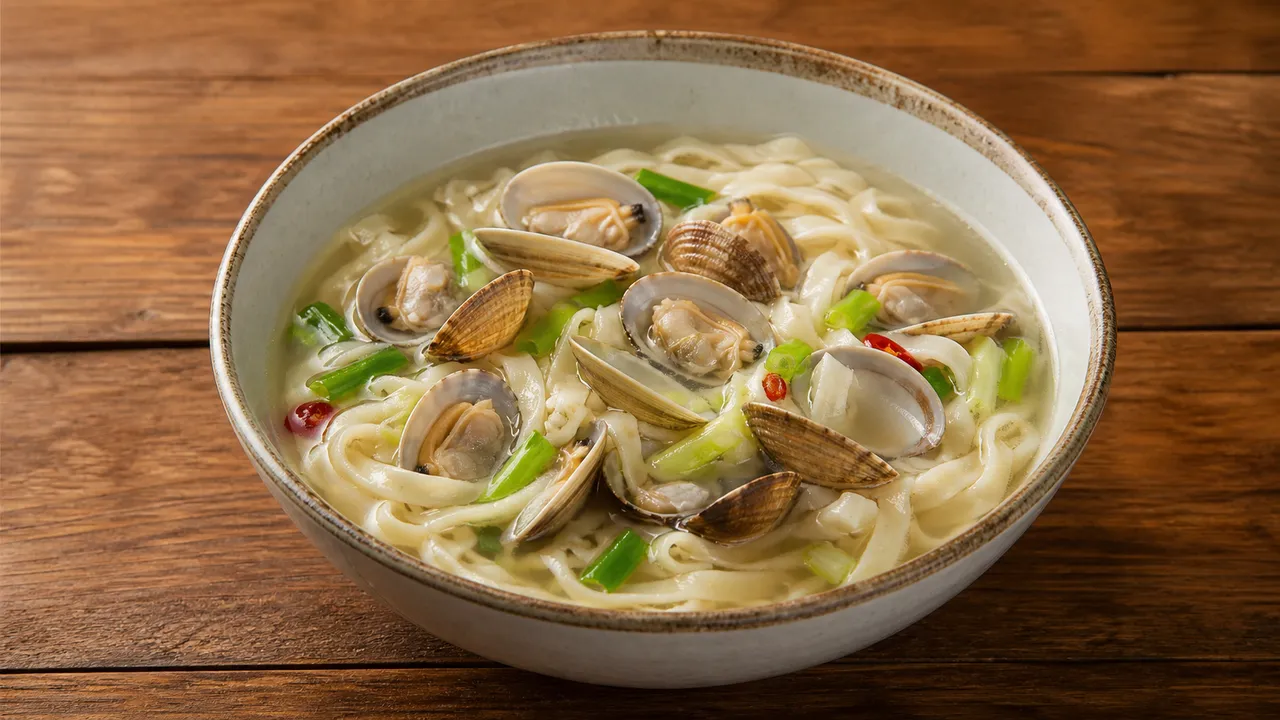
Clam Kalguksu (바지락 칼국수) and Geotjeori (겉절이) Recipe
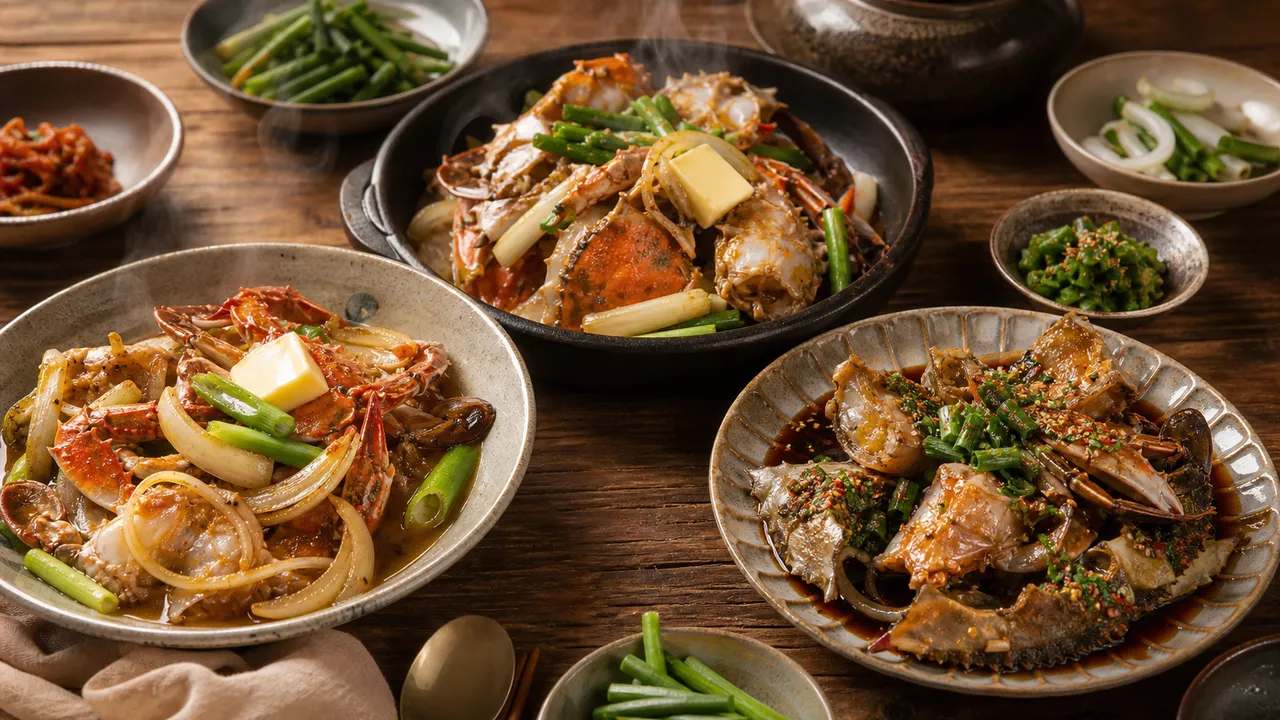
* 이미지는 AI가 생성한 참고 이미지로, 실제 조리 결과물과 다를 수 있습니다.
A recipe to easily make clam kalguksu (Korean knife-cut noodles) that tastes like it came from a specialty restaurant, along with fresh geotjeori (겉절이) to pair with it.
📋 2 recipes — Select to view
A clam kalguksu recipe that allows you to make restaurant-quality kalguksu at home.
📝 Editor's Notes
Today's geotjeori (겉절이) recipe is an instant kimchi made by tossing fresh napa cabbage hearts (알배추) and green onions (쪽파) to enjoy immediately.
It's quick and easy to make without complicated brining steps, making it suitable for beginner cooks.
Its crisp, refreshing taste is excellent when freshly made, and it adds a clean and refreshing flavor when served with kalguksu, warm rice, or meat dishes.
The harmonious blend of spicy, sweet, and sour seasoning makes it an attractive Korean side dish that whets the appetite.
🛒 Ingredient Tips
Choosing the right ingredients is important for delicious geotjeori (겉절이).
First, for napa cabbage hearts (알배추), choose those with green outer leaves, yellow inner leaves, and a firm, heavy feel.
The inner leaves should be soft and tender when the outer leaves are removed.
Green onions (쪽파) should have straight, glossy stems, be fresh, and have clean root ends.
Fish sauce (액젓) is a key ingredient for the deep umami flavor of geotjeori.
Both anchovy fish sauce (멸치액젓) and sand lance fish sauce (까나리액젓) are good, but Korean anchovy fish sauce is recommended for its deeper, richer flavor.
Using high-quality fish sauce will significantly enhance the taste of the geotjeori.
🔄 Substitution Guide
You can use regular napa cabbage instead of napa cabbage hearts (알배추), but regular cabbage has thicker leaves, which may result in a slightly coarser texture.
In this case, it's good to lightly brine the cabbage or allow a bit more aging time after tossing with the seasoning.
If you don't have anchovy fish sauce (멸치액젓) or sand lance fish sauce (까나리액젓), or have seafood allergies, you can use soy sauce.
However, the deep umami unique to fish sauce will be reduced, and the salty taste of soy sauce may become stronger.
Therefore, it's recommended to adjust the amount of soy sauce and add a small amount of salted shrimp (새우젓) to supplement the umami.
Using plum extract (매실청) or honey instead of corn syrup or sugar will add a distinct aroma from each ingredient, allowing you to enjoy a different flavor.
🥘 Ingredients
👨🍳 Cooking Points
The most important point for this geotjeori (겉절이) recipe is to mix it 'quickly and gently'.
Since the cabbage is seasoned by tossing it directly with the sauce without pre-brining, kneading it for too long can result in a bitter taste or a soggy texture.
After adding the seasoning, gently mix with light hands to ensure the cabbage and green onions (쪽파) are evenly coated.
The second point is the golden ratio of the seasoning.
The balance of gochugaru (고춧가루), fish sauce (액젓), sesame oil (참기름), garlic, corn syrup, sugar, and seasoned salt (맛소금) is crucial.
Use the amounts given in the recipe as a base, but taste at the end and adjust the sweetness, spiciness, or saltiness to your preference.
Especially, vinegar is added at the end to provide a refreshing taste, so it's good to adjust it according to your preference.
👨🍳 Directions
In a bowl, combine 2.5 L of water and 5 tbsp of salt. Stir well until the salt dissolves to create the briny water for purging.
Place a colander in the briny water, add 1 kg of clams, and let them purge for 2 hours, covered to block out light.
In a pot, pour 2 L of water. Add 1 tbsp of anchovy dashi (멸치 다시다) powder, 1 tbsp of clam dashi (조개 다시다) powder, 3 tbsp of fish sauce (멸치액젓), 0.5 tbsp of coarse sea salt (꽃소금), and minced garlic. Bring the broth to a boil.
Once the broth boils, add 1 kg of clams (purged and thoroughly rinsed), thinly sliced potato, and 60g of julienned carrot. Boil until the potato is cooked through.
Add 600g of kalguksu noodles, thoroughly rinsed multiple times in cold water to remove all starch.
Add 100g of Korean zucchini (애호박), 120g of large green onion (대파), 15g of Cheongyang chili pepper (청양고추), and 0.2 tbsp of ground black pepper. Continue to boil until the kalguksu noodles are cooked, then serve.
💡 Tips
Rinsing kalguksu noodles thoroughly in cold water to remove all starch prevents the broth from becoming cloudy or thick.
📦 Storage & Reuse
Geotjeori (겉절이) is best enjoyed when freshly made.
Store any leftover geotjeori in an airtight container in the refrigerator and consume within 2-3 days.
The crispness of the cabbage may decrease and the flavor may change over time, so long-term storage is not recommended.
Freezing is not suitable as it will spoil the fresh taste and texture of geotjeori.
If the geotjeori has become slightly sour or you have a lot left over, you can use it in fried rice or kimchi jjigae (김치찌개) for a new flavor.
🥢 Who This Is For
This geotjeori (겉절이) is highly recommended for those who want to enjoy fresh and delicious kimchi even in their busy daily lives.
It pairs wonderfully with noodle dishes like kalguksu or ramyeon, and when eaten with fatty meat dishes like samgyeopsal (삼겹살) or bossam (수육), it cuts through the richness, making them even more enjoyable.
It's also a 'rice thief' side dish that allows you to finish a bowl of warm white rice just with geotjeori.
It's perfect to serve for guests as well.
🔥 Nutrition Info
This geotjeori (겉절이) recipe is estimated to be approximately 200-250 kcal per serving for a 4-serving portion.
Carbohydrates are estimated to be around 15-20g, fats around 15-20g, and protein around 5g.
The main ingredients, napa cabbage hearts (알배추) and green onions (쪽파), are rich in dietary fiber, vitamin C, K, and various other vitamins and minerals, which help with gut health and boosting immunity.
Capsaicin in gochugaru (고춧가루) stimulates metabolism, and sesame oil (참기름) is rich in unsaturated fatty acids, which are beneficial for health.
However, due to fish sauce (액젓) and seasoned salt (맛소금), the sodium content may be somewhat high, so it is recommended to control the intake.
Sugar and corn syrup are added for sweetness, but they are used in appropriate amounts to balance the flavor.
💬 Frequently Asked Questions
- Q. What ingredients do I need for Clam Kalguksu (바지락 칼국수) and Geotjeori (겉절이) Recipe?
- Main ingredients include Water, Salt, Clams, Water, Anchovy stock powder. Fresh clams are key to delicious kalguksu (칼국수). If you buy them in spring, which is their season, they will be plumper and more flavorful. Choose clams that are tightly closed or have unbroken shells. De-sanding should be done sufficiently for at least 2 hours in the dark to ensure a clean broth free of sand or impurities. Using fresh kalguksu (칼국수) noodles offers a chewier texture, but store-bought dried noodles are also fine. Whichever noodles you use, it's important to rinse them thoroughly in cold water to remove enough starch. For geotjeori (겉절이), choose baby napa cabbage that has yellow inner leaves and green outer leaves, feels heavy and firm when lifted, indicating freshness and crispness.
- Q. What are the key tips for making Clam Kalguksu (바지락 칼국수) and Geotjeori (겉절이) Recipe?
- The first key point of this recipe is de-sanding the clams. 2.5 L of water with 5 tbsp of salt creates a salinity similar to seawater, providing optimal conditions for the clams to expel impurities. You must place a sieve and de-sand them for at least 2 hours in the dark to create a clean broth. The second important point is to thoroughly rinse the kalguksu (칼국수) noodles in cold water several times to remove all starch before adding them. This is the secret to keeping the kalguksu broth clear and refreshing, not cloudy! Remember, noodles can quickly release starch into the broth, making it cloudy. Finally, geotjeori (겉절이) should be mixed right before serving to maintain its crisp texture, and you can add 1 tbsp of vinegar to your taste for a sweet and sour flavor.
- Q. How should I store leftover Clam Kalguksu (바지락 칼국수) and Geotjeori (겉절이) Recipe?
- Clam kalguksu (바지락 칼국수) is best enjoyed immediately after cooking, as the noodles can become soggy. If there are leftovers, it's recommended to store the broth and noodles separately. The broth can be stored in an airtight container in the refrigerator for 2-3 days; when ready to eat, cook fresh noodles and warm them in the stored broth. Geotjeori (겉절이) should be stored in an airtight container in the refrigerator and consumed within 2-3 days to maintain its crisp texture. Over time, it may lose its crispness and become more sour. Leftover geotjeori can be chopped finely and eaten with boiled pork slices (suyuk (수육)) or stir-fried with sesame oil (chamgireum (참기름)) to make geotjeori kimchi fried rice for a unique twist.
- Q. How many calories are in Clam Kalguksu (바지락 칼국수) and Geotjeori (겉절이) Recipe?
- This clam kalguksu (바지락 칼국수) and geotjeori (겉절이) recipe is estimated to be approximately 550-650 kcal per serving. If 1 kg of clams is divided among 4 servings, each person consumes about 250g of clams, making it a healthy meal rich in protein and low in fat. Carbohydrates are mainly obtained from the kalguksu (칼국수) noodles and potatoes. Clams are rich in minerals like iron, zinc, and taurine, which can help with fatigue recovery and anemia prevention. The accompanying baby napa cabbage and scallions are rich in vitamin C and dietary fiber, benefiting digestion and gut health. However, as fish sauce and salt are used, the sodium content may be high, so it's advisable to adjust according to your usual diet. It's a perfect healthy and hearty meal.
- Q. Can I substitute ingredients in Clam Kalguksu (바지락 칼국수) and Geotjeori (겉절이) Recipe?
- If clams are difficult to find or you prefer other shellfish, you can substitute with littleneck clams (moshi-jogae (모시조개)) or mussels (honghap (홍합)). Littleneck clams provide a cleaner and more refreshing broth than Manila clams, while mussels add a richer and deeper seafood flavor. However, be aware that mussels can have a strong distinctive aroma. Instead of kalguksu (칼국수) noodles, you can use thin wheat noodles (somyeon (소면)) or rice noodles. Somyeon offers a softer texture, and while rice noodles are less chewy, they have the advantage of being gluten-free. The anchovy fish sauce (myeolchi-aekjeot (멸치액젓)) in the broth can be replaced with Korean soup soy sauce (guk-ganjang (국간장)), but guk-ganjang provides less umami and can darken the broth's color. If you want a more refreshing umami flavor, adding a small amount of salted fermented shrimp (saeu-jeot (새우젓)) is also a good option.
💬 Comments
No comments yet. Be the first to comment!