

TOP 3 Versatile 15-Minute Recipes for After Work: Mapo Tofu,
* 이미지는 AI가 생성한 참고 이미지로, 실제 조리 결과물과 다를 수 있습니다.
Three quick and efficient home-cooked meal recipes for dual-income households. We introduce secrets to save time and money without compromising on flavor.
📋 3 recipes — Select to view
A simple mapo tofu recipe that can be made faster than delivery using a store-bought sauce.
📝 Editor's Notes
This Kimchi Skewered Fish Cake Udon recipe is characterized by allowing you to easily enjoy the spicy and refreshing taste of Tudari's Fish Cake Udon at home.
The clean taste of well-fermented kimchi combined with the savory flavor of fish cake (eomuk) makes for an irresistible dish that you'll finish in no time.
The cooking time is very short, around 15 minutes, making it easy for even beginner cooks to try.
It will be an especially great choice on cold days, rainy days, or when you need a hangover cure after a night out.
It will make a hearty meal that the whole family can enjoy.
🛒 Ingredient Tips
Kimchi is the core ingredient for this recipe, so it's best to use well-fermented, sour kimchi (kimchi).
Choosing kimchi that isn't too mushy and still has a crunchy texture will allow you to enjoy both the deep flavor of the broth and the chewiness of the kimchi simultaneously.
For the fish cake, you can use a mix of various shapes of eomuk (어묵) in addition to skewered eomuk for a richer visual and textural experience.
Good eomuk is bouncy and doesn't have an off-putting smell.
For udon noodles, if possible, use fresh udon noodles stored in the refrigerator to fully appreciate their chewy texture.
Fresh noodles are much softer and blend better with the broth than dried noodles.
🔄 Substitution Guide
You can use other types of fish cake (eomuk) instead of skewered eomuk.
Slicing square eomuk or stick eomuk can provide a different texture.
If you don't have eomuk or prefer a vegetarian option, try adding tofu, mushrooms, or fried tofu pouches (yubu).
This will offer a different, lighter, and healthier flavor.
If you don't have tuna extract (chamchi-aek), you can use anchovy sauce (myeolchi-aekjeot) to add a deep umami flavor.
Please note that anchovy sauce may have a stronger seafood flavor.
Instead of udon noodles, you can use ramen noodles, kalguksu (칼국수) noodles, or even rice cakes (tteok) to make it like tteokbokki (떡볶이) for a different treat.
When changing the type of noodles, it's important to adjust the cooking time.
🥘 Ingredients
👨🍳 Cooking Points
There are three key cooking points for this recipe.
First, sauté the kimchi (kimchi) thoroughly in cooking oil.
Sautéing kimchi softens its sourness and concentrates its umami, making the broth much deeper and richer.
It's important to sauté over medium heat to prevent burning.
Second, only add half of the fish cake soup base first and adjust the seasoning.
Since the saltiness varies by brand, tasting and adjusting the seasoning rather than adding it all at once will help prevent failure.
Third, udon noodles can easily become soggy if boiled for too long, so add them last and boil for exactly 1 minute to maintain their chewy texture.
Remembering these three points will help you make delicious udon.
👨🍳 Directions
Finely mince the white part of the green onion, onion, and chili pepper.
Heat olive oil in a pan, then add the minced green onion (white part), minced onion, and minced chili pepper. Sauté until golden, about 2 minutes.
Add 2 packets of Chinese Mapo Tofu sauce and sauté together.
Add 1 pack (4 blocks) of stewing tofu, cover, and simmer for 1 minute.
Break the tofu into bite-sized pieces and mix well with the sauce.
Serve generously over your preferred rice, such as frozen rice, to complete the dish.
💡 Tips
Pre-mincing vegetables can further shorten cooking time.
For faster cooking, using silken tofu (yeondu-bu) is recommended.
You can make delicious mapo tofu even with basic vegetables you have at home.
📦 Storage & Reuse
This Kimchi Skewered Fish Cake Udon is best enjoyed immediately when warm.
Udon noodles tend to get soggy quickly, so it's recommended to eat it all at once without leftovers.
If you have leftover broth and eomuk, you can store them in an airtight container in the refrigerator for 2-3 days, without the noodles.
When reheating, add water or broth to adjust the seasoning, then add freshly blanched udon noodles to enjoy the same chewy texture as when first made.
Leftover kimchi (kimchi) can also be used for kimchi fried rice or kimchi stew.
🥢 Who This Is For
When you crave a warm and spicy broth in your busy daily life, this is a great dish to make yourself instead of ordering delivery.
It can also be a hearty meal for students during exams or those living alone.
It's also an excellent hangover cure to refresh your stomach.
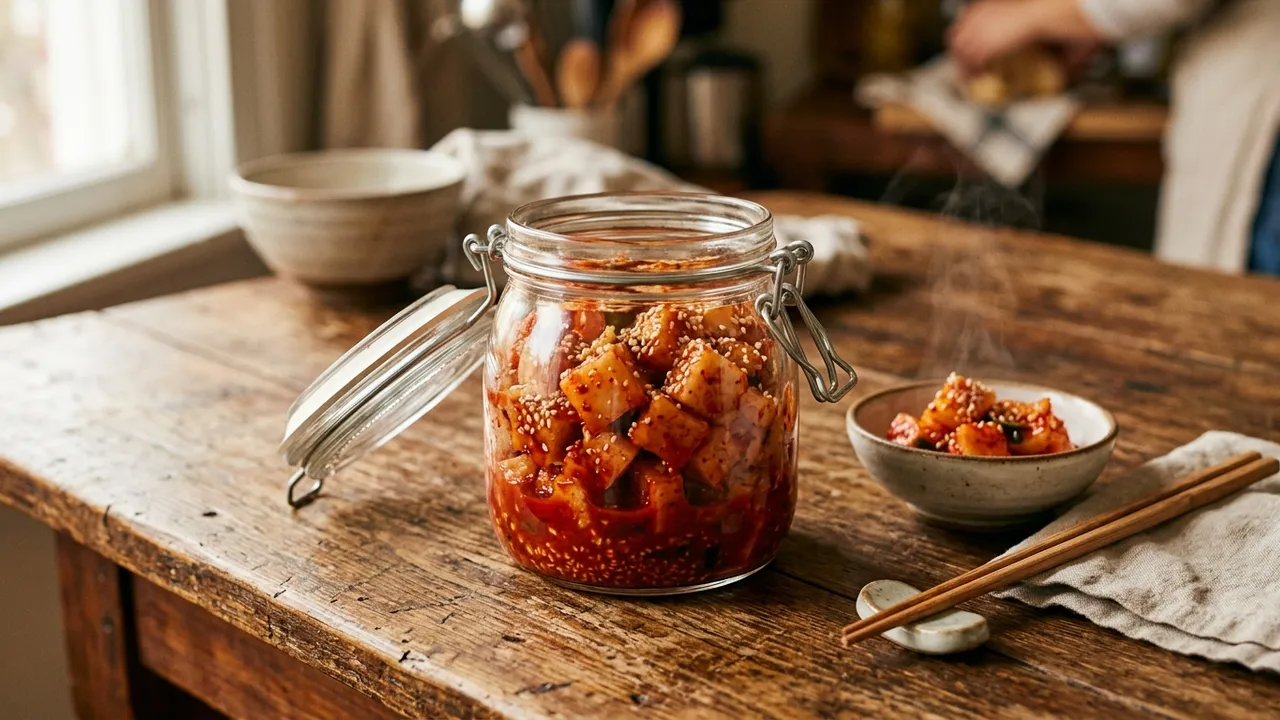
Good accompaniments include tangy pickled radish (danmuji), crunchy cubed radish kimchi (ggakdugi), or soft steamed egg (gyeran-jjim).
It will also make a wonderful meal when served with simple rice balls (jumeokbap).
🔥 Nutrition Info
One serving of this Kimchi Skewered Fish Cake Udon is estimated to be approximately 550-650 kcal.
Since udon noodles and fish cake (eomuk) are the main ingredients, it provides a balanced meal with carbohydrates, protein, and fat.
Carbohydrates are estimated to be about 80-100g, protein about 20-30g, and fat about 15-25g.
Kimchi (kimchi) is rich in probiotics and dietary fiber, which can aid in gut health, and also provides vitamin C.
However, due to ingredients like eomuk, kimchi, and soy sauce, the sodium content may be somewhat high, so those who are mindful of their sodium intake are advised to adjust the amount of fish cake soup base or consume less of the broth.
💬 Frequently Asked Questions
- Q. What ingredients do I need for TOP 3 Versatile 15-Minute Recipes for After Work: Mapo Tofu, Kimchi Fish Cake Udon, and Pork Jowl with Bracken and Aged Kimchi Pot Rice?
- Main ingredients include Minced white part of green onion, Minced onion, Minced chili, Olive oil, Chinese Mapo Tofu seasoning sauce. For this Mapo Tofu, it's important to choose stew tofu (jjigae dubu) with a moderate texture—neither too firm nor too soft. Check the expiration date for freshness and ensure there's no sour smell upon opening. For the green onions, onions, and chili, select fresh, firm ones with vibrant colors. The white part of the green onion, in particular, enhances the Mapo Tofu's aroma with its unique fragrance, so choose carefully. Store-bought Chinese Mapo Tofu seasoning sauces vary in taste by brand, so choosing a product you usually prefer or one with good reviews will help you enjoy delicious Mapo Tofu without fail.
- Q. What are the key tips for making TOP 3 Versatile 15-Minute Recipes for After Work: Mapo Tofu, Kimchi Fish Cake Udon, and Pork Jowl with Bracken and Aged Kimchi Pot Rice?
- The most crucial cooking point in this Mapo Tofu recipe is the process of stir-frying the vegetables. Heat olive oil in a pan, add the minced green onion, onion, and chili, and stir-fry until golden for about 2 minutes to fully develop their aroma. This step forms the base that determines the deep flavor of the Mapo Tofu. If the vegetables are not stir-fried sufficiently, the Mapo Tofu may lack flavor, so be sure to follow this timing. Next, it's important to add the stew tofu (jjigae dubu), cover, and simmer for 1 minute to allow the seasoning to be well absorbed by the tofu. Finally, when mashing the tofu, rather than mashing it too finely, mashing it into large, bite-sized pieces to preserve its soft texture is another appealing aspect of this dish.
- Q. How should I store leftover TOP 3 Versatile 15-Minute Recipes for After Work: Mapo Tofu, Kimchi Fish Cake Udon, and Pork Jowl with Bracken and Aged Kimchi Pot Rice?
- Finished Mapo Tofu can be stored in an airtight container in the refrigerator for 2-3 days. If you wish to store it longer, portion it into single servings and freeze it. It can be stored frozen for up to about a month. To reheat, microwave it or warm it in a pan over low heat, adding a little water to restore its original smooth consistency. Any leftover green onions, onions, and chili can be pre-minced and frozen, which is very useful for saving time when cooking your next meal.
- Q. How many calories are in TOP 3 Versatile 15-Minute Recipes for After Work: Mapo Tofu, Kimchi Fish Cake Udon, and Pork Jowl with Bracken and Aged Kimchi Pot Rice?
- One serving of this Mapo Tofu is estimated to be around 350 kcal. Tofu, the main ingredient, is rich in plant-based protein, providing about 19g of protein, and is packed with beneficial nutrients like calcium and isoflavones. You can get about 27g of healthy unsaturated fats from olive oil, and with a small amount of carbohydrates and dietary fiber from vegetables, it provides a balanced nutrition profile with approximately 12g of carbohydrates. However, store-bought seasoning sauces can be high in sodium, so for health reasons, it's advisable to adjust the amount of sauce or limit excessive consumption of the broth. Adding more vegetables can further increase your intake of vitamins and minerals, making it even healthier to enjoy.
- Q. Can I substitute ingredients in TOP 3 Versatile 15-Minute Recipes for After Work: Mapo Tofu, Kimchi Fish Cake Udon, and Pork Jowl with Bracken and Aged Kimchi Pot Rice?
- For this Mapo Tofu recipe, instead of stew tofu (jjigae dubu), you can use silken tofu (yeon dubu) for a much smoother Mapo Tofu. Conversely, if you prefer a chewier texture, you can use firm tofu (buchim-yong dubu). For children who dislike spicy food, you can finely mince bell peppers or capsicum instead of chili to add color and a sweet taste. If you want to add more heat, try adding cheongyang chili peppers (cheongyang gochu). In addition to green onions and onions, you can add mushrooms, zucchini (aehobak), or minced pork you have at home to enhance the flavor and nutrition. However, remember that adding more ingredients may slightly extend the cooking time.
💬 Comments
No comments yet. Be the first to comment!