
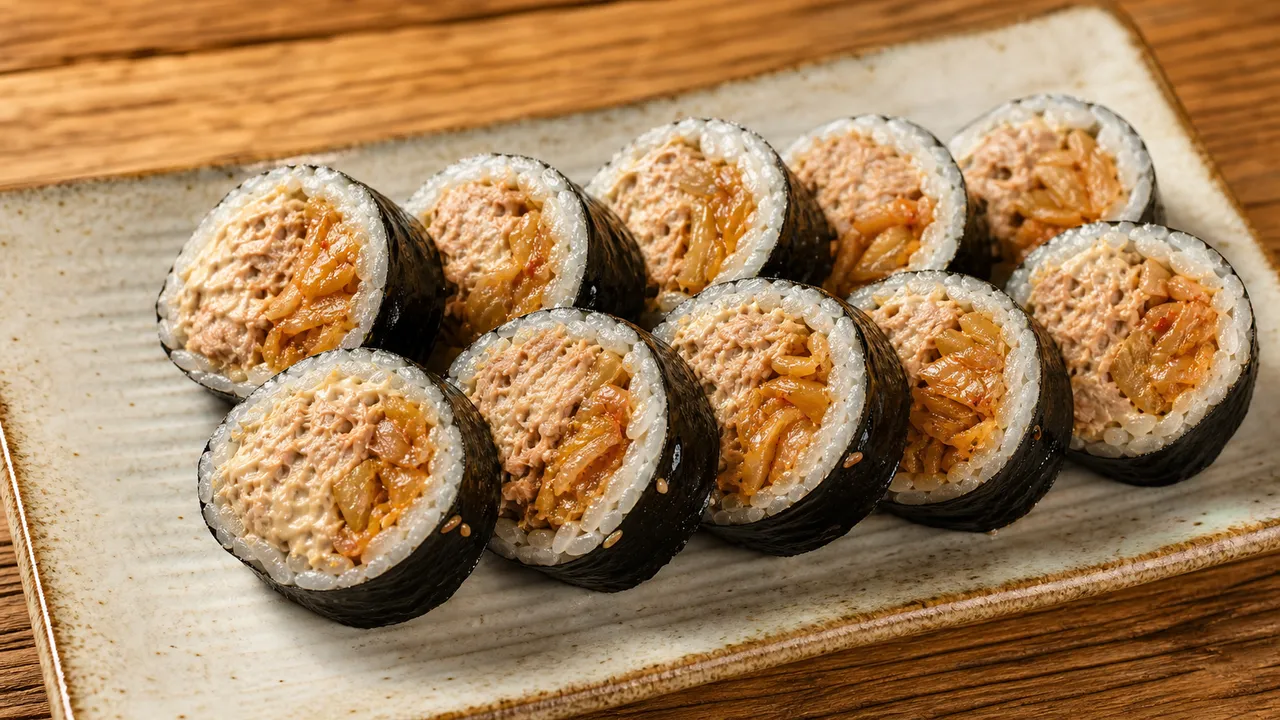
10 Super Easy & Popular Kimbap Recipes: Enjoy Special Kimbap
* 이미지는 AI가 생성한 참고 이미지로, 실제 조리 결과물과 다를 수 있습니다.
Easily and deliciously make 10 popular kimbap recipes at home, including Aged Kimchi Tuna, Spicy Fish Cake, and Spicy Cheongyang Chili Spam Kimbap.
📋 10 recipes — Select to view
This is a sour and savory gimbap made with aged kimchi (mugeunji), tuna, and mayonnaise.
📝 Editor's Notes
Mugeunji Tuna Gimbap (묵은지 참치 김밥), boasting a fantastic harmony of sour mugeunji (묵은지) and savory tuna, is a special delicacy that can be completed in just 20 minutes.
It's easy for even cooking beginners to follow, as it can be enjoyed simply at home without complicated ingredients or processes.
The refreshing taste of mugeunji (묵은지) combined with the smooth richness of tuna spreads happiness with every bite.
It's highly recommended as a picnic lunchbox or weekend brunch item, and it's also great for a light meal when you've lost your appetite on a hot summer day.
The mugeunji (묵은지) seasoning and tuna mayo combination, which further enhances the gimbap's flavor, is truly exquisite.
🛒 Ingredient Tips
The core ingredients for this gimbap are mugeunji (묵은지) and tuna.
For mugeunji (묵은지), it's important to choose one that isn't excessively sour; washing it thoroughly in water to reduce saltiness and sourness is key.
Squeeze out the water completely to ensure the gimbap doesn't become soggy and can be rolled tightly.
For canned tuna, completely removing the oil is crucial for a clean, non-greasy gimbap.
Use a sieve and press firmly with a spoon to extract as much oil as possible.
It's best to use gimbap-specific nori sheets; avoiding ones that are too thin or tear easily will help with rolling.
The rice should be cooked to a fluffy, slightly firm consistency to prevent the gimbap from becoming mushy.
🔄 Substitution Guide
For a cleaner and milder tasting gimbap, you can use baekkimchi (백김치) instead of mugeunji (묵은지).
Simply wash the baekkimchi, squeeze out the water, and season it with sesame oil and oligosaccharide (올리고당).
Instead of tuna, shredded chicken breast mixed with mayonnaise can be used to increase protein content and reduce calories.
While this offers a milder flavor, the unique richness of tuna may be diminished.
Substituting a small amount of Greek yogurt for mayonnaise can reduce calories and add a healthier touch.
However, be aware that the tartness of yogurt might create a slightly different flavor when combined with tuna.
🥘 Ingredients
👨🍳 Cooking Points
There are three crucial cooking points for making delicious Mugeunji Tuna Gimbap (묵은지 참치 김밥).
First, seasoning the mugeunji (묵은지).
Evenly coating the washed mugeunji (묵은지) with sesame oil and oligosaccharide (올리고당) mellows its sourness and enhances its umami.
This process elevates the unique flavor of mugeunji (묵은지).
Second, draining the tuna oil.
Completely removing the oil from canned tuna is essential for a clean, non-greasy gimbap.
It's important to drain as much oil as possible by pressing it firmly in a sieve with a spoon.
Third, the technique of rolling gimbap tightly.
Do not overfill with rice and ingredients; apply firm pressure with your hands when rolling to prevent the gimbap from unraveling when sliced.
Especially by wrapping the tuna with mugeunji (묵은지) before rolling, the filling stays neatly in place and maintains a beautiful shape.
👨🍳 Directions
Wash 4 sheets of mugeunji (묵은지) in water, squeeze out the excess water thoroughly, then season them by evenly coating with sesame oil and oligosaccharide (올리고당).
Drain 3 oz (85g) of canned tuna by pressing it firmly in a sieve to completely remove the oil. Then, add a small amount of mayonnaise and mix well.
Season 2 cups of cooked rice by mixing in seasoned salt, finely ground sesame seeds, and sesame oil until well combined.
Spread the seasoned rice evenly over a sheet of gimbap nori. Place the seasoned mugeunji (묵은지) and mixed tuna on top.
Wrap the tuna with the mugeunji (묵은지), then roll the gimbap tightly and seal the end firmly.
Brush sesame oil evenly over the rolled gimbap, then slice it into bite-sized pieces.
💡 Tips
With mugeunji (묵은지), this combination is nothing short of fantastic.
Even with just these two key ingredients, you can create an amazing flavor.
📦 Storage & Reuse
Mugeunji Tuna Gimbap (묵은지 참치 김밥) is best enjoyed immediately after preparation.
Leftover gimbap can be stored in an airtight container in the refrigerator and will remain delicious until the next day.
However, it's recommended to consume it as soon as possible, as the rice can harden.
Freezing is not recommended, as it can make the rice tough and alter the texture of the mugeunji (묵은지).
If reheating refrigerated gimbap, gently warm it in the microwave or lightly pan-fry the exterior over low heat with a little oil to soften the rice and enhance its savory flavor.
Any leftover mugeunji (묵은지) is also excellent for fried rice or savory pancakes.
🥢 Who This Is For
Mugeunji Tuna Gimbap (묵은지 참치 김밥) is excellent as a snack for children or a light meal for adults.
Its sour and savory taste makes it a dish that everyone, regardless of age, will love.
It would be a particularly popular item if prepared as a lunchbox for outings or picnics.
Great accompaniments include a refreshing fish cake soup (eomuk-tang) or miso soup, and it also pairs wonderfully with spicy ramyeon.
It's also perfect for a light weekend lunch.
🔥 Nutrition Info
Based on one serving (one roll) of Mugeunji Tuna Gimbap (묵은지 참치 김밥), the estimated calories are approximately 450-500 kcal.
Protein can be estimated at about 20-25g, fat at 15-20g, and carbohydrates at 50-60g.
Mugeunji (묵은지) is rich in lactic acid bacteria, which are beneficial for gut health, and tuna is known for its abundant omega-3 fatty acids, good for cardiovascular health and brain function.
Rice is the main source of carbohydrates, while sesame oil and sesame seeds provide unsaturated fatty acids and vitamin E, contributing to nutritional balance.
Mayonnaise, though high in fat, adds a savory flavor in small amounts and also contributes to nutrient intake.
💬 Frequently Asked Questions
- Q. What ingredients do I need for 10 Super Easy & Popular Kimbap Recipes: Enjoy Special Kimbap at Home?
- Main ingredients include Aged Kimchi (mugeunji), Mayonnaise, Canned Tuna, Sesame Oil, Oligosaccharide. It's important to choose aged kimchi (mugeunji) that isn't overly sour. Wash it thoroughly in water to reduce saltiness and squeeze out all the moisture so that the seasoning absorbs well and the kimbap isn't soggy. For canned tuna, opt for a lean meat variety and drain the oil completely to ensure the kimbap tastes fresh and not greasy. Pressing it firmly in a sieve with a spoon is key. For the kimbap seaweed (gim), choose thicker, sturdier sheets rather than thin ones, as this makes it easier to roll the kimbap without tearing and helps maintain its shape.
- Q. What are the key tips for making 10 Super Easy & Popular Kimbap Recipes: Enjoy Special Kimbap at Home?
- The key to this recipe lies in the preparation of the aged kimchi (mugeunji) and tuna. First, thoroughly wash the aged kimchi in water to remove excess saltiness, then squeeze out as much water as possible. Remaining moisture can cause the kimbap to spoil easily and taste bland. Then, gently season the kimchi with sesame oil and oligosaccharide. Second, it's crucial to drain as much oil as possible from the canned tuna. Press it firmly in a sieve with a spoon, and then add just a little mayonnaise to create a savory yet clean tuna mix. Third, season the rice minimally with seasoned salt (mat-sogeum), toasted sesame seeds, and sesame oil. Since the aged kimchi and tuna are already seasoned, keeping the rice seasoning subtle helps balance the overall flavor.
- Q. How should I store leftover 10 Super Easy & Popular Kimbap Recipes: Enjoy Special Kimbap at Home?
- It's best to eat the kimbap as soon as possible after making it. If not consumed immediately, wrap it tightly in plastic wrap to prevent air exposure and store it in the refrigerator, preferably consuming it within the same day. When refrigerated, moisture from the aged kimchi can make the kimbap soggy. Leftover kimbap can be dipped in egg batter and pan-fried for another delicious treat. Any leftover aged kimchi and tuna can be used as ingredients for fried rice or added when making tuna kimchi stew.
- Q. How many calories are in 10 Super Easy & Popular Kimbap Recipes: Enjoy Special Kimbap at Home?
- Based on 2 rolls of Aged Kimchi Tuna Kimbap, the estimated calorie count is approximately 550-650 kcal. Carbohydrates are estimated to be around 80-90g, protein around 25-30g, and fat around 15-20g. Aged kimchi (mugeunji) is rich in probiotics and dietary fiber, which are beneficial for gut health, while tuna provides abundant omega-3 fatty acids and protein for healthy energy. However, due to the inclusion of mayonnaise and sesame oil, the fat content may be relatively high. For a healthier option, consider reducing the amount of mayonnaise or using low-fat mayonnaise.
- Q. Can I substitute ingredients in 10 Super Easy & Popular Kimbap Recipes: Enjoy Special Kimbap at Home?
- If aged kimchi (mugeunji) is too sour or hard to find, you can wash well-fermented napa cabbage kimchi in water and use it instead. Adjust the saltiness and sourness of the kimchi as desired. For a higher protein and lower fat option, use canned chicken breast instead of canned tuna. Shred the chicken breast finely and mix it with a little yogurt or mustard sauce instead of mayonnaise for a different flavor. Alternatively, use tofu mayonnaise or mashed avocado instead of regular mayonnaise to reduce fat content and incorporate healthy fats. While the taste and texture might be slightly different, these can be healthy alternatives.
💬 Comments
No comments yet. Be the first to comment!