
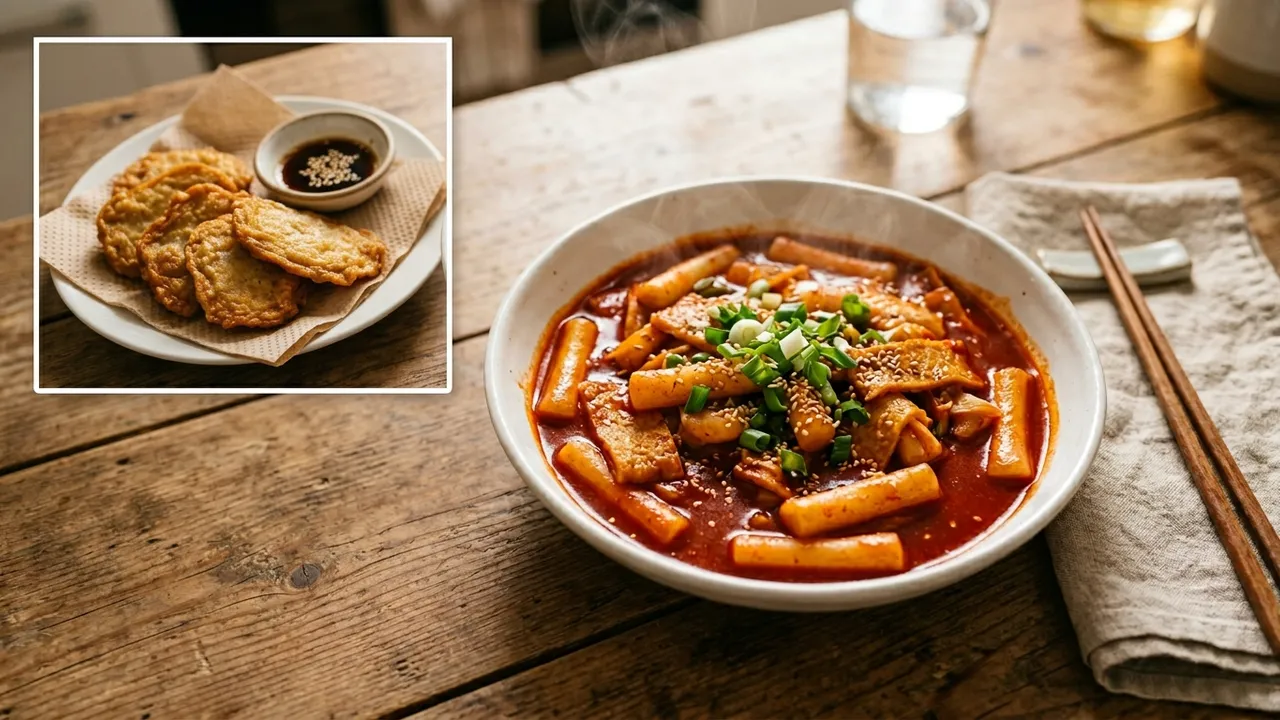
Shinjjeon Tteokbokki (신전 떡볶이) Recipe
* 이미지는 AI가 생성한 참고 이미지로, 실제 조리 결과물과 다를 수 있습니다.
This is an addictively spicy tteokbokki recipe that's 90% similar to Shinjjeon Tteokbokki (신전 떡볶이).
📝 Editor's Notes
This recipe offers a delightful way to recreate the popular sweet and spicy flavors of Shinjjeon Tteokbokki (신전 떡볶이), a beloved tteokbokki chain, right in your home.
The addition of curry powder and black pepper elevates the dish beyond simple spiciness, creating an addictively deep flavor.
The chewy texture unique to wheat rice cakes (밀떡) combined with the savory crunch of fried fish cakes (어묵 튀김) makes this dish irresistible from the first bite.
The cooking process is straightforward, making it an accessible challenge even for beginner cooks.
We highly recommend it for stress relief, a fun home party menu with friends, or especially as a warm treat on rainy or cold days.
🛒 Ingredient Tips
The core ingredients for this recipe are 'wheat rice cakes (밀떡)', 'spicy curry powder', and 'flat fish cakes (일자 어묵)'.
For the rice cakes, it's important to choose wheat rice cakes (밀떡) to achieve the soft and chewy texture characteristic of Shinjjeon Tteokbokki (신전 떡볶이), as they also absorb the sauce well.
When purchasing, look for ones that are soft, clean, and intact.
For fish cakes (어묵), thin, flat-shaped ones are ideal.
Pan-frying them briefly until golden enhances their savory flavor, making them a perfect complement to the tteokbokki.
Most importantly, the 'spicy curry powder' adds a unique charm to this tteokbokki.
You can use any commercially available spicy curry powder; just check the expiration date and choose a well-sealed product to ensure its aroma isn't too weak.
🔄 Substitution Guide
Among the key ingredients, wheat rice cakes (밀떡) can be substituted with rice cakes (쌀떡), but wheat rice cakes better capture the soft and chewy texture characteristic of Shinjjeon Tteokbokki (신전 떡볶이).
Rice cakes (쌀떡) absorb less sauce and have a chewier texture, so choose according to your preference.
Instead of flat fish cakes (일자 어묵), you can use square or bar-shaped fish cakes.
However, there might be differences in taste and texture compared to the savory crispness of thinly fried flat fish cakes.
If you don't have fish cakes, you can add richness by substituting with sausages, boiled eggs, or Vienna sausages.
Finally, spicy curry powder is the most crucial flavor element of this recipe.
If it's difficult to find, you can use regular curry powder and adjust the spiciness by adding more gochugaru (고춧가루) or Cheongyang chili peppers (청양고추).
However, please note that regular curry powder will be less spicy and have a slightly different flavor profile.
Omitting curry powder entirely will make it difficult to achieve the unique taste of Shinjjeon Tteokbokki (신전 떡볶이).
🥘 Ingredients
👨🍳 Cooking Points
Let me share three important cooking points that will determine the success of this recipe.
First, it's essential to pan-fry the fish cakes (어묵) in oil until golden brown and then transfer them to a paper towel before adding them to the tteokbokki.
This step enhances the savory flavor of the fish cakes, significantly boosting the overall taste of the tteokbokki.
Be sure to flip them over medium heat to prevent burning.
Second, precise measurement of the sauce ingredients is crucial.
Accurately follow the golden ratio of gochujang (고추장), gochugaru (고춧가루), sugar, curry powder, and soy sauce provided in the recipe, ensuring all measurements are level using a standard measuring spoon.
This is the secret to achieving the authentic Shinjjeon Tteokbokki (신전 떡볶이) flavor.
Third, reducing the sauce to the right consistency after adding the rice cakes is key.
Once the sauce boils, add the wheat rice cakes (밀떡) and cook sufficiently until they are tender.
Finally, add the black pepper and continue to stir over medium heat, reducing the sauce until it reaches your desired thickness.
Don't forget to stir well to prevent sticking to the bottom of the pan.
👨🍳 Directions
Cut the flat fish cakes (일자 어묵) in half lengthwise.
Heat oil in a pan, pan-fry the fish cakes, flipping occasionally, until golden brown, then transfer them to a paper towel to drain excess oil.
In a pan, combine 6 tbsp gochujang (고추장), 3 tbsp gochugaru (고춧가루), 5 tbsp sugar, 1-2 tbsp soy sauce, 4 tbsp spicy curry powder, and 700ml water. Mix well to create the sauce.
Once the sauce boils, add 300g of wheat rice cakes (밀떡) and cook until tender.
Once the rice cakes are cooked, add 0.5 tbsp black pepper and stir, reducing the sauce until it reaches your desired consistency.
💡 Tips
Using wheat rice cakes (밀떡) that absorb flavor well will make it more similar to Shinjjeon Tteokbokki (신전 떡볶이). It's recommended to use store-bought ground black pepper rather than freshly ground pepper.
Prepare spicy curry powder. The level of spiciness can be adjusted by adding regular gochugaru (고춧가루), Cheongyang gochugaru (청양고춧가루), or chopped Cheongyang chili peppers (청양고추).
All seasoning measurements should be level, using a standard measuring spoon.
If you like cheese tteokbokki, add mozzarella cheese to taste to the finished tteokbokki and mix well before serving.
📦 Storage & Reuse
Store leftover tteokbokki in an airtight container in the refrigerator for 2-3 days.
It's best to consume it as soon as possible, as the rice cakes can harden.
When reheating, microwave or warm gently in a pan over low heat, adding 1-2 spoons of water or broth to soften the rice cakes and revive the sauce.
Uncooked wheat rice cakes (밀떡) can be frozen for about a month, and fish cakes (어묵) can also be frozen in an airtight package.
Don't let the leftover tteokbokki sauce go to waste!
Use it to make fried rice by adding rice, shredded seaweed, and sesame oil, or enjoy it as another delicious meal by adding dumplings or ramen noodles.
🥢 Who This Is For
This sweet and spicy tteokbokki is the perfect choice for a day when you want to relieve stress or enjoy a fun time with friends.
If you're a big fan of Shinjjeon Tteokbokki (신전 떡볶이), you'll be even more satisfied knowing you can easily recreate its flavors at home.
Great side dishes to pair with this tteokbokki include savory Tuna Mayo Jumeokbap (참치마요 주먹밥 - Korean rice balls with tuna and mayo), crispy Gimmari Twigim (김말이 튀김 - fried seaweed rolls with glass noodles), and a refreshing Coolpis (쿨피스 - sweet fruit drink) to balance out the spiciness.
It's excellent as a simple late-night snack or a hearty meal.
🔥 Nutrition Info
Based on a 2-serving portion, this tteokbokki recipe is estimated to contain approximately 600-700 kcal per serving.
It has a high carbohydrate content from the main ingredients like wheat rice cakes (밀떡), sugar, and gochujang (고추장), and fat is contributed by the fish cakes (어묵) and cooking oil.
A small amount of protein can be obtained from the fish cakes and gochujang.
Specifically, gochujang (고추장) and gochugaru (고춧가루), which provide the spiciness, contain capsaicin, which can help boost metabolism.
However, their sodium content is relatively high, so it's advisable to be mindful of your intake.
Adding cheese will further increase the calorie and fat content, so if you are on a diet, we recommend controlling the portion size or omitting the cheese.
Incorporating vegetables or serving with protein-rich foods is also a good way to ensure a balanced meal.
💬 Frequently Asked Questions
- Q. What ingredients do I need for Shinjjeon Tteokbokki (신전 떡볶이)?
- Main ingredients include Wheat Rice Cakes (밀떡), Flat Fish Cakes (일자 어묵), Mozzarella Cheese, Gochujang (고추장), Gochugaru (고춧가루). The core ingredients for this recipe are 'wheat rice cakes (밀떡)', 'spicy curry powder', and 'flat fish cakes (일자 어묵)'. For the rice cakes, it's important to choose wheat rice cakes (밀떡) to achieve the soft and chewy texture characteristic of Shinjjeon Tteokbokki (신전 떡볶이), as they also absorb the sauce well. When purchasing, look for ones that are soft, clean, and intact. For fish cakes (어묵), thin, flat-shaped ones are ideal. Pan-frying them briefly until golden enhances their savory flavor, making them a perfect complement to the tteokbokki. Most importantly, the 'spicy curry powder' adds a unique charm to this tteokbokki. You can use any commercially available spicy curry powder; just check the expiration date and choose a well-sealed product to ensure its aroma isn't too weak.
- Q. What are the key tips for making Shinjjeon Tteokbokki (신전 떡볶이)?
- Let me share three important cooking points that will determine the success of this recipe. First, it's essential to pan-fry the fish cakes (어묵) in oil until golden brown and then transfer them to a paper towel before adding them to the tteokbokki. This step enhances the savory flavor of the fish cakes, significantly boosting the overall taste of the tteokbokki. Be sure to flip them over medium heat to prevent burning. Second, precise measurement of the sauce ingredients is crucial. Accurately follow the golden ratio of gochujang (고추장), gochugaru (고춧가루), sugar, curry powder, and soy sauce provided in the recipe, ensuring all measurements are level using a standard measuring spoon. This is the secret to achieving the authentic Shinjjeon Tteokbokki (신전 떡볶이) flavor. Third, reducing the sauce to the right consistency after adding the rice cakes is key. Once the sauce boils, add the wheat rice cakes (밀떡) and cook sufficiently until they are tender. Finally, add the black pepper and continue to stir over medium heat, reducing the sauce until it reaches your desired thickness. Don't forget to stir well to prevent sticking to the bottom of the pan.
- Q. How should I store leftover Shinjjeon Tteokbokki (신전 떡볶이)?
- Store leftover tteokbokki in an airtight container in the refrigerator for 2-3 days. It's best to consume it as soon as possible, as the rice cakes can harden. When reheating, microwave or warm gently in a pan over low heat, adding 1-2 spoons of water or broth to soften the rice cakes and revive the sauce. Uncooked wheat rice cakes (밀떡) can be frozen for about a month, and fish cakes (어묵) can also be frozen in an airtight package. Don't let the leftover tteokbokki sauce go to waste! Use it to make fried rice by adding rice, shredded seaweed, and sesame oil, or enjoy it as another delicious meal by adding dumplings or ramen noodles.
- Q. How many calories are in Shinjjeon Tteokbokki (신전 떡볶이)?
- Based on a 2-serving portion, this tteokbokki recipe is estimated to contain approximately 600-700 kcal per serving. It has a high carbohydrate content from the main ingredients like wheat rice cakes (밀떡), sugar, and gochujang (고추장), and fat is contributed by the fish cakes (어묵) and cooking oil. A small amount of protein can be obtained from the fish cakes and gochujang. Specifically, gochujang (고추장) and gochugaru (고춧가루), which provide the spiciness, contain capsaicin, which can help boost metabolism. However, their sodium content is relatively high, so it's advisable to be mindful of your intake. Adding cheese will further increase the calorie and fat content, so if you are on a diet, we recommend controlling the portion size or omitting the cheese. Incorporating vegetables or serving with protein-rich foods is also a good way to ensure a balanced meal.
- Q. Can I substitute ingredients in Shinjjeon Tteokbokki (신전 떡볶이)?
- Among the key ingredients, wheat rice cakes (밀떡) can be substituted with rice cakes (쌀떡), but wheat rice cakes better capture the soft and chewy texture characteristic of Shinjjeon Tteokbokki (신전 떡볶이). Rice cakes (쌀떡) absorb less sauce and have a chewier texture, so choose according to your preference. Instead of flat fish cakes (일자 어묵), you can use square or bar-shaped fish cakes. However, there might be differences in taste and texture compared to the savory crispness of thinly fried flat fish cakes. If you don't have fish cakes, you can add richness by substituting with sausages, boiled eggs, or Vienna sausages. Finally, spicy curry powder is the most crucial flavor element of this recipe. If it's difficult to find, you can use regular curry powder and adjust the spiciness by adding more gochugaru (고춧가루) or Cheongyang chili peppers (청양고추). However, please note that regular curry powder will be less spicy and have a slightly different flavor profile. Omitting curry powder entirely will make it difficult to achieve the unique taste of Shinjjeon Tteokbokki (신전 떡볶이).
💬 Comments
No comments yet. Be the first to comment!