
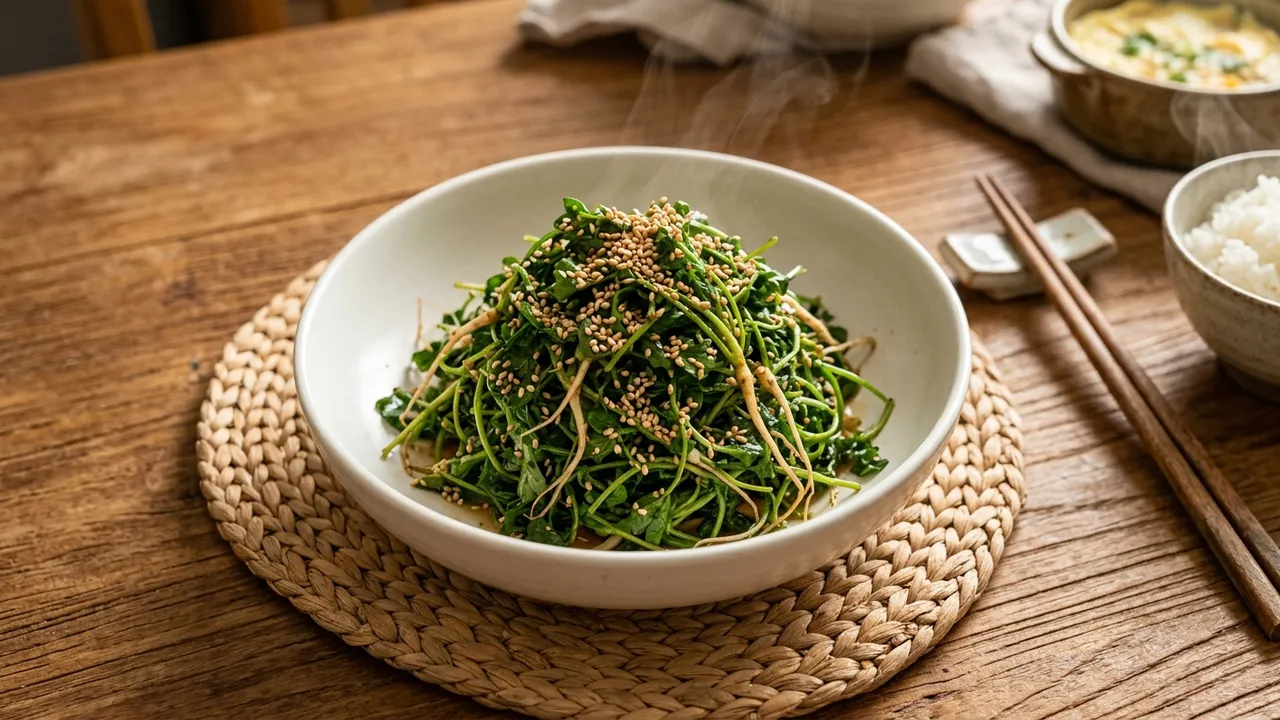
Glasswort (Saebal Namul) Salad Recipe
* 이미지는 AI가 생성한 참고 이미지로, 실제 조리 결과물과 다를 수 있습니다.
A nutritious side dish recipe for glasswort (세발나물), which is abundant and affordable.
📝 Editor's Notes
Saebal Namul Muchim is a simple yet nutritious side dish that allows you to maintain your health even in a busy daily life.
The salty yet fresh taste of glasswort (세발나물) combined with the savory perilla oil (들기름) and aromatic garlic makes it an irresistible 'rice thief.' The cooking process is straightforward, making it easy for even beginner cooks.
It's an excellent choice, especially when you crave a light and healthy meal.
While enjoyable year-round, it's particularly great for stimulating appetite in spring.
Highly recommended for those who prefer a clean and mild flavor.
🛒 Ingredient Tips
When choosing glasswort (세발나물), it's important to select ones with vibrant green leaves that are not wilted, and firm, straight stems.
Fresh, non-flimsy glasswort indicates good quality.
Remember that glasswort is a halophyte that grows in salty coastal soil, so it naturally has a salty taste, which you should consider when seasoning.
Its peak season is typically from spring to early summer, when it's most fresh and delicious.
Don't forget to wash it thoroughly, as there may be soil attached to the roots.
🔄 Substitution Guide
If glasswort (세발나물) is unavailable, you can substitute it with 'Gaetbeol Namul (갯벌나물),' which has a similar texture and the unique taste of a halophyte.
However, Gaetbeol Namul might be slightly tougher than glasswort, so you may need to blanch it for an additional 10-20 seconds.
If you wish to use other vegetables, you can use rock stonecrop (돌나물) or baby greens, but they might lack the distinctive salty and crisp taste of glasswort.
In that case, pay more attention to adjusting the salt seasoning.
While sesame oil can be used instead of perilla oil (들기름), note that it will impart a different aroma and flavor compared to the unique savory and deep notes of perilla oil.
🥘 Ingredients
👨🍳 Cooking Points
The key to delicious Saebal Namul Muchim lies in 'blanching,' 'draining thoroughly,' and 'tossing without clumping.' First, blanch the glasswort (세발나물) quickly for about 20 seconds in boiling water with a pinch of salt to preserve its crisp texture.
Remember not to over-blanch, as it will become mushy and unappetizing.
After blanching, immediately rinse it in cold water to stop the cooking process and thoroughly squeeze out all excess water to prevent the seasoning from becoming diluted and ensure a flavorful dish.
Finally, before seasoning, shake the vegetables to loosen any clumps, which helps the seasoning coat evenly and improves the texture significantly.
After blanching, taste it, and if it's too salty, soak it briefly in water before squeezing.
👨🍳 Directions
Add a pinch of salt to boiling water, then add 21 oz (600g) of lightly rinsed glasswort (세발나물).
Blanch quickly for about 20 seconds over high heat, then immediately rinse in cold water and squeeze out excess water thoroughly.
Before seasoning, gently shake the glasswort (세발나물) to loosen any clumps, as its thin strands tend to stick together.
Add 1/3 tbsp minced garlic, two pinches of salt, 2 tbsp perilla oil (들기름), and toasted sesame seeds. Gently toss and mix evenly, shaking to ensure all strands are coated.
💡 Tips
Glasswort (세발나물) is a halophyte that grows in salty soil near the coast, so it naturally has a salty taste. After blanching, taste it, and if it's too salty, soak it briefly in water before squeezing out the water.
Optionally, add a splash of vinegar for a tangy flavor. If you do, it's recommended to reduce the amount of perilla oil (들기름) by half.
Glasswort (세발나물) is rich in potassium, which helps manage swelling, and its excellent antioxidant properties aid in blood vessel health when consuming fatty foods. It also contains compounds that help with insulin secretion, making it beneficial for diabetes.
📦 Storage & Reuse
The finished Saebal Namul Muchim can be stored in an airtight container in the refrigerator for 2-3 days while maintaining freshness.
Since seasoned vegetables tend to release moisture and lose their crispness over time, it's best to consume them as soon as possible.
Freezing is not recommended as it can make the texture of the vegetables mushy.
Leftover fresh glasswort (세발나물) can be stored for a few more days by lightly removing moisture, wrapping it in a paper towel, and placing it in an airtight container in the refrigerator.
The leftover seasoned dish can be used as an ingredient for bibimbap or added to rolled omelets for a unique flavor.
🥢 Who This Is For
This Saebal Namul Muchim is perfect for those who typically enjoy healthy meals or prefer light and clean side dishes.
It particularly adds a refreshing touch when served with greasy meat dishes and makes a wonderful meal when paired with plain white rice or multi-grain rice.
It's also great for adding to bibimbap and highly recommended for individuals on a diet or those needing to manage swelling.
It's a versatile side dish that harmonizes well with any Korean meal.
🔥 Nutrition Info
This Saebal Namul Muchim is very low in calories, with an estimated 80-100 kcal per serving (based on approximately 5.3 oz or 150g).
Fat is estimated at around 7-10g from perilla oil (들기름), carbohydrates at 5-7g, and protein at 2-3g.
Notably, glasswort (세발나물) is rich in potassium, which helps excrete sodium from the body and is effective in managing swelling.
Its excellent antioxidant properties contribute to blood vessel health, and it even contains compounds that aid in insulin secretion, which can be beneficial for diabetes management.
It's a healthy, light, and highly nutritious side dish.
💬 Frequently Asked Questions
- Q. What ingredients do I need for Glasswort (Saebal Namul) Salad?
- Main ingredients include Glasswort (세발나물), Minced garlic, Salt, Perilla oil (들기름), Toasted sesame seeds. When choosing glasswort (세발나물), it's important to select ones with vibrant green leaves that are not wilted, and firm, straight stems. Fresh, non-flimsy glasswort indicates good quality. Remember that glasswort is a halophyte that grows in salty coastal soil, so it naturally has a salty taste, which you should consider when seasoning. Its peak season is typically from spring to early summer, when it's most fresh and delicious. Don't forget to wash it thoroughly, as there may be soil attached to the roots.
- Q. What are the key tips for making Glasswort (Saebal Namul) Salad?
- The key to delicious Saebal Namul Muchim lies in 'blanching,' 'draining thoroughly,' and 'tossing without clumping.' First, blanch the glasswort (세발나물) quickly for about 20 seconds in boiling water with a pinch of salt to preserve its crisp texture. Remember not to over-blanch, as it will become mushy and unappetizing. After blanching, immediately rinse it in cold water to stop the cooking process and thoroughly squeeze out all excess water to prevent the seasoning from becoming diluted and ensure a flavorful dish. Finally, before seasoning, shake the vegetables to loosen any clumps, which helps the seasoning coat evenly and improves the texture significantly. After blanching, taste it, and if it's too salty, soak it briefly in water before squeezing.
- Q. How should I store leftover Glasswort (Saebal Namul) Salad?
- The finished Saebal Namul Muchim can be stored in an airtight container in the refrigerator for 2-3 days while maintaining freshness. Since seasoned vegetables tend to release moisture and lose their crispness over time, it's best to consume them as soon as possible. Freezing is not recommended as it can make the texture of the vegetables mushy. Leftover fresh glasswort (세발나물) can be stored for a few more days by lightly removing moisture, wrapping it in a paper towel, and placing it in an airtight container in the refrigerator. The leftover seasoned dish can be used as an ingredient for bibimbap or added to rolled omelets for a unique flavor.
- Q. How many calories are in Glasswort (Saebal Namul) Salad?
- This Saebal Namul Muchim is very low in calories, with an estimated 80-100 kcal per serving (based on approximately 5.3 oz or 150g). Fat is estimated at around 7-10g from perilla oil (들기름), carbohydrates at 5-7g, and protein at 2-3g. Notably, glasswort (세발나물) is rich in potassium, which helps excrete sodium from the body and is effective in managing swelling. Its excellent antioxidant properties contribute to blood vessel health, and it even contains compounds that aid in insulin secretion, which can be beneficial for diabetes management. It's a healthy, light, and highly nutritious side dish.
- Q. Can I substitute ingredients in Glasswort (Saebal Namul) Salad?
- If glasswort (세발나물) is unavailable, you can substitute it with 'Gaetbeol Namul (갯벌나물),' which has a similar texture and the unique taste of a halophyte. However, Gaetbeol Namul might be slightly tougher than glasswort, so you may need to blanch it for an additional 10-20 seconds. If you wish to use other vegetables, you can use rock stonecrop (돌나물) or baby greens, but they might lack the distinctive salty and crisp taste of glasswort. In that case, pay more attention to adjusting the salt seasoning. While sesame oil can be used instead of perilla oil (들기름), note that it will impart a different aroma and flavor compared to the unique savory and deep notes of perilla oil.

💬 Comments
No comments yet. Be the first to comment!