
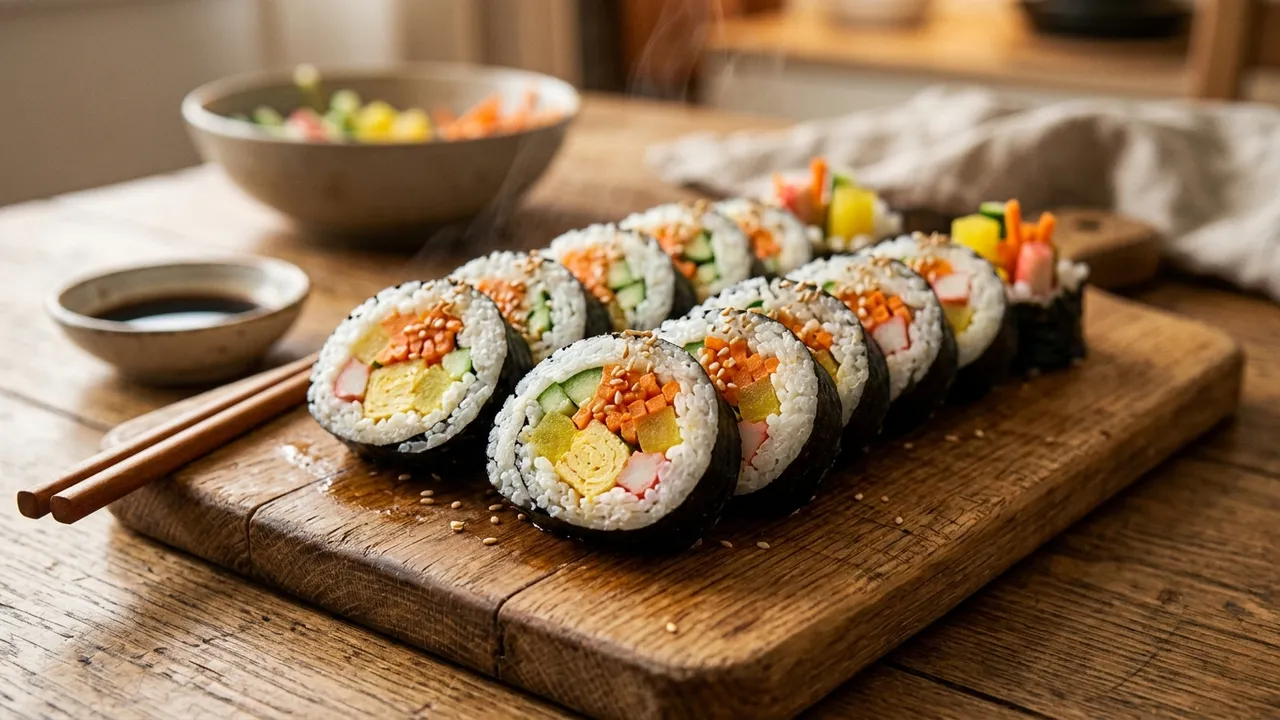
Fresh and Delicious Gimbap Packed with Vegetables Recipe
* 이미지는 AI가 생성한 참고 이미지로, 실제 조리 결과물과 다를 수 있습니다.
Today's recipe is for fresh and delicious gimbap (김밥) packed with plenty of vegetables. It's especially good when made with sliced cucumbers during spring, perfect for when you lack appetite.
📝 Editor's Notes
This recipe guides you through making fresh and delicious gimbap (김밥) generously packed with fresh vegetables.
The crisp textures of cucumber and carrot, savory egg sheet (jidan), and crab sticks mixed with mayonnaise harmonize beautifully, offering a diverse array of flavors in every bite.
It's especially good for a light and healthy meal when you lack appetite in spring, and it makes an excellent picnic lunch or weekend brunch.
The difficulty level is moderate, so even first-time gimbap rollers can follow along step-by-step to create delicious gimbap.
🛒 Ingredient Tips
The key ingredients that determine the freshness of this gimbap (김밥) are cucumber and carrot.
For cucumbers, choose those with dark green skin, firm texture, and a straight shape.
It's best to generously trim off the bitter ends.
For carrots, select ones with vibrant color, smooth surface, and firm texture, as these are fresh.
It's especially important to choose good quality carrots, as the trick is to lightly stir-fry them to preserve their crispness.
For eggs, use fresh ones where the yolk stands tall and the whites don't spread easily when cracked, as this will result in a softer and more flavorful egg sheet (jidan).
🔄 Substitution Guide
The ingredients in this gimbap (김밥) recipe can be varied according to your preference.
Instead of crab sticks, you can use canned tuna to make savory and soft tuna gimbap.
Simply drain the oil from the canned tuna, then mix it with mayonnaise and black pepper.
If you are vegetarian or want to add more protein, try mashing tofu, squeezing out the water, seasoning with salt, and stir-frying it before adding.
This will provide a plain and healthy flavor.
If you have a cucumber allergy or prefer a different texture, you can julienne bell peppers or crisp lettuce.
For a more traditional gimbap flavor, try adding braised burdock root (우엉 조림) or seasoned spinach (시금치나물), seasoned with salt and sesame oil, instead of danmuji (단무지).
🥘 Ingredients
👨🍳 Cooking Points
Remember these three key cooking points for delicious gimbap (김밥).
First, the egg sheet (jidan) should be cooked slowly and patiently over low heat.
If the heat is too high, the outside may burn while the inside remains uncooked or becomes tough.
Pour the egg mixture into the pan and cook gently over low heat for 2-3 minutes.
Second, it's crucial to 'briefly' stir-fry the carrots to maintain a fresh, crisp texture.
Over-frying will make them soggy and diminish their sweetness.
Quickly stir-fry them in an oiled pan with a pinch of salt over high heat for less than 1 minute.
Finally, when rolling gimbap, spread the rice thinly and evenly on the rough side of the seaweed, generously add the ingredients, and then roll tightly with a bamboo mat (gimbal) to ensure the shape holds well and you get beautiful gimbap.
👨🍳 Directions
Trim the ends of the cucumber, then julienne it.
Trim the ends of the carrot, then julienne it. If it's difficult to slice with a knife, you can use a mandoline or julienne peeler.
Shred the crab sticks into strands with clean hands.
Crack 7 eggs into a bowl, add 1/3 tbsp of roasted salt and a dash of black pepper, then beat well until the egg mixture flows smoothly.
Heat a pan and add a generous amount of cooking oil. Pour the beaten egg mixture into the pan and cook slowly over low heat to make an egg sheet (jidan). Lower the heat to prevent the egg from burning before it's cooked through.
Transfer the cooked egg sheet to a plate, let it cool, then julienne it.
In another pan, heat 1 tbsp of cooking oil. Add the julienned carrots and sprinkle with 1 pinch of salt, then stir-fry. Sauté only briefly to retain a fresh, crisp texture, preventing the carrots from becoming too soft.
Combine the shredded crab sticks with a dash of black pepper and 4 tbsp of mayonnaise, then mix well.
In 2 cups of cooked rice, add 1 tbsp of sesame oil, 1 pinch of roasted salt, and 1 tbsp of roasted sesame seeds. Mix well to prepare the gimbap rice.
Place a gimbap seaweed sheet on a bamboo rolling mat (gimbal) with the rough side facing up, not the smooth side. Spread a thin, even layer of seasoned rice over about two-thirds of the seaweed sheet.
Generously layer the julienned carrots, cucumber, and egg sheet on top of the rice. The cucumber is used fresh without salt to maintain its crispness.
On top, add the mayonnaise-seasoned crab sticks and 1 strip of danmuji (단무지).
Using the bamboo rolling mat, roll the gimbap tightly to prevent the ingredients from coming out.
Brush the rolled gimbap with sesame oil and sprinkle with roasted sesame seeds.
Slice into bite-sized pieces and arrange on a plate to serve.
💡 Tips
Using a mandoline or julienne peeler can make julienning ingredients easier.
Cook the egg sheet slowly over low heat to prevent burning and ensure a soft texture.
It's best to sauté carrots briefly to maintain a fresh, crisp texture.
Place the gimbap seaweed sheet with the rough side up so the rice adheres better.
Use cucumber fresh without salt seasoning to enjoy its crispness.
📦 Storage & Reuse
Gimbap (김밥) is best enjoyed immediately after preparation.
Refrigeration should be avoided if possible as the rice can harden, but if you must store it, place it in an airtight container in the refrigerator for up to one day.
Cold, hardened gimbap can be dipped in egg wash and pan-fried until golden, or gently warmed in an air fryer for a different flavor experience.
Leftover julienned cucumber or carrot can be used in salads or stir-fried with other side dishes.
If you have leftover egg sheet (jidan), chop it finely and use it as a topping for fried rice or soup.
🥢 Who This Is For
This vegetable-packed gimbap (김밥) is a wonderful dish for the whole family to enjoy.
It's especially great for spring outings or picnic lunches, as children will also happily eat their vegetables.
Its light and refreshing taste makes it perfect for a no-fuss lunch or dinner.
For accompanying dishes, we recommend warm eomuk-tang (어묵탕, fish cake soup) or refreshing miyeok-naengguk (미역냉국, cold seaweed soup).
These will further enrich the gimbap experience.
🔥 Nutrition Info
This vegetable-packed gimbap (김밥) is a satisfying and well-balanced meal.
Assuming 2 cups of cooked rice serve 4 people, the estimated calories per serving would be approximately 400-500 kcal.
Carbohydrates are estimated to be around 30-35g, protein around 15-20g, and fat around 20-25g.
Carrots and cucumbers provide vitamins A and K, along with abundant dietary fiber, which aids in gut health and boosts immunity.
Eggs are a good source of quality protein, and crab sticks also provide low-fat protein.
Since mayonnaise is high in fat, it's advisable to moderate your intake.
💬 Frequently Asked Questions
- Q. What ingredients do I need for Fresh and Delicious Gimbap Packed with Vegetables?
- Main ingredients include Cucumber, Carrot, Crab sticks, Eggs, Danmuji (단무지). The key ingredients that determine the freshness of this gimbap (김밥) are cucumber and carrot. For cucumbers, choose those with dark green skin, firm texture, and a straight shape. It's best to generously trim off the bitter ends. For carrots, select ones with vibrant color, smooth surface, and firm texture, as these are fresh. It's especially important to choose good quality carrots, as the trick is to lightly stir-fry them to preserve their crispness. For eggs, use fresh ones where the yolk stands tall and the whites don't spread easily when cracked, as this will result in a softer and more flavorful egg sheet (jidan).
- Q. What are the key tips for making Fresh and Delicious Gimbap Packed with Vegetables?
- Remember these three key cooking points for delicious gimbap (김밥). First, the egg sheet (jidan) should be cooked slowly and patiently over low heat. If the heat is too high, the outside may burn while the inside remains uncooked or becomes tough. Pour the egg mixture into the pan and cook gently over low heat for 2-3 minutes. Second, it's crucial to 'briefly' stir-fry the carrots to maintain a fresh, crisp texture. Over-frying will make them soggy and diminish their sweetness. Quickly stir-fry them in an oiled pan with a pinch of salt over high heat for less than 1 minute. Finally, when rolling gimbap, spread the rice thinly and evenly on the rough side of the seaweed, generously add the ingredients, and then roll tightly with a bamboo mat (gimbal) to ensure the shape holds well and you get beautiful gimbap.
- Q. How should I store leftover Fresh and Delicious Gimbap Packed with Vegetables?
- Gimbap (김밥) is best enjoyed immediately after preparation. Refrigeration should be avoided if possible as the rice can harden, but if you must store it, place it in an airtight container in the refrigerator for up to one day. Cold, hardened gimbap can be dipped in egg wash and pan-fried until golden, or gently warmed in an air fryer for a different flavor experience. Leftover julienned cucumber or carrot can be used in salads or stir-fried with other side dishes. If you have leftover egg sheet (jidan), chop it finely and use it as a topping for fried rice or soup.
- Q. How many calories are in Fresh and Delicious Gimbap Packed with Vegetables?
- This vegetable-packed gimbap (김밥) is a satisfying and well-balanced meal. Assuming 2 cups of cooked rice serve 4 people, the estimated calories per serving would be approximately 400-500 kcal. Carbohydrates are estimated to be around 30-35g, protein around 15-20g, and fat around 20-25g. Carrots and cucumbers provide vitamins A and K, along with abundant dietary fiber, which aids in gut health and boosts immunity. Eggs are a good source of quality protein, and crab sticks also provide low-fat protein. Since mayonnaise is high in fat, it's advisable to moderate your intake.
- Q. Can I substitute ingredients in Fresh and Delicious Gimbap Packed with Vegetables?
- The ingredients in this gimbap (김밥) recipe can be varied according to your preference. Instead of crab sticks, you can use canned tuna to make savory and soft tuna gimbap. Simply drain the oil from the canned tuna, then mix it with mayonnaise and black pepper. If you are vegetarian or want to add more protein, try mashing tofu, squeezing out the water, seasoning with salt, and stir-frying it before adding. This will provide a plain and healthy flavor. If you have a cucumber allergy or prefer a different texture, you can julienne bell peppers or crisp lettuce. For a more traditional gimbap flavor, try adding braised burdock root (우엉 조림) or seasoned spinach (시금치나물), seasoned with salt and sesame oil, instead of danmuji (단무지).
💬 Comments
No comments yet. Be the first to comment!