
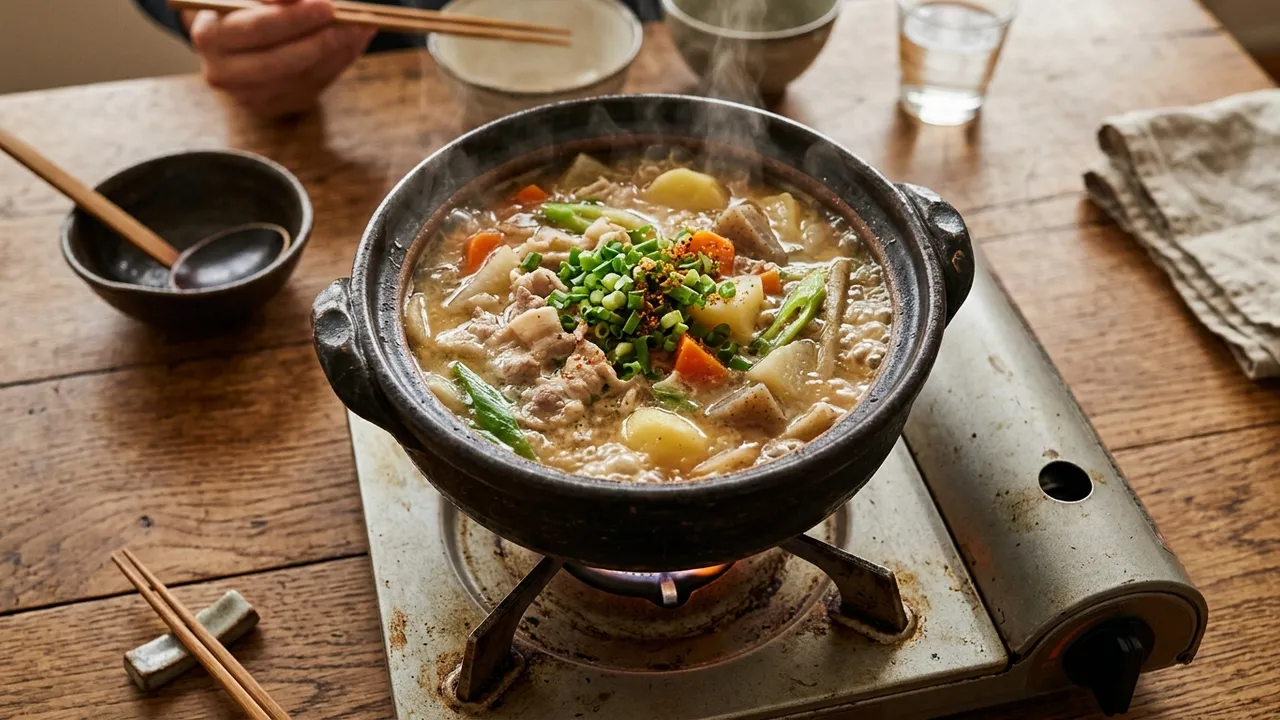
Japanese Miso Soup with Pork (Tonjiru) Recipe
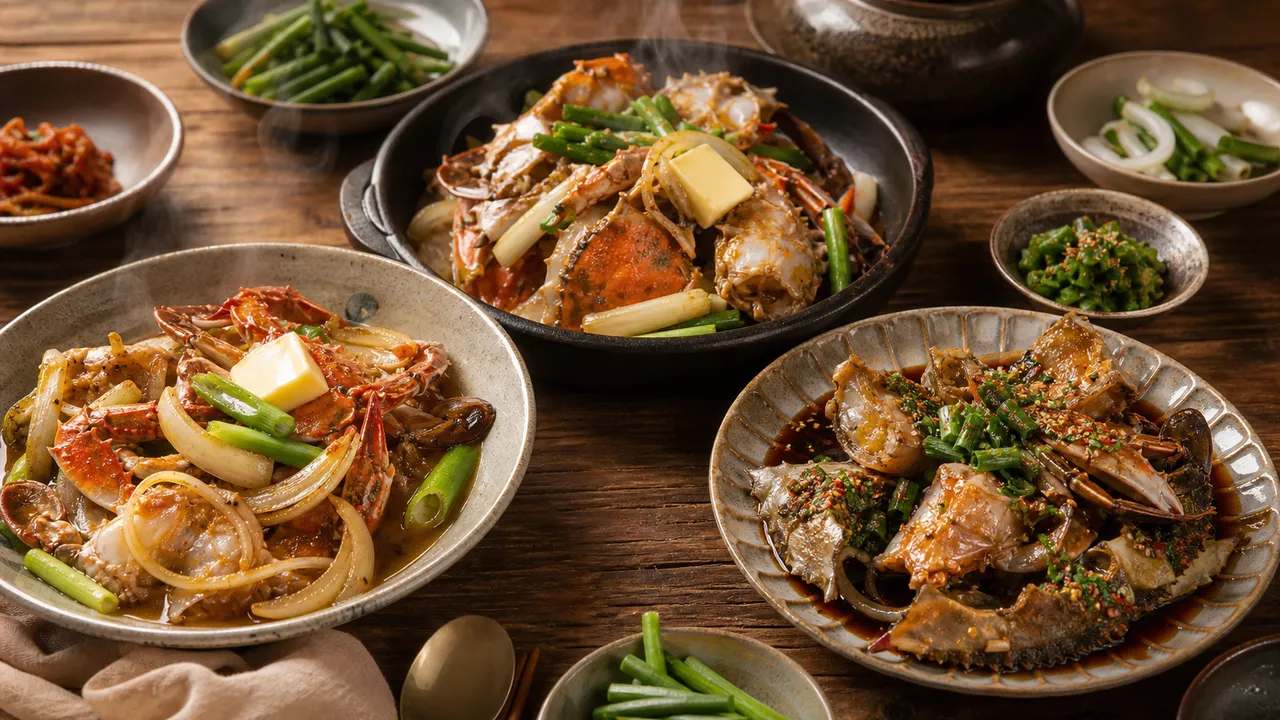
* 이미지는 AI가 생성한 참고 이미지로, 실제 조리 결과물과 다를 수 있습니다.
A top-tier Japanese winter comfort food! Here's a recipe for Tonjiru (Japanese Miso Soup with Pork).
📝 Editor's Notes
Tonjiru, a Japanese miso soup with pork, is a hearty homemade dish featuring a rich dashi stock made from kombu and katsuobushi, combined with pork and various root vegetables.
The savory yet mild flavor of miso paste, coupled with the umami from the pork, creates an exquisite taste.
It's warm and substantial, making it perfect for enjoying with family, especially on chilly days.
The difficulty level is moderate; you should be able to make it without much trouble if you prepare the ingredients well.
🛒 Ingredient Tips
Choosing high-quality key ingredients is crucial for the taste of Tonjiru.
First, select fresh, thinly sliced pork belly that has a vibrant pink color and a good balance of fat and lean meat.
Old meat can develop an unpleasant odor.
For burdock root, look for straight roots with some soil still on the skin.
You'll get a much better aroma if you prepare a whole burdock root yourself rather than buying pre-cut ones from the supermarket.
Among the various miso pastes available, using awase miso (mixed miso) will ensure a deep and savory flavor without fail.
🔄 Substitution Guide
If you prefer a lighter taste or want to reduce fat intake, you can use thinly sliced pork shoulder or pork leg instead of thinly sliced pork belly.
While the rich, savory flavor might be slightly reduced, it will contribute more to protein intake.
Burdock root has a unique aroma and crunchy texture, but if it's difficult to find or you dislike it, you can substitute it with lotus root or shiitake mushrooms.
Lotus root provides a crunchy texture, and shiitake mushrooms add a deep aroma and umami, though you won't experience the original flavor of burdock root.
Konjac can be replaced with aburaage (fried tofu pouches) or fish cakes to add a softer or chewier texture.
🥘 Ingredients
👨🍳 Cooking Points
There are three key points to making delicious Tonjiru.
First, when making the kombu dashi, remove the kombu immediately once the water starts to boil.
Boiling it for too long can result in a bitter taste.
For katsuobushi, turn off the heat and let it steep in the broth for about 5 minutes to extract a deep umami flavor.
Second, thoroughly stir-fry the thinly sliced pork belly, burdock root, and other vegetables.
The flavors will be enhanced when the meat is lightly browned and the vegetables are slightly cooked.
Third, add the miso paste after the broth has come to a full boil, and once the miso is dissolved, simmer only briefly over low heat.
Be careful not to boil it for too long, as this can cause the unique aroma of miso to dissipate.
Skimming off the foam will ensure a cleaner taste.
👨🍳 Directions
Pour 3.8 cups of water into a pot, add 0.18 oz of kombu, and turn on the heat.
Once the water starts to boil, turn off the heat and remove the kombu.
Add 0.7 oz of katsuobushi (bonito flakes) to the dashi stock (from which the kombu was removed) and let it steep.
Slice 1.8 oz of burdock root and soak it in vinegar water to remove the astringent taste.
In another pot, heat 1 tbsp of cooking oil. Add the thinly sliced pork belly and the 1.8 oz of burdock root that was soaked in vinegar water.
Add 0.3 tbsp of minced ginger and stir-fry until the pork is no longer pink.
Pour in 3 tbsp of sake, then add 7.1 oz of daikon radish, 3.5 oz of potato, 1.8 oz of carrot, and 3.5 oz of onion, and stir-fry briefly again.
Strain the prepared katsuobushi dashi stock into the pot, add 3.5 oz of konjac (which has been blanched once in hot water), and bring to a boil.
Once it starts to boil, add 2 tbsp of miso paste and dissolve it to season.
Skim off any foam that rises to the surface while boiling.
Finally, add thinly sliced white parts of green onion and season with black pepper to taste.
💡 Tips
Soaking burdock root in vinegar water helps remove its astringent taste.
Konjac should be blanched once in hot water before adding.
Skimming off the foam that rises while the soup boils will result in a cleaner taste.
📦 Storage & Reuse
Store leftover Tonjiru in an airtight container in the refrigerator for 2-3 days.
However, root vegetables like potatoes and daikon radish may become mushy if frozen.
For long-term storage, it's recommended to remove the vegetables and freeze only the broth.
When reheating, simmer gently over low heat, and add freshly sliced green onions at the end to enjoy a taste as fresh as if it were just made.
Leftover Tonjiru can also be a special treat by mixing it with rice and simmering it like a porridge.
🥢 Who This Is For
Tonjiru is an excellent dish for the whole family to gather around and enjoy on a chilly winter day when a warm soup is desired.
It's substantial enough for a full meal and also makes a wonderful accompaniment to drinks.
Served with rice, you might not even need any other side dishes.
For an even richer dining experience, you can complement it with simple Japanese pickles (tsukemono) or a sweet tamagoyaki (Japanese rolled omelet).
🔥 Nutrition Info
One serving of Tonjiru is estimated to be around 500-620 kcal.
It is rich in protein and fat from the thinly sliced pork belly, and provides dietary fiber and vitamins A, C, and K from various root vegetables like daikon radish, potato, carrot, onion, and burdock root.
Burdock root, in particular, is rich in inulin, which is beneficial for gut health, and miso paste, being a fermented food, helps in the intake of beneficial bacteria.
However, the sodium content might be somewhat high, so it's advisable to adjust the amount of miso paste or eat other side dishes with less salt.
Konjac is a low-calorie ingredient that can be enjoyed without guilt.
💬 Frequently Asked Questions
- Q. What ingredients do I need for Japanese Miso Soup with Pork (Tonjiru)?
- Main ingredients include Water, Kombu, Katsuobushi (Bonito Flakes), Burdock Root, Vinegar. Choosing high-quality key ingredients is crucial for the taste of Tonjiru. First, select fresh, thinly sliced pork belly that has a vibrant pink color and a good balance of fat and lean meat. Old meat can develop an unpleasant odor. For burdock root, look for straight roots with some soil still on the skin. You'll get a much better aroma if you prepare a whole burdock root yourself rather than buying pre-cut ones from the supermarket. Among the various miso pastes available, using awase miso (mixed miso) will ensure a deep and savory flavor without fail.
- Q. What are the key tips for making Japanese Miso Soup with Pork (Tonjiru)?
- There are three key points to making delicious Tonjiru. First, when making the kombu dashi, remove the kombu immediately once the water starts to boil. Boiling it for too long can result in a bitter taste. For katsuobushi, turn off the heat and let it steep in the broth for about 5 minutes to extract a deep umami flavor. Second, thoroughly stir-fry the thinly sliced pork belly, burdock root, and other vegetables. The flavors will be enhanced when the meat is lightly browned and the vegetables are slightly cooked. Third, add the miso paste after the broth has come to a full boil, and once the miso is dissolved, simmer only briefly over low heat. Be careful not to boil it for too long, as this can cause the unique aroma of miso to dissipate. Skimming off the foam will ensure a cleaner taste.
- Q. How should I store leftover Japanese Miso Soup with Pork (Tonjiru)?
- Store leftover Tonjiru in an airtight container in the refrigerator for 2-3 days. However, root vegetables like potatoes and daikon radish may become mushy if frozen. For long-term storage, it's recommended to remove the vegetables and freeze only the broth. When reheating, simmer gently over low heat, and add freshly sliced green onions at the end to enjoy a taste as fresh as if it were just made. Leftover Tonjiru can also be a special treat by mixing it with rice and simmering it like a porridge.
- Q. How many calories are in Japanese Miso Soup with Pork (Tonjiru)?
- One serving of Tonjiru is estimated to be around 500-620 kcal. It is rich in protein and fat from the thinly sliced pork belly, and provides dietary fiber and vitamins A, C, and K from various root vegetables like daikon radish, potato, carrot, onion, and burdock root. Burdock root, in particular, is rich in inulin, which is beneficial for gut health, and miso paste, being a fermented food, helps in the intake of beneficial bacteria. However, the sodium content might be somewhat high, so it's advisable to adjust the amount of miso paste or eat other side dishes with less salt. Konjac is a low-calorie ingredient that can be enjoyed without guilt.
- Q. Can I substitute ingredients in Japanese Miso Soup with Pork (Tonjiru)?
- If you prefer a lighter taste or want to reduce fat intake, you can use thinly sliced pork shoulder or pork leg instead of thinly sliced pork belly. While the rich, savory flavor might be slightly reduced, it will contribute more to protein intake. Burdock root has a unique aroma and crunchy texture, but if it's difficult to find or you dislike it, you can substitute it with lotus root or shiitake mushrooms. Lotus root provides a crunchy texture, and shiitake mushrooms add a deep aroma and umami, though you won't experience the original flavor of burdock root. Konjac can be replaced with aburaage (fried tofu pouches) or fish cakes to add a softer or chewier texture.
💬 Comments
No comments yet. Be the first to comment!