
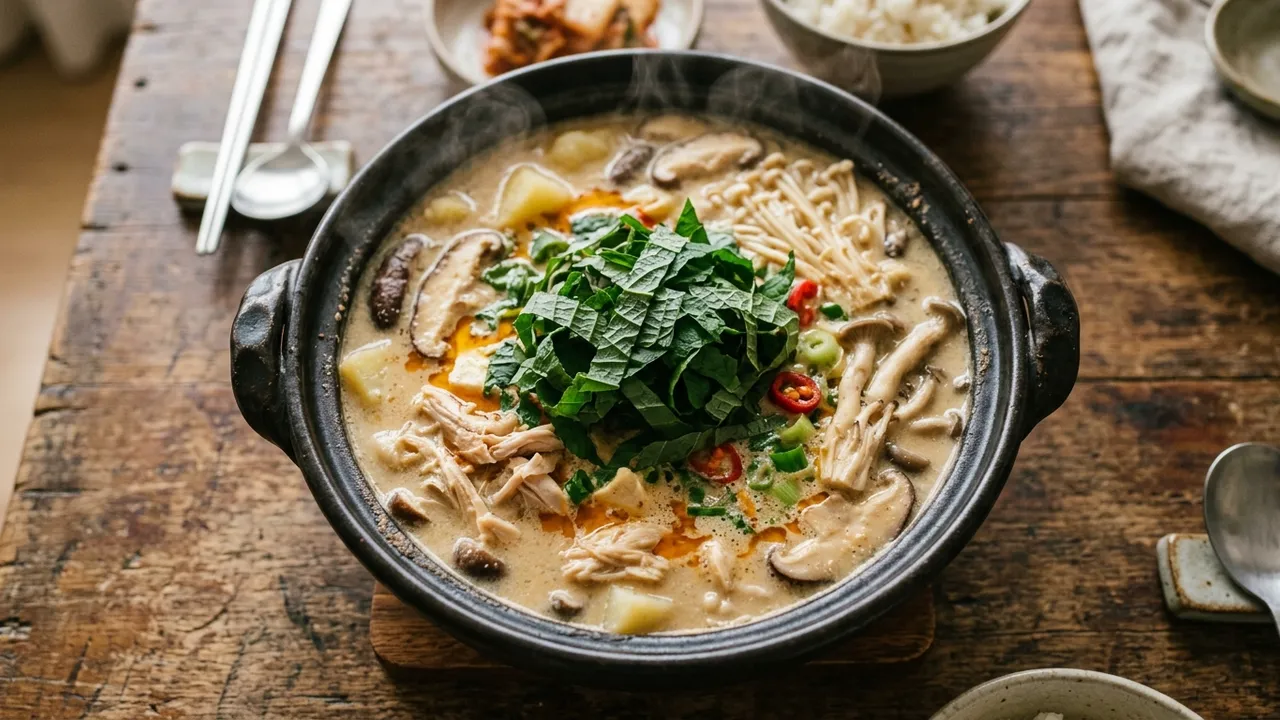
Mushroom Deulkkaetang (Perilla Seed Soup) Recipe
* 이미지는 AI가 생성한 참고 이미지로, 실제 조리 결과물과 다를 수 있습니다.
An immunity-boosting mushroom perilla seed soup for seasonal changes.
📝 Editor's Notes
Mushroom Deulkkaetang (Perilla Seed Soup) is a savory and smooth one-bowl meal, perfect for boosting immunity during seasonal changes.
The chewy texture of various mushrooms combined with the deep, nutty flavor of perilla seed powder makes for a hearty and satisfying dish.
The secret sauce, made with blended tofu and Korean radish (mu), elevates the soup's richness and provides a healthy sense of fullness.
The cooking process is not complicated, making it easy for beginner cooks to try.
Its mild flavor ensures it can be enjoyed by all ages.
It's an excellent choice for a warm meal or a healthy family dinner during crisp autumn and cold winter months.
This dish is characterized by its clean yet profound flavors, highlighting the natural taste of its ingredients.
🛒 Ingredient Tips
Fresh mushrooms are key to the flavor of Mushroom Deulkkaetang.
For shiitake mushrooms, choose ones with caps that aren't too wide open, are plump, and have a firm texture.
For oyster mushrooms, select those with clean stems and that are tightly clustered, indicating freshness.
Enoki mushrooms should be white and not slimy.
For perilla seed powder (deulkkae-garu), using raw (unroasted) perilla seed powder will yield a richer and deeper nutty flavor.
While roasted perilla seed powder is sometimes used, note that its nutty profile is slightly different.
For tofu, a soft-textured, Korean-made pan-frying tofu is suitable for achieving the right consistency and flavor for the secret sauce.
🔄 Substitution Guide
If you find it difficult to obtain certain ingredients or have allergies, consider using substitutes.
For mushrooms, in addition to shiitake and oyster mushrooms, you can substitute or add king oyster mushrooms, button mushrooms, or buna-shimeji mushrooms.
Each mushroom offers a slightly different texture and aroma, but they will all complement the nutty flavor of the deulkkaetang.
Instead of perilla seed powder (deulkkae-garu), you can use roasted soybean powder or pine nut powder for a different kind of nutty flavor.
Soybean powder will result in a thicker, plainer taste, while pine nut powder adds a more luxurious flavor but can be more expensive.
Tofu can be replaced with soft tofu or silken tofu for a much smoother texture, but be aware that the sauce might become thinner, so adjust the amount of water accordingly.
You can season the soup with fish sauce or salt instead of salted shrimp (saeujeot), but the umami kick from saeujeot might be slightly less prominent.
🥘 Ingredients
👨🍳 Cooking Points
There are three key cooking points for this recipe.
First, when making the 'secret sauce,' it's crucial to blend all ingredients, including tofu and Korean radish (mu), very finely in a blender.
This ensures a smooth consistency and well-balanced nutty flavor in the deulkkaetang.
Second, the key to stir-frying the mushrooms is to do so over 'high heat' without oil.
Stir-frying until the mushrooms start releasing their liquid helps bring out their unique deep flavor and chewy texture.
This is the secret to maximizing the mushrooms' umami!
Finally, add the perilla seed powder (deulkkae-garu) in the final stage of stir-frying the mushrooms to absorb their moisture and infuse a rich nutty flavor.
Be careful not to add it too early, as it might burn or clump.
Adjust the consistency with water and season with salt at the very end to achieve a perfect Mushroom Deulkkaetang.
👨🍳 Directions
Quickly rinse 7 shiitake mushrooms in water, then cut off the stems with scissors and set them aside for use in doenjang jjigae (Korean soybean paste stew). Slice the caps into 5mm (approx. 1/4 inch) thick pieces.
Trim the tough ends of 1 package of oyster mushrooms and tear them by hand.
Thinly slice 3 perilla leaves (kkaennip).
In a blender, combine 1 block (300g) tofu, 100g Korean radish (mu), 3 tbsp whole sesame seeds, 1 tbsp salted shrimp (saeujeot), 1 tbsp Korean soup soy sauce (guk-ganjang), 2 cloves garlic, and 2 cups water. Blend until smooth to create the secret sauce.
In a pan, add the sliced shiitake mushrooms and torn oyster mushrooms. Dissolve 1 tbsp Korean soup soy sauce (guk-ganjang) in 1/3 cup water and add it to the pan. Stir-fry over high heat without oil until the mushrooms begin to release their liquid.
Once the mushrooms start releasing liquid, add 5 tbsp perilla seed powder (deulkkae-garu). Mix well and stir-fry, allowing the perilla powder to absorb the moisture and infuse flavor into the mushrooms.
Transfer the stir-fried mushrooms to a pot and pour in the prepared secret sauce.
Add more water to achieve your desired consistency and season with 1 pinch of fine salt to taste.
Add 1 handful of enoki mushrooms and 3 sliced Cheongyang chili peppers (cheongyang-gochu). Bring to a boil once, then it's ready to serve.
💡 Tips
Shiitake mushroom stems can be used in other dishes, such as doenjang jjigae (Korean soybean paste stew).
Stir-frying mushrooms over high heat without oil can enhance their deep flavor.
Adding perilla seed powder helps absorb moisture from the mushrooms while enriching their flavor.
Adjust the consistency of the soup with water and season to taste with fine salt.
📦 Storage & Reuse
Once prepared, Mushroom Deulkkaetang can be stored in an airtight container in the refrigerator for 3-4 days.
For longer storage, portion it into individual servings and freeze.
It can be kept in the freezer for about a month.
To reheat, transfer to a pot and simmer gently over low heat, or microwave.
If the consistency becomes too thick, add a little water to reach your desired thickness.
As for leftover ingredients, shiitake mushroom stems can be used as a broth base for doenjang jjigae or finely chopped and added to fried rice.
Perilla leaves (kkaennip) can be used to make kkaennip jangajji (pickled perilla leaves) or as an aromatic herb in other dishes.
Sliced Cheongyang chili peppers (cheongyang-gochu) can be frozen for convenient use whenever needed.
🥢 Who This Is For
This Mushroom Deulkkaetang is an excellent choice when you need to manage your immunity during seasonal changes or desire a warm and hearty meal.
Its mild and smooth flavor makes it suitable as a nutritious meal for children.
Vegetarians can also enjoy it by omitting the salted shrimp (saeujeot) and seasoning solely with Korean soup soy sauce (guk-ganjang).
Recommended side dishes include freshly cooked multi-grain rice or brown rice.
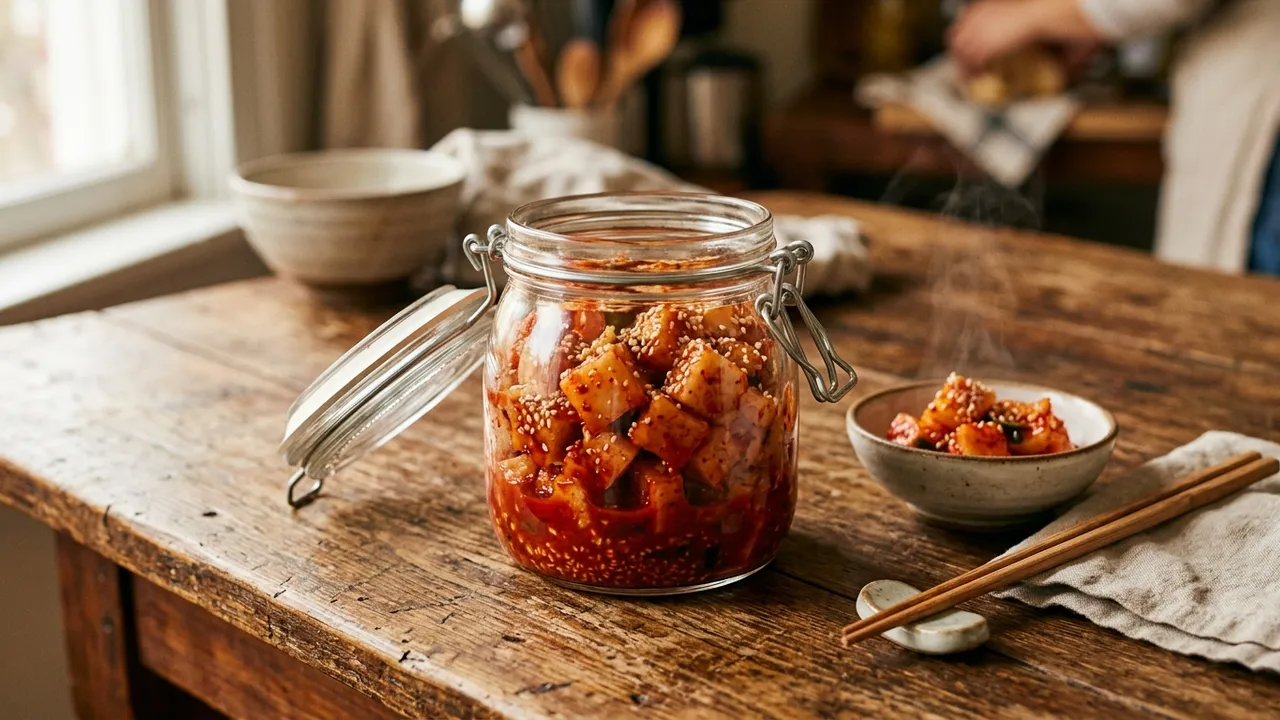
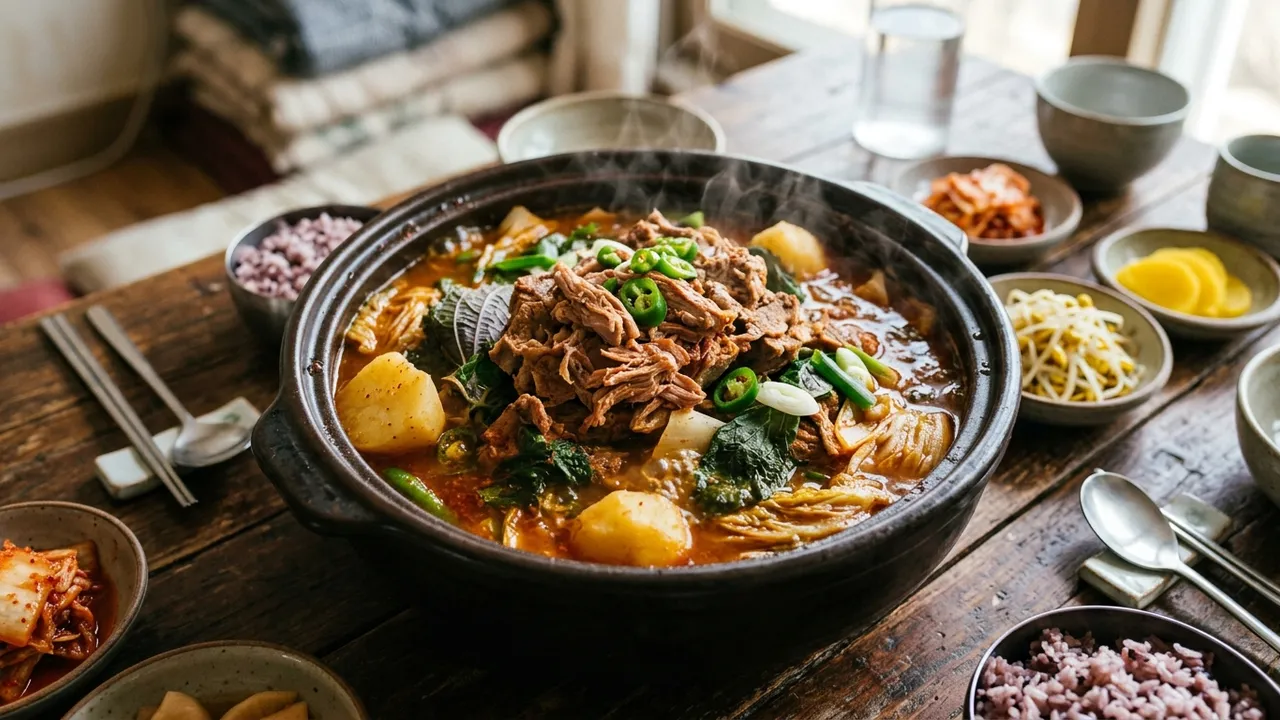
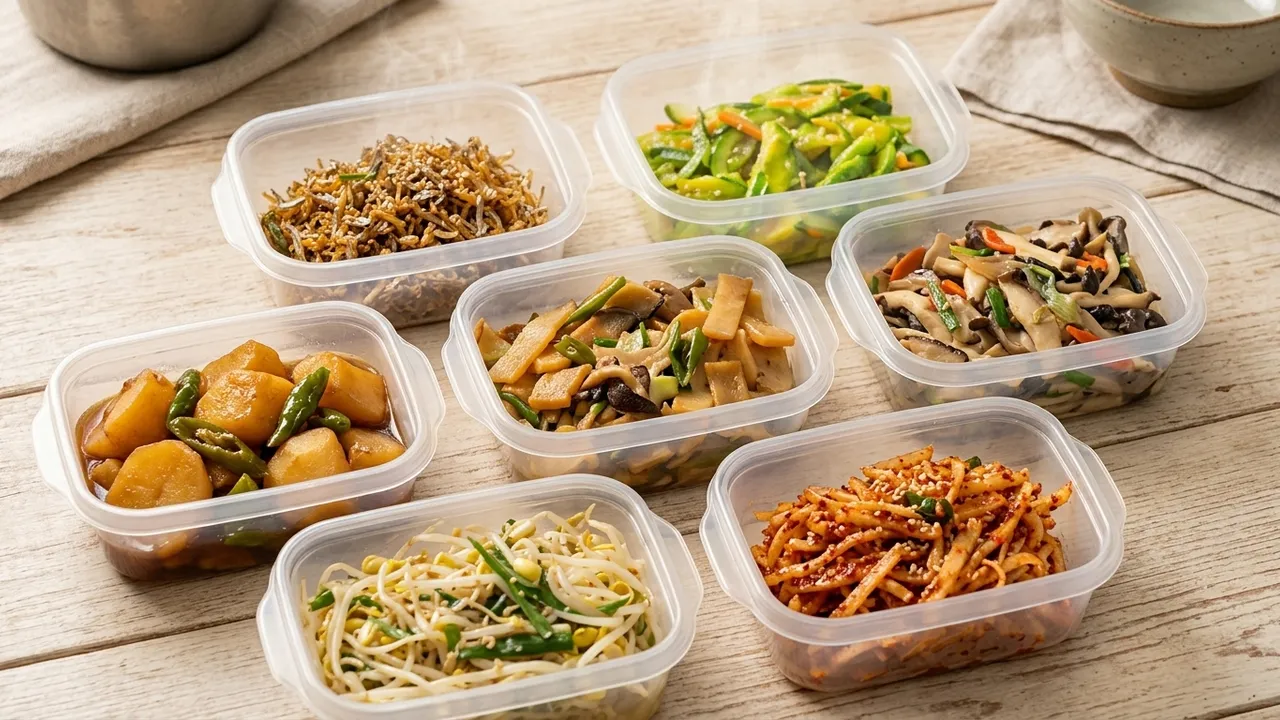
Serving it with crunchy kkakdugi (diced radish kimchi), well-fermented baechu kimchi (napa cabbage kimchi), and sweet and sour pickled radish (mu-jangajji) will complete a more abundant dining table.
It truly represents the essence of healthy and warm home cooking.
🔥 Nutrition Info
This Mushroom Deulkkaetang, based on 3-4 servings, is estimated to have approximately 200-250 kcal per serving.
It is estimated to contain about 10-15g of protein, 12-18g of fat, and 10-15g of carbohydrates.
Mushrooms are particularly rich in beta-glucans, which help boost immunity, and are high in dietary fiber, making them excellent for gut health.
Perilla seed powder (deulkkae-garu) is rich in omega-3 fatty acids, positively impacting cardiovascular health, while tofu provides high-quality plant-based protein and calcium.
Korean radish (mu) is abundant in Vitamin C and digestive enzymes, aiding digestion and reducing fatigue.
Overall, it's a healthy one-bowl meal that provides a balanced intake of various nutrients, including dietary fiber, protein, essential fatty acids, and vitamins.
💬 Frequently Asked Questions
- Q. What ingredients do I need for Mushroom Deulkkaetang (Perilla Seed Soup)?
- Main ingredients include Shiitake mushrooms, Oyster mushrooms, Perilla leaves (kkaennip), Tofu, Korean radish (mu). Fresh mushrooms are key to the flavor of Mushroom Deulkkaetang. For shiitake mushrooms, choose ones with caps that aren't too wide open, are plump, and have a firm texture. For oyster mushrooms, select those with clean stems and that are tightly clustered, indicating freshness. Enoki mushrooms should be white and not slimy. For perilla seed powder (deulkkae-garu), using raw (unroasted) perilla seed powder will yield a richer and deeper nutty flavor. While roasted perilla seed powder is sometimes used, note that its nutty profile is slightly different. For tofu, a soft-textured, Korean-made pan-frying tofu is suitable for achieving the right consistency and flavor for the secret sauce.
- Q. What are the key tips for making Mushroom Deulkkaetang (Perilla Seed Soup)?
- There are three key cooking points for this recipe. First, when making the 'secret sauce,' it's crucial to blend all ingredients, including tofu and Korean radish (mu), very finely in a blender. This ensures a smooth consistency and well-balanced nutty flavor in the deulkkaetang. Second, the key to stir-frying the mushrooms is to do so over 'high heat' without oil. Stir-frying until the mushrooms start releasing their liquid helps bring out their unique deep flavor and chewy texture. This is the secret to maximizing the mushrooms' umami! Finally, add the perilla seed powder (deulkkae-garu) in the final stage of stir-frying the mushrooms to absorb their moisture and infuse a rich nutty flavor. Be careful not to add it too early, as it might burn or clump. Adjust the consistency with water and season with salt at the very end to achieve a perfect Mushroom Deulkkaetang.
- Q. How should I store leftover Mushroom Deulkkaetang (Perilla Seed Soup)?
- Once prepared, Mushroom Deulkkaetang can be stored in an airtight container in the refrigerator for 3-4 days. For longer storage, portion it into individual servings and freeze. It can be kept in the freezer for about a month. To reheat, transfer to a pot and simmer gently over low heat, or microwave. If the consistency becomes too thick, add a little water to reach your desired thickness. As for leftover ingredients, shiitake mushroom stems can be used as a broth base for doenjang jjigae or finely chopped and added to fried rice. Perilla leaves (kkaennip) can be used to make kkaennip jangajji (pickled perilla leaves) or as an aromatic herb in other dishes. Sliced Cheongyang chili peppers (cheongyang-gochu) can be frozen for convenient use whenever needed.
- Q. How many calories are in Mushroom Deulkkaetang (Perilla Seed Soup)?
- This Mushroom Deulkkaetang, based on 3-4 servings, is estimated to have approximately 200-250 kcal per serving. It is estimated to contain about 10-15g of protein, 12-18g of fat, and 10-15g of carbohydrates. Mushrooms are particularly rich in beta-glucans, which help boost immunity, and are high in dietary fiber, making them excellent for gut health. Perilla seed powder (deulkkae-garu) is rich in omega-3 fatty acids, positively impacting cardiovascular health, while tofu provides high-quality plant-based protein and calcium. Korean radish (mu) is abundant in Vitamin C and digestive enzymes, aiding digestion and reducing fatigue. Overall, it's a healthy one-bowl meal that provides a balanced intake of various nutrients, including dietary fiber, protein, essential fatty acids, and vitamins.
- Q. Can I substitute ingredients in Mushroom Deulkkaetang (Perilla Seed Soup)?
- If you find it difficult to obtain certain ingredients or have allergies, consider using substitutes. For mushrooms, in addition to shiitake and oyster mushrooms, you can substitute or add king oyster mushrooms, button mushrooms, or buna-shimeji mushrooms. Each mushroom offers a slightly different texture and aroma, but they will all complement the nutty flavor of the deulkkaetang. Instead of perilla seed powder (deulkkae-garu), you can use roasted soybean powder or pine nut powder for a different kind of nutty flavor. Soybean powder will result in a thicker, plainer taste, while pine nut powder adds a more luxurious flavor but can be more expensive. Tofu can be replaced with soft tofu or silken tofu for a much smoother texture, but be aware that the sauce might become thinner, so adjust the amount of water accordingly. You can season the soup with fish sauce or salt instead of salted shrimp (saeujeot), but the umami kick from saeujeot might be slightly less prominent.
💬 Comments
No comments yet. Be the first to comment!