
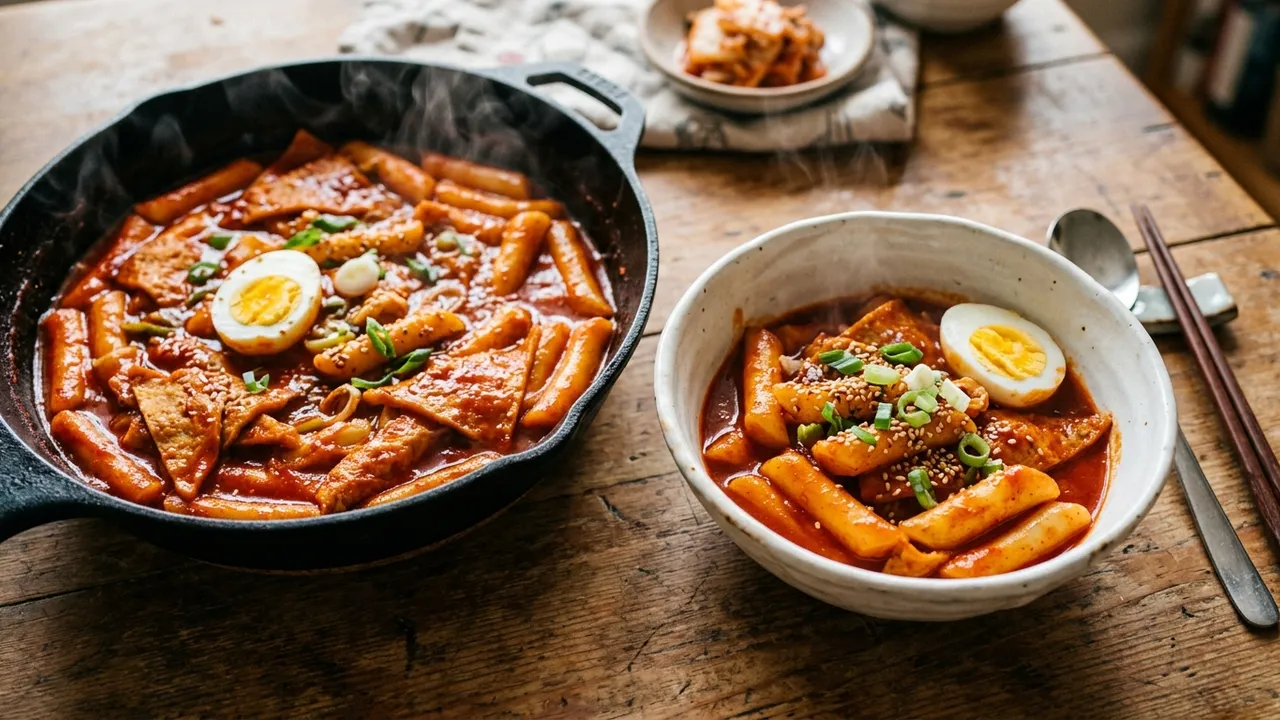
Homemade Tteokbokki Recipe
* 이미지는 AI가 생성한 참고 이미지로, 실제 조리 결과물과 다를 수 있습니다.
This is a golden ratio seasoning tteokbokki (떡볶이) recipe that brings back that nostalgic taste.
📝 Editor's Notes
This recipe for tteokbokki (떡볶이) brings back nostalgic memories, combining both rice tteok (쌀떡) and wheat tteok (밀가루떡) for a delightful blend of chewiness and tenderness.
It features a golden ratio of gochujang (고추장), soy sauce, gochugaru (고춧가루), and sugar, creating a sweet, spicy, and deeply savory flavor profile.
Plenty of green onions and cabbage are added for a refreshing and clean taste.
With its easy-to-follow difficulty, this dish is perfect for days when you need warm comfort or for enjoying good times with friends.
🛒 Ingredient Tips
There are key ingredients that determine the taste of tteokbokki (떡볶이).
First, choose a 'Made in KOREA' gochujang (고추장) that offers a deep flavor, as it will form the robust base of your tteokbokki (떡볶이) sauce.
For fish cakes, the key is to use cheaper ones with a stronger, distinct aroma, rather than premium ones.
These will infuse into the tteokbokki (떡볶이) sauce, providing a richer flavor.
Finally, green onions are essential for the refreshing and clean taste of tteokbokki (떡볶이), so be generous and add plenty.
🔄 Substitution Guide
If you lack ingredients or desire a different taste, several substitutions are possible.
If you only have rice tteok (쌀떡) or wheat tteok (밀가루떡), you can make it with just one type.
However, using only rice tteok will result in a chewier and heartier dish, while using only wheat tteok will make it softer and absorb the sauce better.
MSG enhances umami but is not strictly necessary for a delicious outcome.
You can boost umami by using kelp or anchovy broth, or substitute sugar with oligo syrup or corn syrup for sweetness.
Keep in mind that these might offer less sweetness or result in a different consistency than sugar.
🥘 Ingredients
👨🍳 Cooking Points
Here are three important cooking tips for delicious tteokbokki (떡볶이).
First, it's crucial to first add the sauce, green onions, and cabbage and simmer thoroughly to create a vegetable broth.
This step deepens the flavor of the sauce.
Second, after adding the tteok (떡), simmer it over medium heat, not too high, to allow the sauce to penetrate well.
This helps maintain the tteok's chewy texture without it becoming mushy.
Third, if the sauce reduces too much, you'll need the knack to adjust the consistency by adding small amounts of water.
Check approximately every 5 minutes and adjust to your preferred thickness.
👨🍳 Directions
Slice the green onions diagonally or halve them lengthwise, depending on your preference. Cut the cabbage and fish cakes into bite-sized pieces.
In a pot, combine 1 liter of water, 1/3 cup (1.8 oz) soy sauce, 1/3 cup (2.5 oz) brown sugar, 1/3 cup (2.8 oz) gochujang (고추장), 1/3 cup (0.7 oz) coarse gochugaru (고춧가루), and 1/3 cup (1.0 oz) fine gochugaru (고춧가루). Mix well.
Add the sliced green onions (3 cups / 8.5 oz) and cabbage (2 cups / 5.6 oz) to the sauce and boil to create a broth.
Lightly rinse the rice tteok (쌀떡) (4 cups / 14.1 oz) and wheat tteok (밀가루떡) (4 cups / 14.1 oz) under running water, separating any pieces that are stuck together.
Once the broth boils, add the rinsed tteokbokki tteok and 3 hard-boiled eggs, and continue to boil.
Add 1/2 tbsp (0.2 oz) MSG to taste. Once the broth with the tteok boils, add the fish cakes (4 sheets / 5.6 oz).
Continue to boil until the sauce thickens. If the sauce reduces too much, add more water to achieve your desired consistency.
Boil until the sauce thickens to a rich consistency, then your delicious tteokbokki (떡볶이) is complete.
💡 Tips
MSG is less effective in seasonings with a lot of sugar, but it is effective in dishes with less sweetness. For dishes like tteokbokki (떡볶이), which contain a lot of sugar, it's fine not to add it, but adding it will enhance the umami flavor.
Green onions play a crucial role in tteokbokki (떡볶이) flavor, so it's best to add plenty without hesitation.
Using cheaper fish cakes with a stronger distinct flavor, rather than premium ones, can enhance the overall flavor of tteokbokki (떡볶이).
Gochujang (고추장) is the most important ingredient that determines the taste of tteokbokki (떡볶이) sauce, so choose a 'Made in KOREA' product carefully.
📦 Storage & Reuse
Leftover tteokbokki (떡볶이) can be stored in an airtight container in the refrigerator for 2-3 days.
Freezing is not recommended as it can alter the texture of the tteok (떡), but if you must, portion out slightly undercooked tteok and freeze it.
To reheat, gently simmer with a little added water or broth, stirring occasionally, to enjoy it as fresh.
The leftover tteokbokki (떡볶이) sauce is also delicious for making fried rice with rice, crumbled nori, and sesame oil, or for boiling with ramen noodles.
🥢 Who This Is For
This tteokbokki (떡볶이) is perfect for a weekend family lunch or a casual gathering with friends.
Its sweet and spicy flavor makes it a favorite for all ages.
It will create an even more special memory when enjoyed with its warm sauce on a rainy day.
Recommended side dishes include crispy gim-mari (김말이)튀김 (fried seaweed rolls), refreshing Coolpis (쿨피스) (a Korean fruit drink), and hearty jumeokbap (주먹밥) (rice balls).
It will make for a perfect meal.
🔥 Nutrition Info
Based on 4-5 servings, each portion of this tteokbokki (떡볶이) is estimated to be approximately 650-750 kcal.
Carbohydrates, mainly from rice tteok (쌀떡), wheat tteok (밀가루떡), and sugar, make up the highest proportion at about 100-120g.
Protein intake from hard-boiled eggs and fish cakes can be around 15-20g.
Fat is expected to be about 10-15g from fish cakes and seasonings.
While a small amount of dietary fiber and vitamins C and K can be obtained from cabbage and green onions, the sodium content may be high due to gochujang (고추장) and soy sauce, so it is advisable to be mindful of serving sizes.
💬 Frequently Asked Questions
- Q. What ingredients do I need for Homemade Tteokbokki?
- Main ingredients include Rice tteok (쌀떡), Wheat tteok (밀가루떡), Fish cakes, Cabbage, Green onions. There are key ingredients that determine the taste of tteokbokki (떡볶이). First, choose a 'Made in KOREA' gochujang (고추장) that offers a deep flavor, as it will form the robust base of your tteokbokki (떡볶이) sauce. For fish cakes, the key is to use cheaper ones with a stronger, distinct aroma, rather than premium ones. These will infuse into the tteokbokki (떡볶이) sauce, providing a richer flavor. Finally, green onions are essential for the refreshing and clean taste of tteokbokki (떡볶이), so be generous and add plenty.
- Q. What are the key tips for making Homemade Tteokbokki?
- Here are three important cooking tips for delicious tteokbokki (떡볶이). First, it's crucial to first add the sauce, green onions, and cabbage and simmer thoroughly to create a vegetable broth. This step deepens the flavor of the sauce. Second, after adding the tteok (떡), simmer it over medium heat, not too high, to allow the sauce to penetrate well. This helps maintain the tteok's chewy texture without it becoming mushy. Third, if the sauce reduces too much, you'll need the knack to adjust the consistency by adding small amounts of water. Check approximately every 5 minutes and adjust to your preferred thickness.
- Q. How should I store leftover Homemade Tteokbokki?
- Leftover tteokbokki (떡볶이) can be stored in an airtight container in the refrigerator for 2-3 days. Freezing is not recommended as it can alter the texture of the tteok (떡), but if you must, portion out slightly undercooked tteok and freeze it. To reheat, gently simmer with a little added water or broth, stirring occasionally, to enjoy it as fresh. The leftover tteokbokki (떡볶이) sauce is also delicious for making fried rice with rice, crumbled nori, and sesame oil, or for boiling with ramen noodles.
- Q. How many calories are in Homemade Tteokbokki?
- Based on 4-5 servings, each portion of this tteokbokki (떡볶이) is estimated to be approximately 650-750 kcal. Carbohydrates, mainly from rice tteok (쌀떡), wheat tteok (밀가루떡), and sugar, make up the highest proportion at about 100-120g. Protein intake from hard-boiled eggs and fish cakes can be around 15-20g. Fat is expected to be about 10-15g from fish cakes and seasonings. While a small amount of dietary fiber and vitamins C and K can be obtained from cabbage and green onions, the sodium content may be high due to gochujang (고추장) and soy sauce, so it is advisable to be mindful of serving sizes.
- Q. Can I substitute ingredients in Homemade Tteokbokki?
- If you lack ingredients or desire a different taste, several substitutions are possible. If you only have rice tteok (쌀떡) or wheat tteok (밀가루떡), you can make it with just one type. However, using only rice tteok will result in a chewier and heartier dish, while using only wheat tteok will make it softer and absorb the sauce better. MSG enhances umami but is not strictly necessary for a delicious outcome. You can boost umami by using kelp or anchovy broth, or substitute sugar with oligo syrup or corn syrup for sweetness. Keep in mind that these might offer less sweetness or result in a different consistency than sugar.
💬 Comments
No comments yet. Be the first to comment!