
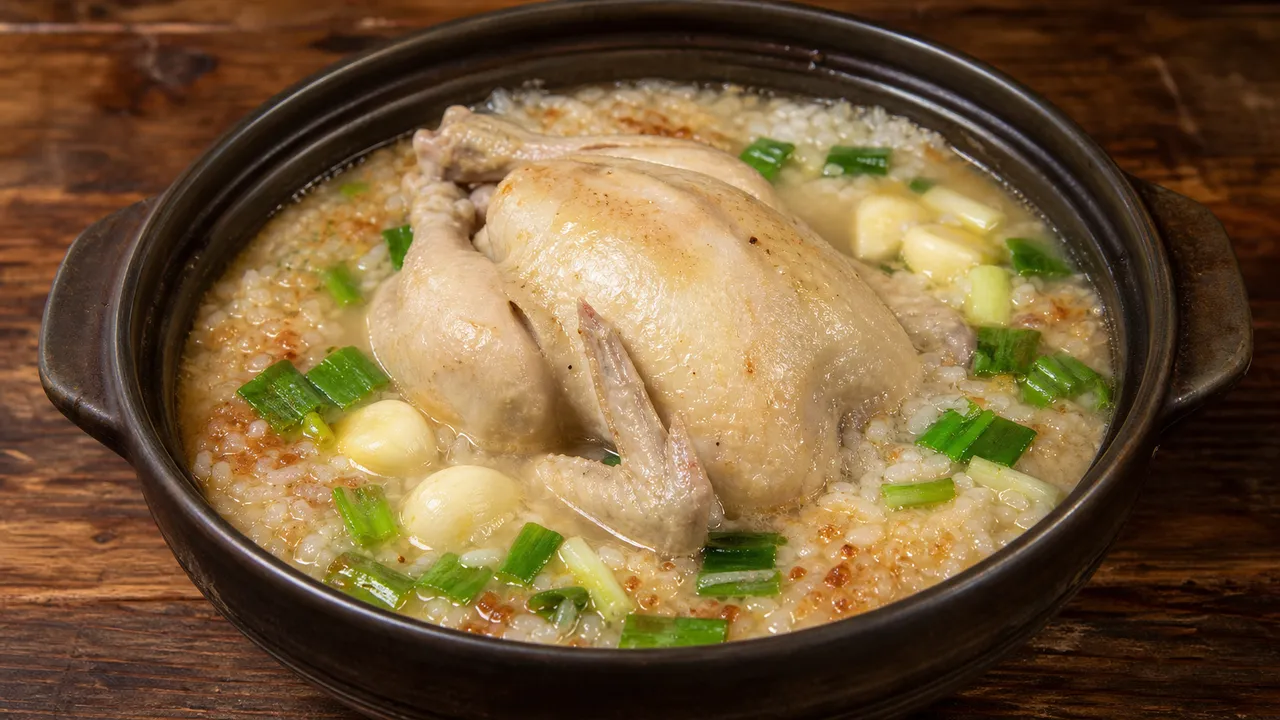
Nurungji Baeksuk (누룽지백숙): A Nourishing Korean Chicken Soup w
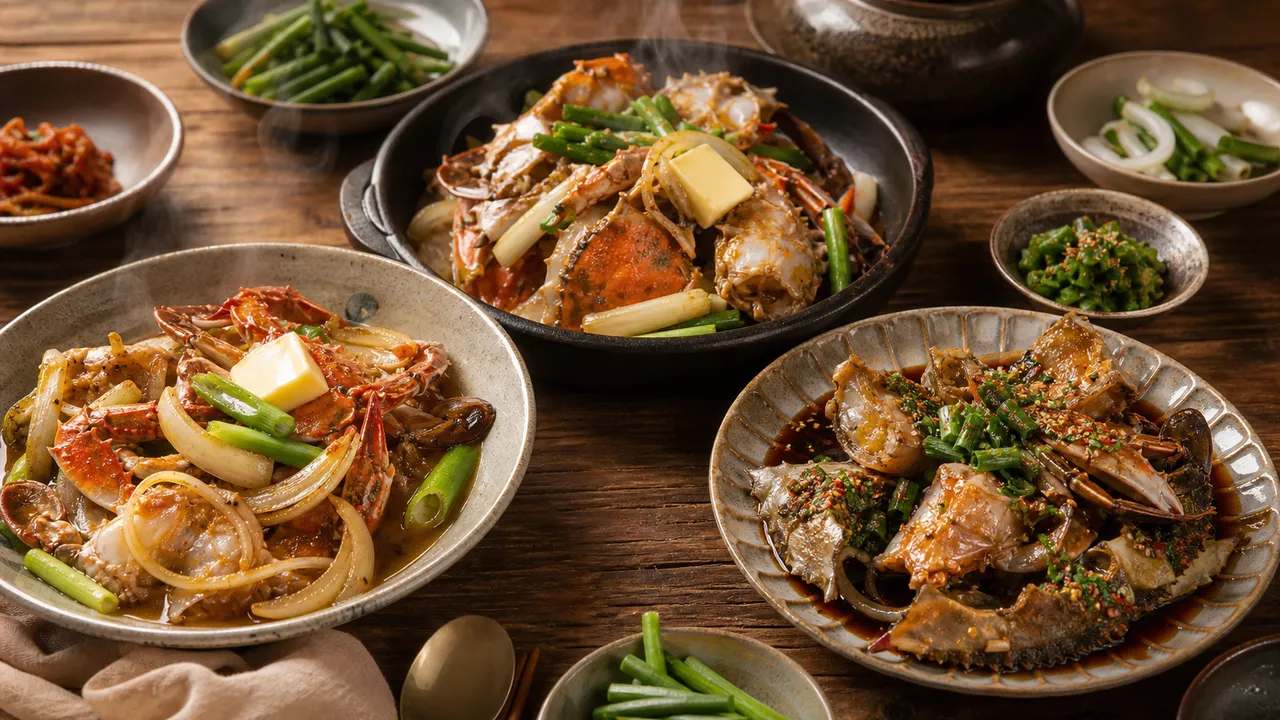
* 이미지는 AI가 생성한 참고 이미지로, 실제 조리 결과물과 다를 수 있습니다.
Nurungji baeksuk (누룽지백숙) is a hearty Korean restorative dish made with chicken, glutinous rice, and whole garlic cloves. It can be made in either a pot or a pressure rice cooker, and the key is spreading the glutinous rice evenly so it does not clump. Start it over high heat to create savory, chewy nurungji (누룽지), Korean scorched rice, in this deeply satisfying recipe.
📋 3 recipes — Select to view
A deeply savory Korean chicken soup with crispy scorched rice, made in a deep pan or heavy pot.
📝 Editor's Notes
With just one chicken and 1 cup of sweet rice, you can make this hearty Korean chicken soup with crispy scorched rice in about 40 minutes.
A single heavy pot lets you make both the tender chicken soup and the crispy scorched rice at once, so the difficulty is moderate, but the steps are easy to follow even for less experienced cooks.
The clean, savory chicken broth combines with nutty rice browned on the bottom of the pot for a filling yet soothing meal.
It is especially good during seasonal changes, hot summer days when you feel drained, or cold winter days when you want something warming.
🛒 Ingredient Tips
Choose a small chicken for soup, about 1 2/3 lb, or a young chicken; it will turn tender and fully cook in about 30 minutes.
Fresh chicken should have pale, resilient skin and little odor.
For the sweet rice, plump, glossy new-crop grains will make the crispy scorched rice chewier and nuttier.
Choose firm garlic cloves without sprouts, and Korean large green onion (대파) with a long, thick white section.
In spring and fall, fresh domestic chicken tends to have good moisture and gives the soup a deeper flavor.
🔄 Substitution Guide
If you do not have sweet rice, you can substitute regular short-grain rice, though it will be less sticky and chewy than sweet rice and the crispy bottom may turn a bit crisper.
Whole garlic cloves can be replaced with minced garlic, but since the aroma releases faster, use slightly less.
Duck can be used instead of chicken for a richer, fattier broth, though its distinctive aroma may not appeal to everyone.
If you have a garlic allergy, a few slices of ginger can help reduce any gamey smell; the garlic’s sweetness will be missing, but the soup will taste cleaner.
🥘 Ingredients
👨🍳 Cooking Points
Heat control is the most important part.
Bring the pot to a boil over high heat, then be sure to reduce it to medium, cover, and maintain that heat for 30 minutes so the chicken stays tender instead of tough.
Spread the sweet rice evenly across the bottom of the pot so the browned layer forms evenly.
To make the crispy scorched rice (누룽지), cook over high heat for 5 minutes; when the sizzling subsides and the pot becomes quieter, gently lift the bottom to check.
Do not leave it too long, or it may smell burnt.
Catching the moment when it turns golden is key.
👨🍳 Directions
Insert your fingers into the cavity near the tailbone area of the chicken to remove any remaining innards, then rinse thoroughly under running water and split the chicken in half.
Rinse the sweet rice, soak it if desired, and spread it evenly across the bottom of a deep pan or heavy pot. The rice can also be used without soaking.
Lay the chicken open on top of the rice, then add the whole garlic cloves, onion, Korean large green onion (대파), and filtered water.
Turn the heat to high. Once it comes to a boil, cover with a lid, reduce to medium heat, and simmer for 30 minutes.
Remove the green onion and onion, add the salt, cover again, and simmer for another 5 minutes.
Ladle only the broth into a bowl, then return the pan to high heat for 5 minutes to form the crispy scorched rice (누룽지).
Invert the finished chicken and crispy rice onto a plate, pour the reserved broth over it, and serve.
💡 Tips
If adding the salt midway through cooking feels inconvenient, you can add it from the beginning.
When making the crispy scorched rice (누룽지), listen for the sizzling to fade as the edges turn golden. Once it becomes quiet, gently lift the bottom to check whether the rice has crisped.
If the broth splatters too much, set the lid slightly askew to reduce splattering.
📦 Storage & Reuse
Store the broth and crispy rice separately in the refrigerator and eat within 2 to 3 days.
For freezing, portion and freeze only the broth for up to 2 weeks; the crispy rice loses its texture when frozen, so it is best eaten fresh.
To reheat, pour the broth into a pot and warm it over low heat, then add the rice to bring back some of the original nutty flavor.
Shred any leftover chicken meat and toss it with chives and vinegared gochujang (초고추장) for a chicken salad, or simmer it into porridge for breakfast the next day.
🥢 Who This Is For
This is a good choice for family members who need a restorative meal, older adults with sensitive digestion, or children who have moved on from baby food.
It also works well as a hearty late-night meal or weekend lunch.
Serve it with refreshing white kimchi (백김치), fresh chive salad, or tangy cucumber salad to balance the richness.
A small salt dip with finely sliced Cheongyang chili peppers (청양고추) also brings out the savory flavor.
🔥 Nutrition Info
For 2 servings, the whole dish is roughly around 950 calories, or about 475 calories per serving.
Each serving provides about 35 g of protein, mostly from the chicken, along with about 18 g of fat and around 35 g of carbohydrates from the sweet rice.
Chicken breast and leg meat contain essential amino acids, niacin, and vitamin B6, which support muscle maintenance.
Allicin from the whole garlic may help with fatigue recovery and circulation.
Eating the broth also helps replenish fluids and minerals, making this a suitable restorative meal.
💬 Frequently Asked Questions
- Q. What ingredients do I need for Nurungji Baeksuk (누룽지백숙): A Nourishing Korean Chicken Soup with Scorched Rice, Made in a Pot or Pressure Rice Cooker?
- Main ingredients include whole chicken, about 1.65 lb, filtered water, glutinous rice, about 5.6 oz, whole garlic cloves, about 2 oz, large green onion, about 1.8 oz. Choose a young chicken around 1.65 lb so the meat stays tender and cooks through in about 30 minutes. Fresh chicken should have smooth skin and clear pink flesh. For glutinous rice, choose plump, milky-white grains so the nurungji (누룽지) turns chewy and toasty. Fresh whole garlic cloves should feel firm with skins that are not dried out; they give the broth a cleaner, more delicate aroma. Use a green onion with a long, thick white section for a deeper natural sweetness in the broth.
- Q. What are the key tips for making Nurungji Baeksuk (누룽지백숙): A Nourishing Korean Chicken Soup with Scorched Rice, Made in a Pot or Pressure Rice Cooker?
- The most important step is spreading the glutinous rice in one even layer across the bottom of the pot. If it clumps, the center may stay undercooked. Bring it to a boil over high heat first, then reduce to medium and hold it there for 30 minutes. If you keep the heat high the whole time, the broth will reduce too much and the bottom may burn. For the nurungji (누룽지), ladle out the broth first, then cook over high heat for 5 minutes. When the sizzling fades and the pan becomes quiet, gently lift the rice to check that the bottom is golden before turning off the heat.
- Q. How should I store leftover Nurungji Baeksuk (누룽지백숙): A Nourishing Korean Chicken Soup with Scorched Rice, Made in a Pot or Pressure Rice Cooker?
- Store the broth and solids separately in airtight containers and refrigerate for 2 to 3 days. For longer storage, remove the meat from the bones and freeze it with the broth for up to 2 to 3 weeks. To reheat, warm the broth first, then add the chicken and simmer briefly so the meat does not dry out. Leftover glutinous rice nurungji (누룽지) can be simmered with broth into a soothing porridge for breakfast the next day.
- Q. How many calories are in Nurungji Baeksuk (누룽지백숙): A Nourishing Korean Chicken Soup with Scorched Rice, Made in a Pot or Pressure Rice Cooker?
- Each serving is estimated at about 480 kcal. The chicken provides roughly 35 g of protein, which can support muscle recovery and energy. With the skin included, fat is around 18 g, while the glutinous rice contributes about 40 g of carbohydrates, making this a complete one-bowl meal. Garlic contains allicin, which is associated with circulation and fatigue recovery, while chicken is rich in niacin, B vitamins, and selenium. If the broth feels too rich, skim off the solidified fat to lower the calories slightly.
- Q. Can I substitute ingredients in Nurungji Baeksuk (누룽지백숙): A Nourishing Korean Chicken Soup with Scorched Rice, Made in a Pot or Pressure Rice Cooker?
- If you do not have glutinous rice, you can use regular short-grain rice, though the nurungji (누룽지) will be less chewy and more crisp. Minced garlic can replace whole garlic cloves, but use only half as much because the flavor is stronger and it can make the broth cloudy. If a whole chicken feels like too much, use 4 to 5 chicken drumsticks instead. They cook faster and stay very tender, though the broth will be slightly less deep because there are fewer bones. You can also add a piece of dried kelp to the filtered water for extra umami.
💬 Comments
No comments yet. Be the first to comment!