
Chef Jung Ho-young's Special Hanjeongsik: A Veteran's Table
* 이미지는 AI가 생성한 참고 이미지로, 실제 조리 결과물과 다를 수 있습니다.
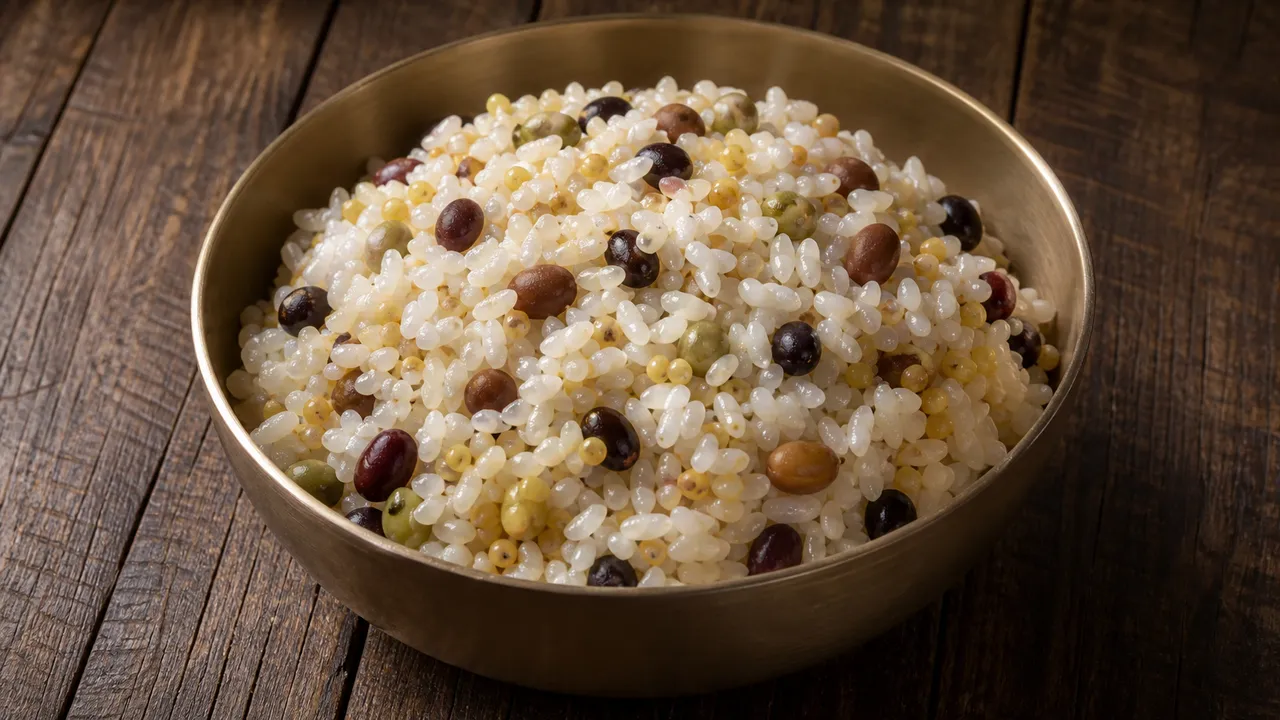
A Hanjeongsik (Korean full course meal) specially prepared by Chef Jung Ho-young, filled with the cherished memories of elderly veterans. This hearty meal recreates the flavors of nostalgia, featuring Millet Rice, Meat Soup, Braised Tilefish, and a Peach Dessert.
📋 4 recipes — Select to view
Healthy millet and bean rice that brings back warm, nostalgic flavors.
📝 Editor's Notes
This is a very easy and healthy rice dish that can be prepared in about 40 minutes with just rice, millet, and beans in a rice cooker.
The more you chew, the nuttier and subtly sweet flavor of the millet emerges, complemented by the mildness of the beans.
It's a satisfying meal on its own, even on days when side dishes are scarce.
Adding just a tiny amount of salt enhances the natural flavors of the ingredients.
It's especially well-suited for crisp autumn and winter days, served with a warm bowl of soup, and is also good for breakfast as it's easy to digest.
🛒 Ingredient Tips
Choose millet grains that are uniform in size, vibrant yellow, and thoroughly dry.
Older millet may have a bitter taste or an off-odor, so be sure to smell it; freshly harvested millet in the autumn is the most fragrant and nutty.
For rice, select grains that are transparent and have few cracks.
For beans, use black soybeans (seoritae, 서리태) or bammitekong (밥밑콩, a type of cooking bean).
Choose beans with taut skins, a glossy sheen, and no signs of insect damage.
Old beans will not soften easily, no matter how long they are cooked.
🔄 Substitution Guide
If millet (조) is unavailable, you can substitute it with foxtail millet (기장) or sorghum (수수), which have similar textures.
Foxtail millet is slightly stickier, while sorghum has a reddish hue and a robust, somewhat astringent, nutty flavor.
If you have a bean allergy or find beans difficult to acquire, you can substitute them with chestnuts, ginkgo nuts, or kidney beans.
Adding chestnuts will impart a distinct sweet flavor.
Substituting white rice with brown rice will increase dietary fiber, but you'll need to use more water and soak it longer, and be aware that the texture may be slightly coarser.
Salt can be omitted if desired.
🥘 Ingredients
👨🍳 Cooking Points
Since millet grains are small and tend to float, rinse them gently in a fine-mesh sieve to prevent them from washing away.
For the cooking water, use slightly less than you would for regular white rice, aiming for about 1 centimeter above the surface of the rice.
Beans are hard, so they should be pre-soaked for at least 30 minutes before cooking with the rice to ensure they cook through.
For 2 cups of rice, two to three pinches of salt are sufficient.
Once cooked, turn off the heat and let it steam for about 10 minutes to allow the millet to plump up and the rice grains to become fluffy.
Skipping the steaming process can result in undercooked or mushy rice.
👨🍳 Directions
Thoroughly wash the rice and millet.
Place the washed rice, millet, and beans into a pot, then add water to the appropriate level for cooking rice.
Add a pinch of salt and cook the warm millet and bean rice.
💡 Tips
For even more delicious millet and bean rice, ensure the steaming process is perfectly timed.
📦 Storage & Reuse
Cooked rice can be cooled down, then divided into single servings and stored in airtight containers for up to 2 days in the refrigerator or 2 weeks in the freezer.
To reheat frozen rice, sprinkle a drop or two of water on it and microwave for about 2 minutes to make it moist as if freshly cooked.
Leftover millet and bean rice can also be mixed with sesame oil and shredded seaweed to form rice balls (jumeokbap), or hot water can be poured over it to enjoy a hearty sungnyung (숭늉, scorched rice tea) instead of nurungji (누룽지, scorched rice).
🥢 Who This Is For
This dish is easy to digest and mild, making it suitable for the whole family, from children to the elderly.
It's also a great option for those on a diet or needing to manage blood sugar levels.
Its mild flavor pairs exceptionally well with hearty stews like doenjang-jjigae (된장찌개, soybean paste stew), cheonggukjang (청국장, fermented soybean paste stew), or siraegi-guk (시래기국, dried radish greens soup).
Served with nabak-kimchi (나박김치, thinly sliced radish kimchi) or ganjang-jorim kongjaban (간장조림 콩자반, braised black beans in soy sauce), it creates a simple yet refined meal.
🔥 Nutrition Info
Per serving (approximately 130 grams), it is estimated to be around 230 to 260 kcal.
Carbohydrates account for most of it, at approximately 48 grams.
Thanks to the beans, protein content is about 6 to 7 grams, and fat is relatively low at around 1.5 grams.
Millet is richer in dietary fiber, magnesium, and iron than white rice, and beans contain plant-based protein and isoflavones.
Compared to white rice, which is primarily refined carbohydrates, this dish raises blood sugar levels slowly, promoting longer-lasting satiety, and also provides B vitamins.
The low amount of salt means the sodium intake is not a significant concern.
💬 Frequently Asked Questions
- Q. What ingredients do I need for Chef Jung Ho-young's Special Hanjeongsik: A Veteran's Table of Memories?
- Main ingredients include Rice, Millet (jo), Beans (kong), Salt. Choose millet (jo) with uniform, vibrant yellow grains and minimal broken pieces. Old millet (jo) can be bitter, so freshly hulled millet is recommended. Select rice that is transparent, lustrous, and has few cracked grains. For beans (kong), look for those with fewer wrinkles on the skin and plump, fresh kernels. When washing millet (jo), remove any light husks that float to the surface to reduce off-flavors. Using Seoritae (서리태) black soybeans or 'bapmit-kong' (밥밑콩, a type of bean traditionally cooked with rice) will enhance the sweetness.
- Q. What are the key tips for making Chef Jung Ho-young's Special Hanjeongsik: A Veteran's Table of Memories?
- Since millet (jo) grains are small and easily washed away, the key is to gently rinse them in a fine-mesh sieve. To prevent beans (kong) from cooking hard, soak them for about 30 minutes beforehand so they cook tenderly with the rice. Millet (jo) absorbs more water, so use slightly more water than you would for white rice (baekmi) – enough to just cover the back of your hand when placed on top of the grains. Start cooking over high heat; once it boils, reduce to low heat and simmer for 12-15 minutes, then turn off the heat and let it steam for 10 minutes to achieve fluffy rice. Add only a very small amount of salt to avoid masking the natural flavors of the ingredients.
- Q. How should I store leftover Chef Jung Ho-young's Special Hanjeongsik: A Veteran's Table of Memories?
- After cooling, portion leftover millet rice (jobap) into airtight containers. It can be refrigerated for 2-3 days or frozen for up to 2-3 weeks. When reheating, add a spoonful of water or ice and microwave until warm; it will become as moist as freshly cooked rice. Hardened millet rice (jobap) can be used to make porridge by adding plenty of water, or turn it into fried rice with eggs and vegetables. You can also make a comforting savory scorched rice soup (nurungji-bap) with it.
- Q. How many calories are in Chef Jung Ho-young's Special Hanjeongsik: A Veteran's Table of Memories?
- Per serving (approx. 7.4 oz / 210g), the estimated calories are about 300-340 kcal. Carbohydrates are the main energy source, around 65-70g. Thanks to the beans (kong), protein is about 7-9g, and fat is relatively low at about 2-3g. Millet (jo) is richer in dietary fiber, magnesium, and iron than white rice (baekmi), and beans add plant-based protein and isoflavones. This dish causes a more gradual rise in blood sugar compared to consuming only refined carbohydrates, offering a mild yet balanced meal. However, millet rice (jobap) alone may not provide sufficient protein, so it is recommended to supplement with soup or side dishes.
- Q. Can I substitute ingredients in Chef Jung Ho-young's Special Hanjeongsik: A Veteran's Table of Memories?
- If millet (jo) is difficult to find, you can substitute sorghum (susu, 수수) or foxtail millet (gijang, 기장) for a similar mixed grain rice feel. Foxtail millet (gijang) grains are slightly larger and softer than millet, while sorghum (susu) has a reddish hue and a more pronounced chewiness. If you have a bean allergy or can't find beans, you can substitute kidney beans (gangnang-kong, 강낭콩), green peas, or chestnuts to add sweetness and a fluffy texture. Substituting white rice (baekmi) with brown rice (hyeonmi) increases dietary fiber but requires longer soaking and more water to prevent it from becoming hard. Salt can be omitted; instead, adding a piece of dried kelp (dashima, 다시마) when cooking will provide a subtle umami flavor that replaces the saltiness.
💬 Comments
No comments yet. Be the first to comment!