
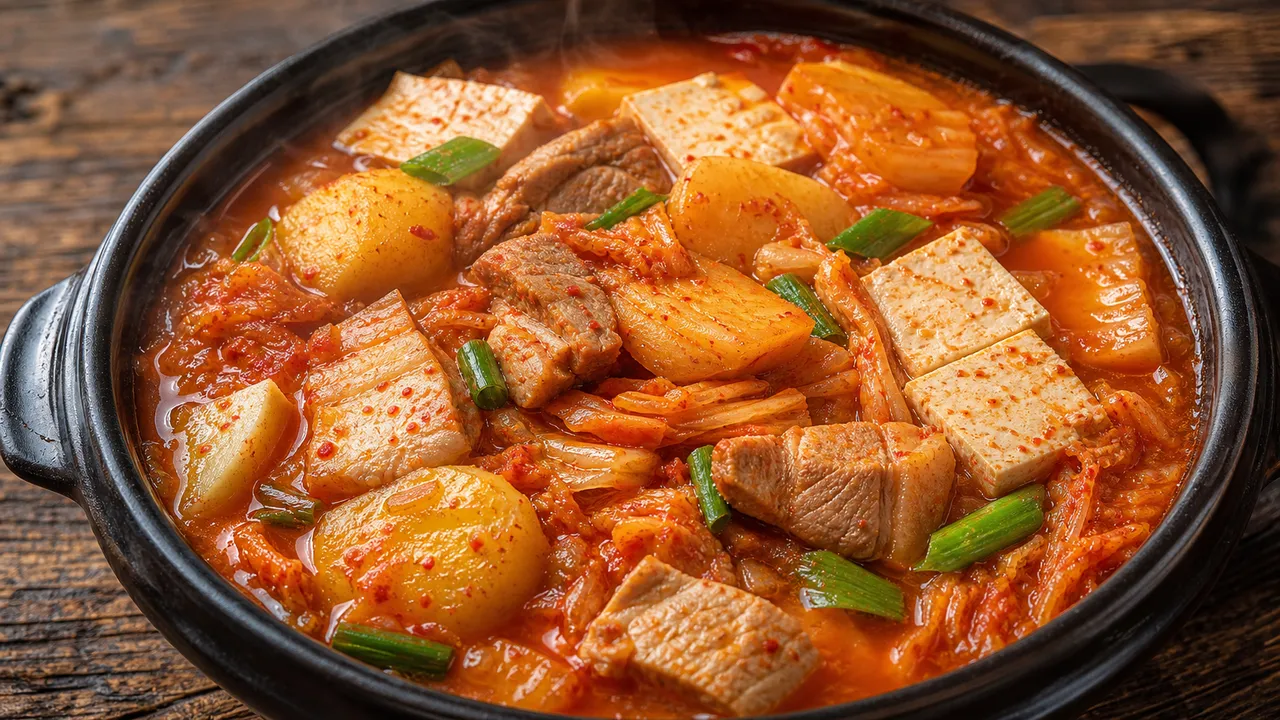
Hearty Pork and Potato Kimchi Jjigae (김치찌개) with Rich Umami
* 이미지는 AI가 생성한 참고 이미지로, 실제 조리 결과물과 다를 수 있습니다.
A hearty kimchi jjigae (김치찌개) with deep, rich umami, made with pork, aged kimchi, and potatoes.
📝 Editor's Notes
This hearty, home-style kimchi jjigae (김치찌개) can be completed in just 40 minutes with pork belly, aged kimchi, and fluffy potatoes.
The difficulty level is suitable for beginners.
By stir-frying gochugaru (고춧가루) in the pork fat, you get a clean, deep umami flavor without any bitterness.
The potatoes thicken the broth naturally, making one bowl incredibly satisfying.
It's especially delicious when made with perfectly aged kimchi during the chilly autumn and winter months, perfect for a family dinner or a gathering with drinks.
🛒 Ingredient Tips
Kimchi is half the battle for kimchi jjigae (김치찌개).
Choose aged kimchi (신김치) that has a pleasant sourness and a refreshing, well-fermented taste without any off-flavors to achieve a deep broth.
Kimchi that's been aged for 2-3 weeks and has softened slightly is ideal.
While pork belly provides a rich, fatty umami, pork shoulder or front leg meat are good alternatives if you prefer a leaner dish.
For potatoes, starchy, floury varieties (like 'sumi' potatoes) are recommended, as they release starch into the broth, creating a natural thickness.
Choose firm potatoes without sprouts or green spots on the surface.
🔄 Substitution Guide
If pork belly's fat content is a concern, you can substitute it with pork shoulder or front leg meat.
This will result in a lighter, less oily broth, though the umami might be slightly less intense.
If your aged kimchi (신김치) isn't sour enough, add a few drops of vinegar or some kimchi brine to enhance the tanginess.
If anchovy broth is unavailable, you can use kelp broth or rice water; rice water will make the broth richer and thicker.
Tuna extract (참치액) can be replaced with a small amount of guk-ganjang (국간장, Korean soup soy sauce) or fish sauce.
For mirin (미림), substituting with sake (cheongju, 청주) plus a pinch of sugar will have a similar effect in removing gamey odors.
🥘 Ingredients
👨🍳 Cooking Points
First, stir-fry the pork belly over medium heat until the fat renders golden.
Sautéing the kimchi and gochugaru (고춧가루) in this rendered fat eliminates bitterness, bringing out a clean umami flavor and a beautiful red color.
Second, cut the potatoes into thick pieces, soak them in cold water for 10 minutes to remove starch, then drain thoroughly.
This prevents them from breaking apart during boiling and allows them to absorb flavor better.
Third, after pouring in the broth, cover and simmer over medium heat for 10 minutes, then check if the potatoes are cooked.
Adding green onions at the very end preserves their aroma and color.
👨🍳 Directions
Dice 2 potatoes into bite-sized, thick pieces, then soak them in cold water for 10 minutes to remove starch. Drain thoroughly.
Halve 1 large green onion lengthwise, then slice it diagonally. Diagonally slice 2 Cheongyang chili peppers (청양고추) and 1 red chili pepper.
Thinly slice 1/2 onion and cut 1/2 block of tofu into slightly thick pieces.
Cut 10.6 oz (300g) pork belly (pork shoulder or front leg meat can be used) into bite-sized pieces. Cut 7 oz (200g) aged kimchi (신김치) into bite-sized pieces.
Turn on the stove, add the pork belly to a pan, and stir-fry over medium heat until the surface of the meat is cooked and the fat renders golden.
Add 7 oz (200g) aged kimchi (신김치) and 2 tbsp gochugaru (고춧가루) to the cooked pork. Gently stir-fry until the kimchi and pork are well combined.
Add the 2 drained potatoes and gently stir-fry them together.
Add 1 tbsp minced garlic and gently stir-fry.
Pour in 3 cups (700ml) anchovy broth, 1 tbsp soy sauce, 3 tbsp mirin (미림), and 2 tbsp tuna extract (참치액). Cover and simmer over medium heat for 10 minutes.
After 10 minutes, open the lid, add 1/2 onion, and 1 tbsp raw sugar (or regular sugar). Mix well.
Check if the potatoes are cooked through, then add 2 Cheongyang chili peppers (청양고추), 1 red chili pepper, 1/2 block tofu, and 1 large green onion. Simmer briefly to finish.
Season with salt to taste. If it's too salty, add a little water to adjust the seasoning.
💡 Tips
Cutting potatoes into thick, bite-sized pieces and soaking them in cold water for 10 minutes removes starch, preventing them from breaking apart during cooking and allowing them to absorb flavor better.
Stir-frying gochugaru (고춧가루) in oil removes any bitterness, resulting in a clean flavor and a beautiful color.
Adding mirin (미림) helps remove any gamey odor from the pork, creating a more delicious kimchi jjigae (김치찌개).
Raw sugar (or regular sugar) mellows the sourness of the kimchi, balancing the flavors.
Adding green onions at the end preserves their aroma and maintains the beautiful color of the kimchi jjigae (김치찌개).
📦 Storage & Reuse
Once the kimchi jjigae (김치찌개) has cooled down, transfer it to an airtight container and refrigerate for 3-4 days.
Kimchi jjigae (김치찌개) often tastes even better the next day as the flavors meld further.
When reheating, add a little water and simmer over medium-low heat to adjust the saltiness.
Tofu can become mushy if left for too long, so it's best to add it just before serving.
Any leftover broth can be used to make kimchi fried rice or as a base for ramen, making sure nothing goes to waste.
🥢 Who This Is For
This dish is perfect for a family weeknight dinner and, thanks to the spicy kick of Cheongyang chili peppers (청양고추), it also makes an excellent accompaniment for drinks.
It's best served by pouring the broth over freshly cooked white rice.
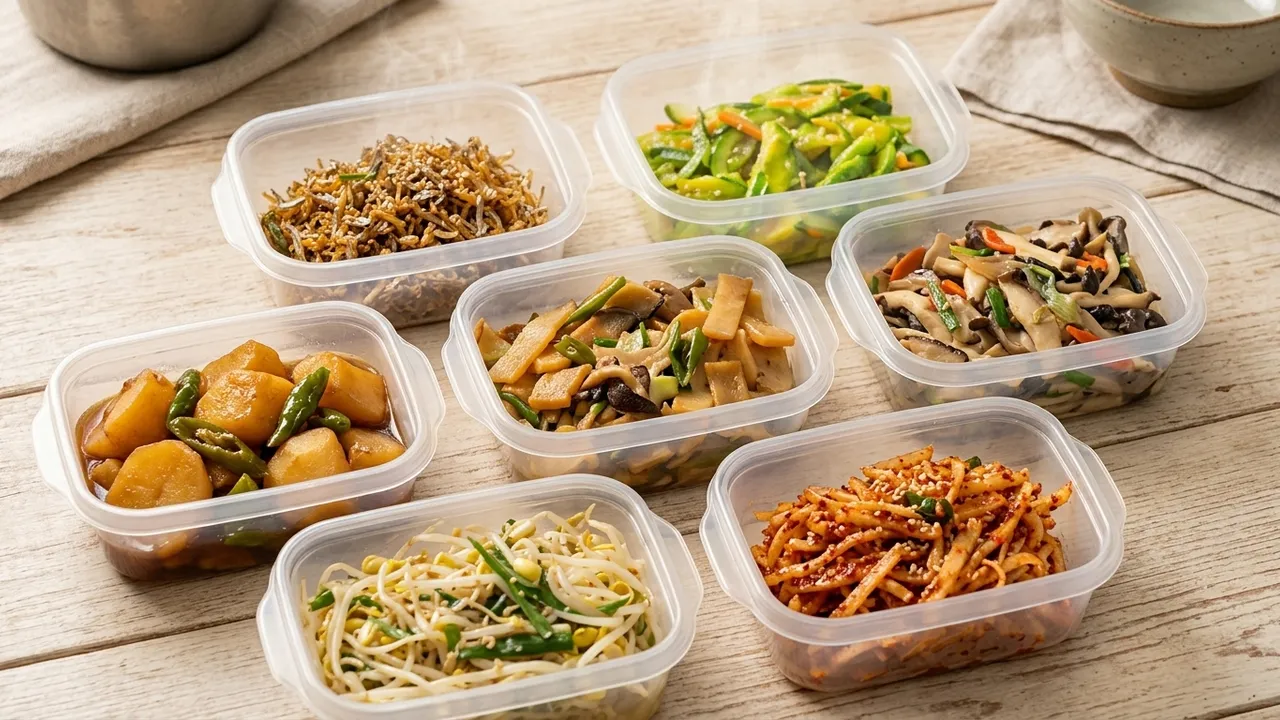
Pairing it with simple side dishes like gyeran-mari (계란말이, rolled omelet), gim (김, dried seaweed), or kongnamul-muchim (콩나물무침, seasoned bean sprouts) completes a satisfying meal.
Adding ramen noodles or kalguksu (칼국수, knife-cut noodles) to any leftover broth is also a delightful treat.
🔥 Nutrition Info
This recipe is for 3-4 servings, with an estimated 380-450 calories per serving.
The protein content from pork belly is approximately 18-22g, and fat is 25-30g, indicating a higher fat proportion.
You can enjoy a lighter version by skimming off some of the oil.
Carbohydrates from potatoes and onions are around 20-25g.
It's rich in kimchi's probiotics and vitamin C, potatoes' potassium, and pork's vitamin B1, which can help combat fatigue.
As this is a high-sodium dish, consume the broth in moderation and adjust your rice portion accordingly.
💬 Frequently Asked Questions
- Q. What ingredients do I need for Hearty Pork and Potato Kimchi Jjigae (김치찌개) with Rich Umami?
- Main ingredients include Potatoes, Pork belly (pork shoulder or front leg meat also possible), Aged kimchi (신김치), Tofu, Large green onion. Kimchi is half the battle for kimchi jjigae (김치찌개). Choose aged kimchi (신김치) that has a pleasant sourness and a refreshing, well-fermented taste without any off-flavors to achieve a deep broth. Kimchi that's been aged for 2-3 weeks and has softened slightly is ideal. While pork belly provides a rich, fatty umami, pork shoulder or front leg meat are good alternatives if you prefer a leaner dish. For potatoes, starchy, floury varieties (like 'sumi' potatoes) are recommended, as they release starch into the broth, creating a natural thickness. Choose firm potatoes without sprouts or green spots on the surface.
- Q. What are the key tips for making Hearty Pork and Potato Kimchi Jjigae (김치찌개) with Rich Umami?
- First, stir-fry the pork belly over medium heat until the fat renders golden. Sautéing the kimchi and gochugaru (고춧가루) in this rendered fat eliminates bitterness, bringing out a clean umami flavor and a beautiful red color. Second, cut the potatoes into thick pieces, soak them in cold water for 10 minutes to remove starch, then drain thoroughly. This prevents them from breaking apart during boiling and allows them to absorb flavor better. Third, after pouring in the broth, cover and simmer over medium heat for 10 minutes, then check if the potatoes are cooked. Adding green onions at the very end preserves their aroma and color.
- Q. How should I store leftover Hearty Pork and Potato Kimchi Jjigae (김치찌개) with Rich Umami?
- Once the kimchi jjigae (김치찌개) has cooled down, transfer it to an airtight container and refrigerate for 3-4 days. Kimchi jjigae (김치찌개) often tastes even better the next day as the flavors meld further. When reheating, add a little water and simmer over medium-low heat to adjust the saltiness. Tofu can become mushy if left for too long, so it's best to add it just before serving. Any leftover broth can be used to make kimchi fried rice or as a base for ramen, making sure nothing goes to waste.
- Q. How many calories are in Hearty Pork and Potato Kimchi Jjigae (김치찌개) with Rich Umami?
- This recipe is for 3-4 servings, with an estimated 380-450 calories per serving. The protein content from pork belly is approximately 18-22g, and fat is 25-30g, indicating a higher fat proportion. You can enjoy a lighter version by skimming off some of the oil. Carbohydrates from potatoes and onions are around 20-25g. It's rich in kimchi's probiotics and vitamin C, potatoes' potassium, and pork's vitamin B1, which can help combat fatigue. As this is a high-sodium dish, consume the broth in moderation and adjust your rice portion accordingly.
- Q. Can I substitute ingredients in Hearty Pork and Potato Kimchi Jjigae (김치찌개) with Rich Umami?
- If pork belly's fat content is a concern, you can substitute it with pork shoulder or front leg meat. This will result in a lighter, less oily broth, though the umami might be slightly less intense. If your aged kimchi (신김치) isn't sour enough, add a few drops of vinegar or some kimchi brine to enhance the tanginess. If anchovy broth is unavailable, you can use kelp broth or rice water; rice water will make the broth richer and thicker. Tuna extract (참치액) can be replaced with a small amount of guk-ganjang (국간장, Korean soup soy sauce) or fish sauce. For mirin (미림), substituting with sake (cheongju, 청주) plus a pinch of sugar will have a similar effect in removing gamey odors.
💬 Comments
No comments yet. Be the first to comment!