
Kkakdugi (깍두기) Fried Rice, Cream Shrimp, and Mapo Tofu Rice
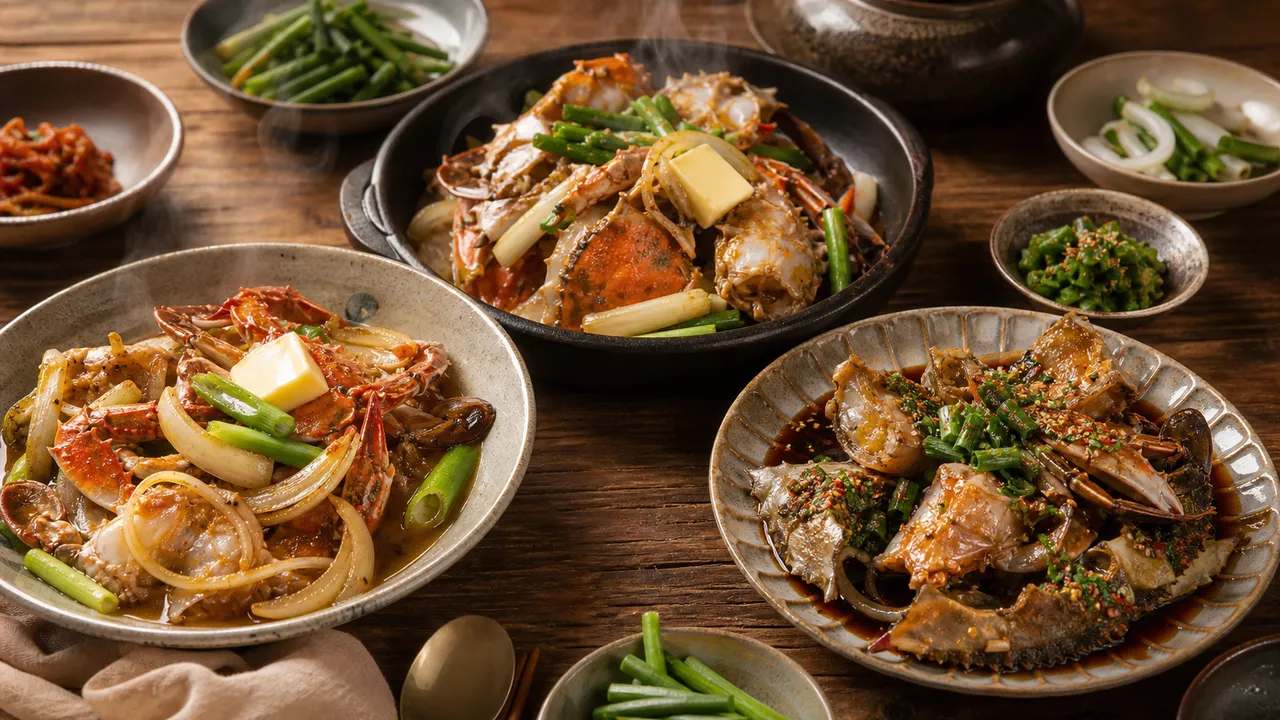
* 이미지는 AI가 생성한 참고 이미지로, 실제 조리 결과물과 다를 수 있습니다.
Introducing Chef Lee Yeon-bok's special recipes for Kkakdugi (깍두기) Fried Rice, sweet and crispy Cream Shrimp, and spicy yet mild Mapo Tofu Rice Bowl. Enjoy a perfect meal, even with refreshing Misutgaru (미숫가루) on the side.
📋 4 recipes — Select to view
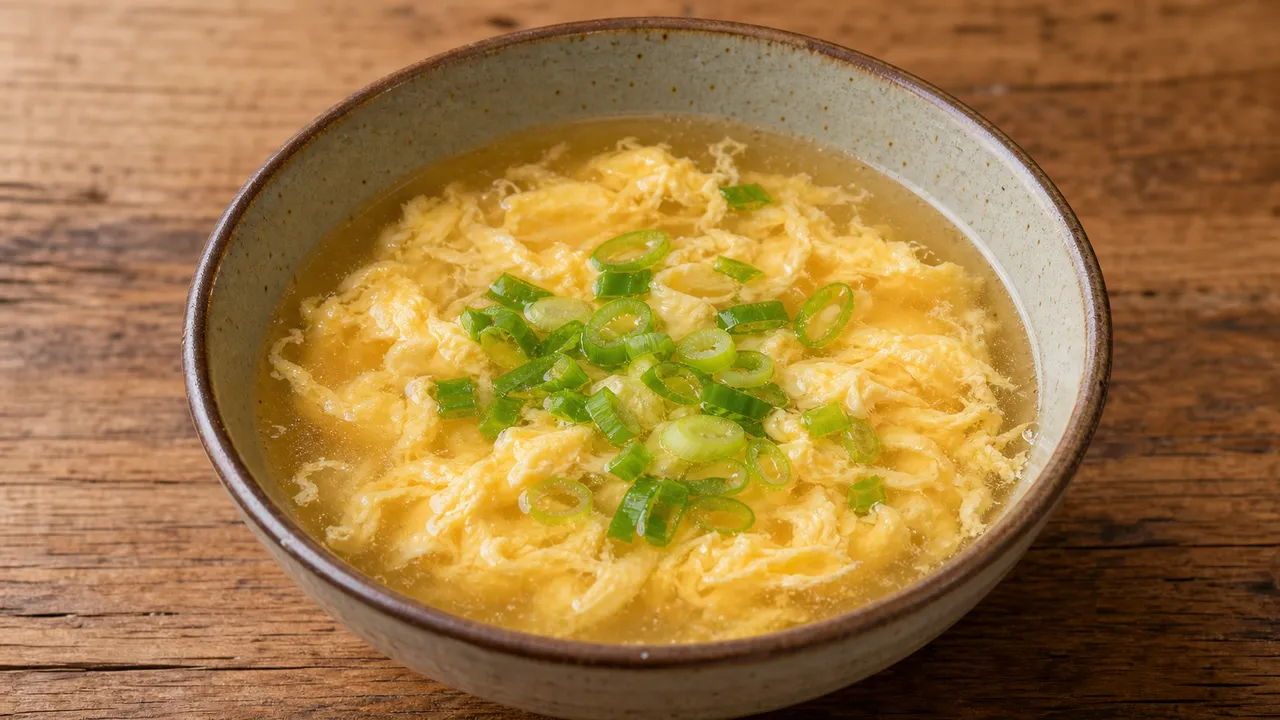
A warm egg drop soup that's quick and easy to make with chicken stock.
📝 Editor's Notes
This is a super simple egg drop soup that can be made in under 10 minutes with just one egg and chicken stock.
Since chicken stock provides the savory depth without needing to make a separate broth, even beginner cooks can make it successfully.
The broth is clear and clean, with soft egg ribbons that gently melt in your mouth.
It's especially perfect for a hungry morning, an evening when you crave a comforting bowl of soup with rice, or on days when you feel under the weather and want something warm.
🛒 Ingredient Tips
Choose fresh eggs with a rough shell that don't slosh much when shaken.
The fresher the egg, the more beautifully the egg ribbons will spread in the soup.
For scallions, look for ones with firm white bases and vibrant, straight green leaves.
While scallions (daepa, 대파 - referring to large scallions/leeks commonly used in Korean cooking) are generally good year-round, those from spring to early summer are particularly crisp and sweet.
When selecting chicken stock, check the sodium content and choose a less salty product to make seasoning adjustment much easier.
🔄 Substitution Guide
If chicken stock is unavailable, you can substitute it with anchovy-kelp broth (myeolchi-dasima yuksu, 멸치다시마 육수) or a clear broth seasoned with Korean soup soy sauce (guk-ganjang, 국간장) and salt.
In this case, the umami will be slightly more subtle, resulting in a lighter and cleaner soup closer to traditional Korean taste.
For vegetarians, vegetable stock or water infused with shiitake mushrooms (pyogo-beoseot urin mul, 표고버섯 우린 물) works well.
If you have an egg allergy, you can mash soft tofu (sundubu, 순두부) and add it to achieve a similar soft, comforting texture.
Instead of scallions, chives (buchu, 부추) or water parsley (minari, 미나리) can be used for a different aromatic twist.
🥘 Ingredients
👨🍳 Cooking Points
The most crucial aspect is the timing of adding the whisked egg.
When the broth is boiling vigorously, hold a ladle with the whisked egg and pour it in a thin, circular stream.
This prevents the egg from clumping and creates delicate egg ribbons.
After adding the egg, let it sit undisturbed for about 10 seconds before stirring.
Stirring immediately will make the broth cloudy and messy.
For the chicken stock, don't add it all at once; incorporate it gradually and taste as you go to adjust the seasoning and prevent it from becoming too salty.
👨🍳 Directions
Bring water to a boil in a pot and add chicken stock to make a broth.
Whisk 1 egg and pour it into the broth to create soft egg ribbons.
Add finely chopped scallions and simmer briefly to finish.
💡 Tips
Slowly pouring the whisked egg into the hot broth in a thin stream will create delicate egg 'flowers' (ribbons).
📦 Storage & Reuse
Egg drop soup is best enjoyed fresh.
If there are leftovers, let it cool completely, then store in an airtight container in the refrigerator and consume within 2 days.
Freezing is not recommended as it can make the egg texture dry and crumbly.
When reheating, avoid boiling it vigorously over high heat; gently warm it over low heat to prevent the egg from becoming tough.
Any leftover scallions can be finely chopped and frozen, ready for your next soup or stir-fry.
🥢 Who This Is For
This soup is perfect for students living alone who need a warm meal or for a busy breakfast.
It's easy to digest, making it suitable for children, the elderly, and those recovering from illness.
It complements dishes like kimchi fried rice (kimchi-bokkeumbap, 김치볶음밥) or simple stir-fries, serving as an excellent side soup.
It also pairs well with humble side dishes such as gim (김, roasted seaweed), namul-muchim (나물무침, seasoned vegetable salad), and gyeran-mari (계란말이, rolled omelet).
🔥 Nutrition Info
This is a very light soup, providing approximately 90 to 120 kcal per serving.
One egg contributes about 6 to 7g of protein, making it satisfying.
It contains about 5g of fat, and carbohydrates are minimal, around 3g, mainly from scallions and chicken stock.
Eggs are rich in lutein, vitamin A, vitamin B12, which are good for eye health, and choline, which supports brain activity.
However, chicken stock tends to be high in sodium, so if you are concerned about blood pressure, reduce the amount or use a low-sodium product.
💬 Frequently Asked Questions
- Q. What ingredients do I need for Kkakdugi (깍두기) Fried Rice, Cream Shrimp, and Mapo Tofu Rice Bowl: Recipes from 'Will it be Eaten Locally?'?
- Main ingredients include Egg, Cooked Rice, Pork Belly (samgyeopsal), Onion, Young Radish Kimchi (총각김치). For young radish kimchi (총각김치), choose one that is well-fermented and slightly sour, as this will enhance the umami flavor when stir-fried. Firm and crisp radish parts are best for texture. For pork belly (삼겹살), select a cut with an even ratio of fat to lean meat, as this will provide just the right amount of oil to add richness to the fried rice. For eggs, choose fresh ones with a rough shell and minimal sloshing when shaken, as this yields smoother scrambled eggs. For rice, fluffy, slightly cooled cooked rice is better for stir-frying than freshly cooked hot rice.
- Q. What are the key tips for making Kkakdugi (깍두기) Fried Rice, Cream Shrimp, and Mapo Tofu Rice Bowl: Recipes from 'Will it be Eaten Locally?'?
- The most important thing is to prepare fluffy rice. If you stir-fry sticky rice, it will clump together and become mushy. First, scramble the egg mixture, then add the rice and break it apart while stir-frying to coat the grains and make them fluffy. The key is to stir-fry the kimchi and pork belly over high heat to infuse a smoky flavor. If the sourness is too strong, add about ½ tablespoon of sugar to balance it. Do not add the young radish (총각무) at the beginning; add it at the very end and stir-fry gently, pressing lightly, to preserve its crispness.
- Q. How should I store leftover Kkakdugi (깍두기) Fried Rice, Cream Shrimp, and Mapo Tofu Rice Bowl: Recipes from 'Will it be Eaten Locally?'?
- Once finished, let the fried rice cool slightly, then store it in an airtight container in the refrigerator for 2 to 3 days. Divided into single servings and frozen, it can be kept for up to 2 weeks. When reheating, it tastes better if you stir-fry it in a pan with a little oil rather than using a microwave, as this helps the rice grains become fluffy again. If it's too dry, add a spoonful of water or kimchi juice. Since reheating makes the young radish lose its crispness, if you anticipate leftovers, it's a good idea to store the radish separately and add it just before serving.
- Q. How many calories are in Kkakdugi (깍두기) Fried Rice, Cream Shrimp, and Mapo Tofu Rice Bowl: Recipes from 'Will it be Eaten Locally?'?
- Per serving, it is estimated to be around 650 to 750 kcal. With pork belly (삼겹살) and eggs, protein is approximately 25 to 30g, and fat is relatively high due to the pork belly oil, at about 35 to 45g. Carbohydrates, being primarily from rice, are around 70 to 80g. Young radish kimchi (총각김치) provides probiotics, dietary fiber, and Vitamin C, while eggs are rich in Vitamin D and choline. However, due to the kimchi and salt, sodium content tends to be high, so if it tastes too salty, it's advisable to reduce the salt and adjust the amount of kimchi juice.
- Q. Can I substitute ingredients in Kkakdugi (깍두기) Fried Rice, Cream Shrimp, and Mapo Tofu Rice Bowl: Recipes from 'Will it be Eaten Locally?'?
- If pork belly (삼겹살) is too heavy or you want to reduce fat, you can substitute it with ground beef or chicken breast. However, the unique savory flavor of pork belly fat will be reduced; in this case, a drizzle of sesame oil can compensate. If young radish kimchi (총각김치) is unavailable, you can use well-fermented napa cabbage kimchi (김치), finely chopped, but the crisp radish texture will be lost, so try adding some shredded dried radish (무말랭이) or diced radish kimchi (깍두기). For egg allergies, mashed tofu can be stir-fried to provide a similar soft texture, and brown rice or konjac rice can be used instead of white rice to reduce carbohydrates.
💬 Comments
No comments yet. Be the first to comment!