
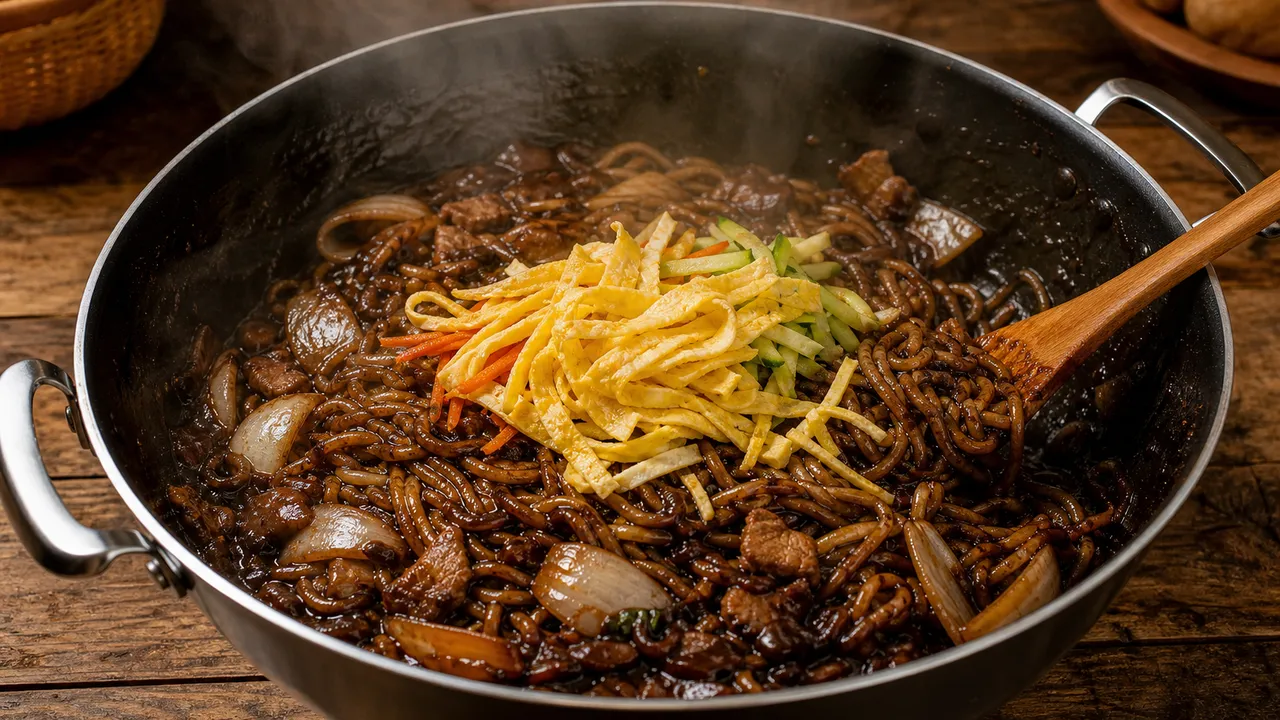
Osaek Bibim Jjajang: A Special Recipe that Captures Both Fla
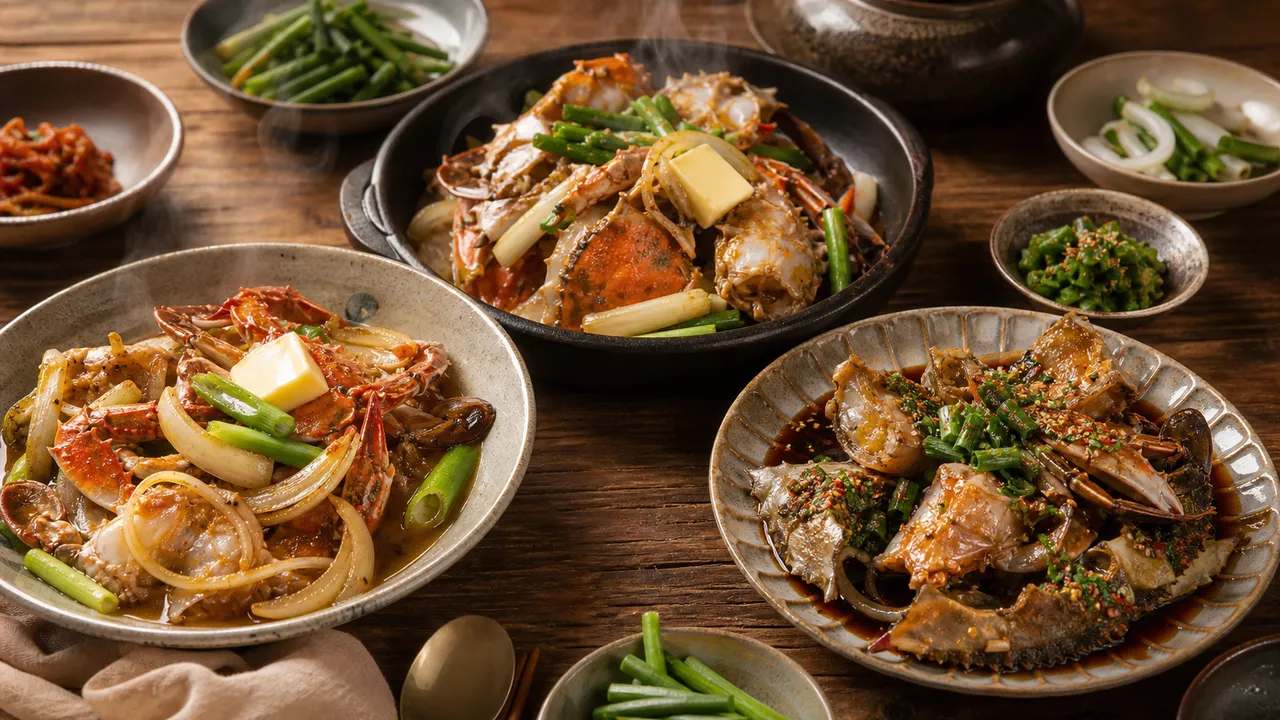
* 이미지는 AI가 생성한 참고 이미지로, 실제 조리 결과물과 다를 수 있습니다.
This is a recipe for Osaek Bibim Jjajang, featuring chewy noodles and vibrant toppings, all brought together with a jjajang (짜장) sauce made from stir-fried various vegetables and pork. Chilling the jjajang (짜장) sauce before serving enhances its deep flavor.
📋 5 recipes — Select to view
This recipe for Five-Color Mixed Jjajang (Black Bean) Noodles features a rich jjajang sauce made with stir-fried various vegetables and pork, served with chewy noodles and vibrant toppings. Chilling the jjajang sauce before serving enhances its deep flavor.
📝 Editor's Notes
Five-Color Mixed Jjajang (Black Bean) Noodles is a special dish that combines chewy noodles, abundant toppings, and a specially chilled jjajang (짜장) sauce for a deep flavor.
Unlike regular jjajangmyeon, the addition of various vegetable toppings offers not only visual appeal but also a delightful crunch and fresh taste.
Chilling the jjajang sauce in ice water is a key step in this recipe, as it deepens the jjajang's flavor and helps it blend more harmoniously with the noodles.
It's perfect for a cool treat on a hot summer day or whenever you want to try a unique jjajang dish.
Its vibrant presentation makes it an excellent choice for entertaining guests.
🛒 Ingredient Tips
For this Five-Color Mixed Jjajang (Black Bean) Noodles, it's convenient to use minced pork.
Choosing a cut with a good balance of fat and lean meat (e.g., pork shoulder or neck) will deepen the flavor of the jjajang (짜장) sauce.
Fresh pork should have a vibrant red color, be firm to the touch, and have no unpleasant odor.
For onions, choose sweet and juicy domestic spring onions if available.
Look for onions with shiny, firm skins and clean root ends.
The jjajang paste, which dictates the flavor of the sauce, will be richer if you use a solid jjajang paste or chunjang (춘장, Korean black bean paste) from commercial brands.
Always check the expiration date, and choosing a brand you usually enjoy will minimize the chance of failure.
🔄 Substitution Guide
You can substitute pork with minced chicken breast or ground beef.
Using chicken breast will result in a lighter and lower-calorie dish, though it might slightly reduce the deep savory flavor of the jjajang (짜장) sauce.
Beef has a stronger flavor than pork, which can offer a different appeal when combined with the jjajang sauce.
For noodles, besides Chinese-style noodles, you can use kalguksu (칼국수) noodles or spaghetti noodles.
However, note that the texture may vary depending on the noodle thickness and ingredients.
If mung bean sprouts (숙주, sukju) or carrots are unavailable for toppings, feel free to use other vegetables you have at home, such as shredded cabbage or bell peppers.
Just be aware that the color harmony might change slightly.
🥘 Ingredients
👨🍳 Cooking Points
The most crucial cooking point for Five-Color Mixed Jjajang (Black Bean) Noodles is 'chilling the jjajang (짜장) sauce'.
Thoroughly chill the stir-fried jjajang sauce in ice water for about 2 hours.
While this step might seem bothersome, it allows the oil in the jjajang to solidify and the flavors of the ingredients to condense, creating a deeper and richer taste.
The second point is 'boiling and rinsing the noodles'.
Boil the noodles precisely according to the package instructions, then immediately rinse them several times in cold water to remove starch and preserve their chewy texture.
Finally, 'preparing the toppings' is also important.
Neatly julienning a variety of colorful toppings such as egg garnish (달걀지단, dalgyal jidan), cucumber, mung bean sprouts (숙주, sukju), carrot, tomato, and pickled onion will complete a visually delightful Five-Color Mixed Jjajang (Black Bean) Noodles.
👨🍳 Directions
Remove the frozen noodles from their package. (It is safer to cut the noodle package with scissors or on a cutting board; be careful not to cut your hand when opening the package with a knife.)
Finely chop the onion and pork, then stir-fry them in a wok.
Add the jjajang (짜장) sauce to the stir-fried onion and pork, and continue to stir-fry together.
Chill the stir-fried jjajang sauce in ice water for about 2 hours.
Boil the noodles, then immediately rinse them in cold water to enhance their chewy texture.
Place the boiled noodles in a bowl and generously top with the chilled jjajang sauce.
Arrange the egg garnish (달걀지단, dalgyal jidan), cucumber, mung bean sprouts (숙주, sukju), carrot, tomato toppings, and pickled onion attractively by color to complete the Five-Color Mixed Jjajang (Black Bean) Noodles.
💡 Tips
When cutting the noodle package, use scissors instead of a knife or carefully cut it against a cutting board to avoid cutting your hand.
Thoroughly chilling the stir-fried jjajang (짜장) sauce in ice water will deepen its flavor even further.
Utilize the four basic topping colors (egg garnish, cucumber, mung bean sprouts, carrot, tomato) along with the black color of the jjajang (짜장) sauce to create a beautiful five-color visual.
Adding pickled onion as a topping brings a tangy flavor that harmonizes with the jjajang (짜장) sauce, adding a new dimension of taste.
📦 Storage & Reuse
It's best to store the noodles and jjajang (짜장) sauce separately for Five-Color Mixed Jjajang (Black Bean) Noodles.
The jjajang sauce can be stored in an airtight container in the refrigerator for about 3-4 days.
Boiled noodles, rinsed in cold water and thoroughly drained, can be stored in an airtight container for about a day, but for the best chewy texture, it's recommended to consume them on the same day.
Leftover jjajang sauce is also delicious mixed with rice or used as an ingredient for fried rice.
When reheating, warm it gently over medium-low heat; be careful not to overheat it, as the jjajang might become too salty.
Toppings should be stored separately by ingredient and added just before serving to maintain their freshness.
🥢 Who This Is For
This Five-Color Mixed Jjajang (Black Bean) Noodles is an excellent dish for a special family meal out, or a wonderful way to entertain friends at home.
Its refreshing and tangy flavor makes it perfect as a delightful summer treat.
With its vibrant appearance and delicious taste, it's a dish the whole family can enjoy together.
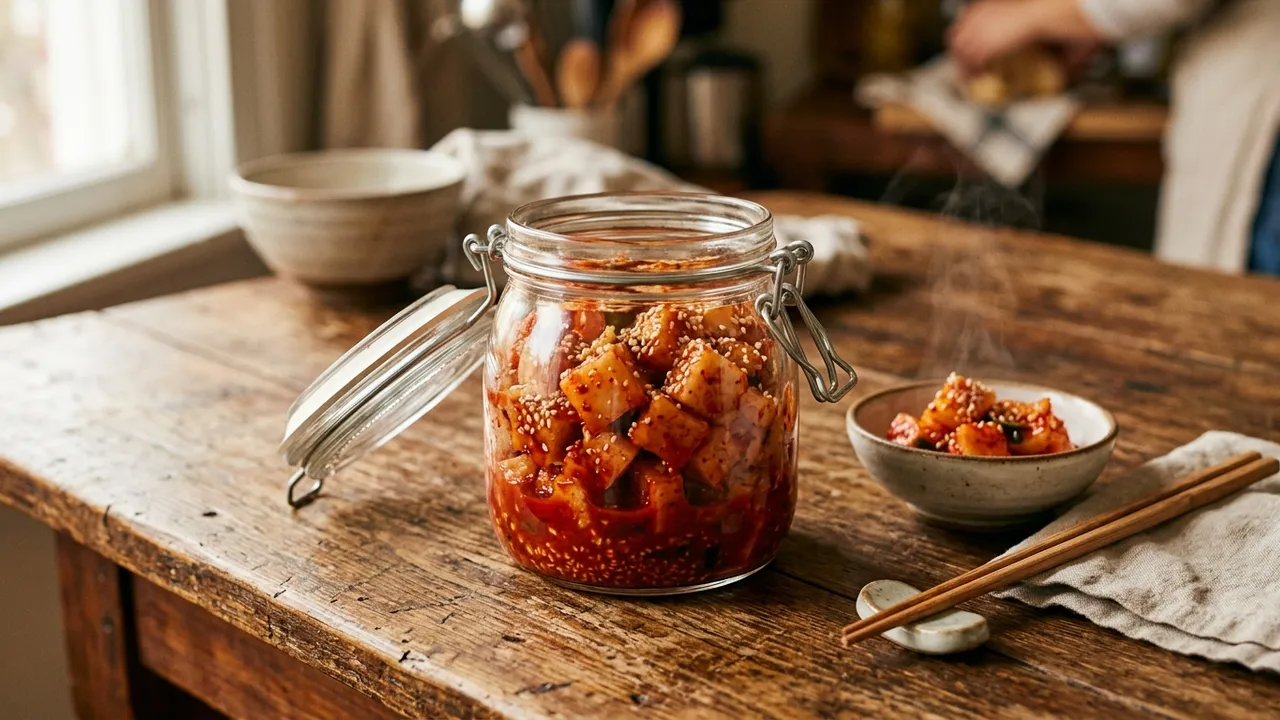
Recommended side dishes include cool danmuji (단무지, pickled radish) or kkakdugi (깍두기, diced radish kimchi), and refreshing cucumber pickles.
Sprinkling some spicy gochugaru (고춧가루, chili powder) on top can add an even richer array of flavors.
🔥 Nutrition Info
For one serving of Five-Color Mixed Jjajang (Black Bean) Noodles, the estimated calorie count is approximately 700-800 kcal.
This can vary depending on the type and quantity of noodles, the oil content in the jjajang (짜장) sauce, and the fat content of the pork.
Protein is estimated at about 30-40g, fat at 30-45g, and carbohydrates at 80-100g.
Pork is rich in high-quality protein and B vitamins, while onions in the jjajang sauce contain the antioxidant quercetin.
Additionally, the various vegetable toppings provide vitamins A, C, and dietary fiber, making this a nutritionally balanced meal.
However, the sodium content can be high, so it's advisable to adjust the amount of jjajang sauce consumed.
💬 Frequently Asked Questions
- Q. What ingredients do I need for Osaek Bibim Jjajang: A Special Recipe that Captures Both Flavor and Visual Appeal?
- Main ingredients include Noodles, Onion, Pork, Jjajang (짜장) paste/sauce, Egg Julienne. Let's look at the key ingredients that determine the taste of Osaek Bibim Jjajang. First, using minced pork is convenient. Cuts with a good balance of fat and lean meat will deepen the flavor of the jjajang (짜장) sauce. Ensure fresh pork has a vibrant red color and is firm to the touch. For onions, choosing sweet new onions will enhance the umami of the sauce. It's best to select those with firm skin, a glossy appearance, and no soft spots. And for topping vegetables like cucumber, carrot, tomato, and mung bean sprouts, freshness is paramount. Choose those with bright colors and a crisp texture to both enhance the five-colored visual and enrich the flavor.
- Q. What are the key tips for making Osaek Bibim Jjajang: A Special Recipe that Captures Both Flavor and Visual Appeal?
- To perfectly create this Osaek Bibim Jjajang, there are a few crucial points. First, never skip the step of thoroughly chilling the jjajang (짜장) sauce. Chilling the stir-fried jjajang (짜장) sauce in ice water for about 2 hours deepens the flavors of the ingredients and stabilizes the sauce's consistency, resulting in a much more delicious jjajangmyeon (짜장면). Second, the doneness of the noodles is important. For frozen noodles, refer to the cooking time on the package, but the key is to immediately rinse them thoroughly in cold water after boiling to maintain their chewy texture. Be careful not to overcook them, as soggy noodles will not taste good. Third, arrange the toppings beautifully by color. The five colors of egg julienne, cucumber, mung bean sprouts, carrot, and tomato, combined with the black of the jjajang (짜장), add visual delight.
- Q. How should I store leftover Osaek Bibim Jjajang: A Special Recipe that Captures Both Flavor and Visual Appeal?
- If you have leftover Osaek Bibim Jjajang, it's best to store the jjajang (짜장) sauce, noodles, and toppings separately. The jjajang (짜장) sauce can be stored in an airtight container in the refrigerator for about 3-4 days, maintaining its freshness. Boiled noodles, after being rinsed in cold water and thoroughly drained, can be refrigerated for up to the next day, though their texture may decline over time. Store the vegetable toppings in airtight containers in the refrigerator and add them just before serving. When reheating the jjajang (짜장) sauce, warm it slowly over low heat or use a microwave. Leftover jjajang (짜장) sauce is also delicious mixed with rice, or used in jjajang tteokbokki (짜장 떡볶이) or jjajang-bap (짜장밥).
- Q. How many calories are in Osaek Bibim Jjajang: A Special Recipe that Captures Both Flavor and Visual Appeal?
- This Osaek Bibim Jjajang, with its variety of vegetables and pork, can be a nutritionally well-balanced meal. For a single serving, the estimated calories are around 700-800 kcal, with approximately 30-40g of protein, 25-35g of fat, and 80-100g of carbohydrates. Pork provides high-quality protein and B vitamins, while vegetable toppings like cucumber, carrot, and tomato offer abundant vitamin C, vitamin A, and dietary fiber, aiding digestion and balancing nutrients. The lycopene in tomatoes, in particular, contributes to antioxidant activity. Onions in the jjajang (짜장) sauce contain compounds beneficial for blood circulation, offering many health advantages.
- Q. Can I substitute ingredients in Osaek Bibim Jjajang: A Special Recipe that Captures Both Flavor and Visual Appeal?
- If you don't eat pork or wish to substitute it, you can use minced beef or minced chicken breast. Beef will provide a deeper, richer flavor, while chicken breast offers a lighter, plainer taste. If using chicken breast, adding a little extra oil to the jjajang (짜장) sauce can help prevent it from becoming dry. If mung bean sprouts are unavailable for the toppings, bean sprouts can be a good substitute. They offer a similar crunchy texture, but their distinct aroma will create a different flavor profile when combined with the jjajang (짜장) sauce. You could also use radish sprouts or baby greens instead of pickled onion. For those with allergies, egg julienne can be replaced with tofu noodles or other plant-based ingredients.
💬 Comments
No comments yet. Be the first to comment!