
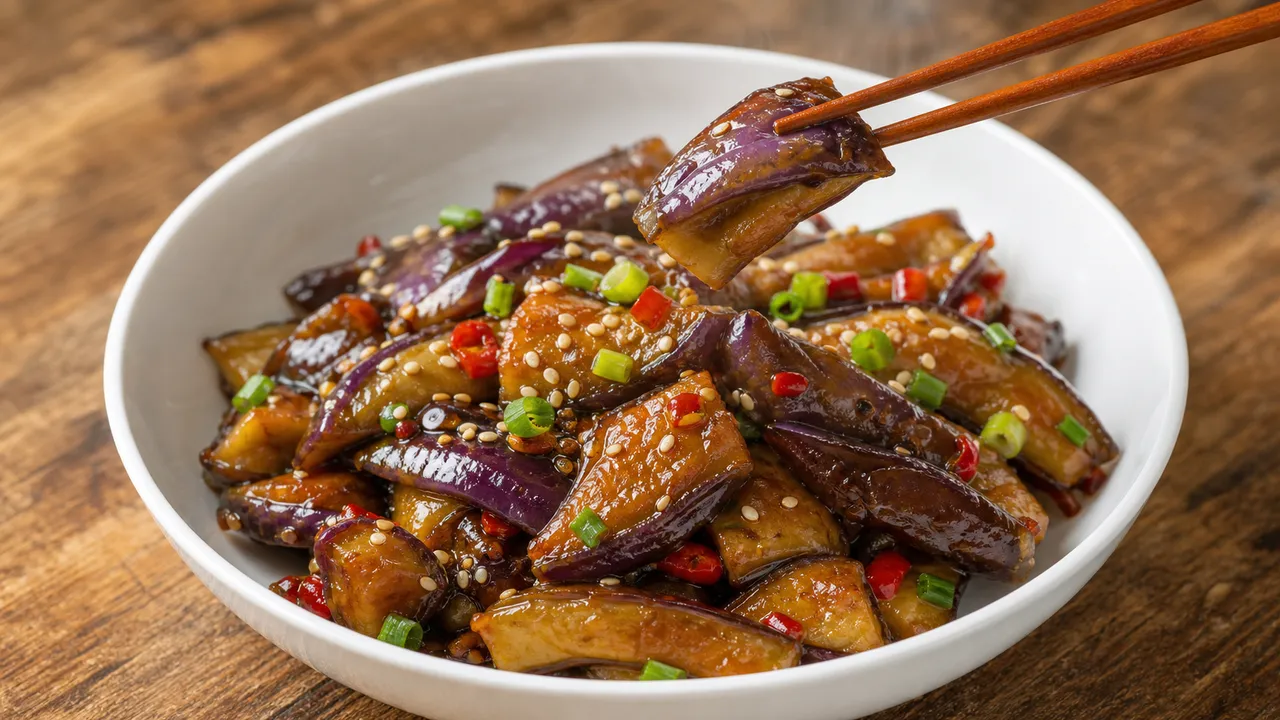
Gaji-bokkeum (Stir-fried Eggplant) with a Savory and Firm Te
* 이미지는 AI가 생성한 참고 이미지로, 실제 조리 결과물과 다를 수 있습니다.
This seasonal Gaji-bokkeum (Stir-fried Eggplant) is soft yet savory, infused with the aroma of green onion oil. The sauce is gently absorbed, making it perfect to serve over rice.
📝 Editor's Notes
This is an easy, beginner-friendly side dish that can be made in just 20 minutes with 3-4 eggplants.
It's flavored with green onion oil, then simmered in soy sauce and tuna extract, resulting in a rich, savory umami flavor.
The eggplant remains tender but not mushy, with a pleasant texture, making it perfect to serve over rice.
Eggplant is in season from summer to early autumn, so preparing this as a banchan (Korean side dish) on hot days when your appetite is low will provide a satisfying meal for several days.
🛒 Ingredient Tips
When choosing eggplants, opt for those with an even thickness and firm texture, rather than overly plump ones.
Excessively thick eggplants may have too many seeds, leading to a less pleasant texture.
Fresh eggplants should have a glossy skin, an undried stem, and feel slightly springy when pressed.
The peak season is from June to September when eggplants are sweetest and most tender.
For the umami-rich Kkotge-aek (꽃게액) or Chamchi-aek (참치액) (crab or tuna extract), choose a product with a clean and strong aroma to deepen the flavor of the seasoning.
🔄 Substitution Guide
If you don't have Kkotge-aek (꽃게액) or Chamchi-aek (참치액) (crab or tuna extract), you can substitute 1 tbsp of Guk-ganjang (국간장, Korean soup soy sauce) or Myeolchi-aekjeot (멸치액젓, anchovy sauce).
However, each ingredient offers a different depth of umami: tuna extract is clean, while anchovy sauce adds a richer, saltier, and more savory flavor, so adjust the amount accordingly.
You can also substitute regular soy sauce for brewed soy sauce, but regular soy sauce is sweeter and darker, so it's best to use about 1½ tbsp.
If perilla oil is unavailable, you can use sesame oil, but the distinct nutty aroma will be less prominent.
Green onions can be replaced with chives or onions; using onions will add a sweeter and milder flavor.
🥘 Ingredients
👨🍳 Cooking Points
The first key point is the green onion oil.
Add 3 tbsp of oil to a pan with green onions and stir-fry until a strong aroma develops, as this forms the flavor base.
The second point is to stir-fry the eggplant until it completely absorbs the oil like a sponge; skipping this step can result in a mushy texture.
After adding the seasoning, cover and simmer for 10 minutes, but reduce the heat to medium-low around the 7-minute mark.
Finally, turn the heat to high to quickly evaporate any remaining moisture, ensuring the dish is rich and flavorful without being watery or soggy.
Adjust the amount of water slightly depending on your pan and stovetop.
👨🍳 Directions
Trim the ends of the eggplants, then cut each eggplant into three equal sections. Cut each section into bite-sized pieces (4-8 wedges).
Halve the green onion lengthwise, then chop thinly.
Heat 3 tbsp of cooking oil in a pan over medium heat. Add the chopped green onion and stir-fry until fragrant to create green onion oil.
Add the chopped eggplant to the pan and stir-fry until the eggplant has absorbed all the oil.
Add 1 tbsp Gochu-garu (고춧가루), 2 tbsp soy sauce, 1 tbsp Kkotge-aek (꽃게액) / Chamchi-aek (참치액), 1 tbsp minced garlic, 1 tbsp perilla oil, and ⅔ cup water. Mix well to ensure the seasoning is evenly distributed over the eggplant.
Cover the pan and simmer for about 10 minutes until the sauce reduces. Occasionally open the lid and stir to prevent the eggplant from burning.
After about 7 minutes, reduce the heat to medium-low. Uncover the pan and continue to simmer, watching carefully until the sauce reduces further.
Finally, increase the heat to high and quickly stir-fry the remaining sauce to evaporate excess moisture, then turn off the heat.
Add 2 tsp vinegar and mix well.
Garnish with chopped green onion, 2 tsp toasted sesame seeds, and red chili (optional).
💡 Tips
Avoid overly plump eggplants as they may contain many seeds.
When eggplant absorbs oil like a sponge, it becomes soft and savory, enhances the absorption of antioxidants, and reduces bitterness.
Adjust the amount of water as needed during cooking, depending on your cooking utensils and heat source.
Adding 2 tsp of vinegar at the end helps cut through the richness and leaves a clean aftertaste.
📦 Storage & Reuse
Once cooked, let the Gaji-bokkeum cool completely, then store it in an airtight container in the refrigerator for 3-4 days.
Freezing is not recommended as it's a saucy side dish; the eggplant will become mushy upon thawing, significantly degrading its texture.
When reheating, it's better to briefly stir-fry it in a pan rather than using a microwave, as this helps evaporate moisture and revives its original rich flavor.
Leftover Gaji-bokkeum is also delicious mixed with rice and a drizzle of sesame oil, or used as a filling for gimbap (김밥).
🥢 Who This Is For
This dish is perfect for those with a diminished appetite during hot weather or anyone looking for a versatile side dish.
Since it can be stored for several days, it's also great for students living alone or busy professionals.
It's delicious simply mixed with freshly cooked white rice, and pairs wonderfully with mild steamed eggs (Gyeran-jjim, 계란찜), pan-fried tofu, or refreshing seaweed soup (Miyeok-guk, 미역국) for a complete and satisfying meal.
🔥 Nutrition Info
For the entire recipe, the calorie count is approximately 400-450 kcal.
Divided into 4 servings, each serving is relatively light at about 100-110 kcal.
Per serving, protein is estimated at 2-3g, fat (from cooking oil, sesame oil, and perilla oil) at 7-8g, and carbohydrates at 6-8g.
Eggplants are high in water content, low in calories, and rich in dietary fiber.
Their purple skin contains antioxidants like anthocyanins, which are better absorbed when cooked with oil.
However, since the dish is seasoned with soy sauce and Kkotge-aek (꽃게액) or Chamchi-aek (참치액), the sodium content is relatively high, so it's recommended to consume it in moderation with rice.
💬 Frequently Asked Questions
- Q. What ingredients do I need for Gaji-bokkeum (Stir-fried Eggplant) with a Savory and Firm Texture?
- Main ingredients include Eggplant, Cooking oil, Green onion (scallion), Vinegar, Sesame oil. When choosing eggplants, opt for those with an even thickness and firm texture, rather than overly plump ones. Excessively thick eggplants may have too many seeds, leading to a less pleasant texture. Fresh eggplants should have a glossy skin, an undried stem, and feel slightly springy when pressed. The peak season is from June to September when eggplants are sweetest and most tender. For the umami-rich Kkotge-aek (꽃게액) or Chamchi-aek (참치액) (crab or tuna extract), choose a product with a clean and strong aroma to deepen the flavor of the seasoning.
- Q. What are the key tips for making Gaji-bokkeum (Stir-fried Eggplant) with a Savory and Firm Texture?
- The first key point is the green onion oil. Add 3 tbsp of oil to a pan with green onions and stir-fry until a strong aroma develops, as this forms the flavor base. The second point is to stir-fry the eggplant until it completely absorbs the oil like a sponge; skipping this step can result in a mushy texture. After adding the seasoning, cover and simmer for 10 minutes, but reduce the heat to medium-low around the 7-minute mark. Finally, turn the heat to high to quickly evaporate any remaining moisture, ensuring the dish is rich and flavorful without being watery or soggy. Adjust the amount of water slightly depending on your pan and stovetop.
- Q. How should I store leftover Gaji-bokkeum (Stir-fried Eggplant) with a Savory and Firm Texture?
- Once cooked, let the Gaji-bokkeum cool completely, then store it in an airtight container in the refrigerator for 3-4 days. Freezing is not recommended as it's a saucy side dish; the eggplant will become mushy upon thawing, significantly degrading its texture. When reheating, it's better to briefly stir-fry it in a pan rather than using a microwave, as this helps evaporate moisture and revives its original rich flavor. Leftover Gaji-bokkeum is also delicious mixed with rice and a drizzle of sesame oil, or used as a filling for gimbap (김밥).
- Q. How many calories are in Gaji-bokkeum (Stir-fried Eggplant) with a Savory and Firm Texture?
- For the entire recipe, the calorie count is approximately 400-450 kcal. Divided into 4 servings, each serving is relatively light at about 100-110 kcal. Per serving, protein is estimated at 2-3g, fat (from cooking oil, sesame oil, and perilla oil) at 7-8g, and carbohydrates at 6-8g. Eggplants are high in water content, low in calories, and rich in dietary fiber. Their purple skin contains antioxidants like anthocyanins, which are better absorbed when cooked with oil. However, since the dish is seasoned with soy sauce and Kkotge-aek (꽃게액) or Chamchi-aek (참치액), the sodium content is relatively high, so it's recommended to consume it in moderation with rice.
- Q. Can I substitute ingredients in Gaji-bokkeum (Stir-fried Eggplant) with a Savory and Firm Texture?
- If you don't have Kkotge-aek (꽃게액) or Chamchi-aek (참치액) (crab or tuna extract), you can substitute 1 tbsp of Guk-ganjang (국간장, Korean soup soy sauce) or Myeolchi-aekjeot (멸치액젓, anchovy sauce). However, each ingredient offers a different depth of umami: tuna extract is clean, while anchovy sauce adds a richer, saltier, and more savory flavor, so adjust the amount accordingly. You can also substitute regular soy sauce for brewed soy sauce, but regular soy sauce is sweeter and darker, so it's best to use about 1½ tbsp. If perilla oil is unavailable, you can use sesame oil, but the distinct nutty aroma will be less prominent. Green onions can be replaced with chives or onions; using onions will add a sweeter and milder flavor.

💬 Comments
No comments yet. Be the first to comment!