
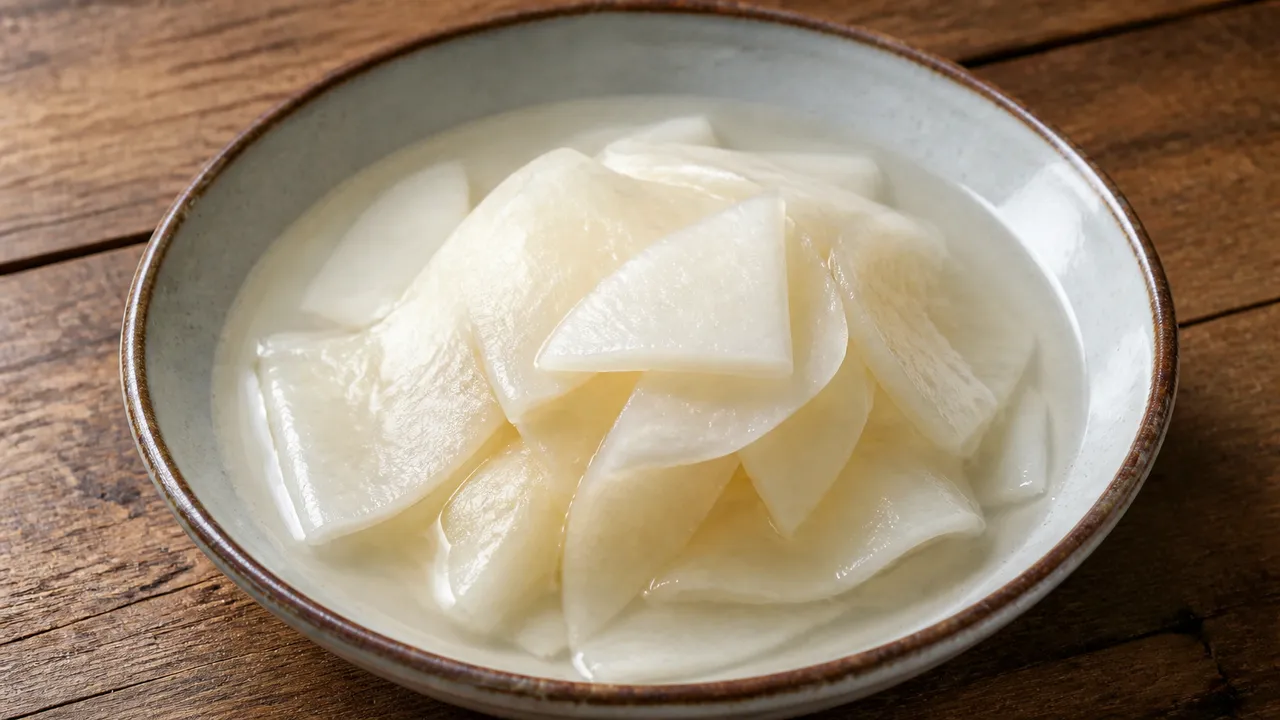
Easy Homemade Naengmyeon Broth and Mu Kimchi Recipe
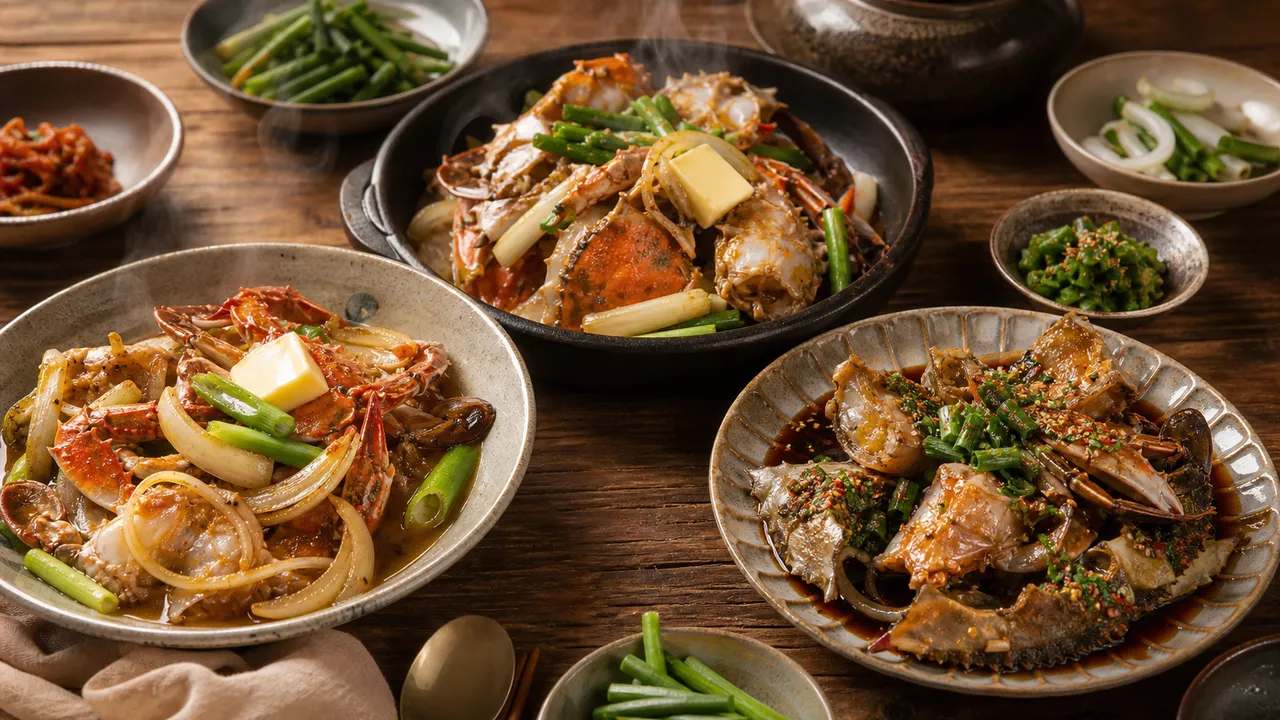
* 이미지는 AI가 생성한 참고 이미지로, 실제 조리 결과물과 다를 수 있습니다.
Enjoy restaurant-quality naengmyeon (cold noodles) at home with this sweet and sour radish kimchi and deeply flavored broth. Make a generous batch and freeze it, so you can enjoy a refreshing bowl of cold noodles anytime.
📋 3 recipes — Select to view
Crisp, sweet, and tangy naengmyeon (냉면) radish kimchi, when prepared in advance and allowed to mature, enhances the flavor of cold noodles.
📝 Editor's Notes
This naengmyeon (냉면) radish kimchi, requiring only about 1.1 lb (500g) of radish, can be prepared in under 40 minutes, including brining time, making it a foolproof recipe even for beginners.
While the preparation itself is easy, the true flavor develops after 2-3 days of aging.
The crisp radish combined with the sweet and tangy broth makes it a perfect accompaniment to cold noodles or other noodle dishes in summer, invigorating your appetite.
During warmer seasons, preparing it in advance and storing it in the fridge provides a reliable side dish.
🛒 Ingredient Tips
The upper, greenish part of a radish is sweeter, so it's good to use this section for this dish.
Choose radishes that are smooth, firm, heavy, and have few rootlet holes on their surface.
It should feel plump with moisture when lifted to ensure crispness.
While late fall to early winter is peak season for radishes, good quality radishes are available year-round these days.
For fine gochugaru (고춧가루), use one that is brightly colored and finely ground to achieve a clear and clean-tasting liquid.
🔄 Substitution Guide
If you don't have saccharin (뉴슈가) or prefer to avoid artificial sweeteners, you can substitute it by adding 1-2 extra tablespoons of sugar.
However, this may result in a heavier sweetness and a slightly thicker liquid.
If using regular brewed vinegar instead of double-strength apple cider vinegar, increase the amount to 4.7-5.4 tbsp (70-80 ml) due to its lower acidity.
While the subtle aroma characteristic of apple cider vinegar will be reduced, the tartness will be similar.
Kohlrabi can also be used instead of radish for a good crisp texture; it has a stronger sweetness and milder flavor than radish, offering a different appeal.
🥘 Ingredients
👨🍳 Cooking Points
The most important tip is to slice the radish thinly and flat.
If you only cut it into thick pieces, the outside might become soft while the inside remains firm.
Slicing thick chunks (0.8-1 inch / 2-2.5 cm) thinly and flat will ensure the radish stays crisp even after it's flavored.
Brining for 10 minutes is sufficient; the radish should just become slightly pliable.
Over-brining will make it too salty and soft, so adhere to the time.
Be sure to discard the brining liquid.
For the seasoning liquid, strain it through a fine-mesh sieve to remove chili powder sediment, which helps maintain a clear color.
👨🍳 Directions
Wash the radish thoroughly and peel only the dirty parts. Cut into thick slices about 0.8-1 inch (2-2.5 cm) thick, then slice them thinly and flat.
Add 1½ tbsp of salt to the sliced radish and brine for about 10 minutes, until the radish softens slightly.
Discard the water that came out from the brined radish. Transfer the radish to a container and set aside.
In 2 cups (500 ml) of purified water or cooled boiled water, add 3 tbsp sugar, ½ tbsp saccharin (뉴슈가), 1 tbsp salt, ½ tbsp fine gochugaru (고춧가루), and 3½ tbsp (50 ml) double-strength apple cider vinegar. Mix well until the sugar and salt are fully dissolved to create the naengmyeon radish kimchi seasoning liquid.
Strain the prepared seasoning liquid through a fine-mesh sieve to remove any chili powder sediment. Pour the strained liquid over the brined radish in the container to complete the naengmyeon radish kimchi.
💡 Tips
Slicing the radish thinly and flat ensures a crisp texture when it's fermented.
Naengmyeon radish kimchi needs to be refrigerated and aged for at least 2-3 days for the flavors to fully develop.
Using fine gochugaru (고춧가루) for the seasoning liquid will result in a clean color. If you don't have fine gochugaru, coarse gochugaru can be used instead.
📦 Storage & Reuse
Store in an airtight container, ensuring the liquid fully covers the radish, and refrigerate for up to 2-3 weeks while maintaining its crispness.
It tastes best after 2-3 days of aging.
Freezing is not recommended as the radish becomes soggy and loses its texture.
If you have leftover liquid, you can thinly slice cucumbers or onions and soak them to make simple pickles.
Once the radish is fully flavored, enjoy it as a topping for cold noodles (naengmyeon) or spicy mixed noodles (bibim-guksu).
🥢 Who This Is For
This kimchi pairs wonderfully with summer dishes like mul-naengmyeon (물냉면), bibim-naengmyeon (비빔냉면), and janchi-guksu (잔치국수), as its tangy liquid cuts through any richness.
It also serves as an excellent palate cleanser when served with fatty meat dishes like samgyeopsal (삼겹살) or jeyuk-bokkeum (제육볶음).
It's especially recommended for those looking for a refreshing and clean-tasting side dish, or for anyone needing a make-ahead banchan (반찬).
🔥 Nutrition Info
Radish is a very low-calorie vegetable, so this kimchi is estimated to be around 60-80 kcal per serving.
Carbohydrates, combining sugar and radish's natural sugars, are approximately 15-18g, protein is around 1g, and fat is almost negligible, close to 0g.
Radish contains vitamin C and diastase, an enzyme that aids digestion, making it a good accompaniment to fatty foods.
However, as it contains sugar and salt, if you are concerned about sodium and sugar intake, it's advisable to consume less of the liquid.
Its low-calorie count makes it suitable for those on a diet.
💬 Frequently Asked Questions
- Q. What ingredients do I need for Easy Homemade Naengmyeon Broth and Mu Kimchi?
- Main ingredients include Korean Radish (mu), Water, Sugar, New Sugar (saccharin sodium, 뉴슈가), Salt. The Korean radish (mu) is crucial for the crispness of naengmyeon mu kimchi. Choose one that feels heavy and firm, with a smooth surface and a greenish top, characteristic of autumn radishes which are sweeter and firmer. Fresh radishes have moist cut surfaces where the greens were removed. Cucumbers with intact bumps and a firm texture are less watery, ensuring long-lasting crispness after marinating. Raw cane sugar (원당) for the broth offers a cleaner aftertaste and subtle aroma compared to refined white sugar. When selecting, look for a non-clumpy, dry texture for easier measurement.
- Q. What are the key tips for making Easy Homemade Naengmyeon Broth and Mu Kimchi?
- Marinate the Korean radish (mu) with 1 1/2 tbsp of salt for precisely 10 minutes. Over-marinating will make it soft and lose its crispness. The key is to immediately squeeze out the water once tender. For the broth, thinly slice vegetables and simmer for only 15 minutes; boiling for too long will make the broth cloudy. Boil chilk noodles for just 30 seconds, then immediately rinse thoroughly multiple times in ice water to completely remove starch. This final rinsing step determines their chewy texture.
- Q. How should I store leftover Easy Homemade Naengmyeon Broth and Mu Kimchi?
- The mu kimchi can be stored in an airtight container in the refrigerator and aged for 2-3 days for a deeper flavor, then consumed over the next week. The broth, once cooled, can be divided into 2-serving portions and frozen in freezer bags for one to two months; it's best enjoyed about 30 minutes after taking it out of the freezer, when it's still slushy. Cook noodles just before serving as they can become soggy if boiled in advance. Leftover mu kimchi can be cleverly used as a seasoning for bibim guksu (spicy mixed noodles).
- Q. How many calories are in Easy Homemade Naengmyeon Broth and Mu Kimchi?
- Estimated at approximately 350-420 kcal per serving. Chilk naengmyeon noodles constitute most of the carbohydrates, about 65-75g. Protein from the boiled egg and small amounts of broth ingredients is about 9-12g, and fat, mainly from the egg and tuna fish sauce, is about 6-8g. Korean radish (mu) and cucumber provide Vitamin C and dietary fiber, while eggs contribute iron and B vitamins. However, the sodium content from salt, guk-ganjang (국간장), Dashida (다시다) in the broth, and the mu kimchi liquid is high, so consuming less broth can help reduce sodium intake.
- Q. Can I substitute ingredients in Easy Homemade Naengmyeon Broth and Mu Kimchi?
- If New Sugar (saccharin sodium, 뉴슈가) is a concern or hard to find, you can substitute it with sugar or oligo-saccharide. However, lacking its distinct intense sweetness, the mu kimchi might taste slightly less sweet and sour, so add about half a tablespoon more sugar. If you prefer to avoid commercial beef Dashida (다시다), you can use beef bone broth or clam/anchovy broth instead, but the umami flavor will be milder, so compensate by adjusting the guk-ganjang (국간장) and salt. Chilk naengmyeon noodles can be substituted with mul-naengmyeon noodles or buckwheat noodles; buckwheat noodles have a nutty aroma but a slightly more brittle texture.
💬 Comments
No comments yet. Be the first to comment!