
Home-Cooked Meal Menu Recipe: 3 Summer Banchan and Warm Aeho
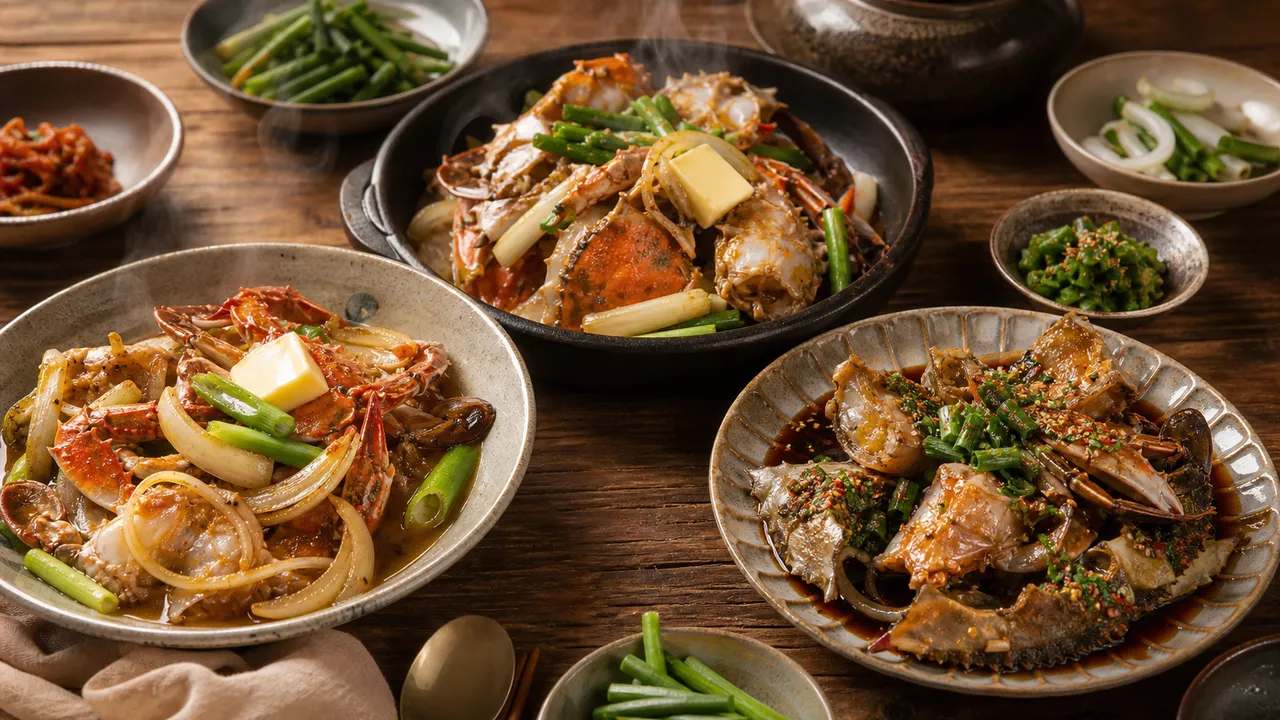
* 이미지는 AI가 생성한 참고 이미지로, 실제 조리 결과물과 다를 수 있습니다.
This hearty home-cooked meal menu features fragrant perilla leaf kimchi (깻잎김치), crispy pickled green chili peppers (고추장아찌), sweet and sour seasoned pickled cucumber (오이지무침), and warm Korean zucchini stew (애호박찌개), perfect for a satisfying meal.
📋 4 recipes — Select to view
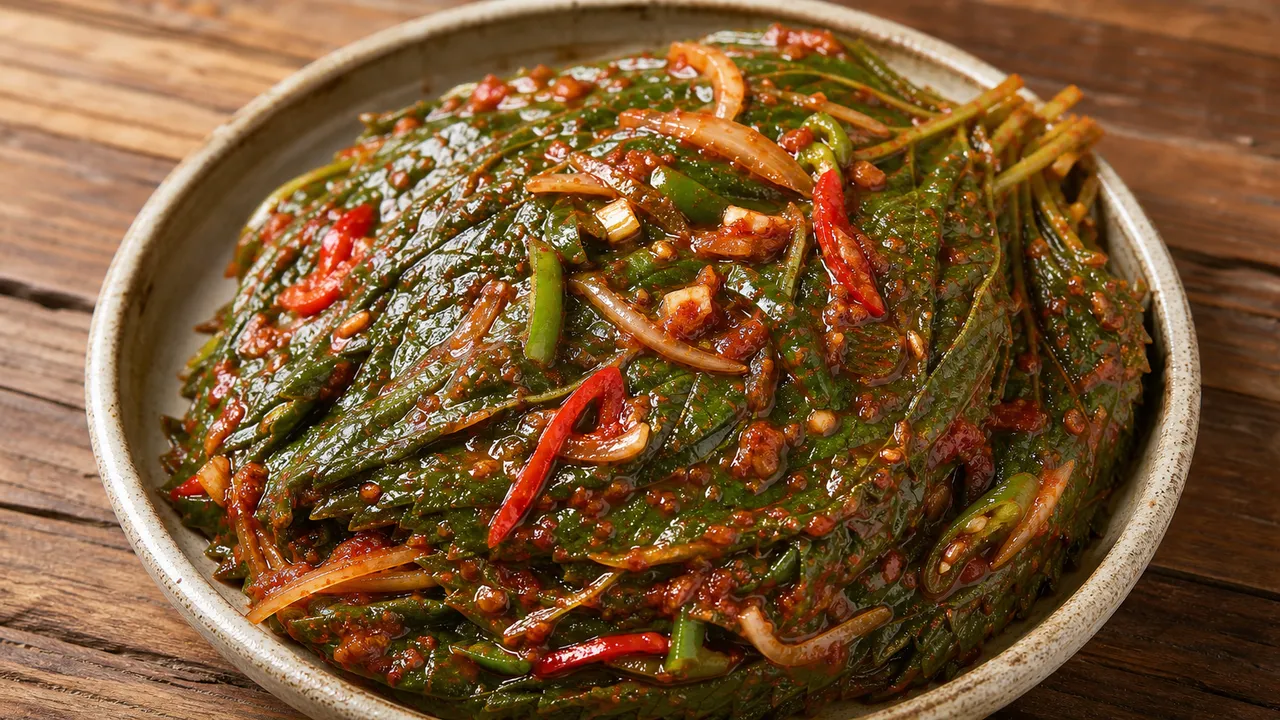
This is a spicy and sweet summer side dish (banchan) made by coating fragrant perilla leaves with a flavorful seasoning.
📝 Editor's Notes
This spicy and sweet summer side dish can be made in just 10 minutes with 60 perilla leaves and common vegetables you have at home.
It's an easy recipe for beginners, as it only requires layering the seasoning without any cooking.
The umami from soy sauce and anchovy sauce, the subtle sweetness of green plum extract, and the pungent spiciness of Cheongyang chili peppers come together to create a dish that's perfect with a bowl of rice.
It's a great make-ahead dish for summer days when you lack appetite or side dishes.
🛒 Ingredient Tips
Choose perilla leaves that are deep green and uniform in size.
Leaves with clear veins and firm, fresh stems have a stronger aroma; avoid those that are yellowed or softened.
The peak season is from June to September, making them particularly fragrant in summer.
For Cheongyang chili peppers and red chili peppers, select those with smooth, firm skins.
For green onions, long and thick white parts indicate better sweetness.
If using store-bought green plum extract (maesilcheong), choose one that isn't excessively sweet to maintain a balanced flavor in the seasoning.
🔄 Substitution Guide
If you find anchovy sauce (myeolchi aekjeot) too fishy or don't have it, you can substitute it with kkanari aekjeot (sand lance sauce) or saeujeot (salted fermented shrimp).
Kkanari aekjeot provides a cleaner taste, while saeujeot offers a milder umami.
For a vegetarian option, replace the fish sauce with an additional 1 tbsp of soy sauce and a little dashi (kelp broth) for a similar savory depth.
If you don't have green plum extract (maesilcheong), you can substitute it with 1 tsp of oligo syrup or sugar with a dash of lemon juice, though it might lack the unique refreshing tartness of green plum.
If Cheongyang chili peppers are too spicy, you can use regular green chilies and adjust the spiciness with gochugaru (Korean chili flakes) for a milder taste.
🥘 Ingredients
👨🍳 Cooking Points
The most crucial step is to thoroughly remove moisture from the perilla leaves.
After soaking them in vinegar water for 10 minutes, make sure to dry them completely with a salad spinner or paper towels.
This ensures the seasoning adheres well and doesn't run off.
If moisture remains, the kimchi will quickly become soggy and bland.
Another key point is to finely chop the vegetables for the seasoning.
If they are cut too coarsely, gaps will form between the perilla leaves, preventing the seasoning from penetrating properly.
Instead of trying to coat all the leaves at once, layer 2-3 leaves at a time, spreading a thin layer of seasoning evenly between them to build layers.
If you prefer less spice, reduce the Cheongyang chili peppers to 1.
👨🍳 Directions
Trim the ends of the perilla leaves with scissors. Dissolve 1 tbsp of vinegar in water and soak the leaves for about 10 minutes.
Wash thoroughly and drain the water using a salad spinner or similar method.
Thinly slice 1 onion, finely chop 1 stalk of green onion, and mince 2 Cheongyang chili peppers and 2 red chili peppers.
To the chopped vegetables, add 4 tbsp Korean chili flakes (gochugaru), 1 tbsp minced garlic, 4 tbsp soy sauce, 2 tbsp anchovy sauce (myeolchi aekjeot), 1 tbsp green plum extract (maesilcheong), and 1/4 cup water. Mix the seasoning well.
Lay the perilla leaves in small stacks and spread the seasoning evenly, layering them one by one until all leaves are coated. Your Perilla Leaf Kimchi is now complete.
Store the completed Perilla Leaf Kimchi in the refrigerator.
💡 Tips
Soak the perilla leaves in vinegar water to remove impurities and clean them thoroughly.
Finely chop the vegetables for the seasoning to ensure the flavors are well absorbed.
Storing Perilla Leaf Kimchi in the refrigerator allows you to enjoy it as a reliable side dish for a long time.
📦 Storage & Reuse
Store the finished Perilla Leaf Kimchi in an airtight container in the refrigerator, and it will stay delicious for about a week to ten days.
The flavor deepens after a day as the seasoning fully penetrates.
If you want to keep it longer, you can portion and freeze it, though the leaves might become slightly softer after thawing.
When serving, make sure your chopsticks are dry to prevent spoilage and extend its shelf life.
If you have leftover seasoning, you can use it to make fresh kimchi (geotjeori) with cucumbers or shredded radish, or simmer it with tofu.
🥢 Who This Is For
This dish is perfect when you're looking for a simple side dish, especially during the hot summer months when appetites tend to wane.
Enjoy it over white rice or barley rice to savor its fragrant and spicy flavors.
It also pairs wonderfully with meat dishes like samgyeopsal (grilled pork belly) or jeyuk bokkeum (spicy stir-fried pork) as a wrap.
Served alongside plain grilled tofu or steamed egg (gyeran jjim), the spicy perilla leaf kimchi will awaken your taste buds.
It's also an excellent choice for lunch boxes or as a side dish for guests.
🔥 Nutrition Info
Considering this entire recipe yields 4-6 servings, one serving is quite light, estimated at about 40-55 kcal.
With no oil used, fat is less than 1g.
Carbohydrates, from the green plum extract in the seasoning and vegetables, are estimated at about 7-9g, and protein, from anchovy sauce and vegetables, at about 2-3g.
Perilla leaves are rich in vitamins A and K, calcium, and iron, contributing to anemia prevention and bone health.
However, as soy sauce, anchovy sauce, and gochugaru (Korean chili flakes) are used, the sodium content is relatively high.
Therefore, it is recommended to enjoy this dish in moderation as a side dish rather than consuming large quantities at once.
💬 Frequently Asked Questions
- Q. What ingredients do I need for Home-Cooked Meal Menu Recipe: 3 Summer Banchan and Warm Aehobak-jjigae (Korean Zucchini Stew)?
- Main ingredients include Perilla leaves (깻잎), Onion, Cheongyang (청양) chili peppers, Red chili peppers, Green onion. Choose perilla leaves (깻잎) that are thick and have a deep green color. They should feel firm but not stiff to the touch and release a strong fragrance, indicating freshness. Avoid leaves with blackened stems or yellowed edges. Perilla leaves are most fragrant from June throughout the summer. For gochugaru (고춧가루), opt for newly harvested chili powder with a vibrant color. If using commercially available maesil-cheong (매실청), choose one that isn't excessively sweet to maintain a balanced flavor.
- Q. What are the key tips for making Home-Cooked Meal Menu Recipe: 3 Summer Banchan and Warm Aehobak-jjigae (Korean Zucchini Stew)?
- The most crucial step is to thoroughly remove moisture. If the washed perilla leaves (깻잎) retain water, the seasoning won't adhere well, and the kimchi will quickly become soggy. Ensure they are well drained using a salad spinner or sieve. Second, regarding the seasoning consistency: finely chop the vegetables so the seasoning can penetrate evenly. Third, when layering, don't stack too many perilla leaves at once; lay a small handful at a time and spread a thin layer of seasoning between each stack. This ensures even flavoring for every leaf. While it can be eaten immediately, letting it sit in the refrigerator for about a day will allow the flavors to meld beautifully.
- Q. How should I store leftover Home-Cooked Meal Menu Recipe: 3 Summer Banchan and Warm Aehobak-jjigae (Korean Zucchini Stew)?
- Store the completed perilla leaf kimchi (깻잎김치) in an airtight container in the refrigerator for up to 2 weeks. The flavors will deepen over time as the seasoning permeates the leaves. For longer storage, you can portion and freeze it, but note that the leaves might become slightly soft after thawing. If liquid forms, mix it with rice, or use any leftover seasoning for braised tofu (두부조림) or as a flavor base for fried rice, ensuring nothing goes to waste.
- Q. How many calories are in Home-Cooked Meal Menu Recipe: 3 Summer Banchan and Warm Aehobak-jjigae (Korean Zucchini Stew)?
- Including the seasoning, the entire batch of perilla leaf kimchi (깻잎김치) for one meal (approximately 4-5 servings) is estimated to be around 250 kcal. Per single serving, it's very light, approximately 50-60 kcal. Carbohydrates from maesil-cheong (매실청) and vegetables are about 8g, protein from anchovy fish sauce and perilla leaves (깻잎) is about 3g, and fat is low, less than 1g. Perilla leaves are particularly rich in beta-carotene, vitamin K, calcium, and iron, helping to replenish minerals often lacking in summer. However, due to soy sauce and fish sauce, the sodium content is high, so adjust the amount if you are sensitive to saltiness.
- Q. Can I substitute ingredients in Home-Cooked Meal Menu Recipe: 3 Summer Banchan and Warm Aehobak-jjigae (Korean Zucchini Stew)?
- If anchovy fish sauce is unavailable or its fishy scent is too strong, you can substitute it with kkanari-aekjeot (까나리액젓 - sand lance fish sauce) or guk-ganjang (국간장 - Korean soup soy sauce). If using guk-ganjang, the aroma will be cleaner but the umami might be slightly less intense, so consider adding a bit more minced garlic to compensate. Maesil-cheong (매실청) can be replaced with oligo-dang (올리고당 - oligosaccharide syrup) or sugar water (1 tsp sugar + a little water). However, the unique subtle acidity and fragrance of maesil-cheong will be lost, making the sweetness a bit plainer. If the spiciness of cheongyang (청양) chili peppers is too much, you can substitute them with regular green chili peppers for a milder flavor suitable for children. For a different texture, perilla leaves (깻잎) can also be replaced with thin napa cabbage leaves.
💬 Comments
No comments yet. Be the first to comment!