
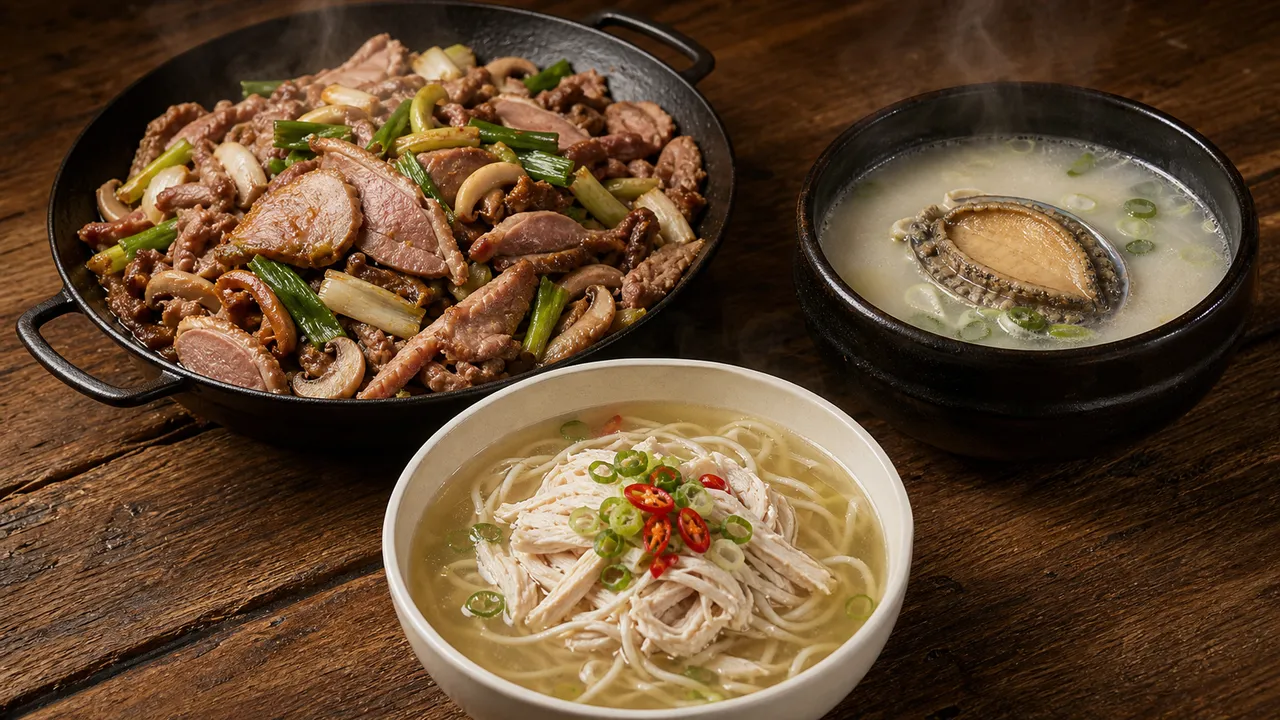
30-Minute Super Easy Recipe Collection: Dakgomtang (Chicken
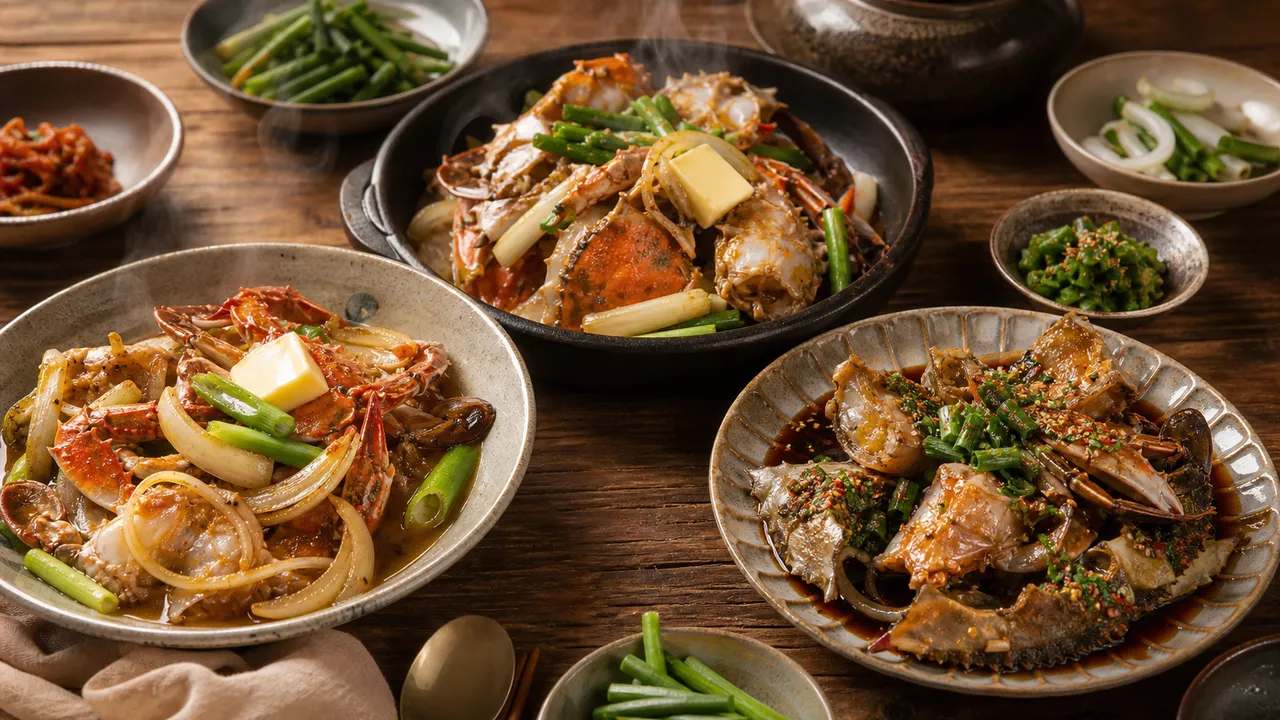
* 이미지는 AI가 생성한 참고 이미지로, 실제 조리 결과물과 다를 수 있습니다.
This collection features three super easy nourishing dishes that can be completed in 30 minutes: Dakgomtang (Chicken Soup) with a deep flavor from chicken thighs, savory Jeonbokgomtang (Abalone Soup) without any fishy smell, and umami-packed Daepae Oribulgogi (Thinly Sliced Duck Bulgogi).
📋 3 recipes — Select to view
This is Lee Jung-hyun's super simple 30-minute Dak Gomtang recipe, made by grilling boneless chicken thighs before boiling.
📝 Editor's Notes
When you can't give up a warm and hearty meal even in a busy daily life, this 30-minute Dak Gomtang recipe will be the answer.
By using boneless chicken thighs, there's no need to debone, drastically shortening the cooking time.
You can enjoy a wonderful Dak Gomtang in just 30 minutes from prep to finish.
Grilling the chicken thighs first enhances their savory flavor, and simmering them deeply with vegetables creates a rich and clean broth that is exquisite.
This is an excellent dish, especially during seasonal changes, when you lack energy, or when you need a warm soup dish for the whole family.
With its easy-to-follow difficulty, even beginners can enjoy the pleasure of cooking.
🛒 Ingredient Tips
For chicken thighs, preparing boneless, skin-on cuts will make cooking much easier.
Choosing cuts with the skin on will allow savory chicken fat to render during searing, which deepens the broth's flavor.
Fresh chicken thighs should be plump and firm to the touch.
For onions, choose firm ones with glossy skins.
For large green onions (daepa), select those with straight stalks and vibrant green parts.
Fresh bean sprouts (sukju) should have roots that are not too long, plump stems, and no breaks for the best crisp texture.
Remember that fresher ingredients always enhance the taste of your dish.
🔄 Substitution Guide
You can use chicken breast instead of chicken thighs.
Chicken breast has the advantage of being leaner and lower in calories, but it may be difficult to achieve the same deep broth flavor as with chicken thighs.
In this case, blanching the chicken breast first can result in a more tender texture.
Instead of bean sprouts, you can use soybean sprouts (kongnamul (콩나물)) for a refreshing and crunchy texture.
Keep in mind that soybean sprouts may have a stronger distinct aroma than bean sprouts.
If you don't have fish sauce (aekjeot (액젓)), you can season with soup soy sauce (gukganjang (국간장)).
However, the flavor will be cleaner rather than having the unique umami of fish sauce.
It's also fine to use cooking oil instead of olive oil, but you'll miss out on the aromatic notes of olive oil.
🥘 Ingredients
👨🍳 Cooking Points
The first key to this recipe is the process of searing the chicken thighs first.
Heat olive oil in a hot pot and sear the chicken thighs skin-side down until golden brown.
This process maximizes the savory flavor of the chicken thighs and adds depth to the broth.
The second point is removing the gamey odor: soak the chicken thighs in water with a splash of vinegar for about 10 minutes, then rinse thoroughly.
This eliminates the chicken's peculiar gamey smell, resulting in a cleaner Dak Gomtang.
Lastly, when boiling the broth, bring it to a boil over high heat once, then reduce to medium-low and simmer thoroughly for 30 minutes.
It's important to control the heat, as simmering for too long over high heat can make the broth cloudy.
👨🍳 Directions
Roughly chop 2 onions and 2 large green onions (daepa). Thinly slice a handful of chives (jjokpa) for garnish.
Soak 1 kg of boneless chicken thighs in water with a splash of vinegar for about 10 minutes, then rinse thoroughly with clean water to remove any gamey odor.
Heat a little olive oil in a hot pot. Place the chicken thighs skin-side down and sear them.
Once the chicken fat starts to render, add the chopped onions, large green onions, and 2 tbsp minced garlic, and sauté until fragrant.
Pour in 2 L of water, bring to a boil over high heat, then cover, reduce heat to medium-low, and simmer for 30 minutes.
After 30 minutes, remove the large green onions, onions, and chicken from the pot.
Finally, add 200 g of bean sprouts (sukju) and boil for about 3 more minutes until done. Season with fish sauce (aekjeot) to your taste.
💡 Tips
Cut the vegetables for the broth into appropriate sizes to extract more flavor.
Splashing vinegar on the chicken thighs is even more effective at removing any gamey odor.
Seasoning with fish sauce (aekjeot) to your liking will make the umami flavor burst, making it even more delicious.
📦 Storage & Reuse
The finished Dak Gomtang can be stored in an airtight container in the refrigerator for 3-4 days.
Make sure to cool it completely before storing to prevent spoilage.
If you want to store it longer, we recommend portioning it into individual servings and freezing.
When frozen, it can be enjoyed fresh for up to about 1 month.
To reheat, transfer it to a pot and gently simmer over medium-low heat.
Be careful not to reheat over high heat, as the broth may reduce.
You can also add rice to the leftover Dak Gomtang broth to make a porridge, or add kalguksu (칼국수) noodles to make chicken kalguksu (닭칼국수) for another delicious meal.
🥢 Who This Is For
This Dak Gomtang is a dish loved by all ages and is especially recommended for those who need an energy boost or crave a warm soup.
Since there's no need to debone, even children and the elderly can enjoy it comfortably.
For side dishes, we recommend refreshing kkakdugi (깍두기) (diced radish kimchi) or crunchy baechu kimchi (배추김치) (napa cabbage kimchi).
Eating it with a bowl of rice will complete a satisfying meal that's second to none.
Adding simple side dishes like buchu muchim (부추무침) (seasoned chives) or seasoned bean sprouts (sukju namul (숙주나물)) is also a good idea.
🔥 Nutrition Info
This 30-minute Dak Gomtang provides a highly nutritious meal.
Assuming 1 kg of chicken thighs is used for approximately 4 servings, each serving would be about 250 g.
Based on this, the estimated calories are about 400-500 kcal per serving.
Protein is primarily supplied by chicken thighs, approximately 35-45 g; fat from chicken thighs and olive oil, approximately 25-35 g; and carbohydrates from vegetables like onions, large green onions (daepa (대파)), and bean sprouts (sukju (숙주)), approximately 10-15 g.
Chicken is an excellent source of high-quality protein and is rich in B vitamins, which aid in fatigue recovery.
Bean sprouts are rich in vitamin C and dietary fiber, while onions and large green onions contain antioxidants, boosting immunity.
Overall, it can be considered a nourishing dish that provides balanced nutrition.
💬 Frequently Asked Questions
- Q. What ingredients do I need for 30-Minute Super Easy Recipe Collection: Dakgomtang (Chicken Soup), Jeonbokgomtang (Abalone Soup), and Daepae Oribulgogi (Thinly Sliced Duck Bulgogi)?
- Main ingredients include Chicken Thighs, Onions, Large Green Onions, Minced Garlic, Olive Oil. Chicken thighs are the key ingredient that determines the flavor of Dakgomtang (Chicken Soup). Fresh chicken thighs should have clear, elastic skin and bright pink flesh. It's important to choose those with no odor and firm texture. Fresh onions should have shiny, firm skin and feel heavy; they will add a refreshing and sweet flavor to the Dakgomtang broth. For large green onions, look for clean roots, straight stalks, vibrant green tops, and long white parts. They will significantly enrich the aroma of the broth.
- Q. What are the key tips for making 30-Minute Super Easy Recipe Collection: Dakgomtang (Chicken Soup), Jeonbokgomtang (Abalone Soup), and Daepae Oribulgogi (Thinly Sliced Duck Bulgogi)?
- The first crucial point in this recipe is to effectively remove any gamey odor from the chicken thighs. Soaking them in water with a splash of vinegar for about 10 minutes is very effective. The second point is to sear the chicken thighs skin-side down first to render out enough chicken fat. This chicken fat adds a rich, savory flavor to the broth, and sautéing it with vegetables further deepens the taste. Finally, timing is key: bring to a boil over high heat, then reduce to medium-low and simmer for exactly 30 minutes. Cooking too long can make the chicken dry, while cooking too short won't allow the broth to develop its full flavor.
- Q. How should I store leftover 30-Minute Super Easy Recipe Collection: Dakgomtang (Chicken Soup), Jeonbokgomtang (Abalone Soup), and Daepae Oribulgogi (Thinly Sliced Duck Bulgogi)?
- Once prepared, Dakgomtang (Chicken Soup) can be stored in an airtight container in the refrigerator for 2-3 days. When ready to eat, transfer to a pot and gently reheat over low heat until warm. For longer storage, it's recommended to separate the broth and solids and freeze them. The broth can be frozen in a freezer bag or container for up to a month. Please note that the texture of the solids may change slightly after freezing and thawing. Leftover broth can also be deliciously repurposed for making Kalguksu (Korean knife-cut noodles) or as a porridge by adding rice.
- Q. How many calories are in 30-Minute Super Easy Recipe Collection: Dakgomtang (Chicken Soup), Jeonbokgomtang (Abalone Soup), and Daepae Oribulgogi (Thinly Sliced Duck Bulgogi)?
- This Dakgomtang (Chicken Soup), with chicken thighs as its main ingredient, is a highly protein-rich nourishing dish. Based on 2.2 lbs (1 kg) of chicken thighs and 2 quarts (2 L) of water, estimated for about 4 servings, the approximate calorie content per serving would be around 350-400 kcal. You can expect to consume about 30-35g of protein, 20-25g of fat, and 10-15g of carbohydrates per serving. Chicken is rich in essential amino acids, aiding in immunity boosting and muscle building. Onions and large green onions provide Vitamin C and dietary fiber, supporting digestion and offering antioxidant effects. Garlic, with its allicin compound, can help improve blood circulation and provides antibacterial benefits.
- Q. Can I substitute ingredients in 30-Minute Super Easy Recipe Collection: Dakgomtang (Chicken Soup), Jeonbokgomtang (Abalone Soup), and Daepae Oribulgogi (Thinly Sliced Duck Bulgogi)?
- You can use chicken breast instead of chicken thighs. Chicken breast will result in a lighter, lower-calorie Dakgomtang (Chicken Soup) due to its lower fat content, but the broth may be less rich than with chicken thighs. When using chicken breast, it's best to reduce the cooking time slightly to prevent it from becoming dry. If you don't have bean sprouts or don't like them, try substituting enoki mushrooms or oyster mushrooms. Mushrooms will add a chewy texture and umami flavor. Instead of Aekjeot (fish sauce), you can season with Guk-ganjang (국간장, Korean soup soy sauce). Guk-ganjang has a saltier taste and a more savory aroma than fish sauce, so adjust the amount according to your preference.
💬 Comments
No comments yet. Be the first to comment!