
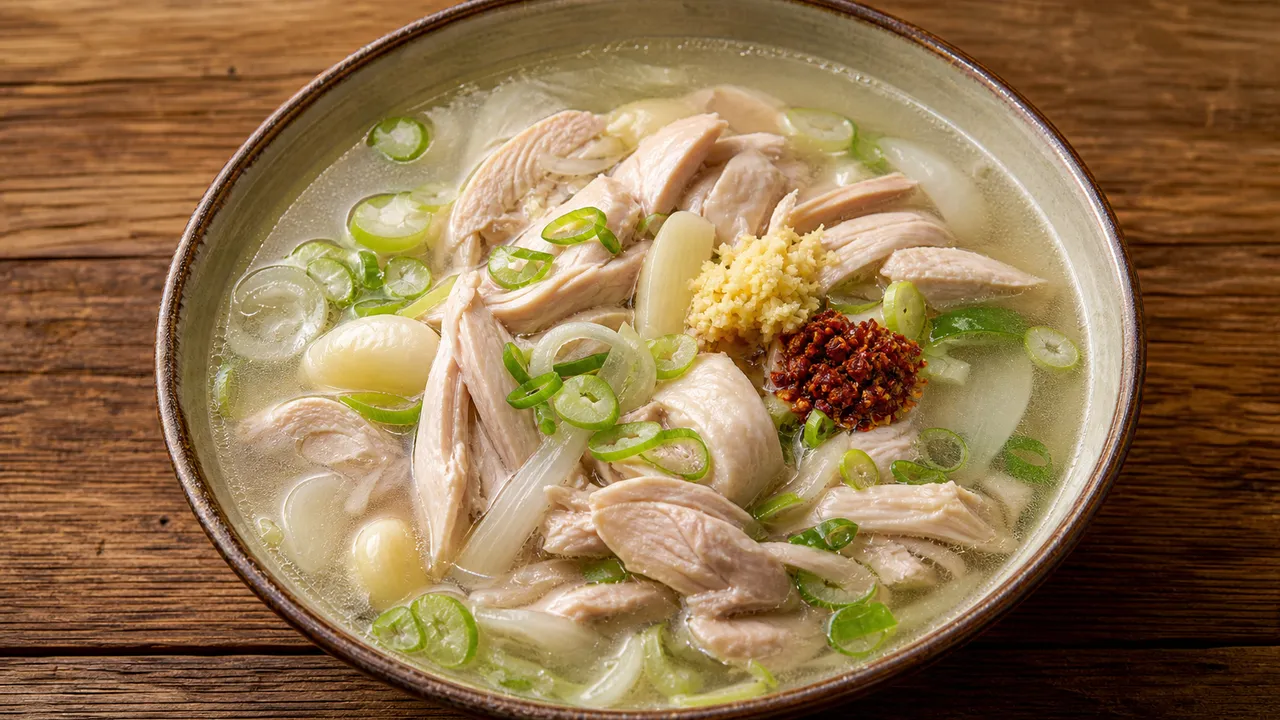
Boknal Chicken Recipe: Enjoying Both Clear Dakgomtang and Sp
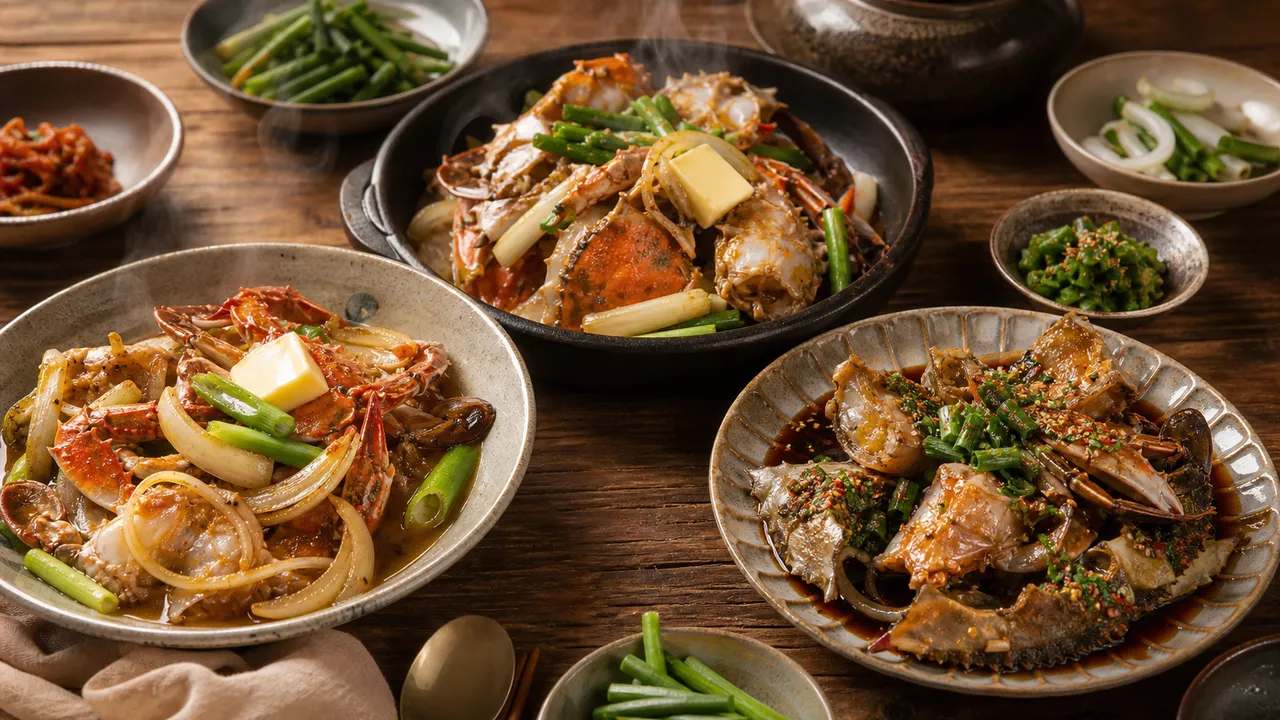
* 이미지는 AI가 생성한 참고 이미지로, 실제 조리 결과물과 다를 수 있습니다.
This recipe allows you to simultaneously enjoy a clear Dakgomtang (닭곰탕) made with chicken thighs and a spicy Dakgaejang (닭개장) – both excellent restorative foods for Boknal (복날) – in just 40 minutes. Delight your whole family with the clean, deep broth of Dakgomtang and the invigorating kick of Dakgaejang.
📋 3 recipes — Select to view
This recipe allows you to simultaneously enjoy a nourishing Dakgomtang (clear chicken soup) made with chicken thighs, perfect as a restorative meal on Boknal, and a spicy Dakgaejang (spicy chicken soup) – all in just 40 minutes. Delight your whole family with both the clear, deeply flavored Dakgomtang and the invigoratingly spicy Dakgaejang.
📝 Editor's Notes
This recipe allows you to make both clear Dakgomtang (clear chicken soup) and spicy Dakgaejang (spicy chicken soup) in just 40 minutes with 1 kg of boneless chicken thighs.
By searing the chicken skin first, the broth becomes deep and rich without any gamey smell.
The Dakgomtang offers a clean and milky flavor, while the Dakgaejang is spicy and invigorating with fish sauce (myeolchi-aekjeot) and red pepper powder (gochugaru).
The cooking difficulty is medium, so even beginners can manage it.
It's perfect as a nourishing meal for the whole family on a sweltering Boknal (복날) day or a chilly evening.
🛒 Ingredient Tips
For chicken thighs, choose boneless, skin-on cuts for easier preparation and eating.
Fresh chicken thighs should be plump, firm, and vibrant in color.
Avoid those with excess moisture on the surface or an off-smell.
For mung bean sprouts, look for plump, white stems with firm root tips.
For green onions, thick, firm white parts (especially winter varieties) add a sweeter flavor to the broth.
Choose ginger with a smooth, firm surface.
🔄 Substitution Guide
If chicken thighs are too heavy or you prefer a leaner option, you can substitute with chicken breast.
However, chicken breast can easily become dry, so be careful not to overcook it.
Soju (소주) is used to remove gamey odors and can be replaced with cheongju (청주 - Korean rice wine) or mirin.
If unavailable, you can add a little more ginger.
If you don't have fish sauce (myeolchi-aekjeot), you can season with guk-ganjang (국간장 - Korean soup soy sauce) or salt, but fish sauce adds a deeper umami flavor.
Instead of mung bean sprouts, you can use soybean sprouts for a refreshing broth, although they will be less crunchy.
Bracken (gosari) pairs well with taro stems or blanched dried radish greens (siraegi).
🥘 Ingredients
👨🍳 Cooking Points
The most important thing is to pat the chicken dry with paper towels instead of washing it.
Washing can actually leave a gamey smell.
Searing the chicken skin-side down until golden brown ensures a savory and clear broth.
Simmer the broth for a total of 30 minutes: 10 minutes over high heat, then 20 minutes over medium-low heat.
Be sure to skim off any impurities that float to the surface to keep the broth clear.
Add mung bean sprouts only at the very end; overcooking them will make them soft and lose their crunch.
👨🍳 Directions
Pat dry 1 kg of boneless chicken thighs with paper towels.
Heat a generous amount of olive oil in a pan, and sear the chicken thighs, skin-side down, until golden brown.
Place 1 roughly chopped medium onion, 2 large green onions, 10 whole garlic cloves, and 1 piece of ginger on top of the seared chicken thighs.
Pour in 2 tbsp of soju (소주) and add enough water to cover all the ingredients.
Close the lid and bring to a boil over high heat for 10 minutes, then reduce to medium-low heat and simmer for 20 minutes to make the broth (total 30 minutes).
Skim off any impurities that float to the surface of the broth.
💡 Tips
Patting the chicken dry with paper towels instead of washing it helps reduce its gamey smell.
You can enjoy two versions of this recipe: a clear Dakgomtang broth and a spicy Dakgaejang.
Using boneless chicken thighs makes preparation easier and more convenient to eat.
Mung bean sprouts do not need to be cooked for a long time.
📦 Storage & Reuse
Store the broth and solids together in an airtight container in the refrigerator for about 3 days.
For longer storage, divide into single servings and freeze for up to a month.
When reheating, transfer to a pot and bring to a boil to restore the flavor without any off-smell.
Mung bean sprouts can become soggy when reheated, so it's recommended to add fresh ones just before serving.
Leftover broth can be used for kalguksu (칼국수 - knife-cut noodles) or porridge.
🥢 Who This Is For
This dish is perfect for those needing nourishment on Boknal (복날), or for family members with reduced appetites.
The clear Dakgomtang is easy for seniors and children to enjoy, while the spicy Dakgaejang pairs well with a drink.
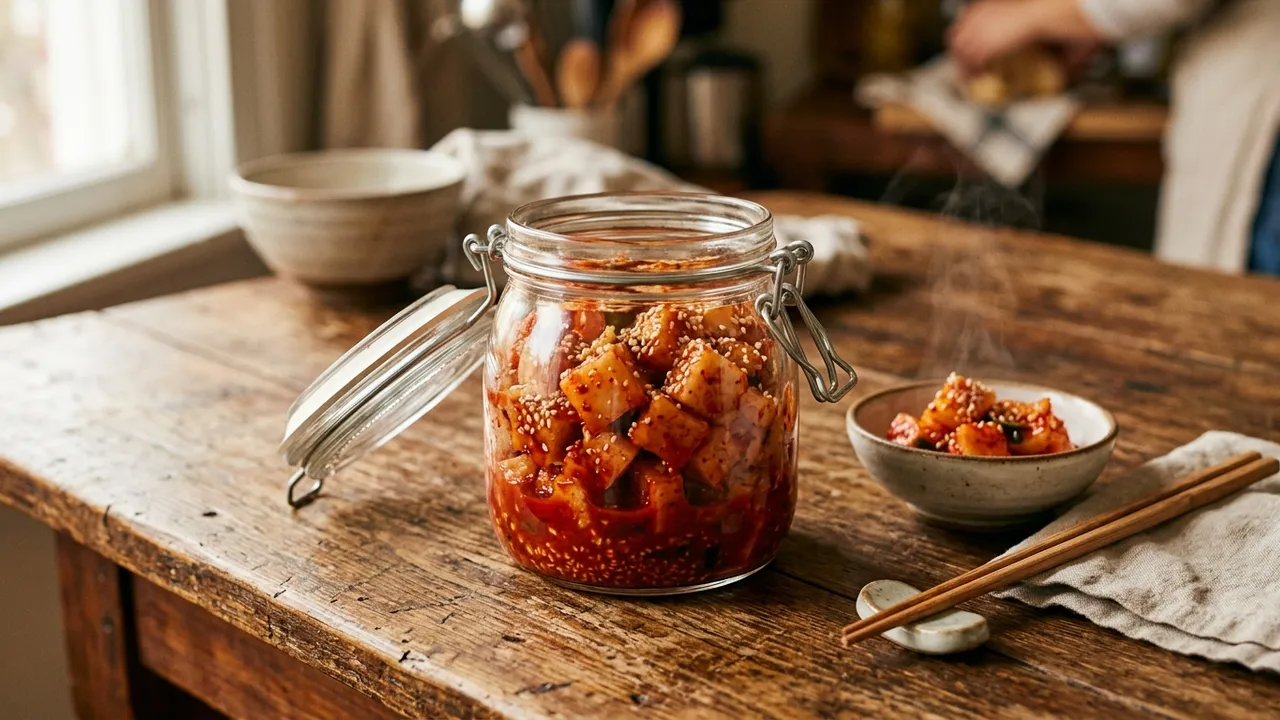
Enjoy it as a hearty meal with rice, or serve with kkakdugi (깍두기 - diced radish kimchi), baechu kimchi (배추김치 - napa cabbage kimchi), or buchu-muchim (부추무침 - spicy chive salad) to enhance the broth's flavor.
🔥 Nutrition Info
Estimated at about 480 kcal per serving.
With a generous amount of chicken thighs, protein content is high at around 40g, which is excellent for muscle recovery and boosting energy.
Fat is about 25g, partly from searing and the skin, while carbohydrates are low at about 10g, mainly from vegetables.
Allicin in garlic and ginger helps with blood circulation and immunity, and green onions and mung bean sprouts provide vitamin C and dietary fiber.
Dakgaejang with bracken (gosari) adds iron and potassium.
However, be mindful of sodium intake from fish sauce (myeolchi-aekjeot), and consume the broth in moderation.
💬 Frequently Asked Questions
- Q. What ingredients do I need for Boknal Chicken Recipe: Enjoying Both Clear Dakgomtang and Spicy Dakgaejang Simultaneously?
- Main ingredients include Boneless chicken thighs, Large green onions, Onion, Whole garlic cloves, Ginger. Choose boneless chicken thighs for easy preparation and eating. Fresh thighs should be firm, vibrant in color, and not excessively watery. For large green onions, select ones with thick, firm white stems for a sweeter broth. Pick ginger with a smooth, firm exterior and distinct aroma. Mung bean sprouts purchased on the same day, with plump, white stems and intact roots, will be the crispest. For gochugaru (고춧가루), using fine, bright red sun-dried chili powder will result in a more appetizing color for the Dakgaejang broth.
- Q. What are the key tips for making Boknal Chicken Recipe: Enjoying Both Clear Dakgomtang and Spicy Dakgaejang Simultaneously?
- First, do not wash the chicken; simply pat it dry with paper towels. Washing can cause the gamey smell to spread into the broth. Second, the key is to sear the chicken skin-side down until golden brown before simmering. This Maillard reaction on the surface enhances the broth's umami. Third, simmer for 10 minutes over high heat, then reduce to medium-low for 20 minutes, diligently skimming off any foam to keep the broth clear. Mung bean sprouts for Dakgaejang should be added at the very end and blanched for only 1-2 minutes; overcooking will make them mushy and lose their crispness.
- Q. How should I store leftover Boknal Chicken Recipe: Enjoying Both Clear Dakgomtang and Spicy Dakgaejang Simultaneously?
- Once cooked, let the broth cool down, then store it in an airtight container. It can be refrigerated for 3-4 days or frozen for 2-3 weeks. Storing the meat and broth separately can help maintain texture when reheating. To reheat, it's best to bring it to a boil in a pot. For mung bean sprouts, always add them fresh when reheating to preserve their crispness. Leftover Dakgomtang can be enjoyed with rice or kalguksu (칼국수) noodles for another satisfying meal.
- Q. How many calories are in Boknal Chicken Recipe: Enjoying Both Clear Dakgomtang and Spicy Dakgaejang Simultaneously?
- Estimated at approximately 480-560 kcal per serving. With chicken thighs as the main ingredient, it's rich in protein (around 45-50g). Fat content is about 25-30g, including skin and olive oil, while carbohydrates are relatively low (about 8-12g), mainly from vegetables and mung bean sprouts. Chicken thighs provide essential amino acids along with iron and zinc, helping with energy replenishment during summer. Allicin in garlic and gingerol in ginger aid digestion and blood circulation. Mung bean sprouts add vitamin C and dietary fiber. Note that Dakgaejang, with anchovy fish sauce (멸치액젓) and Cheongyang chili peppers (청양고추), can be high in sodium, so it's advisable to consume the broth in moderation.
- Q. Can I substitute ingredients in Boknal Chicken Recipe: Enjoying Both Clear Dakgomtang and Spicy Dakgaejang Simultaneously?
- If boneless chicken thighs are not preferred, you can use a whole chicken (young chicken) or chicken pieces meant for dakbokkeumtang (닭볶음탕 - spicy braised chicken). However, bones will increase preparation and deboning effort, though the broth might become richer. If anchovy fish sauce (멸치액젓) is too strong or causes allergies, you can substitute it with gukganjang (국간장 - Korean soup soy sauce) or saeujeot (새우젓 - salted fermented shrimp). If using gukganjang, the umami might be slightly less intense, so add a pinch of salt to adjust the seasoning. If bracken (고사리) is unavailable, taro stems or oyster mushrooms can be used as alternatives for a similar texture. Soju (소주) can be replaced with cheongju (청주 - Korean rice wine) or mirin (맛술); if using mirin, reduce the amount slightly due to its sweetness.
💬 Comments
No comments yet. Be the first to comment!