
Jumo's Special Secret Recipe: Tteokbokki, Dongnae Pajeon, an
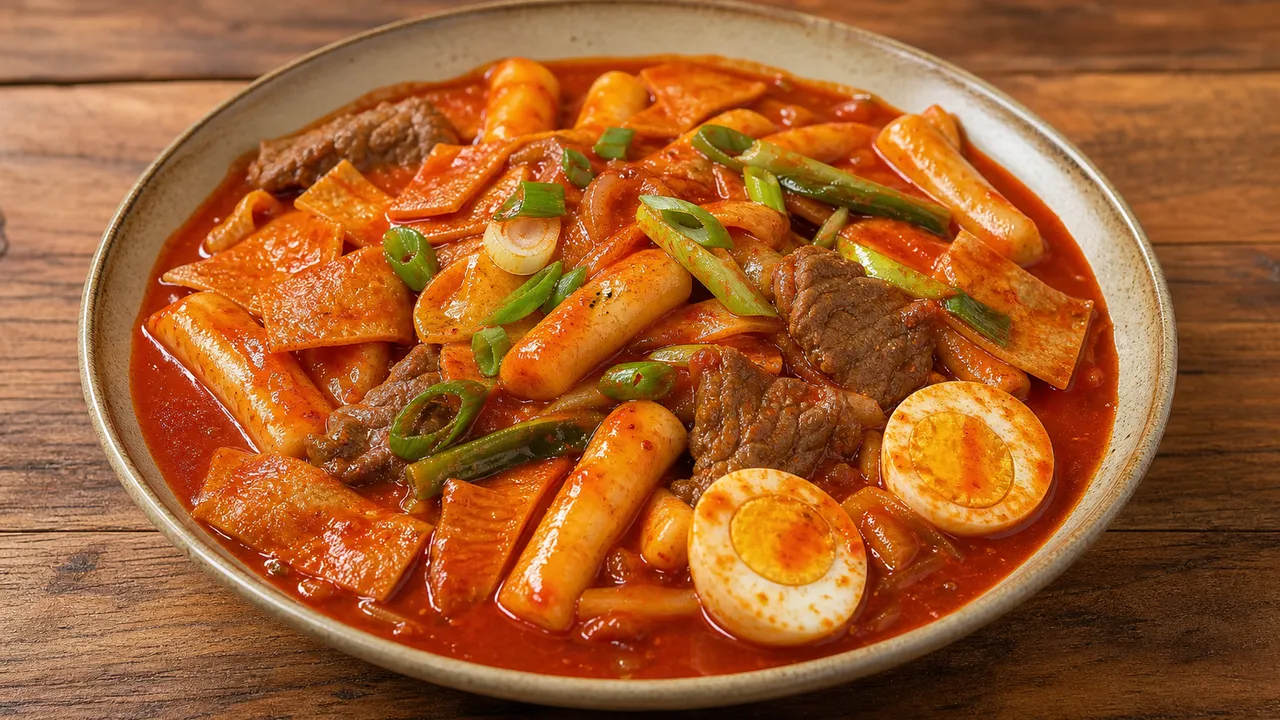
* 이미지는 AI가 생성한 참고 이미지로, 실제 조리 결과물과 다를 수 있습니다.
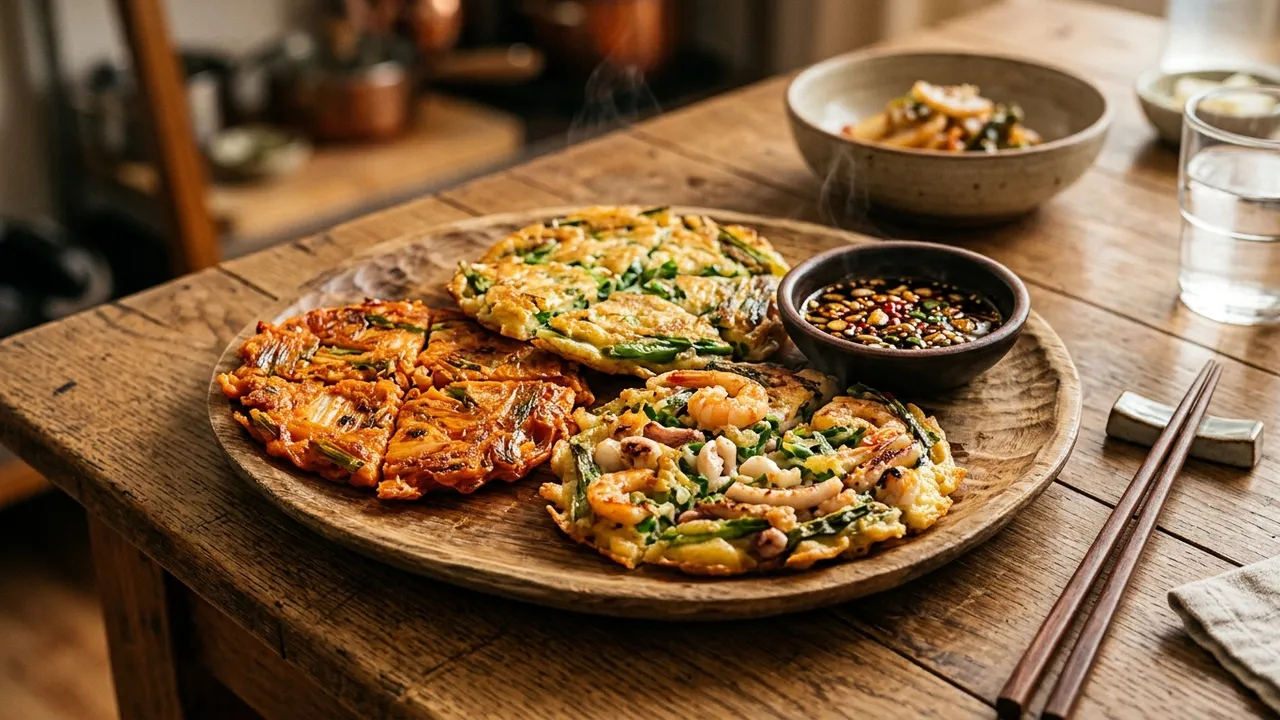
A generous complete meal featuring Tteokbokki, enhanced with the flavor of stir-fried green onions and beef, a crispy squid and scallion pancake, and bittersweet Doraji Namul (도라지나물).
📋 3 recipes — Select to view
A luxurious tteokbokki (떡볶이) that achieves deep flavor from dried pollock broth and enhanced richness from sautéed green onions and beef.
📝 Editor's Notes
Yoonjoodang Signature Tteokbokki (떡볶이) is a luxurious dish with a deep umami flavor from sautéed green onions and beef, and a rich broth made from dried pollock.
It takes about 20 minutes to complete and is considered a medium difficulty recipe.
The harmonious blend of spicy gochujang (고추장) and Cheongyang chili powder (cheongyang gochugaru (청양고춧가루)), along with the subtle sweetness of Korean grain syrup (jocheong (조청)), creates a profoundly rich and flavorful experience.
It’s perfect for a cozy family dinner on a chilly evening or as an impressive main dish for guests.
The deep flavor and special ingredient combination will elevate your culinary enjoyment.
🛒 Ingredient Tips
For Korean rice cakes (garaetteok (가래떡)), choose ones with a high rice content for a chewier and more delicious texture.
Rice cakes absorb flavor slower than flour-based cakes, so it's important to simmer them sufficiently in the sauce.
For beef, use a cut that isn't too fatty, such as brisket or bulgogi-style beef, to further enhance the tteokbokki's flavor.
For fresh green onions, use the white stalk portion rather than the green leaves for added sweetness and aroma.
Mixing various types of fish cakes (eomuk (어묵)) will provide a richer taste and texture.
🔄 Substitution Guide
If dried pollock broth ingredients are hard to find or you're short on time, you can use commercial instant broth tablets or kelp broth packs as a substitute.
While the depth of flavor might be slightly less, it will still add an easy umami boost.
If beef is unavailable or for a vegetarian option, sauté a generous amount of shiitake mushrooms or other mushrooms to achieve a rich umami and chewy texture similar to meat.
Regular sugar can be used instead of unrefined sugar, but the subtle, deep sweetness from unrefined sugar may differ slightly.
Corn syrup can be used instead of Korean grain syrup (jocheong (조청)), but jocheong pairs better with Korean rice cakes (garaetteok (가래떡)) and enhances its savory flavor.
🥘 Ingredients
👨🍳 Cooking Points
There are three key points to making this tteokbokki (떡볶이) successfully.
First, properly extracting the dried pollock broth is crucial.
Boil the dried pollock head (hwangtae meori (황태머리)), small dried anchovies (bandaengi (밴댕이)), dried shiitake mushrooms, and kelp root (ppuri-dasima (뿌리다시마)) for 20-30 minutes to develop a deep flavor.
This broth forms the foundation of the taste.
Second, sautéing the green onions and beef first to develop aroma.
Heat oil in a pan and thoroughly sauté the green onions and beef to bring out their savory richness.
Don't forget to add minced garlic and a splash of soy sauce to enhance the aroma.
Third, pre-sautéing the gochujang (고추장).
Commercial gochujang can sometimes have an alcoholic or floury taste; lightly sautéing it in oil removes these off-flavors and brings out its sweet and savory notes.
Keep these three points in mind, and you'll be able to make delicious tteokbokki every time.
👨🍳 Directions
To make the broth, add the dried pollock head (hwangtae meori (황태머리)), 6 small dried anchovies (bandaengi (밴댕이)), 4 slices of dried shiitake mushrooms, and 1 piece of kelp root (ppuri-dasima (뿌리다시마)) to a pot. Boil for 20-30 minutes, then strain. (You can substitute with instant broth tablets if preferred.)
Cut the Korean rice cakes (garaetteok (가래떡)) in half to prepare bite-sized pieces. (Flour-based rice cakes cook quickly, while garaetteok tastes better when simmered slowly to absorb flavor.)
Prepare boiled eggs, an essential part of tteokbokki (떡볶이).
Heat oil in a pan, then add green onions and beef and sauté until fragrant.
Add 1 tbsp of minced garlic and a splash of soy sauce to infuse a savory aroma.
Add 2 tbsp of gochujang (고추장) and sauté to remove any alcohol or flour taste, bringing out a sweet and savory depth. (Sautéing commercial gochujang is highly recommended for a better flavor.)
Add 2 tbsp of unrefined sugar and sauté together with the mixture.
Pour in 2 ladles of the prepared broth.
Add 2 tbsp of Cheongyang chili powder (cheongyang gochugaru (청양고춧가루)) and mix well.
Add 2 tbsp of Korean grain syrup (jocheong (조청)) instead of corn syrup. (Jocheong pairs well with garaetteok, enhancing its savory flavor.)
Add a generous amount of fish cakes (eomuk (어묵)), boiled eggs, and Korean rice cakes (garaetteok (가래떡)), then simmer thoroughly until the sauce is well absorbed.
Optionally, sprinkle a dash of black pepper to add a spicy kick.
Continue to simmer until a rich, deep flavor develops. It's now complete!
Finally, garnish with sesame seeds before serving.
💡 Tips
If broth ingredients are unavailable, you can substitute with instant broth tablets.
Sautéing commercial gochujang (고추장) beforehand helps to remove any alcohol or flour taste, enhancing its sweet and savory notes.
Korean grain syrup (jocheong (조청)) pairs better with Korean rice cakes (garaetteok (가래떡)) than corn syrup, bringing out a richer, savory flavor.
If the sauce thickens too much, add more broth to adjust the consistency.
📦 Storage & Reuse
Store leftover tteokbokki (떡볶이) in an airtight container in the refrigerator for 2-3 days to maintain freshness.
While freezing is possible for longer storage, the texture of the rice cakes may become hard, and fish cakes might change, so it’s best to consume them as soon as possible.
For freezing, portion into smaller containers for convenience.
When reheating, simmer over low heat with a little extra broth to restore its original flavor.
You can also make a delicious fried rice by mixing leftover tteokbokki with rice, seaweed flakes, and sesame oil.
🥢 Who This Is For
This Yoonjoodang Signature Tteokbokki (떡볶이) is perfect as a special family meal or a main dish when entertaining guests.
Its deep flavor also makes it an excellent accompaniment for alcoholic beverages.
With its spicy and sweet taste, it's a dish that people of all ages will love.
We recommend pairing it with refreshing bean sprout soup (kongnamul-guk (콩나물국)), crispy pickled radish (danmuji (단무지)), or crunchy fried seaweed rolls (gimmari (김말이)) to balance the spiciness of the tteokbokki and create an even richer dining experience.
🔥 Nutrition Info
As this tteokbokki (떡볶이) uses high-quality ingredients, it is also rich in nutrients.
For a single serving, the estimated calories are around 600-700 kcal, with approximately 30-40g of protein, 20-30g of fat, and 80-100g of carbohydrates.
Beef provides high-quality protein and iron, while green onions and garlic add vitamins and antioxidants.
The dried pollock broth (hwangtae yuksu (황태 육수)) is rich in collagen and amino acids, making it a great choice not just for taste but also for nutrition.
However, since it contains sugar and Korean grain syrup (jocheong (조청)), be mindful of sugar intake, and adding more vegetables can make it an even more balanced meal.
💬 Frequently Asked Questions
- Q. What ingredients do I need for Jumo's Special Secret Recipe: Tteokbokki, Dongnae Pajeon, and Doraji Namul Complete Meal?
- Main ingredients include Garaetteok (가래떡) (Cylindrical Rice Cakes), Eomuk (어묵) (Fish Cakes), Green Onion, Beef, Boiled Egg. The key to this recipe starts with good ingredients. For garaetteok (가래떡), it's best to use freshly made rice cakes from a mill for a chewy texture. If using frozen garaetteok (가래떡), thaw them in advance until soft. For eomuk (어묵) (fish cakes), it's good to use thick and chewy varieties generously, rather than thin or easily crumbled ones, as they blend well with the sauce and add to the enjoyment. Beef is an important ingredient for adding umami to tteokbokki, so it's best to prepare thinly sliced cuts like beef chuck (buchaesal) or bulgogi (불고기) (marinated beef) style cuts that are not too fatty. Fresh beef has a bright red color, a glossy sheen, and is firm to the touch. For broth ingredients like dried pollack head (황태머리), bandengi (밴댕이) (small anchovies), dried shiitake mushrooms, and kombu (다시마) (kelp root), choose well-dried ones that are free from fishy odors. Especially for dried pollack (황태), it's good to select plump pieces with a yellowish hue.
- Q. What are the key tips for making Jumo's Special Secret Recipe: Tteokbokki, Dongnae Pajeon, and Doraji Namul Complete Meal?
- Here are three important cooking points that determine the taste of this Tteokbokki. First, the process of making the dried pollack broth. It's crucial to add dried pollack (황태), bandengi (밴댕이) (small anchovies), dried shiitake mushrooms, and kombu (다시마) (kelp) and simmer for 20-30 minutes to create a deep flavor. Be careful not to boil it for too long, as it can become bitter. Second, stir-frying the gochujang (고추장) after stir-frying the green onions and beef. Heat oil in a pan, add green onions, beef, minced garlic, and soy sauce, stir-fry sufficiently to infuse the flavors, then add 2 tbsp of gochujang (고추장) and stir-fry over low heat for 1-2 minutes. This process removes the dull taste of gochujang (고추장) and maximizes its sweetness and savory notes. Third, using jocheong (조청) is key. Adding 2 tbsp of jocheong (조청) instead of corn syrup pairs exceptionally well with garaetteok (가래떡) and adds a savory flavor, so please make sure to follow this step. Finally, it's important to add all ingredients and simmer thoroughly over medium-low heat until the seasoning is well absorbed. Simmer for at least 10 minutes for the rice cakes and fish cakes to properly soak up the rich flavor.
- Q. How should I store leftover Jumo's Special Secret Recipe: Tteokbokki, Dongnae Pajeon, and Doraji Namul Complete Meal?
- The finished Tteokbokki can be stored in an airtight container in the refrigerator for 2-3 days. When reheating, warm it in the microwave or transfer it to a pot, add a little more broth, and simmer over low heat to enjoy the original taste. Leftover tteokbokki sauce can be used to make a delicious fried rice by adding rice, shredded seaweed, and sesame oil. If you have leftover garaetteok (가래떡), slice them thinly and freeze. After thawing, use them for tteokguk (떡국) (rice cake soup) or tteokkochi (떡꼬치) (skewered fried rice cakes). Dongnae Pajeon (동래파전) is best enjoyed immediately, but if there are leftovers, refrigerate and then reheat in a pan with a little oil over low heat to restore some of its crispiness.
- Q. How many calories are in Jumo's Special Secret Recipe: Tteokbokki, Dongnae Pajeon, and Doraji Namul Complete Meal?
- Since this recipe is a complete meal consisting of Tteokbokki, Dongnae Pajeon (동래파전), and Doraji Namul (도라지나물), an exact calorie calculation per serving is difficult. However, focusing solely on the Tteokbokki, it is estimated to be around 500-600 kcal per serving. You can expect to consume approximately 70-80g of carbohydrates from garaetteok (가래떡), 20-25g of protein from beef and eomuk (어묵), and 15-20g of fat from gochujang (고추장), jocheong (조청), and oil. Beef provides high-quality protein and iron, while green onions and chili powder offer Vitamin C and capsaicin, aiding in immune system enhancement and vitality. Jocheong (조청) is an unrefined sweetener rich in minerals, which can be slightly more beneficial for blood sugar control than sugar. Doraji Namul (도라지나물) is rich in dietary fiber and saponins, which are good for bronchial health.
- Q. Can I substitute ingredients in Jumo's Special Secret Recipe: Tteokbokki, Dongnae Pajeon, and Doraji Namul Complete Meal?
- If it's difficult to find broth ingredients like dried pollack head (황태머리) and bandengi (밴댕이), you can substitute with commercial instant broth tablets/packets or kelp broth packs. However, the deep umami flavor might be less intense than homemade dried pollack broth. If you don't have beef or prefer a vegetarian option, you can finely chop and stir-fry shiitake mushrooms or king oyster mushrooms instead to add flavor and texture. In this case, adding boiled quail eggs or tofu is a good way to supplement protein. While it's acceptable to use white sugar and corn syrup instead of unrefined sugar and jocheong (조청), please note that the unique savory taste of jocheong (조청) and the subtle sweetness of unrefined sugar might be slightly diminished.
💬 Comments
No comments yet. Be the first to comment!