
Foolproof Restaurant-Style Chadol Doenjang-jjigae (차돌된장찌개) S
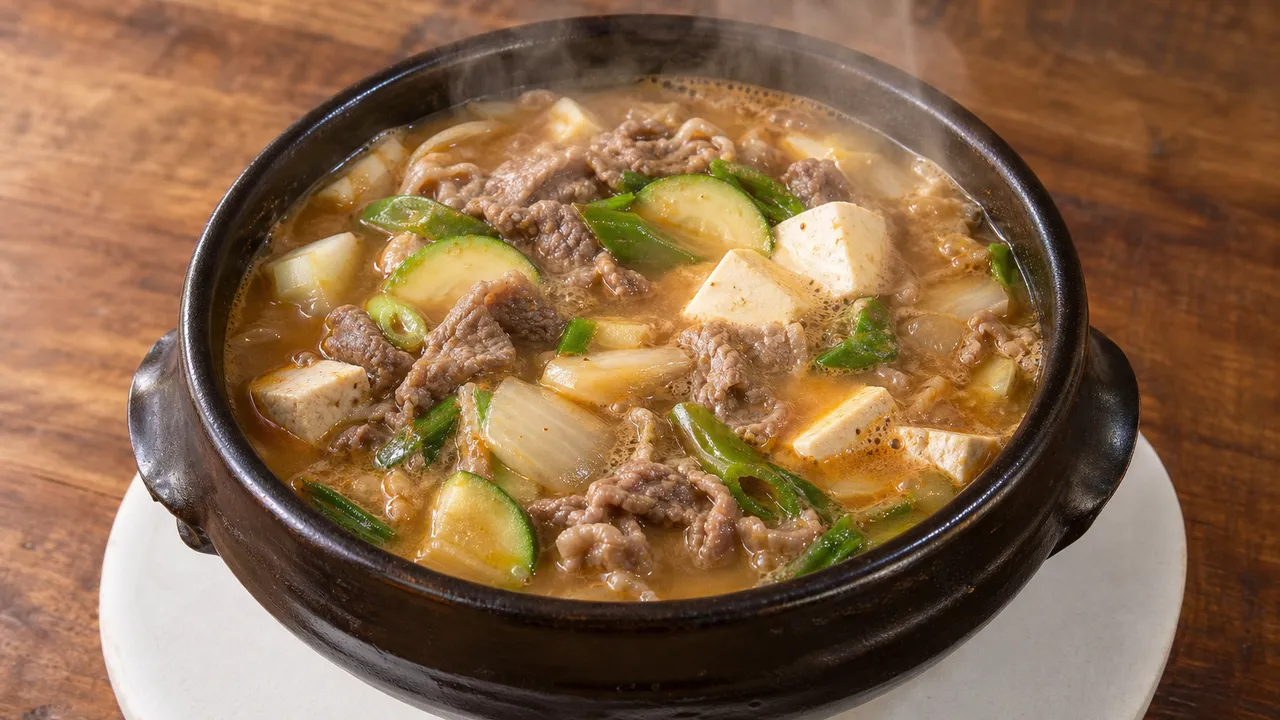
* 이미지는 AI가 생성한 참고 이미지로, 실제 조리 결과물과 다를 수 있습니다.
This is a foolproof Chadol Doenjang-jjigae (차돌된장찌개) recipe that maximizes flavor and umami by stir-frying doenjang (된장) and sesame oil in the rendered fat from chadol (차돌박이).
📝 Editor's Notes
Today's recipe is for Chadol Doenjang-jjigae (차돌된장찌개), a stew with a deep, exquisite flavor achieved by stir-frying doenjang (된장) in the savory fat rendered from chadol (차돌박이).
It's a medium-difficulty dish that can be completed in about 30 minutes.
The process of stir-frying doenjang and sesame oil in the chadol fat is particularly crucial, as it creates an explosive combination of rich and savory umami.
With the addition of rice water and a seafood broth tablet, it also offers a refreshing taste, making it a perfect dish to enjoy with warm rice on chilly days.
🛒 Ingredient Tips
The core ingredient of Chadol Doenjang-jjigae (차돌된장찌개) is chadol (차돌박이).
Fresh chadol should have a vibrant red color with evenly distributed white fat.
Choose chadol of a moderate thickness – neither too thin nor too thick – so that it renders enough fat when cooked to blend well with the doenjang (된장).
For the doenjang, both homemade and store-bought varieties work well, but it's important to select one that isn't too salty and has a strong, savory flavor.
For store-bought doenjang, choosing a product with added seafood or shiitake mushrooms can enhance the depth of flavor.
Make sure to use firm tofu (or 'stew-용' tofu) to ensure it holds its shape and maintains a good texture during cooking.
🔄 Substitution Guide
If chadol (차돌박이) is unavailable, you can use thinly sliced pork belly (daepae samgyeopsal, 대패삼겹살) or beef brisket (usamygyeop, 우삼겹).
While it may offer less of the rich, savory flavor of chadol, it will still make a delicious doenjang-jjigae (된장찌개).
Pork offers a different kind of savory depth compared to beef.
If you don't have a seafood broth tablet, you can make your own broth with kelp (dashima, 다시마) and dried anchovies (myeolchi, 멸치), or use a store-bought kelp broth packet.
Kelp and anchovy broth will add a refreshing and clean taste, though it might be slightly less intensely flavored than a broth tablet.
If you prefer less spice, you can substitute Cheongyang chili pepper (청양고추) with a regular green chili pepper, making it enjoyable for those who can't handle too much heat.
🥘 Ingredients
👨🍳 Cooking Points
There are two crucial cooking points for this Chadol Doenjang-jjigae (차돌된장찌개).
First, the process of sufficiently stir-frying the chadol (차돌박이) over low heat to render its fat.
You need to stir-fry it enough so that the bottom of the pot is coated with chadol fat, allowing the doenjang (된장) and sesame oil to blend well with it, creating a deep flavor.
Second, the key is to add doenjang, sesame oil, and soy sauce in that order to the chadol fat and stir-fry them thoroughly.
Maintain low heat to prevent the doenjang from burning and stir-fry until it sizzles gently; this will reduce any bitterness from the doenjang and maximize its savory umami.
Perform this step for about 5 minutes.
Finally, when adjusting the seasoning, it's best to add ingredients little by little and taste as you go, rather than adding a large amount at once.
👨🍳 Directions
Prepare an earthenware pot (ttukbaegi) or a pot for the stew.
Add more than half of the prepared 200g of chadol (차돌박이) to the pot and grill over low heat. Stir-fry sufficiently until the pot is coated with chadol fat.
Once the chadol (차돌박이) is well-cooked and enough fat has rendered, add 1 heaping tbsp of doenjang (된장) and 1 tbsp of sesame oil, then stir-fry the doenjang in the chadol fat.
When the doenjang (된장) is sizzling and cooking, add 1 tbsp of soy sauce and stir-fry it together.
Once it has been sufficiently stir-fried, add rice water and 1 seafood-based broth tablet.
When the water boils vigorously, add 1/2 onion and 1/3 Korean zucchini (애호박). Simmer until the onion and Korean zucchini are tender.
After simmering, taste for seasoning. If it's bland, add a pinch of salt. If it lacks depth, add a little more doenjang (된장) to adjust the seasoning. If it's too salty, add a little more water.
Once the seasoning is perfect, add 1 Cheongyang chili pepper (청양고추), gochugaru (고춧가루), and 1/2 block of firm tofu for stew. Simmer for another 3 minutes, then serve.
💡 Tips
Stir-frying doenjang (된장) and sesame oil together in the rendered chadol (차돌박이) fat deepens the flavor and umami of the doenjang-jjigae (된장찌개) and reduces any lingering bitterness.
Using rice water can create a deeper flavor, and adding a seafood broth tablet significantly enhances the aroma.
By following the key points in this recipe instead of just haphazardly boiling the doenjang-jjigae (된장찌개), you can create a delicious stew with a 0% chance of failure.
📦 Storage & Reuse
The prepared Chadol Doenjang-jjigae (차돌된장찌개) is best stored in an airtight container in the refrigerator for 2-3 days.
The broth may reduce and the flavor might change over time, so it's recommended to consume it as soon as possible.
Freezing is not recommended as it can alter the texture of the tofu and vegetables.
When reheating, warm it gently over low heat.
If the broth has reduced too much, add a little rice water or plain water to adjust the seasoning.
Leftover stew can be enjoyed by mixing it with rice or by adding ramen noodles for a unique Doenjang Ramen (된장라면) experience.
🥢 Who This Is For
This Chadol Doenjang-jjigae (차돌된장찌개) is a delightful dish for the whole family to enjoy.
Its rich flavor will satisfy both children and adults who love meat.
It's perfect for when you crave a warm stew on a chilly day, or it can be served as a main dish when entertaining guests.
Paired with freshly cooked white rice, it makes a hearty meal even without other side dishes.
For an even richer dining experience, consider serving it alongside spicy gochujang bulgogi (고추장불고기) or a light grilled fish.
🔥 Nutrition Info
This Chadol Doenjang-jjigae (차돌된장찌개) is estimated to be approximately 450-550 kcal per 2 servings.
When using 200g of chadol (차돌박이), it is expected to contain about 30-40g of protein, 35-45g of fat, and 15-20g of carbohydrates.
It is rich in protein and fat from the chadol, and plant-based protein can be supplemented by the tofu.
Vegetables such as onion, Korean zucchini (애호박), and Cheongyang chili pepper (청양고추) provide vitamins and dietary fiber.
Using rice water and seafood broth contributes to umami and helps with mineral intake, making it a nutritionally balanced stew.
However, the sodium content can be relatively high, so it is important to adjust the salt seasoning during cooking.
💬 Frequently Asked Questions
- Q. What ingredients do I need for Foolproof Restaurant-Style Chadol Doenjang-jjigae (차돌된장찌개) Secret Recipe?
- Main ingredients include Chadol (차돌박이) (Brisket Point), Doenjang (된장) (Korean Soybean Paste), Sesame Oil, Soy Sauce, Rice Water. The core ingredient of Chadol Doenjang-jjigae (차돌된장찌개) is chadol (차돌박이). Fresh chadol should have a vibrant red color with evenly distributed white fat. Choose chadol of a moderate thickness – neither too thin nor too thick – so that it renders enough fat when cooked to blend well with the doenjang (된장). For the doenjang, both homemade and store-bought varieties work well, but it's important to select one that isn't too salty and has a strong, savory flavor. For store-bought doenjang, choosing a product with added seafood or shiitake mushrooms can enhance the depth of flavor. Make sure to use firm tofu (or 'stew-용' tofu) to ensure it holds its shape and maintains a good texture during cooking.
- Q. What are the key tips for making Foolproof Restaurant-Style Chadol Doenjang-jjigae (차돌된장찌개) Secret Recipe?
- There are two crucial cooking points for this Chadol Doenjang-jjigae (차돌된장찌개). First, the process of sufficiently stir-frying the chadol (차돌박이) over low heat to render its fat. You need to stir-fry it enough so that the bottom of the pot is coated with chadol fat, allowing the doenjang (된장) and sesame oil to blend well with it, creating a deep flavor. Second, the key is to add doenjang, sesame oil, and soy sauce in that order to the chadol fat and stir-fry them thoroughly. Maintain low heat to prevent the doenjang from burning and stir-fry until it sizzles gently; this will reduce any bitterness from the doenjang and maximize its savory umami. Perform this step for about 5 minutes. Finally, when adjusting the seasoning, it's best to add ingredients little by little and taste as you go, rather than adding a large amount at once.
- Q. How should I store leftover Foolproof Restaurant-Style Chadol Doenjang-jjigae (차돌된장찌개) Secret Recipe?
- The prepared Chadol Doenjang-jjigae (차돌된장찌개) is best stored in an airtight container in the refrigerator for 2-3 days. The broth may reduce and the flavor might change over time, so it's recommended to consume it as soon as possible. Freezing is not recommended as it can alter the texture of the tofu and vegetables. When reheating, warm it gently over low heat. If the broth has reduced too much, add a little rice water or plain water to adjust the seasoning. Leftover stew can be enjoyed by mixing it with rice or by adding ramen noodles for a unique Doenjang Ramen (된장라면) experience.
- Q. How many calories are in Foolproof Restaurant-Style Chadol Doenjang-jjigae (차돌된장찌개) Secret Recipe?
- This Chadol Doenjang-jjigae (차돌된장찌개) is estimated to be approximately 450-550 kcal per 2 servings. When using 200g of chadol (차돌박이), it is expected to contain about 30-40g of protein, 35-45g of fat, and 15-20g of carbohydrates. It is rich in protein and fat from the chadol, and plant-based protein can be supplemented by the tofu. Vegetables such as onion, Korean zucchini (애호박), and Cheongyang chili pepper (청양고추) provide vitamins and dietary fiber. Using rice water and seafood broth contributes to umami and helps with mineral intake, making it a nutritionally balanced stew. However, the sodium content can be relatively high, so it is important to adjust the salt seasoning during cooking.
- Q. Can I substitute ingredients in Foolproof Restaurant-Style Chadol Doenjang-jjigae (차돌된장찌개) Secret Recipe?
- If chadol (차돌박이) is unavailable, you can use thinly sliced pork belly (daepae samgyeopsal, 대패삼겹살) or beef brisket (usamygyeop, 우삼겹). While it may offer less of the rich, savory flavor of chadol, it will still make a delicious doenjang-jjigae (된장찌개). Pork offers a different kind of savory depth compared to beef. If you don't have a seafood broth tablet, you can make your own broth with kelp (dashima, 다시마) and dried anchovies (myeolchi, 멸치), or use a store-bought kelp broth packet. Kelp and anchovy broth will add a refreshing and clean taste, though it might be slightly less intensely flavored than a broth tablet. If you prefer less spice, you can substitute Cheongyang chili pepper (청양고추) with a regular green chili pepper, making it enjoyable for those who can't handle too much heat.
💬 Comments
No comments yet. Be the first to comment!