
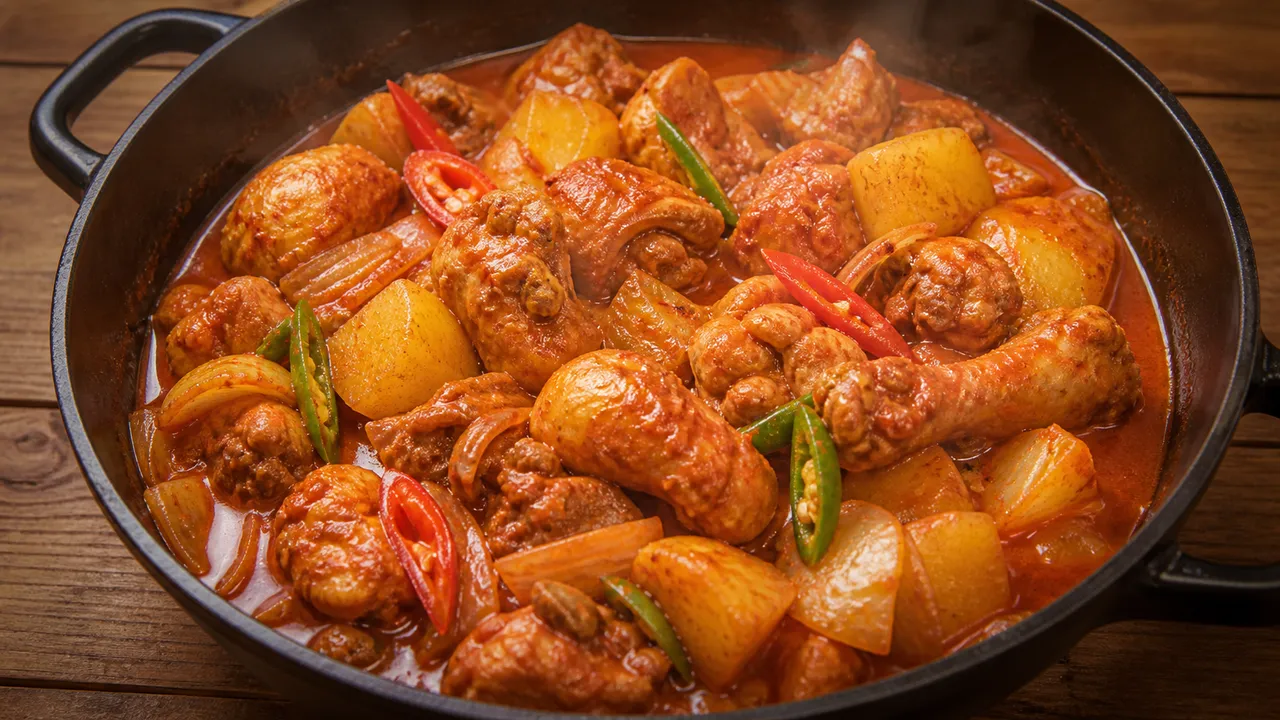
Dakbokkeumtang (Korean Spicy Braised Chicken): Secret Recipe
* 이미지는 AI가 생성한 참고 이미지로, 실제 조리 결과물과 다를 수 있습니다.
This Dakbokkeumtang (Korean Spicy Braised Chicken) recipe delivers a deep umami flavor in just 30 minutes, using 1 kg of chicken. It features a secret method for eliminating gamey odors and a golden seasoning ratio known only to experts.
📝 Editor's Notes
This Dakbokkeumtang recipe allows you to create a fantastic meal with 1 kg of chicken in just 30 minutes.
It's characterized by its deep umami flavor and lack of gamey odor.
The key secret to this dish is first stir-frying the chicken with soy sauce and ginger.
Its spicy, sweet, and savory taste is exquisite, making it perfect for enjoying with family on chilly days or as an impressive dish for guests.
You'll be able to perfectly recreate that restaurant-quality taste right at home.
🛒 Ingredient Tips
For Dakbokkeumtang, it's convenient to prepare about 1 kg of pre-cut chicken.
Fresh chicken should have firm flesh, glossy skin, and no odor.
When buying chicken, it's best to choose pieces without too many small bone fragments.
For potatoes, two medium-sized ones are suitable, not too large.
Select potatoes with smooth, firm skin and no sprouts.
For the onion, use half a piece; a fresh onion has thin, glossy skin and is firm to the touch.
🔄 Substitution Guide
If you prefer an alternative to chicken in your Dakbokkeumtang, you can use duck or pork shoulder.
Duck meat is higher in fat than chicken but contains beneficial unsaturated fatty acids and can add a richer flavor.
Pork shoulder will provide a chewy texture and deeper meaty aroma.
Substituting sweet potatoes for regular potatoes will add a distinct sweetness, offering a different flavor profile.
If the sugar content is a concern, grating half an onion can provide natural sweetness.
If oyster sauce is unavailable, you can add an extra 1 tbsp of soy sauce, though the unique umami of oyster sauce might be slightly diminished.
🥘 Ingredients
👨🍳 Cooking Points
There are two crucial cooking points for this Dakbokkeumtang.
First, ensuring the gamey odor is thoroughly removed from the chicken.
Blanching the chicken briefly in boiling water, then rinsing it clean in cold water, is key.
This step alone will result in a much cleaner taste.
Second, stir-frying the chicken first with soy sauce and ginger.
Add 1 tbsp minced garlic, 1/2 tsp minced ginger, and 6 tbsp soy sauce, and stir-fry until the chicken is deeply browned with the soy sauce.
This process infuses the chicken with a deep umami flavor, significantly enhancing its richness.
Finally, dice the potatoes into large pieces and simmer for about 15 minutes until they are tender and fluffy for the best taste.
👨🍳 Directions
Blanch 1 kg of chicken briefly in boiling water, then rinse in cold water to remove impurities and gamey odor.
Heat cooking oil in a pan, then add the blanched chicken. Add 1 tbsp minced garlic, 1/2 tsp minced ginger, and 6 tbsp soy sauce, and stir-fry until the chicken is deeply browned with soy sauce.
Add 300 ml water, 4 tbsp sugar, 3 tbsp mirin, 4 tbsp gochugaru (고춧가루), 2 tbsp oyster sauce, and 3 tbsp gochujang (고추장), and bring to a simmer.
Add 2 large-diced potatoes, followed by 1/2 large-diced onion, then simmer until the potatoes are tender and fluffy (about 15 minutes).
Once the potatoes are cooked, taste the broth and adjust seasoning to your preference. Add a pinch of black pepper, 1 chopped green onion, and sliced chili peppers as desired, then finish cooking.
💡 Tips
Blanching the chicken in boiling water helps to cleanly remove impurities and gamey odor.
Stir-frying the chicken with minced ginger and soy sauce helps to eliminate gamey smells and adds a much richer and deeper flavor to the seasoning.
If the amount of sugar feels too much, reduce it to 1-2 tbsp and instead grate half an onion into the dish to add a subtle sweetness and clean taste.
After enjoying the Dakbokkeumtang, adding instant ramen noodles or making fried rice with the leftover broth is not an option, but a must!
📦 Storage & Reuse
The finished Dakbokkeumtang can be stored in an airtight container in the refrigerator for 2-3 days.
For longer storage, divide it into single-serving portions and freeze for up to 2 weeks.
To thaw, either naturally defrost in the refrigerator or use a microwave, then gently reheat in a pot over low heat.
Be careful not to reheat too quickly over high heat, as the chicken may become tough.
Leftover Dakbokkeumtang broth is great for mixing with rice or using as a base for other stews or stir-fries.
If you have leftover potatoes, mashing them for a salad or making pancakes (jeon) are also good ways to use them up.
🥢 Who This Is For
This Dakbokkeumtang is a fantastic dish for the whole family to enjoy.
It's especially well-suited as a hearty and spicy dinner or a special weekend meal.
If you love spicy food, feel free to add more Cheongyang chili peppers (청양고추).
It's excellent as a side dish for rice and also makes a superb accompaniment to alcoholic beverages.
We highly recommend making fried rice with the leftover broth by adding shredded nori and sesame oil, or adding instant ramen noodles.
This combination is truly an irresistible delicacy.
🔥 Nutrition Info
Dakbokkeumtang, with chicken as its main ingredient, is an excellent dish for protein intake.
Based on 1 kg of chicken in this recipe, if divided into 3-4 servings, the estimated calories per serving are approximately 500-600 kcal.
Protein is estimated at about 35-45g, fat at 25-35g, and carbohydrates at 30-40g.
Chicken is rich in essential amino acids and B vitamins, which help alleviate fatigue.
Potatoes provide vitamin C and potassium, while onions contain antioxidants.
However, the sodium content can be high, so it's advisable to moderate your broth consumption.
💬 Frequently Asked Questions
- Q. What ingredients do I need for Dakbokkeumtang (Korean Spicy Braised Chicken): Secret Recipe to Perfectly Recreate Restaurant Flavor, Odor-Free with a Golden Ratio?
- Main ingredients include Chicken, Cooking oil, Minced garlic, Minced ginger, Soy sauce. For Dakbokkeumtang, it's convenient to prepare about 1 kg of pre-cut chicken. Fresh chicken should have firm flesh, glossy skin, and no odor. When buying chicken, it's best to choose pieces without too many small bone fragments. For potatoes, two medium-sized ones are suitable, not too large. Select potatoes with smooth, firm skin and no sprouts. For the onion, use half a piece; a fresh onion has thin, glossy skin and is firm to the touch.
- Q. What are the key tips for making Dakbokkeumtang (Korean Spicy Braised Chicken): Secret Recipe to Perfectly Recreate Restaurant Flavor, Odor-Free with a Golden Ratio?
- There are two crucial cooking points for this Dakbokkeumtang. First, ensuring the gamey odor is thoroughly removed from the chicken. Blanching the chicken briefly in boiling water, then rinsing it clean in cold water, is key. This step alone will result in a much cleaner taste. Second, stir-frying the chicken first with soy sauce and ginger. Add 1 tbsp minced garlic, 1/2 tsp minced ginger, and 6 tbsp soy sauce, and stir-fry until the chicken is deeply browned with the soy sauce. This process infuses the chicken with a deep umami flavor, significantly enhancing its richness. Finally, dice the potatoes into large pieces and simmer for about 15 minutes until they are tender and fluffy for the best taste.
- Q. How should I store leftover Dakbokkeumtang (Korean Spicy Braised Chicken): Secret Recipe to Perfectly Recreate Restaurant Flavor, Odor-Free with a Golden Ratio?
- The finished Dakbokkeumtang can be stored in an airtight container in the refrigerator for 2-3 days. For longer storage, divide it into single-serving portions and freeze for up to 2 weeks. To thaw, either naturally defrost in the refrigerator or use a microwave, then gently reheat in a pot over low heat. Be careful not to reheat too quickly over high heat, as the chicken may become tough. Leftover Dakbokkeumtang broth is great for mixing with rice or using as a base for other stews or stir-fries. If you have leftover potatoes, mashing them for a salad or making pancakes (jeon) are also good ways to use them up.
- Q. How many calories are in Dakbokkeumtang (Korean Spicy Braised Chicken): Secret Recipe to Perfectly Recreate Restaurant Flavor, Odor-Free with a Golden Ratio?
- Dakbokkeumtang, with chicken as its main ingredient, is an excellent dish for protein intake. Based on 1 kg of chicken in this recipe, if divided into 3-4 servings, the estimated calories per serving are approximately 500-600 kcal. Protein is estimated at about 35-45g, fat at 25-35g, and carbohydrates at 30-40g. Chicken is rich in essential amino acids and B vitamins, which help alleviate fatigue. Potatoes provide vitamin C and potassium, while onions contain antioxidants. However, the sodium content can be high, so it's advisable to moderate your broth consumption.
- Q. Can I substitute ingredients in Dakbokkeumtang (Korean Spicy Braised Chicken): Secret Recipe to Perfectly Recreate Restaurant Flavor, Odor-Free with a Golden Ratio?
- If you prefer an alternative to chicken in your Dakbokkeumtang, you can use duck or pork shoulder. Duck meat is higher in fat than chicken but contains beneficial unsaturated fatty acids and can add a richer flavor. Pork shoulder will provide a chewy texture and deeper meaty aroma. Substituting sweet potatoes for regular potatoes will add a distinct sweetness, offering a different flavor profile. If the sugar content is a concern, grating half an onion can provide natural sweetness. If oyster sauce is unavailable, you can add an extra 1 tbsp of soy sauce, though the unique umami of oyster sauce might be slightly diminished.
💬 Comments
No comments yet. Be the first to comment!