
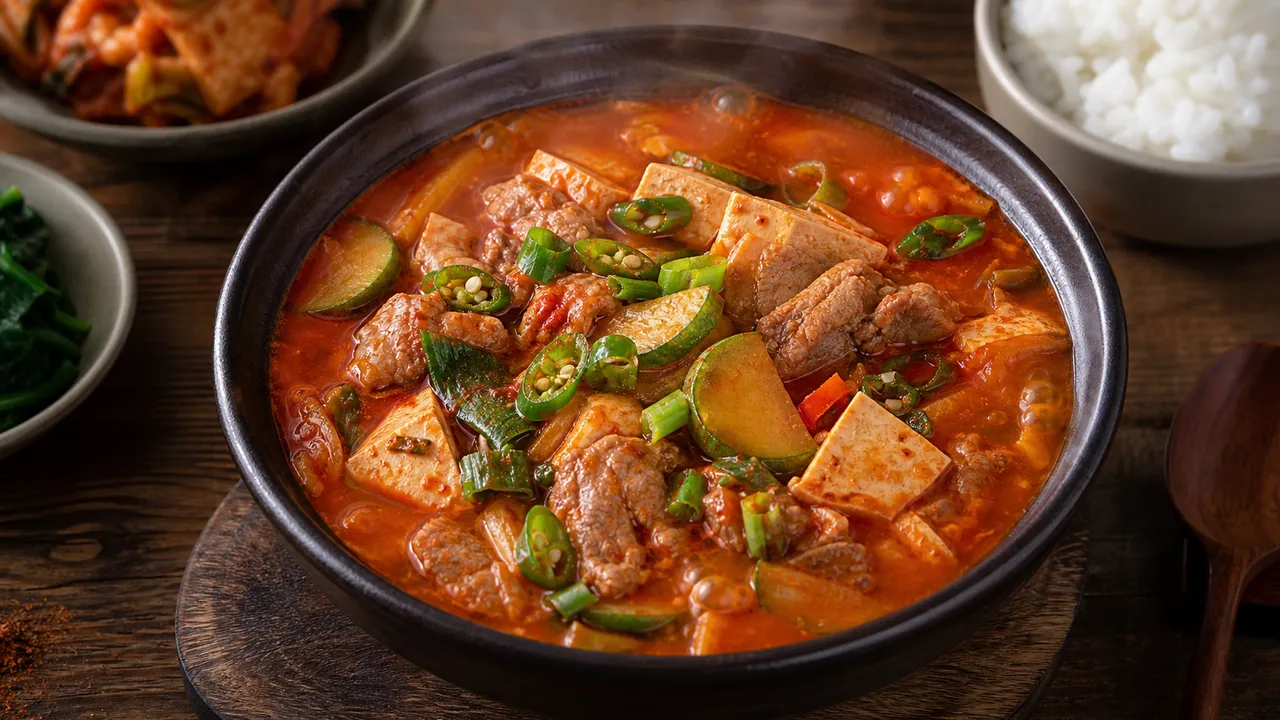
Spicy and Deeply Flavorful Korean Zucchini Gochujang Stew: J
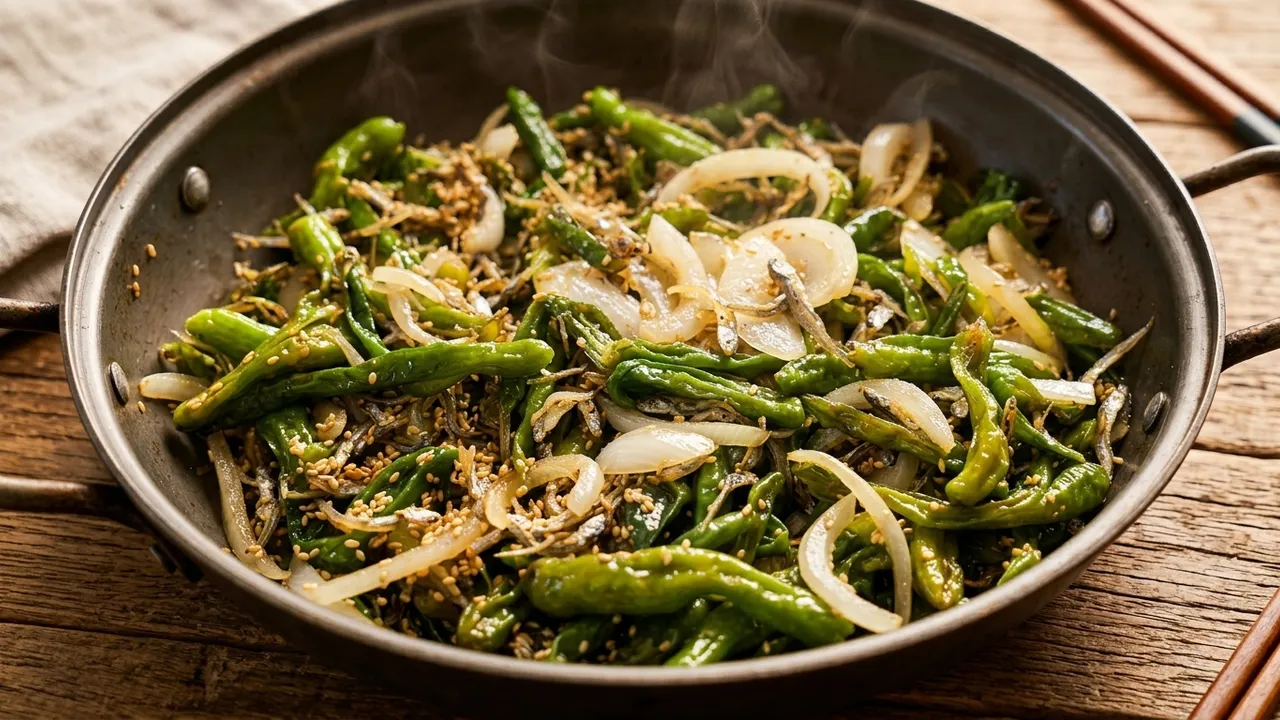
* 이미지는 AI가 생성한 참고 이미지로, 실제 조리 결과물과 다를 수 있습니다.
A gochujang (고추장) stew recipe loaded with generously cut Korean zucchini (aehobak) and thick slices of pork neck, offering a spicy and deeply savory umami flavor.
📝 Editor's Notes
Aehobak Gochujang Jjigae is a spicy and deeply flavorful stew made with generous amounts of thick pork neck and Korean zucchini (aehobak).
It's a moderately difficult dish that can be prepared in about 30 minutes.
Its savory and spicy umami taste makes it perfect for a hearty meal with warm rice on chilly days, especially when you're craving a spicy soup.
It's an excellent dish for the whole family to enjoy, whether as a satisfying meal or a flavorful accompaniment to drinks.
🛒 Ingredient Tips
For the pork neck, the star of this stew, it's best to choose a cut with a good balance of fat and lean meat to ensure a tender and not overly dry texture.
When selecting Korean zucchini (aehobak), look for one with a glossy, firm skin that feels heavy for its size.
This will help it maintain its texture without getting mushy even when thickly sliced for the stew.
For tofu, using firm tofu made from domestic Korean soybeans will prevent it from crumbling easily and add a nutty flavor, enhancing the stew's overall taste.
🔄 Substitution Guide
Instead of pork neck, you can use beef bulgogi-cut meat or beef brisket (chadolbaegi).
Beef offers a deeper, richer meaty flavor but might result in a less substantial taste compared to pork due to lower fat content.
If you don't have firm tofu, you can omit it or use soft tofu (sundubu) to make a creamy Sundubu Gochujang Jjigae.
However, soft tofu is delicate, so add it at the very end and simmer only briefly.
If Cheongyang chili peppers (청양고추) are too spicy, use regular green chilies or omit them entirely.
Note that the spiciness will be reduced, so adjust the amount of gochugaru (고춧가루) accordingly.
If oyster sauce is unavailable, you can substitute it with guk-ganjang (국간장 - Korean soup soy sauce) or fish sauce, but be aware that the unique deep umami of oyster sauce might be less prominent.
🥘 Ingredients
👨🍳 Cooking Points
The first key cooking point for this recipe is to stir-fry the pork neck with 1 tbsp of soy sauce until it's slightly caramelized.
This process explosively enhances the meat's flavor and umami.
The second point is to thoroughly stir-fry the meat and seasonings before adding water.
Allow the gochugaru (고춧가루), gochujang (고추장), soy sauce, minced garlic, and oyster sauce to deeply infuse into the meat by stir-frying over medium-low heat for about 3-5 minutes.
This is the secret to achieving a rich and deep stew flavor.
Lastly, it's important to slice the Korean zucchini (aehobak) thickly.
If sliced too thinly, it can become mushy and lose its texture during cooking.
Cutting it into large half-moon shapes ensures a pleasant, slightly crisp texture even after simmering.
👨🍳 Directions
Prepare the ingredients. Cut the pork neck into bite-sized pieces. Slice the Cheongyang chili pepper (청양고추) and green onion diagonally. Cut the Korean zucchini (aehobak) in half lengthwise, then slice it thickly into large half-moon shapes.
Heat cooking oil in a dolsot (stone pot) or heavy pot. Add 14 oz (400g) of pork neck and stir-fry.
When the pork neck is lightly browned, add 1 tbsp of soy sauce and stir-fry until slightly caramelized to enhance the flavor. Then, add the diagonally sliced green onion and Cheongyang chili pepper (청양고추) and stir-fry together.
Add 3 tbsp of gochugaru (고춧가루), 2 tbsp of gochujang (고추장), 2 tbsp of soy sauce, 1 tbsp of minced garlic, and 1 tbsp of oyster sauce. Stir-fry carefully to prevent burning, allowing the seasonings to absorb into the meat.
Pour in 2 cups (500ml) of water, add the thickly sliced Korean zucchini (aehobak) and 1 block of tofu. Bring to a boil, and it's done.
Finally, add cooked kalguksu noodles or somyeon noodles and boil once more to enjoy as a noodle dish.
💡 Tips
Stir-frying the meat with 1 tbsp of soy sauce until slightly caramelized greatly enhances its flavor and umami.
Stir-frying the meat and seasonings thoroughly before adding water is key to achieving a deeply flavorful stew.
Cutting the Korean zucchini (aehobak) thickly ensures it maintains a good texture without becoming mushy after cooking.
Adding cooked kalguksu or somyeon noodles to the finished stew allows you to enjoy a rich, authentic Korean noodle dish.
📦 Storage & Reuse
The prepared Aehobak Gochujang Jjigae can be stored in an airtight container in the refrigerator for 2-3 days.
When reheating, simmer gently over low heat.
If the broth has reduced too much, add a little water or broth to adjust the seasoning.
Freezing is not recommended, as the Korean zucchini (aehobak) and tofu can become mushy upon thawing.
If you have leftover ingredients, the pork neck can be used in Kimchi Jjigae (김치찌개) or Jeyuk Bokkeum (제육볶음), and the Korean zucchini (aehobak) can be used for jeon (pan-fried fritters) or stir-fries.
🥢 Who This Is For
This Aehobak Gochujang Jjigae is highly recommended for those who crave a spicy and hearty meal.
It's especially perfect for warming up on a rainy day or during a cold winter.
While delicious with rice, adding cooked kalguksu or somyeon noodles makes it an even more substantial dish.
For side dishes, refreshing options like chilled kongnamul-muchim (콩나물무침 - seasoned bean sprouts) or crisp oyi-muchim (오이무침 - seasoned cucumber salad) pair well.
Serving it with warm gyeran-jjim (계란찜 - steamed egg custard) creates an even richer dining experience.
🔥 Nutrition Info
This Aehobak Gochujang Jjigae is estimated to contain approximately 450-550 calories per serving.
Each serving provides about 30-40g of protein, 25-35g of fat, and 20-30g of carbohydrates.
Pork neck is rich in high-quality protein and B vitamins, aiding in energy recovery.
Korean zucchini (aehobak) is abundant in vitamins A and C, and potassium, which are beneficial for boosting immunity and reducing fatigue.
Tofu, with its plant-based protein and calcium, contributes to bone health.
Cheongyang chili peppers (청양고추) contain capsaicin, which can help stimulate metabolism.
💬 Frequently Asked Questions
- Q. What ingredients do I need for Spicy and Deeply Flavorful Korean Zucchini Gochujang Stew: Jang Minho's Secret Restaurant Recipe?
- Main ingredients include Pork neck (or shoulder), Korean zucchini (aehobak), Firm tofu, Green onion, Cheongyang chili pepper (청양고추). For the pork neck, the star of this stew, it's best to choose a cut with a good balance of fat and lean meat to ensure a tender and not overly dry texture. When selecting Korean zucchini (aehobak), look for one with a glossy, firm skin that feels heavy for its size. This will help it maintain its texture without getting mushy even when thickly sliced for the stew. For tofu, using firm tofu made from domestic Korean soybeans will prevent it from crumbling easily and add a nutty flavor, enhancing the stew's overall taste.
- Q. What are the key tips for making Spicy and Deeply Flavorful Korean Zucchini Gochujang Stew: Jang Minho's Secret Restaurant Recipe?
- The first key cooking point for this recipe is to stir-fry the pork neck with 1 tbsp of soy sauce until it's slightly caramelized. This process explosively enhances the meat's flavor and umami. The second point is to thoroughly stir-fry the meat and seasonings before adding water. Allow the gochugaru (고춧가루), gochujang (고추장), soy sauce, minced garlic, and oyster sauce to deeply infuse into the meat by stir-frying over medium-low heat for about 3-5 minutes. This is the secret to achieving a rich and deep stew flavor. Lastly, it's important to slice the Korean zucchini (aehobak) thickly. If sliced too thinly, it can become mushy and lose its texture during cooking. Cutting it into large half-moon shapes ensures a pleasant, slightly crisp texture even after simmering.
- Q. How should I store leftover Spicy and Deeply Flavorful Korean Zucchini Gochujang Stew: Jang Minho's Secret Restaurant Recipe?
- The prepared Aehobak Gochujang Jjigae can be stored in an airtight container in the refrigerator for 2-3 days. When reheating, simmer gently over low heat. If the broth has reduced too much, add a little water or broth to adjust the seasoning. Freezing is not recommended, as the Korean zucchini (aehobak) and tofu can become mushy upon thawing. If you have leftover ingredients, the pork neck can be used in Kimchi Jjigae (김치찌개) or Jeyuk Bokkeum (제육볶음), and the Korean zucchini (aehobak) can be used for jeon (pan-fried fritters) or stir-fries.
- Q. How many calories are in Spicy and Deeply Flavorful Korean Zucchini Gochujang Stew: Jang Minho's Secret Restaurant Recipe?
- This Aehobak Gochujang Jjigae is estimated to contain approximately 450-550 calories per serving. Each serving provides about 30-40g of protein, 25-35g of fat, and 20-30g of carbohydrates. Pork neck is rich in high-quality protein and B vitamins, aiding in energy recovery. Korean zucchini (aehobak) is abundant in vitamins A and C, and potassium, which are beneficial for boosting immunity and reducing fatigue. Tofu, with its plant-based protein and calcium, contributes to bone health. Cheongyang chili peppers (청양고추) contain capsaicin, which can help stimulate metabolism.
- Q. Can I substitute ingredients in Spicy and Deeply Flavorful Korean Zucchini Gochujang Stew: Jang Minho's Secret Restaurant Recipe?
- Instead of pork neck, you can use beef bulgogi-cut meat or beef brisket (chadolbaegi). Beef offers a deeper, richer meaty flavor but might result in a less substantial taste compared to pork due to lower fat content. If you don't have firm tofu, you can omit it or use soft tofu (sundubu) to make a creamy Sundubu Gochujang Jjigae. However, soft tofu is delicate, so add it at the very end and simmer only briefly. If Cheongyang chili peppers (청양고추) are too spicy, use regular green chilies or omit them entirely. Note that the spiciness will be reduced, so adjust the amount of gochugaru (고춧가루) accordingly. If oyster sauce is unavailable, you can substitute it with guk-ganjang (국간장 - Korean soup soy sauce) or fish sauce, but be aware that the unique deep umami of oyster sauce might be less prominent.
💬 Comments
No comments yet. Be the first to comment!