
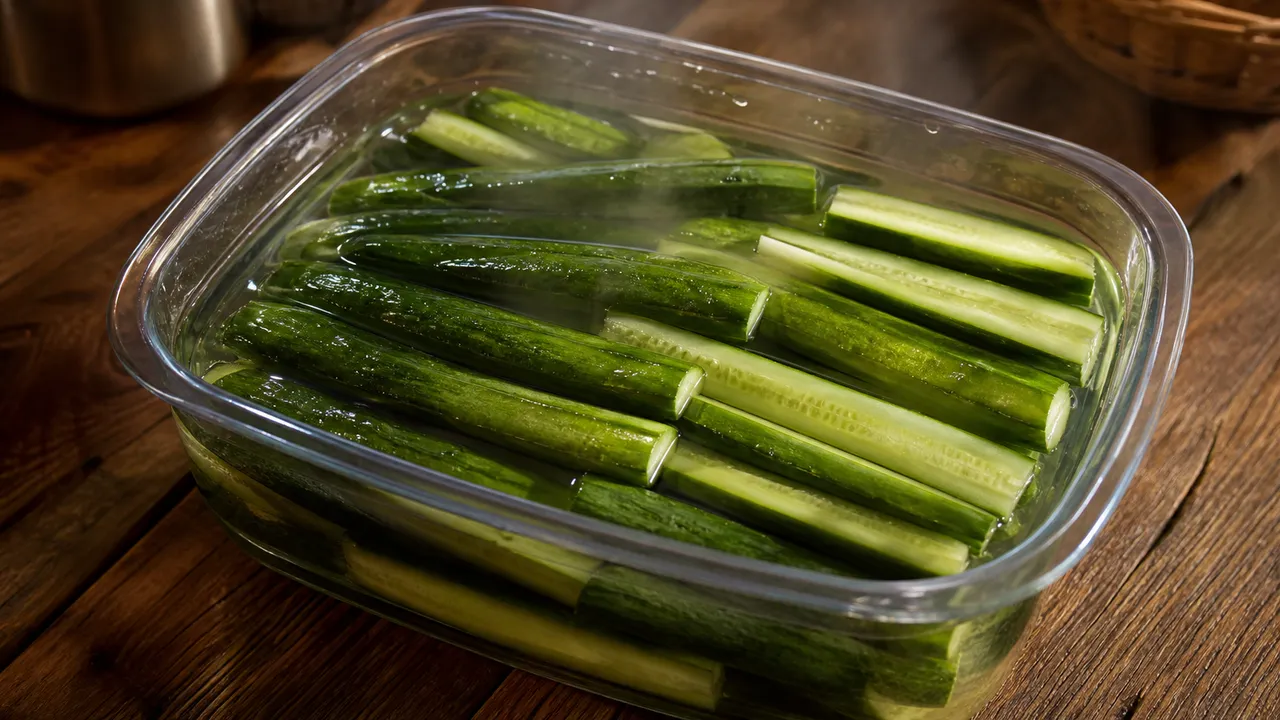
Super Simple Golden Ratio Recipe for Seasonal Oiji (오이지)
* 이미지는 AI가 생성한 참고 이미지로, 실제 조리 결과물과 다를 수 있습니다.
Enjoy the salty and crunchy taste of Oiji (오이지) made with 10 seasonal cucumbers from May to July. This super simple, foolproof recipe allows anyone to easily make delicious pickled cucumbers.
📝 Editor's Notes
Oiji (오이지), a side dish you can abundantly enjoy with just 10 seasonal cucumbers from May to July, is a super simple banchan (밑반찬) that's ready after 10 minutes of preparation and a week of curing.
Its salty yet crunchy texture is exquisite, making it an ultimate 'rice thief' (밥도둑).
Especially when you lose your appetite in summer, eating it as a refreshing muchim (무침, seasoned salad) will help you regain your taste.
Create a healthy table this hot summer with fresh Oiji (오이지).
🛒 Ingredient Tips
Cucumbers are in season from May to July, so making Oiji (오이지) during this period will result in the most delicious and crunchy pickled cucumbers.
When choosing cucumbers, look for ones that are straight, uniformly thick, and have small thorns alive on their surface, indicating freshness.
It's also important to check that the ends are not dried out and are fresh.
For Korean sea salt (천일염), use salt from which the bittern has been well drained to achieve a clean taste without bitterness.
Brewed vinegar is a good choice for this recipe, and you can adjust the amount of Cheongyang chili peppers (청양고추) according to your preference.
Feel free to add more if you like a spicier kick.
🔄 Substitution Guide
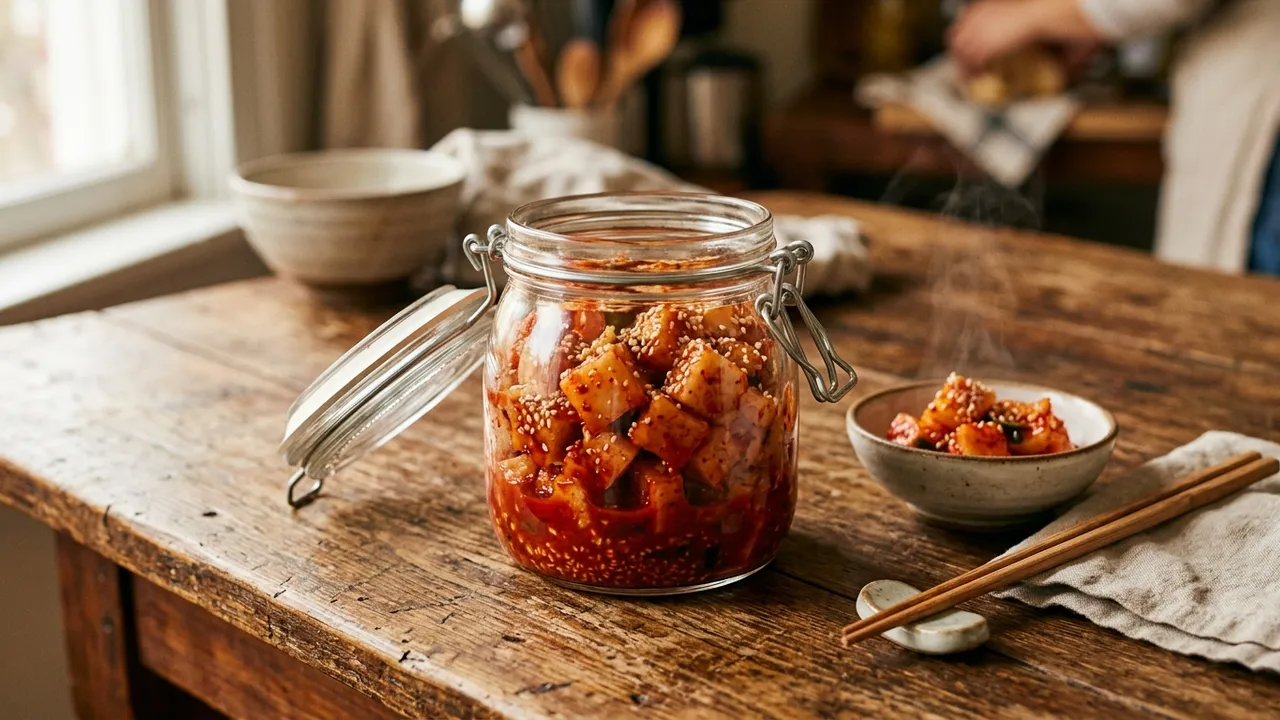
If seasonal cucumbers are hard to find or if you have a cucumber allergy, try making Mu Jangajji (무장아찌, pickled radish) using radishes.
You'll experience a different kind of crunchy texture and refreshing taste compared to Oiji (오이지).
Radishes have less water content than cucumbers, so they might require a slightly longer pickling time.
Also, while you can use regular salt instead of Korean sea salt (천일염), the latter has a higher mineral content and better umami flavor.
Using apple cider vinegar or brown rice vinegar instead of regular vinegar will slightly alter the flavor but maintain the basic taste.
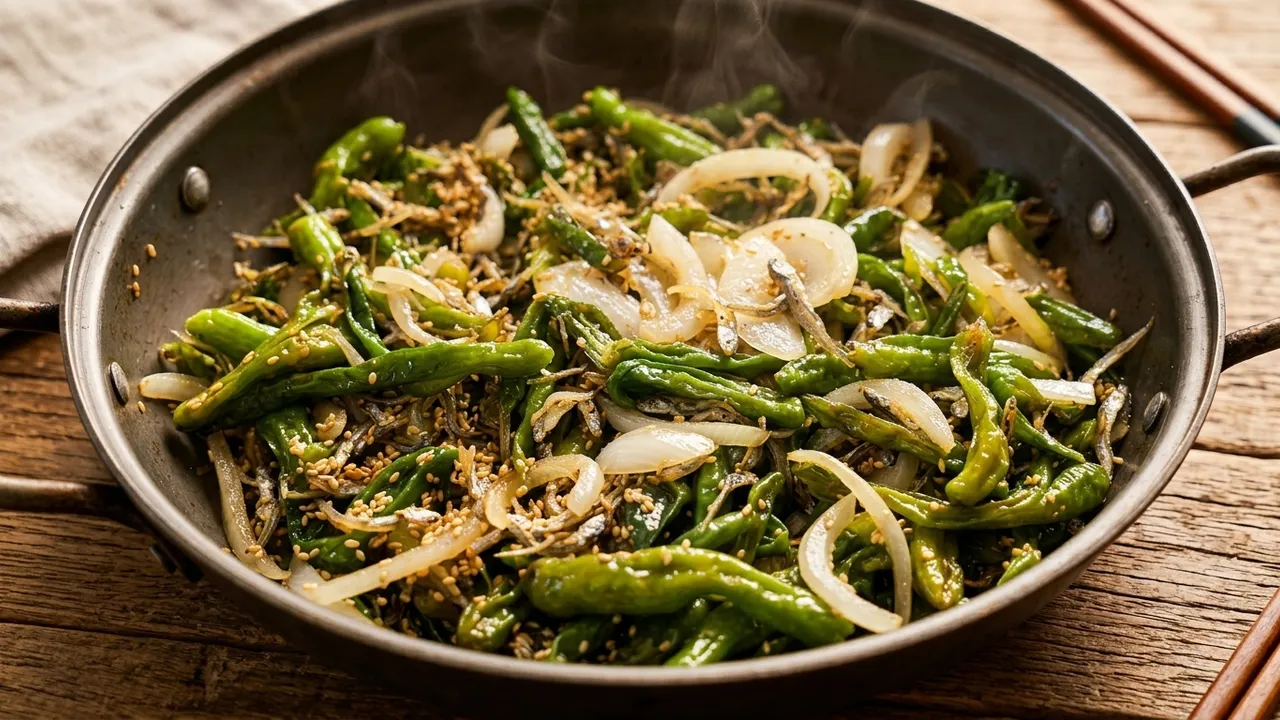
If Cheongyang chili peppers (청양고추) are too spicy, you can substitute them with Kkari-gochu (꽈리고추, shishito peppers) or red chili peppers to add color and a mild spiciness.
🥘 Ingredients
👨🍳 Cooking Points
There are two main crucial points when making Oiji (오이지).
First, after thoroughly washing the cucumbers, it's essential to trim off their ends.
Trimming the ends allows the brine to penetrate the cucumbers better, ensuring even pickling.
Second, the brine must be boiled, then vinegar added, and the Korean sea salt (천일염) completely dissolved before use.
Pouring hot brine over the cucumbers helps them retain a crisper texture and speeds up the penetration of the brine, shortening the curing time.
Finally, it's important to press the cucumbers down with a heavy object to ensure they are fully submerged in the brine.
If the cucumbers float above the liquid, they can spoil, so please remember this.
👨🍳 Directions
Place 10 cucumbers in a stainless steel container, add enough water to cover them, dissolve a little vinegar in the water, and soak for 10 minutes.
After 10 minutes, trim off the ends of the cucumbers and wash them thoroughly under running water.
Pour 2 liters of water into another pot and bring it to a boil. Once the water boils, turn off or reduce the heat to low.
Add 1¼ cups of Korean sea salt (천일염) and 2 cups of vinegar to the boiled water, and stir well until the salt is completely dissolved.
Arrange the washed cucumbers and Cheongyang chili peppers (청양고추) neatly in the container, then pour in the prepared brine (the boiled water with salt and vinegar).
Place a heavy object, such as a plate, on top to ensure the cucumbers are fully submerged in the brine.
Store at room temperature for 10 hours, then cure for about a week in a shaded place, away from direct sunlight.
💡 Tips
Store the finished Oiji (오이지) in an airtight container in the refrigerator to enjoy for several months.
Ensuring the cucumbers remain submerged in the pickling liquid helps maintain their quality.
If the cucumbers are not fully submerged, add more weight on top.
It is best to make Oiji (오이지) during peak cucumber season, from May to July.
📦 Storage & Reuse
Store the finished Oiji (오이지) in an airtight container in the refrigerator to enjoy for several months.
It is important to keep the Oiji (오이지) submerged in the liquid, so make sure they don't float to the top.
When taking out Oiji (오이지), use clean tongs or chopsticks to prevent contamination.
Leftover Oiji (오이지) can be thinly sliced, soaked in water to reduce saltiness, and then used in Oiji muchim (오이지 무침, seasoned Oiji), Oiji naengguk (오이지 냉국, cold Oiji soup), or Oiji bibimbap (오이지 비빔밥) as an ingredient, allowing you to enjoy various dishes.
The longer you store it, the deeper the flavor becomes, so making a generous batch will provide you with a reliable side dish all summer long.
🥢 Who This Is For
This Oiji (오이지) pairs wonderfully with refreshing noodles or naengmyeon (냉면, cold noodles) in the summer.
It's also incredibly delicious just served with hot rice soaked in water (물말은 밥).
When serving guests, transforming it into Oiji muchim (오이지 무침, seasoned Oiji) or Oiji naengguk (오이지 냉국, cold Oiji soup) will create a special dish.
Seasoned with spicy or sweet and sour dressing, it will become a beloved banchan (밑반찬) for the whole family.
🔥 Nutrition Info
Oiji (오이지) is very low in calories, making it a guilt-free addition to a diet plan.
Based on this recipe, the estimated calorie count per serving (1 cucumber) is approximately 10-15 kcal.
Cucumbers themselves are rich in water, and contain various vitamins and minerals such as Vitamin K, Vitamin C, and potassium.
While the sodium content increases during the pickling process, the high fiber content can aid in gut health.
With very low carbohydrate, protein, and fat content, it is a healthy side dish that's easy to enjoy.
💬 Frequently Asked Questions
- Q. What ingredients do I need for Super Simple Golden Ratio Recipe for Seasonal Oiji (오이지)?
- Main ingredients include Cucumbers, Water, Korean sea salt (천일염), Vinegar, Cheongyang chili peppers (청양고추). Cucumbers are in season from May to July, so making Oiji (오이지) during this period will result in the most delicious and crunchy pickled cucumbers. When choosing cucumbers, look for ones that are straight, uniformly thick, and have small thorns alive on their surface, indicating freshness. It's also important to check that the ends are not dried out and are fresh. For Korean sea salt (천일염), use salt from which the bittern has been well drained to achieve a clean taste without bitterness. Brewed vinegar is a good choice for this recipe, and you can adjust the amount of Cheongyang chili peppers (청양고추) according to your preference. Feel free to add more if you like a spicier kick.
- Q. What are the key tips for making Super Simple Golden Ratio Recipe for Seasonal Oiji (오이지)?
- There are two main crucial points when making Oiji (오이지). First, after thoroughly washing the cucumbers, it's essential to trim off their ends. Trimming the ends allows the brine to penetrate the cucumbers better, ensuring even pickling. Second, the brine must be boiled, then vinegar added, and the Korean sea salt (천일염) completely dissolved before use. Pouring hot brine over the cucumbers helps them retain a crisper texture and speeds up the penetration of the brine, shortening the curing time. Finally, it's important to press the cucumbers down with a heavy object to ensure they are fully submerged in the brine. If the cucumbers float above the liquid, they can spoil, so please remember this.
- Q. How should I store leftover Super Simple Golden Ratio Recipe for Seasonal Oiji (오이지)?
- Store the finished Oiji (오이지) in an airtight container in the refrigerator to enjoy for several months. It is important to keep the Oiji (오이지) submerged in the liquid, so make sure they don't float to the top. When taking out Oiji (오이지), use clean tongs or chopsticks to prevent contamination. Leftover Oiji (오이지) can be thinly sliced, soaked in water to reduce saltiness, and then used in Oiji muchim (오이지 무침, seasoned Oiji), Oiji naengguk (오이지 냉국, cold Oiji soup), or Oiji bibimbap (오이지 비빔밥) as an ingredient, allowing you to enjoy various dishes. The longer you store it, the deeper the flavor becomes, so making a generous batch will provide you with a reliable side dish all summer long.
- Q. How many calories are in Super Simple Golden Ratio Recipe for Seasonal Oiji (오이지)?
- Oiji (오이지) is very low in calories, making it a guilt-free addition to a diet plan. Based on this recipe, the estimated calorie count per serving (1 cucumber) is approximately 10-15 kcal. Cucumbers themselves are rich in water, and contain various vitamins and minerals such as Vitamin K, Vitamin C, and potassium. While the sodium content increases during the pickling process, the high fiber content can aid in gut health. With very low carbohydrate, protein, and fat content, it is a healthy side dish that's easy to enjoy.
- Q. Can I substitute ingredients in Super Simple Golden Ratio Recipe for Seasonal Oiji (오이지)?
- If seasonal cucumbers are hard to find or if you have a cucumber allergy, try making Mu Jangajji (무장아찌, pickled radish) using radishes. You'll experience a different kind of crunchy texture and refreshing taste compared to Oiji (오이지). Radishes have less water content than cucumbers, so they might require a slightly longer pickling time. Also, while you can use regular salt instead of Korean sea salt (천일염), the latter has a higher mineral content and better umami flavor. Using apple cider vinegar or brown rice vinegar instead of regular vinegar will slightly alter the flavor but maintain the basic taste. If Cheongyang chili peppers (청양고추) are too spicy, you can substitute them with Kkari-gochu (꽈리고추, shishito peppers) or red chili peppers to add color and a mild spiciness.

💬 Comments
No comments yet. Be the first to comment!