
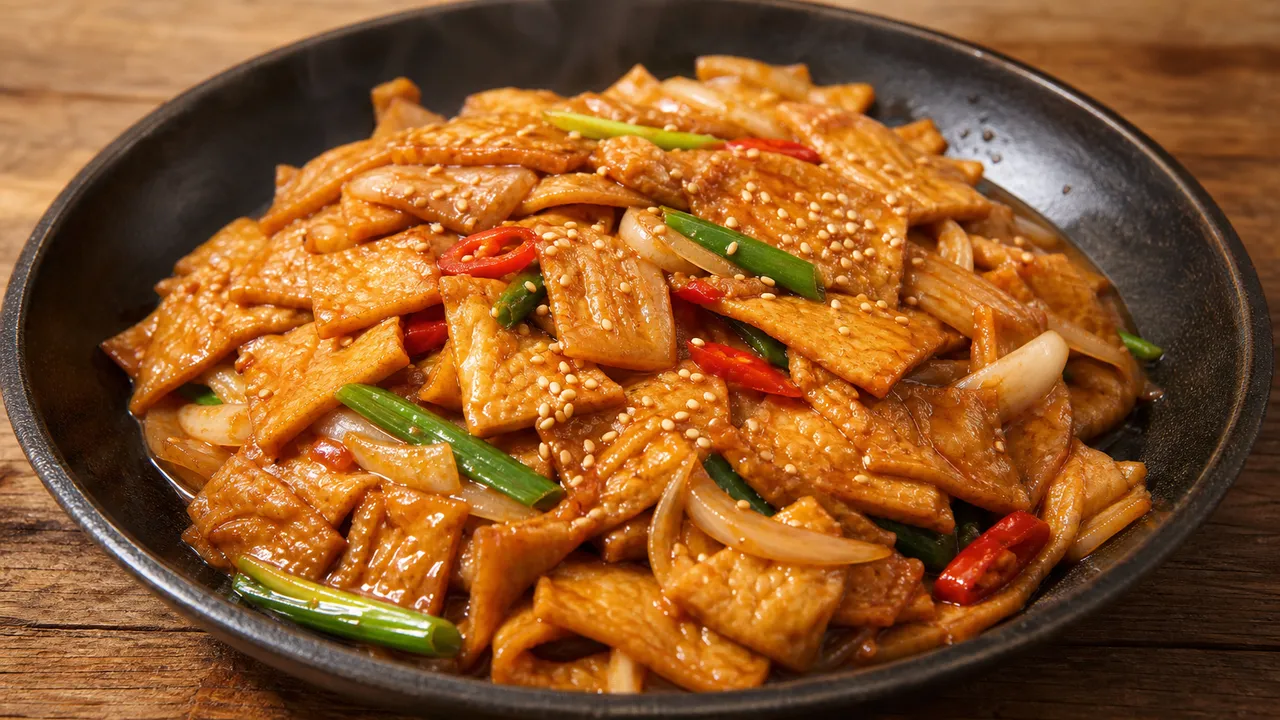
Oil-Free Spicy Fish Cake Stir-fry Recipe
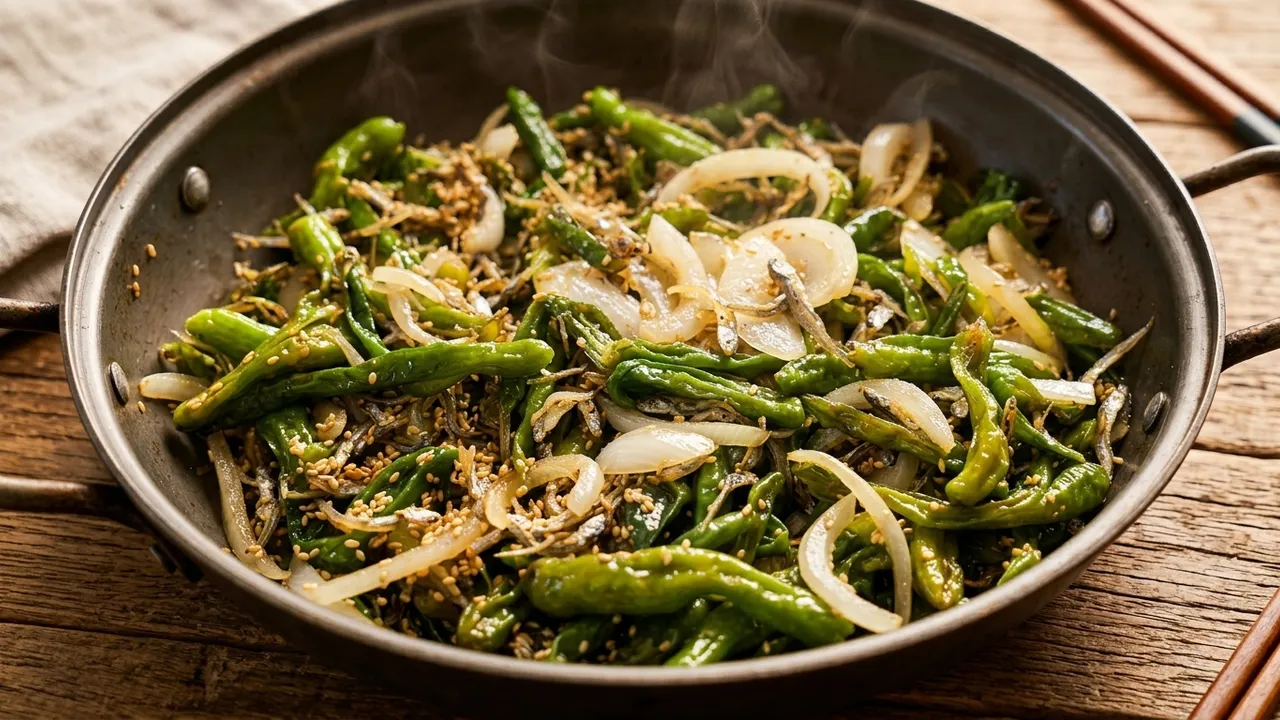
This is a clean and delicious fish cake stir-fry made without using cooking oil for the main stir-frying process. An umami flavor is first created by simmering a sauce made with soy sauce, mirin (미림), minced garlic, oligosaccharide syrup, sugar, and oyster sauce. Then, vegetables and fish cakes are stir-fried, and homemade chili oil is added to complete the spicy and savory flavor. It's excellent as a side dish for rice and lunchboxes.
📝 Editor's Notes
As the name suggests, this Oil-Free Spicy Fish Cake Stir-fry is a recipe that boasts a clean and light flavor by minimizing the use of cooking oil for the stir-frying process.
Its key feature is simmering an umami-rich sauce with soy sauce, mirin (미림), and oyster sauce first, allowing the fish cakes to deeply absorb the flavor.
Finishing with homemade chili oil creates an exquisite spicy and savory aroma.
It's excellent as a side dish for rice and lunchboxes.
Anyone can make it easily, even beginners can enjoy it deliciously.
It will make a warm side dish for the whole family to enjoy together.
🛒 Ingredient Tips
It's important to choose fresh fish cakes with a chewy texture.
Check that the package is dry and not too soggy, and be sure to check the expiration date.
For onions, choose firm ones with shiny skins, and for green onions, select those with clear green and white parts and a fresh appearance.
Especially for cheongyang chili peppers (청양고추) and red chili peppers, pick ones with vibrant colors and no blemishes to fully enjoy their spicy and fresh aroma.
Using seasonal vegetables will make them even sweeter and more delicious.
🔄 Substitution Guide
You can substitute fish cakes with chicken breast or tofu to increase protein content and reduce fat.
Chicken breast will offer a familiar taste, while tofu provides a soft and light flavor.
If you don't have oyster sauce, you can add a bit more soy sauce, compensate for sweetness with mirin (미림) or sugar, or use kelp broth to add umami flavor.
While the unique depth of oyster sauce might be slightly reduced, it will still be delicious.
If cheongyang chili peppers (청양고추) are too spicy, try adjusting the spiciness by substituting with Kkari-gochu (꽈리고추) (Korean shishito peppers) or bell peppers.
The taste and aroma will be slightly different, but you can enjoy a crunchy texture.
🥘 Ingredients
👨🍳 Cooking Points
The first key point of this recipe is the 'homemade chili oil'.
You heat cooking oil over medium heat until small bubbles form around the edges, then turn off the heat and let it cool before pouring it over gochugaru (고춧가루) in a bowl.
This method prevents the chili flakes from burning and preserves their unique flavor.
The second point is 'boiling the seasoning sauce first'.
By simmering the soy sauce and other seasonings to dissolve the sugar and enhance umami, the fish cakes absorb the seasoning better, resulting in a deeper flavor.
The third point is to 'add chili oil at the end'.
Adding chili oil too early can burn the chili flakes and create a bitter taste, so it's crucial to add it towards the end of cooking to impart a spicy aroma.
👨🍳 Directions
Slice the fish cakes into bite-sized strips. Thickly slice the 1 large onion, diagonally slice the 1 green onion, and diagonally slice the 2 cheongyang chili peppers (청양고추) and 1 red chili pepper.
Generously add cooking oil to a frying pan and heat over medium heat until small bubbles form around the edges. Turn off the heat and let it cool. Pour the cooled oil into a bowl containing gochugaru (고춧가루) and mix well to make chili oil.
Combine 3 tbsp soy sauce, 2 tbsp mirin (미림), 1 tbsp minced garlic, 2 tbsp oligosaccharide syrup, a pinch of sugar, 1 tbsp oyster sauce, a pinch of black pepper, and a dash of sesame oil to make the seasoning sauce.
In a heated frying pan, add the prepared seasoning sauce. Stir and bring to a simmer until the sugar dissolves. Reduce heat to medium.
Add the sliced onion, green onion, cheongyang chili peppers (청양고추), and red chili pepper. Stir-fry until aromatic and slightly softened.
Add the sliced fish cakes and stir-fry, tossing them to ensure the sauce is evenly coated.
Add an appropriate amount of the pre-made chili oil and stir-fry to combine evenly, adding a spicy flavor.
Finally, sprinkle with toasted sesame seeds and lightly mix. The spicy fish cake stir-fry is complete.
💡 Tips
Stir-frying without cooking oil can create a cleaner and lighter flavor.
Oyster sauce adds umami, and chili oil enhances the spicy flavor.
Boiling the seasoning sauce first allows the fish cakes to absorb the flavor better.
Adding chili oil at the beginning can burn the chili flakes and create a bitter taste, so add it later.
📦 Storage & Reuse
Once completed, store the fish cake stir-fry in an airtight container in the refrigerator for 2-3 days.
Freezing is also possible, but the texture of the fish cakes may become a bit chewy, so it's recommended to consume them as soon as possible.
When freezing, storing in individual portions is more convenient.
To reheat, microwave for 1-2 minutes or lightly stir-fry over low heat to enjoy the original taste.
If you stir-fry leftover fish cakes with rice, shredded seaweed, and sesame oil, it can transform into delicious fish cake fried rice, so definitely give it a try.
🥢 Who This Is For
This spicy fish cake stir-fry, being both spicy and light, is especially recommended for those who prefer less stimulating side dishes.
It will likely appeal more to adult palates than children's.
It's excellent as a side dish for rice, and also great as a snack with a glass of beer when you're hungry.
Serve with warm rice, miyeokguk (미역국) (seaweed soup), and gyeranjjim (계란찜) (steamed egg) for a balanced Korean meal.
It's also very popular as a lunchbox side dish, so definitely give it a try.
🔥 Nutrition Info
Based on 10.6 oz (300g) of fish cakes, this recipe is expected to serve about 2-3 people.
One serving is estimated to have approximately 250-300 kcal.
Protein is estimated at about 15-20g, fat at about 10-15g, and carbohydrates at about 20-25g.
Fish cakes are a source of protein, while onions, green onions, and chili peppers provide vitamin C and dietary fiber.
Especially due to the oyster sauce, sodium content can be high, so those with high blood pressure should be mindful of their intake.
💬 Comments
No comments yet. Be the first to comment!