
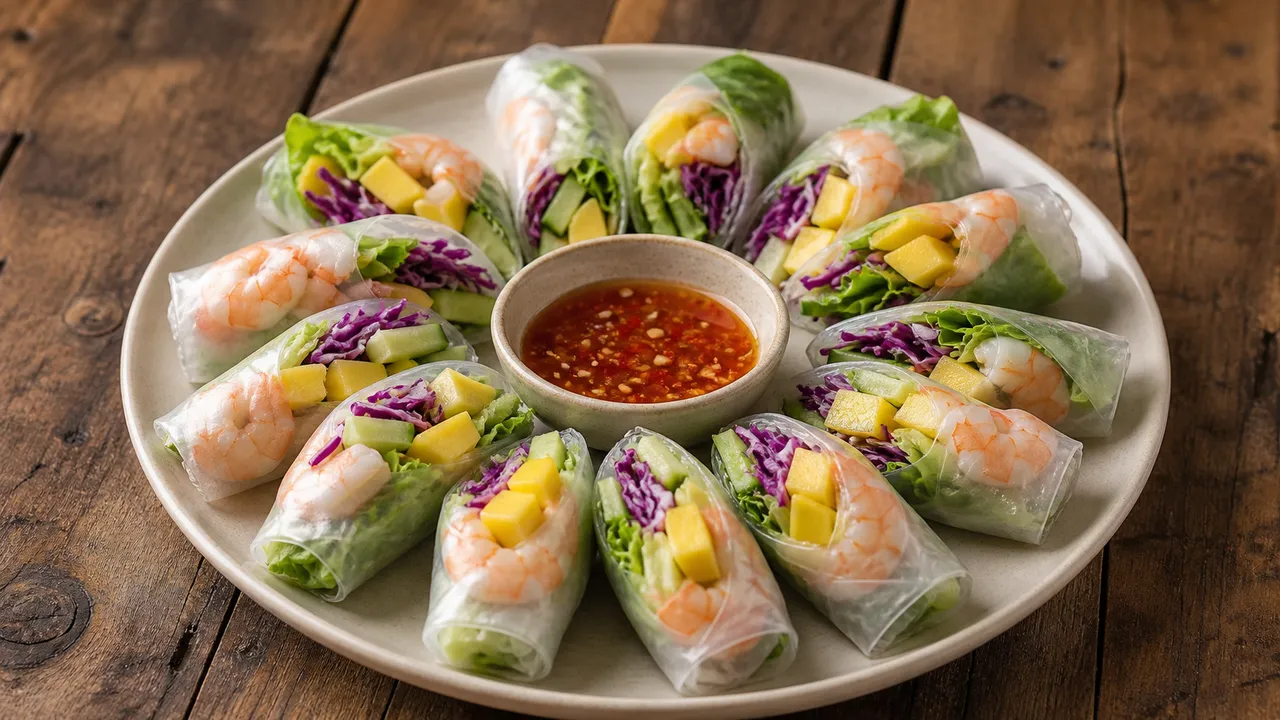
Shrimp Summer Rolls: How to Prevent Sticking Recipe
* 이미지는 AI가 생성한 참고 이미지로, 실제 조리 결과물과 다를 수 있습니다.
These summer rolls feature a delightful combination of fresh shrimp, crisp vegetables, and zesty pineapple. This recipe also includes a clever tip for preventing them from sticking together during storage and the secret to a fantastic peanut sriracha sauce.
📝 Editor's Notes
Shrimp Summer Rolls are a dish that offers a mouthful of happiness, harmoniously blending fresh seafood with various vegetables and refreshing fruits.
The contrast between the chewy rice paper and the crisp vegetables is exquisite, and the peanut sriracha sauce, with its sweet, spicy, and savory notes, elevates the flavor of the summer rolls even further.
It's relatively simple to make, and with the included tip for keeping them moist even when prepared in advance, they're excellent for entertaining guests or as a lunchbox option.
Perfect as a light and refreshing dish to boost your appetite in summer.
🛒 Ingredient Tips
Freshness is paramount for shrimp.
Choose shrimp with translucent, firm bodies and shiny shells.
Shrimp that are not fishy-smelling and have a springy texture will largely determine the taste of your summer rolls.
For bell peppers and cucumbers, look for bright, firm, and blemish-free produce.
Bell peppers, in particular, should feel heavy and full, indicating freshness and crispness.
For red cabbage, select one with tightly packed, deeply colored leaves and no wilting on the outer leaves.
Opting for fresh, seasonal ingredients will ensure you enjoy even more delicious and nutritious summer rolls.
🔄 Substitution Guide
Instead of shrimp, you can use chicken breast or boiled pork shoulder.
Chicken breast is high in protein and low in calories, making it suitable for diet meals, while pork offers a richer and heartier flavor.
For the imitation crab meat, shredded crab sticks (krab stick) or chicken breast can be good alternatives.
If pineapple is unavailable, you can substitute with other sweet and sour fruits like mango or kiwi.
However, fruits can easily absorb other flavors, so use fresh ones and choose those that are not too soft.
For those with peanut allergies, a sweet and sour sauce made with soy sauce, vinegar, and sugar, or a nuoc mam (느억맘) sauce based on fish sauce, can be served instead of peanut sauce.
🥘 Ingredients
👨🍳 Cooking Points
There are three key cooking points for this summer roll recipe.
First, steam the shrimp instead of boiling them.
Steaming for about 5 minutes will maximize the firm texture and sweetness of the shrimp.
Second, it's crucial to only briefly dip the rice paper in cold water.
Soaking it for too long will make it too soft and difficult to roll, and the summer roll might tear easily.
Third, when rolling the summer rolls, firmly press and wrap the ingredients with the romaine lettuce.
This will help the summer roll maintain its shape and prevent it from unraveling.
Keeping these points in mind will ensure you make delicious summer rolls every time.
👨🍳 Directions
Devein the raw shrimp. Season with a pinch of salt and black pepper, then steam for 5 minutes. Let the steamed shrimp cool, then slice them in half lengthwise, ready for the summer rolls.
Remove seeds from the bell pepper and julienne it. Halve the cucumbers lengthwise and then slice them into long strips. Halve each piece of imitation crab meat lengthwise.
Finely shred 1/4 head of red cabbage using a mandoline or sharp knife. Julienne the danmuji (단무지) to the appropriate length.
Using a clean cutting board to prevent flavor transfer, slice the pineapple thinly, then julienne it.
Briefly dip a rice paper wrapper in cold water. Lay the softened wrapper on a cutting board. Place a piece of romaine lettuce on top, then layer the prepared danmuji (단무지), cucumber, imitation crab meat, bell pepper, red cabbage, and pineapple in order.
Firmly wrap the ingredients with the romaine lettuce. Arrange the halved shrimp neatly on top. Then, tightly roll the rice paper to form a summer roll.
Combine store-bought peanut sauce with sriracha sauce, using approximately 1/3 the amount of sriracha relative to the peanut sauce, and mix well to create the dipping sauce. (Adjust sriracha amount according to your spice preference.)
To prevent sticking, tightly wrap each finished summer roll individually in plastic wrap. Slice them diagonally for serving, or pack them whole in a lunchbox with the sauce on the side.
💡 Tips
If preparing summer rolls in advance, wrapping each one individually in plastic wrap will prevent the rice paper from drying out or sticking together.
Wrapped summer rolls can be kept moist in the refrigerator for one to two days, making them ideal for lunchboxes or entertaining guests.
Steaming the shrimp instead of boiling them helps achieve a firmer, more delicious texture.
When preparing pineapple, it's best to use a clean cutting board to prevent its strong scent from transferring to other ingredients.
Mixing about 1/3 sriracha sauce into the peanut sauce creates a uniquely flavored dipping sauce. (Adjust amount based on spice preference.)
📦 Storage & Reuse
It's best to meticulously wrap each finished summer roll individually in plastic wrap and store them in an airtight container in the refrigerator.
This prevents the rice paper from drying out or sticking together.
They can be kept moist in the fridge for 1-2 days.
For a softer texture, take them out and let them sit at room temperature for a short while before serving.
Any leftover vegetable ingredients can be used in a salad or stir-fry, and extra shrimp can be enjoyed as cocktail shrimp or added to pasta for another delicious meal.
🥢 Who This Is For
Shrimp Summer Rolls are highly recommended for those who prefer light and healthy meals.
They are an excellent option when you are on a diet or want to incorporate more fresh vegetables into your diet.
Served as an appetizer for guests, their beautiful colors and delicious taste are sure to earn you compliments.
They pair wonderfully with a refreshing beer or white wine in the summer, and can also be enjoyed as a light course alongside a simple chicken breast salad or Vietnamese pho.
🔥 Nutrition Info
These Shrimp Summer Rolls are well-balanced nutritionally, primarily consisting of fresh vegetables and protein-rich shrimp.
Per serving, the estimated calories are approximately 250-300 kcal, with protein estimated at 15-20g, fat at 8-12g, and carbohydrates at 25-35g.
Shrimp, in particular, is a low-fat, high-protein food, abundant in essential amino acids and taurine, which helps with fatigue recovery.
Various vegetables like bell peppers, cucumbers, and red cabbage provide a rich source of Vitamin C, Vitamin K, and dietary fiber, contributing to immune system strengthening and gut health.
Pineapple contains bromelain, an enzyme that aids digestion.
💬 Frequently Asked Questions
- Q. What ingredients do I need for Shrimp Summer Rolls: How to Prevent Sticking?
- Main ingredients include Rice Paper, Shrimp, Yellow Bell Pepper, Imitation Crab Meat, Romaine Lettuce. Freshness is paramount for shrimp. Choose shrimp with translucent, firm bodies and shiny shells. Shrimp that are not fishy-smelling and have a springy texture will largely determine the taste of your summer rolls. For bell peppers and cucumbers, look for bright, firm, and blemish-free produce. Bell peppers, in particular, should feel heavy and full, indicating freshness and crispness. For red cabbage, select one with tightly packed, deeply colored leaves and no wilting on the outer leaves. Opting for fresh, seasonal ingredients will ensure you enjoy even more delicious and nutritious summer rolls.
- Q. What are the key tips for making Shrimp Summer Rolls: How to Prevent Sticking?
- There are three key cooking points for this summer roll recipe. First, steam the shrimp instead of boiling them. Steaming for about 5 minutes will maximize the firm texture and sweetness of the shrimp. Second, it's crucial to only briefly dip the rice paper in cold water. Soaking it for too long will make it too soft and difficult to roll, and the summer roll might tear easily. Third, when rolling the summer rolls, firmly press and wrap the ingredients with the romaine lettuce. This will help the summer roll maintain its shape and prevent it from unraveling. Keeping these points in mind will ensure you make delicious summer rolls every time.
- Q. How should I store leftover Shrimp Summer Rolls: How to Prevent Sticking?
- It's best to meticulously wrap each finished summer roll individually in plastic wrap and store them in an airtight container in the refrigerator. This prevents the rice paper from drying out or sticking together. They can be kept moist in the fridge for 1-2 days. For a softer texture, take them out and let them sit at room temperature for a short while before serving. Any leftover vegetable ingredients can be used in a salad or stir-fry, and extra shrimp can be enjoyed as cocktail shrimp or added to pasta for another delicious meal.
- Q. How many calories are in Shrimp Summer Rolls: How to Prevent Sticking?
- These Shrimp Summer Rolls are well-balanced nutritionally, primarily consisting of fresh vegetables and protein-rich shrimp. Per serving, the estimated calories are approximately 250-300 kcal, with protein estimated at 15-20g, fat at 8-12g, and carbohydrates at 25-35g. Shrimp, in particular, is a low-fat, high-protein food, abundant in essential amino acids and taurine, which helps with fatigue recovery. Various vegetables like bell peppers, cucumbers, and red cabbage provide a rich source of Vitamin C, Vitamin K, and dietary fiber, contributing to immune system strengthening and gut health. Pineapple contains bromelain, an enzyme that aids digestion.
- Q. Can I substitute ingredients in Shrimp Summer Rolls: How to Prevent Sticking?
- Instead of shrimp, you can use chicken breast or boiled pork shoulder. Chicken breast is high in protein and low in calories, making it suitable for diet meals, while pork offers a richer and heartier flavor. For the imitation crab meat, shredded crab sticks (krab stick) or chicken breast can be good alternatives. If pineapple is unavailable, you can substitute with other sweet and sour fruits like mango or kiwi. However, fruits can easily absorb other flavors, so use fresh ones and choose those that are not too soft. For those with peanut allergies, a sweet and sour sauce made with soy sauce, vinegar, and sugar, or a nuoc mam (느억맘) sauce based on fish sauce, can be served instead of peanut sauce.
💬 Comments
No comments yet. Be the first to comment!