
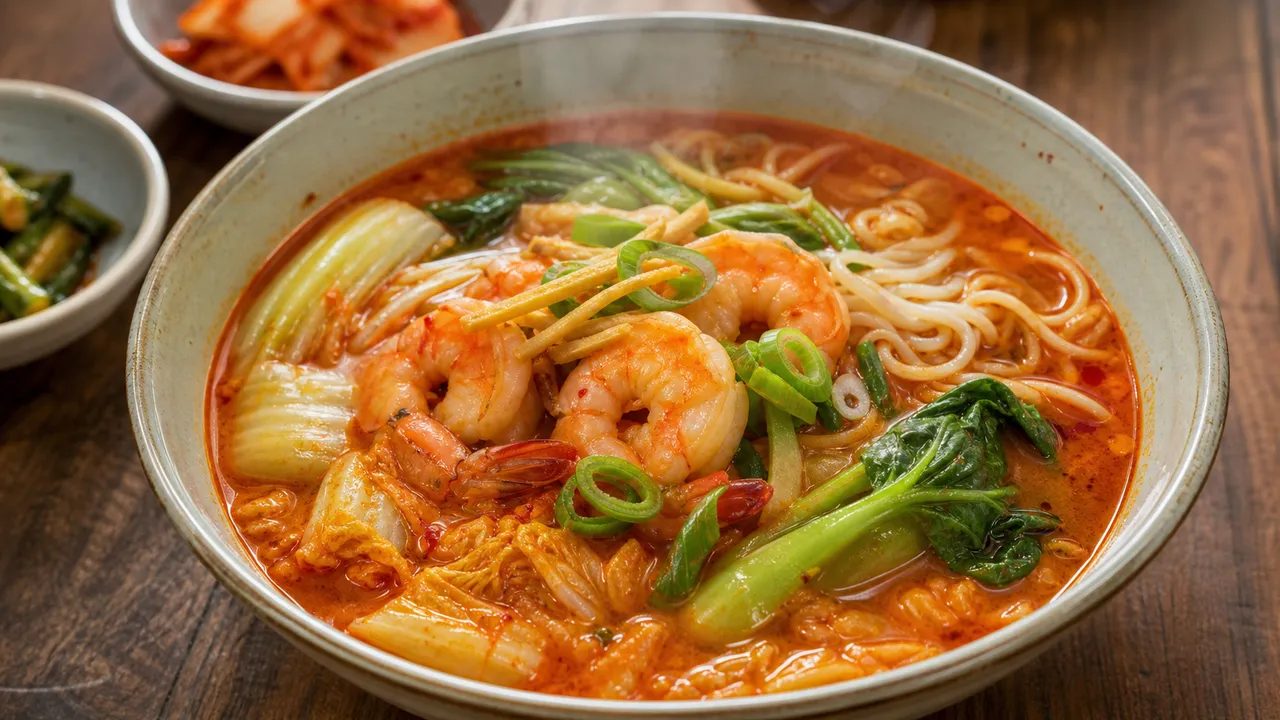
Spicy and Hearty Singaporean Shrimp Noodle Soup at Home
* 이미지는 AI가 생성한 참고 이미지로, 실제 조리 결과물과 다를 수 있습니다.
A spicy yet savory shrimp noodle soup that brings the authentic taste of Singapore right to your home.
📝 Editor's Notes
This Spicy Singaporean Shrimp Noodle Soup is a Southeast Asian-style noodle dish with an exquisite spicy yet savory broth.
The rich broth, made from simmering shrimp heads, adds a deep flavor, while the cornstarch slurry adjusts the consistency for a smooth texture.
It's simple to make without complex steps, making it easy for beginner cooks to try.
Its spicy flavor makes it a perfect comfort food on a rainy day or a chilly evening to warm you up.
Those who enjoy exotic flavors will surely be satisfied.
🛒 Ingredient Tips
The freshness of shrimp, a key ingredient in this recipe, is crucial.
Choose shrimp that are firm, glossy, have a hard shell, and whose heads are firmly firmly attached to the body.
Since the shrimp heads yield a rich broth, it's best to use whole shrimp with heads on.
For mini napa cabbage, select those with tightly packed centers and fresh green outer leaves.
For bok choy, choose ones with firm stalks and un-wilted leaves.
For egg noodles, pick products with a good shelf life and a clear yellow color for a chewy texture.
🔄 Substitution Guide
If you have a shrimp allergy or don't prefer seafood, you can use chicken breast or pork neck instead.
Chicken breast is lean, and pork neck has just the right amount of fat, making them good alternatives to shrimp.
However, please note that using chicken broth or vegetable broth instead of shrimp head broth may slightly reduce the original deep and rich seafood flavor.
If egg noodles are unavailable, you can use thin noodles (like somen), medium noodles (like udon), or even ramen noodles.
While they may lack the unique chewiness of egg noodles, you'll still enjoy a delicious noodle soup.
You can also add texture and nutrition by using other vegetables like bean sprouts or mushrooms instead of mini napa cabbage or bok choy.
🥘 Ingredients
👨🍳 Cooking Points
The most crucial point of this recipe is the 'shrimp head broth.' You must thoroughly stir-fry the shrimp heads to develop a savory aroma, then simmer them in water for at least 5 minutes to extract a deep and rich broth.
The umami flavor from the shrimp heads is key to the soup's taste, so remember this step.
The second point is 'timing the shrimp meat cooking.' Shrimp meat can easily become tough if overcooked, so the secret to maintaining a tender texture is to remove it as soon as it turns red and add it back in at the end.
Finally, 'adjusting the cornstarch slurry consistency.' Do not add all the cornstarch slurry at once; instead, gradually pour it around the edges while stirring until your desired consistency is achieved.
It's important to stir well to prevent clumping.
👨🍳 Directions
Remove shrimp heads and set aside. Peel off shells and devein the shrimp.
Make a long incision along the center of each shrimp body and flatten it.
Slice 3 pieces of ginger and diagonally slice 2 stalks of green onions.
Julienne 3 leaves of mini napa cabbage.
In a bowl, combine 2 tbsp cornstarch and 3 tbsp water to make a cornstarch slurry.
Heat 4 tbsp cooking oil in a pan. Add 3 tbsp minced garlic, sliced ginger, and sliced green onions, and stir-fry until fragrant to make aromatic oil.
Once the aromatic oil is ready, add the reserved shrimp heads and shrimp bodies, and stir-fry together.
When the shrimp turn red, add 3 cups water, 1 tbsp soy sauce, 2 tbsp mirin, 1.5 tbsp oyster sauce, and 1 tbsp fish sauce, then bring to a boil.
Once the shrimp are cooked, remove only the shrimp bodies and set aside. Leave the shrimp heads and simmer for another 5 minutes to make the broth. Once the broth is ready, remove the shrimp heads.
Add the julienned mini napa cabbage, bok choy, 4 servings of egg noodles, and the reserved shrimp bodies, and cook together.
Gradually pour the prepared cornstarch slurry around the edges of the pot, stirring constantly to adjust the broth's consistency.
Finally, drizzle with a little sesame oil and serve.
💡 Tips
When adding the cornstarch slurry, pour it around the edges to prevent clumping.
Shrimp meat can become tough if overcooked, so it's best to remove it as soon as it's cooked and add it back in later.
📦 Storage & Reuse
For best results, store the finished shrimp noodle soup in an airtight container in the refrigerator and consume within 2-3 days.
Storing the broth and solid ingredients separately can help maintain freshness longer.
For freezing, it is recommended to freeze only the broth, then thaw and add fresh noodles and other ingredients when reheating.
When reheating, simmer gently over low heat or use a microwave, but be careful not to overcook the noodles.
Leftover shrimp can be used in fried rice or salads, and any remaining vegetables can be added to other stir-fries to avoid waste.
🥢 Who This Is For
This spicy shrimp noodle soup is an excellent choice for those who miss the authentic flavors of Singapore or want to enjoy a unique dish on a special occasion.
Its warm and spicy broth makes it a fantastic accompaniment to drinks or a perfect hangover remedy.
It's also suitable for family meals or entertaining guests.
For side dishes, we recommend light fried rice or a simple salad.
You can also enjoy it with savory fish cake stir-fry or kimchi for a harmonious blend of Korean flavors.
🔥 Nutrition Info
Based on a 4-serving recipe, each serving is estimated to contain approximately 450-550 calories.
It is projected to provide about 25-30g of protein, 20-25g of fat, and 40-50g of carbohydrates.
Shrimp are rich in protein and taurine, which aids in fatigue recovery.
Mini napa cabbage and bok choy provide dietary fiber and vitamins C and K, contributing to gut health and immune system enhancement.
Green onions and ginger contain allicin and gingerol, which have antibacterial and anti-inflammatory properties and help warm the body.
However, since seasonings like soy sauce, oyster sauce, and fish sauce can be high in sodium, it's advisable to adjust the amount of salt for health reasons.
💬 Frequently Asked Questions
- Q. What ingredients do I need for Spicy and Hearty Singaporean Shrimp Noodle Soup at Home?
- Main ingredients include Shrimp, Mini Napa Cabbage, Ginger, Green Onions, Bok Choy. The freshness of shrimp, a key ingredient in this recipe, is crucial. Choose shrimp that are firm, glossy, have a hard shell, and whose heads are firmly firmly attached to the body. Since the shrimp heads yield a rich broth, it's best to use whole shrimp with heads on. For mini napa cabbage, select those with tightly packed centers and fresh green outer leaves. For bok choy, choose ones with firm stalks and un-wilted leaves. For egg noodles, pick products with a good shelf life and a clear yellow color for a chewy texture.
- Q. What are the key tips for making Spicy and Hearty Singaporean Shrimp Noodle Soup at Home?
- The most crucial point of this recipe is the 'shrimp head broth.' You must thoroughly stir-fry the shrimp heads to develop a savory aroma, then simmer them in water for at least 5 minutes to extract a deep and rich broth. The umami flavor from the shrimp heads is key to the soup's taste, so remember this step. The second point is 'timing the shrimp meat cooking.' Shrimp meat can easily become tough if overcooked, so the secret to maintaining a tender texture is to remove it as soon as it turns red and add it back in at the end. Finally, 'adjusting the cornstarch slurry consistency.' Do not add all the cornstarch slurry at once; instead, gradually pour it around the edges while stirring until your desired consistency is achieved. It's important to stir well to prevent clumping.
- Q. How should I store leftover Spicy and Hearty Singaporean Shrimp Noodle Soup at Home?
- For best results, store the finished shrimp noodle soup in an airtight container in the refrigerator and consume within 2-3 days. Storing the broth and solid ingredients separately can help maintain freshness longer. For freezing, it is recommended to freeze only the broth, then thaw and add fresh noodles and other ingredients when reheating. When reheating, simmer gently over low heat or use a microwave, but be careful not to overcook the noodles. Leftover shrimp can be used in fried rice or salads, and any remaining vegetables can be added to other stir-fries to avoid waste.
- Q. How many calories are in Spicy and Hearty Singaporean Shrimp Noodle Soup at Home?
- Based on a 4-serving recipe, each serving is estimated to contain approximately 450-550 calories. It is projected to provide about 25-30g of protein, 20-25g of fat, and 40-50g of carbohydrates. Shrimp are rich in protein and taurine, which aids in fatigue recovery. Mini napa cabbage and bok choy provide dietary fiber and vitamins C and K, contributing to gut health and immune system enhancement. Green onions and ginger contain allicin and gingerol, which have antibacterial and anti-inflammatory properties and help warm the body. However, since seasonings like soy sauce, oyster sauce, and fish sauce can be high in sodium, it's advisable to adjust the amount of salt for health reasons.
- Q. Can I substitute ingredients in Spicy and Hearty Singaporean Shrimp Noodle Soup at Home?
- If you have a shrimp allergy or don't prefer seafood, you can use chicken breast or pork neck instead. Chicken breast is lean, and pork neck has just the right amount of fat, making them good alternatives to shrimp. However, please note that using chicken broth or vegetable broth instead of shrimp head broth may slightly reduce the original deep and rich seafood flavor. If egg noodles are unavailable, you can use thin noodles (like somen), medium noodles (like udon), or even ramen noodles. While they may lack the unique chewiness of egg noodles, you'll still enjoy a delicious noodle soup. You can also add texture and nutrition by using other vegetables like bean sprouts or mushrooms instead of mini napa cabbage or bok choy.
💬 Comments
No comments yet. Be the first to comment!