
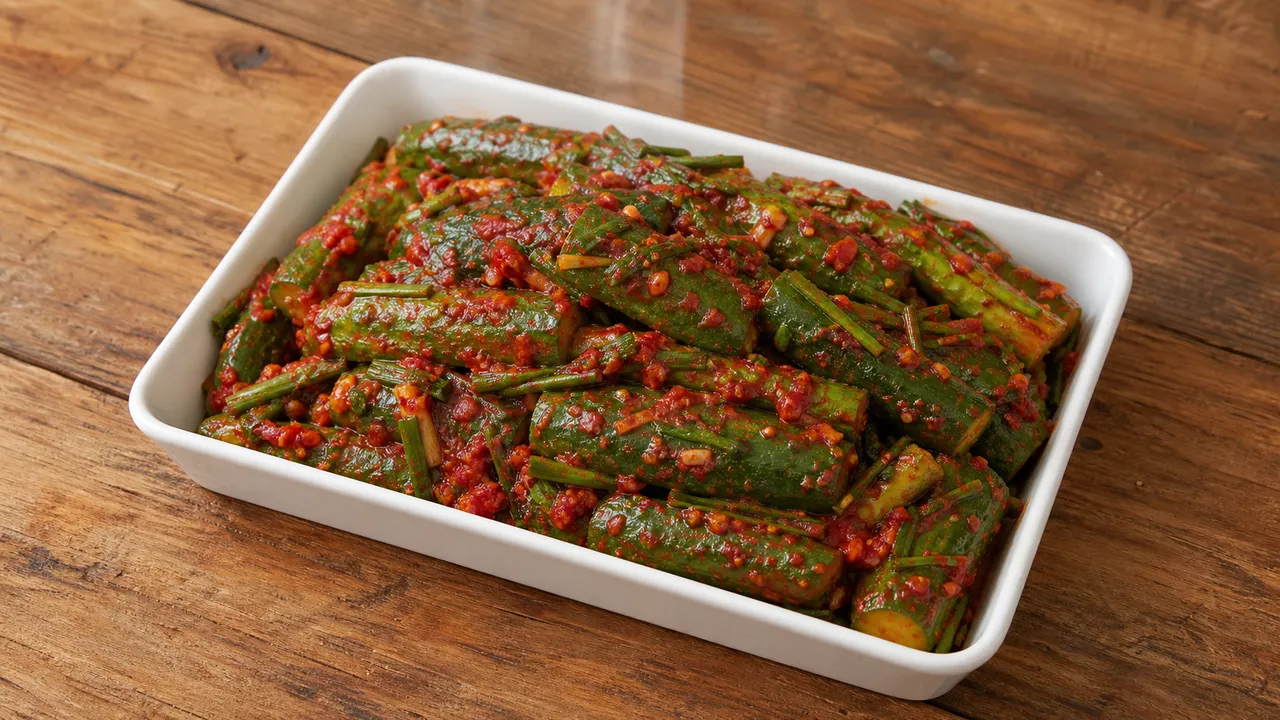
How to Make Crunchy and Refreshing Oisobagi (Cucumber Kimchi
Oisobagi (오이소박이) is a summer side dish made with seasonal cucumbers that are pickled for a crisp texture and filled with spicy seasoning.
📝 Editor's Notes
This oisobagi (cucumber kimchi) recipe is a delightful summer side dish that maximizes the crisp and refreshing taste of seasonal cucumbers.
A key feature is the pickling method, using baking soda for washing and New Sugar (saccharin) with coarse sea salt to prevent sogginess and maintain a crunchy texture throughout.
The addition of Asian pear and cooled cooked rice deepens and cools the seasoning, creating a spicy yet clean flavor that is exquisite.
The difficulty level is medium; anyone can succeed by simply mastering the cucumber pickling process and seasoning proportions.
There's truly no better side dish to boost your appetite on a hot summer day.
🛒 Ingredient Tips
Choose cucumbers that are straight, uniformly thick, and have prominent spines on their surface.
The stem ends should be fresh and not dry.
Baking soda is very effective at removing impurities and pesticides from the cucumber's surface.
Use coarse sea salt that has been sufficiently drained of brine to avoid bitterness and to pickle the cucumbers more crisply.
For Korean chives (buchu) and scallions, choose ones with firm, bright green leaves that are not wilted to add fresh aroma.
Remember, good ingredients are the first step to making delicious oisobagi (cucumber kimchi).
🔄 Substitution Guide
If cucumbers are unavailable or you have an allergy, you can substitute with Korean zucchini (aehobak, 애호박) or eggplant to make sobagi.
However, the texture will be softer rather than crisp like cucumber.
New Sugar (saccharin) can be substituted with regular sugar, but New Sugar helps maintain the cucumber's crispness for a longer period.
If using sugar, use a slightly reduced amount and pay closer attention to the pickling time of the cucumbers.
If saeujeot (salted fermented shrimp) is unavailable, you can substitute with myeolchi aekjeot (fish sauce) or tuna sauce, but the unique umami and refreshing taste of saeujeot might be slightly diminished.
Please note that each substitute will result in subtle differences in taste and texture.
🥘 Ingredients
👨🍳 Cooking Points
The most crucial cooking point is the pickling process of the cucumbers.
After making cross-shaped incisions in the cucumbers, directly sprinkling coarse sea salt and lightly sprinkling New Sugar (saccharin) solution (or sugar solution) will prevent the cucumbers from becoming soggy and keep them crisp.
Successfully following this step alone ensures success.
Also, remember to pickle the cucumbers in cold water instead of hot water to prevent them from losing their natural sweetness and to maintain their texture for a long time.
When making the seasoning, blending the Asian pear and cooled cooked rice until smooth in a blender is key.
This makes the seasoning smoother and imparts a deeper sweetness and refreshing flavor.
Be sure to generously stuff the seasoning into the cucumbers.
👨🍳 Directions
Soak the cucumbers in baking soda water to remove impurities, then rinse them thoroughly with clean water about 3 times.
Trim both ends of the cucumbers, then cut them into bite-sized pieces. At one end of each cucumber piece, make a cross-shaped incision, leaving the very end intact.
Sprinkle coarse sea salt directly into the incisions of the cucumbers to season them, then lightly sprinkle with New Sugar (saccharin) solution (or sugar solution).
Wash the Korean chives (buchu) and scallions thoroughly, then finely chop them into bite-sized pieces.
Combine 1/4 piece of Asian pear, 1/2 onion, 1 tbsp saeujeot (salted fermented shrimp), 1 tbsp garlic, a small piece of ginger, 2 tbsp myeolchi aekjeot (fish sauce), and 1 tbsp cooled cooked rice in a blender and blend until smooth.
Place the finely chopped Korean chives (buchu) and scallions in a bowl, pour in the blended seasoning, add gochugaru (Korean chili powder) as needed, and mix well to complete the seasoning.
Generously stuff the prepared seasoning into the cross-shaped incisions of the well-pickled, crunchy cucumbers.
Store the stuffed oisobagi (cucumber kimchi) in an airtight container.
💡 Tips
After thoroughly washing the cucumbers with baking soda, rinsing them about 3 times helps remove dirt and other impurities.
After making cross-shaped incisions in the cucumbers, sprinkling coarse sea salt directly and then New Sugar (saccharin) solution (or sugar solution) helps prevent the cucumbers from becoming soggy, maintaining their crisp texture until they are all eaten.
When pickling cucumbers, using cold water with coarse sea salt and New Sugar (saccharin) solution (or sugar solution) instead of hot water prevents the cucumbers from losing their natural sweetness and helps them stay crisp for longer.
📦 Storage & Reuse
It is best to store the finished oisobagi (cucumber kimchi) in an airtight container in the refrigerator.
For optimal readiness to eat, let it ferment at room temperature for about half a day before refrigerating.
The recommended storage period in the refrigerator is about 1 week; over time, the cucumbers may soften and become more sour.
Freezing is not recommended as it can alter the texture of the cucumbers.
Leftover oisobagi can be finely chopped and added to bibimbap (비빔밥, mixed rice with vegetables) or used as a topping for noodles for another delicious treat.
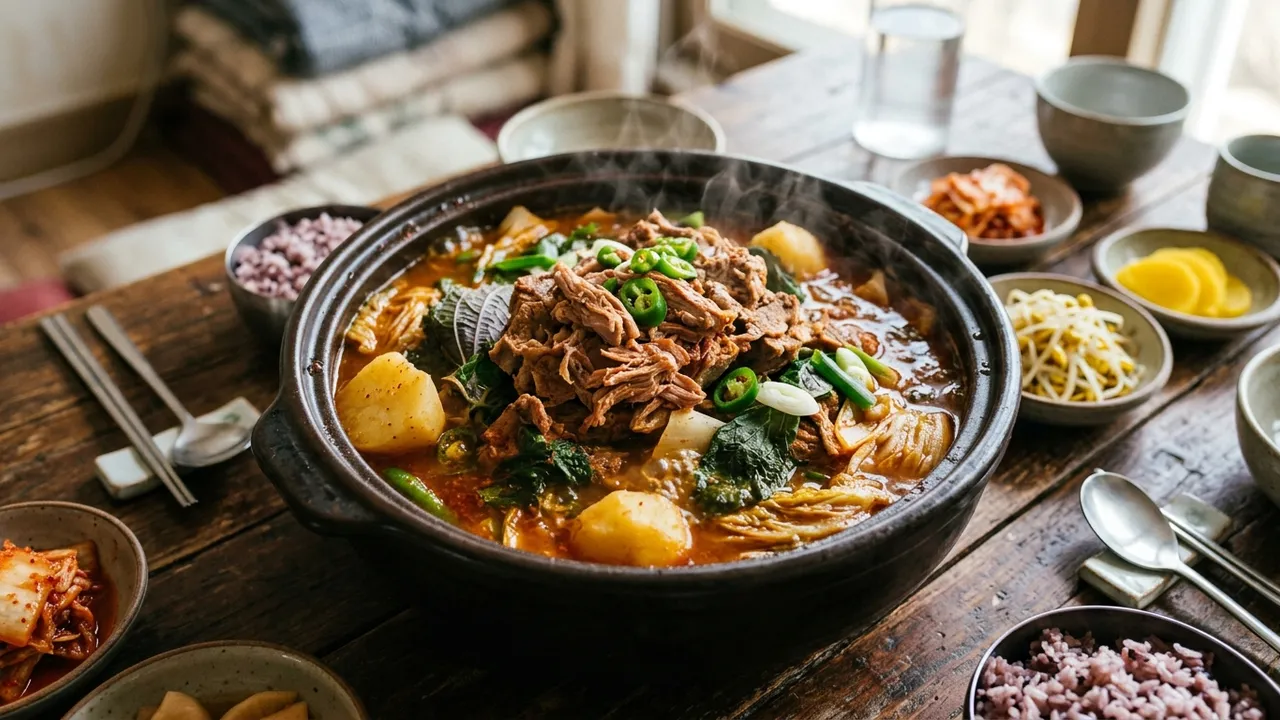
If it becomes too sour, it's a great ingredient to use in kimchi jjigae (김치찌개, kimchi stew).
🥢 Who This Is For
This oisobagi (cucumber kimchi) is the perfect side dish to regain lost appetite during hot summer days.
It's especially delicious when served with refreshing naengmyeon (냉면, cold noodles) or kalguksu (칼국수, knife-cut noodle soup), or simply alongside a warm bowl of rice.
Its spicy yet crisp texture is appealing to all ages, from the elderly to children.
It's also an excellent dish to serve at a dinner party or to pack as a side dish for camping or a picnic.
We highly recommend it as a healthy and vibrant addition to your summer dining table.
🔥 Nutrition Info
This oisobagi (cucumber kimchi) is characterized by being rich in dietary fiber and low in calories, with cucumbers as its main ingredient.
The estimated calories per serving are around 50-80 kcal, making it a light and enjoyable dish.
Protein is estimated at about 2-4g, fat at about 1-2g, and carbohydrates at about 10-15g.
Cucumbers are high in water content, which is great for quenching thirst in summer, and are also rich in Vitamin C and potassium, aiding in fatigue recovery and sodium excretion.
Korean chives (buchu) and scallions add Vitamin A, iron, and calcium, contributing to nutritional balance.
It is an excellent healthy and refreshing summer side dish.

💬 Comments
No comments yet. Be the first to comment!