
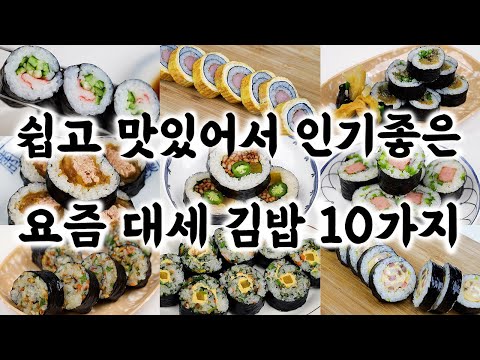
Easy-to-Roll Kimbap (김밥)
Fluffy kimbap (김밥) with a delightful texture, made using an easy, one-go rolling method.
📝 Editor's Notes
Cheese-Rolled Kimbap (치즈둘둘이김밥) is a rice ball-flavored kimbap (김밥) that everyone, young and old, loves.
It's packed with a variety of vegetables, rice ball flakes, and plenty of sesame oil (참기름) in the rice, creating an explosion of savory and umami flavor.
The rich cheese and crunchy pickled radish (단무지) come together harmoniously, making every bite a delight.
All ingredients are finely chopped to integrate with the rice, ensuring a smooth texture where ingredients don't feel separate.
The cooking process isn't complicated, making it easy for beginners, and it's perfect for a busy breakfast or a picnic lunch.
Especially with the addition of cheongyang chili peppers (청양고추), it has a slightly spicy yet clean aftertaste, making it irresistibly delicious.
🛒 Ingredient Tips
There are several key ingredients that determine the taste of this kimbap (김밥).
First, for burdock root (우엉), if you buy whole burdock root (우엉) and chop it yourself, it will be fresher and add a crunchy texture.
You can also use pre-seasoned burdock root (우엉) side dish, but choose one that isn't too strongly seasoned.
For carrots, choose ones with vibrant color, firm texture, and smooth skin.
Since they will be finely chopped, size isn't a major concern.
For perilla leaves (깻잎), it's important to choose fresh ones with a strong aroma.
Avoid wilted or yellowing leaves; opt for those with a deep green color and a glossy sheen.
For sesame oil (참기름), using high-quality, domestic sesame oil (참기름) with a rich, nutty aroma will further enhance the kimbap's (김밥) flavor.
The key is to add plenty of it.
🔄 Substitution Guide
If you can't find the key ingredients for this recipe or prefer alternatives, here are some substitutions: Instead of burdock root (우엉), you can finely chop shiitake mushrooms or king oyster mushrooms.
Mushrooms add flavor and texture, offering a different umami taste than burdock root (우엉).
However, mushrooms contain a lot of moisture, so it's best to sauté them lightly to remove excess water before use.
If cheongyang chili peppers (청양고추) are too spicy or for children, finely chopped Korean green peppers (o-i gochu (오이고추)) or bell peppers are good alternatives.
This reduces the spiciness while maintaining a crunchy texture and vibrant color.
For cheese, any type can be used instead of cheddar, such as mozzarella or sliced cheese.
Mozzarella cheese will give a softer, melty texture, while sliced cheese will offer a similar savory flavor to cheddar.
If you don't have pickled radish (단무지), finely chopped pickles can add a refreshing taste.
If rice ball flakes are unavailable, you can season the rice with roasted seaweed flakes (gimjaban (김자반)), toasted sesame seeds, and a little soy sauce.
However, the unique taste and texture of rice ball flakes might be slightly different.
🥘 Ingredients
👨🍳 Cooking Points
There are three key cooking points for successful Cheese-Rolled Kimbap (치즈둘둘이김밥).
First, it's crucial to finely chop all vegetables.
Finely chop burdock root (우엉), cheongyang chili peppers (청양고추), carrots, and perilla leaves (깻잎) as much as possible so they blend well with the rice.
This creates a smooth texture where ingredients don't stand out separately, allowing for a much more harmonious taste when eating kimbap (김밥).
Second, adding plenty of sesame oil (참기름) when seasoning the rice is essential.
It maximizes the savory flavor, prevents rice grains from sticking together, and significantly enhances the overall aroma.
Don't just eyeball it; add a generous amount according to the rice volume.
Third, be careful not to spread the rice too thickly on the seaweed sheet (gim (김)) when rolling kimbap (김밥).
Too much rice makes it difficult to roll and can overpower the flavors of other ingredients.
Spread the rice to an appropriate thickness, then add cheese and pickled radish (단무지), and roll it tightly with firm pressure all the way to the end.
Finally, lightly press the ends of the kimbap (김밥) with your hand before slicing to prevent it from falling apart and to cut it neatly.
👨🍳 Directions
Finely chop the crab sticks (mas-sal (맛살)), burdock root (ugong (우엉)), and ham.
Finely chop the pickled radish (단무지) as well. (This pickled radish (단무지) will be mixed into the rice.)
Season 2 eggs with seasoned salt (mat-sogeum (맛소금)) and beat them well. Add the finely chopped ingredients (crab sticks (mas-sal (맛살)), burdock root (ugong (우엉)), and ham), excluding the pickled radish (단무지), and mix well.
Heat a pan with cooking oil. Pour the egg mixture into the pan and cook it. Roll the egg as it sets, adding the remaining egg mixture in batches and continuing to roll. Cook over low heat to ensure it doesn't break.
Shape it using a kimbap (김밥) rolling mat (gimbal (김발)).
Season the cooked rice with seasoned salt (mat-sogeum (맛소금)), add sesame oil (chamgireum (참기름)) and finely ground sesame seeds, then mix evenly to season the rice.
Add the finely chopped pickled radish (단무지) to the seasoned rice and mix.
Spread the seasoned rice evenly on a seaweed sheet (gim (김)), then place the shaped egg roll on top.
As you roll, moisten the edge of the seaweed sheet (gim (김)) with a little water to seal it. Brush with sesame oil (참기름) and slice to complete the easy-to-roll kimbap (김밥).
💡 Tips
Finely chop the ingredients for the egg roll to ensure they mix well with the egg mixture.
When cooking the egg mixture, fry it in several batches over low heat to get a nice shape.
Before rolling the kimbap (김밥), apply a little water to the edge of the seaweed sheet (gim (김)) to help it seal.
Its fluffy texture is a characteristic, making it an addictively delicious snack you can't stop eating.
📦 Storage & Reuse
Cheese-Rolled Kimbap (치즈둘둘이김밥) is best enjoyed on the day it's made.
Leftover kimbap (김밥) can be stored in an airtight container in the refrigerator and will be fine until the next day.
However, the rice may harden, so it's more delicious to microwave it lightly or pan-fry it until golden.
Freezing is not recommended, as the rice texture can become dry and the cheese flavor may diminish.
Here are some tips for using leftover ingredients: Finely chopped burdock root (우엉), carrots, perilla leaves (깻잎), etc., can be refrigerated and used for fried rice or bibimbap.
Rice ball flakes can be sprinkled on rice for simple rice balls or used as a topping for steamed egg.
Sesame oil (참기름) should be sealed and stored in a cool, dark place, and used as soon as possible after opening.
🥢 Who This Is For
This kimbap (김밥) is a great menu for the whole family to enjoy.
Children, in particular, will love the savory cheese and rice ball flavor, while adults will appreciate the subtle spiciness of cheongyang chili peppers (청양고추).
It's an excellent choice for a busy weekday dinner, a weekend outing lunch box, or a picnic menu.
Good companion dishes include warm fish cake soup (eomuktang (어묵탕)), seaweed soup (miyeokguk (미역국)), or refreshing bean sprout soup (kongnamulguk (콩나물국)).
These pair wonderfully with the kimbap's (김밥) savory and slightly spicy taste.
For a snack, it also goes well with refreshing rice punch (sikhye (식혜)) or carbonated drinks.
🔥 Nutrition Info
The estimated calorie count for one serving of Cheese-Rolled Kimbap (치즈둘둘이김밥) is approximately 450-550 kcal.
This can vary depending on the amount of rice, cheese, and sesame oil (참기름).
Approximate nutritional values are estimated to be around 70-80g carbohydrates, 15-20g protein, and 15-20g fat.
Rice, the main ingredient, provides carbohydrates, which are the primary energy source.
Cheese is rich in high-quality protein and calcium.
Vegetables such as burdock root (우엉), carrots, and perilla leaves (깻잎) provide dietary fiber, vitamins, and minerals, aiding in gut health and strengthening immunity.
Carrots are particularly rich in vitamin A, good for eye health, and perilla leaves (깻잎) are high in iron and vitamin C, effective for preventing anemia and combating fatigue.
Sesame oil (참기름), rich in unsaturated fatty acids, can also contribute to cardiovascular health.
Cheongyang chili peppers (청양고추) contain capsaicin, which boosts metabolism and enhances immunity.
💬 Comments
No comments yet. Be the first to comment!