
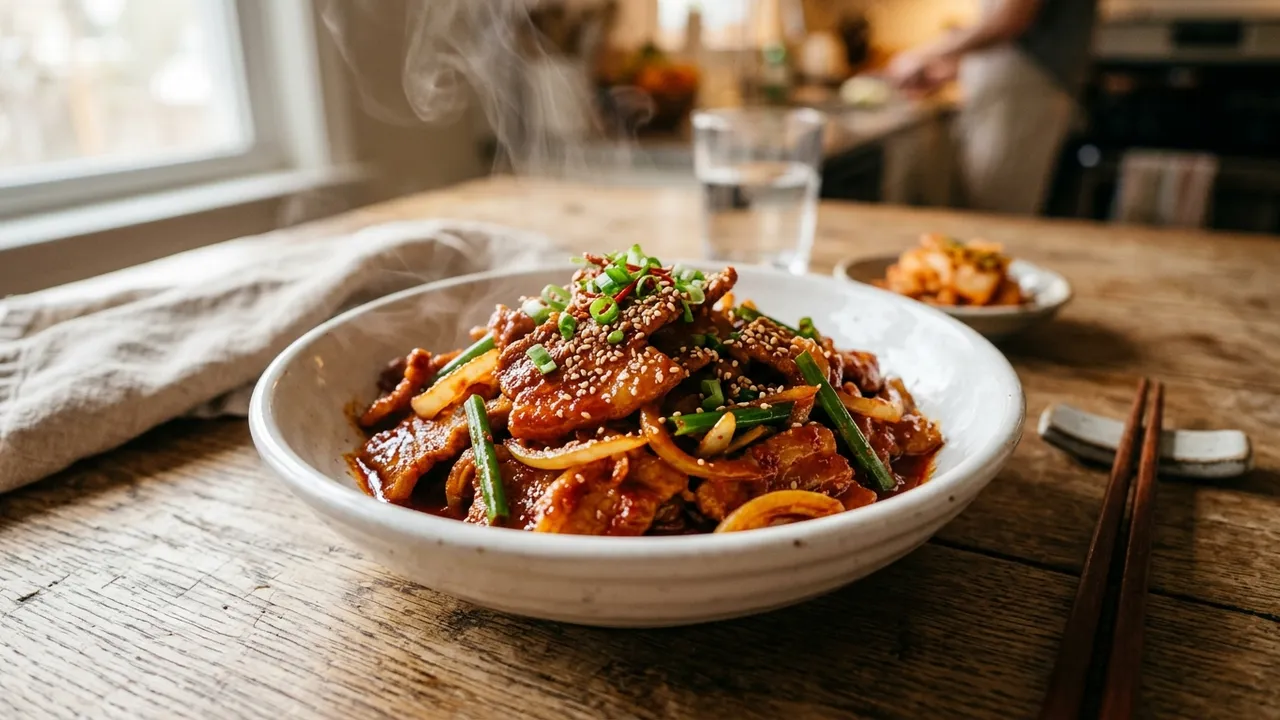
Spicy Pork Stir-fry (Jeyuk Bokkeum) with Pork Shoulder Butt
This Jeyuk Bokkeum features pork shoulder butt marinated in a spicy sauce with vegetables, quickly stir-fried over high heat.
📝 Editor's Notes
Here's a recipe for Jeyuk Bokkeum, a spicy and sweet dish loved by the whole family. Pork shoulder butt, with its balanced ratio of fat and lean meat, is perfect for Jeyuk Bokkeum. Stir-fried quickly over high heat, it locks in the juices and deeply infuses the flavors, creating an irresistible side dish that will have you finishing a whole bowl of rice. If you're wondering what to make for dinner tonight, try this recipe for a delicious meal. Its simple cooking method makes it easy for anyone to create excellent Jeyuk Bokkeum.
🛒 Ingredient Tips
Ingredient selection is crucial for delicious Jeyuk Bokkeum. Choose pork shoulder butt that isn't too thick to allow the seasoning to penetrate better and shorten cooking time. You can adjust the amount of gochugaru (고춧가루) to your taste; if you prefer a spicier kick, you can mix in some cheongyang gochugaru (청양고춧가루, Korean hot chili powder). Opt for fresh, sweet onions as they add natural sweetness when stir-fried. Using both the white and green parts of the green onion enhances both color and aroma. As you know, fresh ingredients significantly improve the taste of any dish!
🔄 Substitution Guide
Instead of pork shoulder butt, you can also use pork neck or pork belly. Pork neck has less fat than shoulder butt, offering a leaner taste, while pork belly, with more fat, provides a richer and more tender flavor. Beyond onions, adding vegetables such as carrots, cabbage, or perilla leaves (깻잎) can enhance the texture and nutritional value. Cabbage, in particular, becomes sweeter and softer when stir-fried, pairing wonderfully with Jeyuk Bokkeum. If you don't like spicy food, you can reduce the amount of gochugaru or use a soy sauce-based seasoning instead of gochujang. Oligosaccharide or jocheong (조청, traditional Korean grain syrup) can be used as a substitute for corn syrup. Feel free to use ingredients you have on hand to create your own unique Jeyuk Bokkeum.
🥘 Ingredients
👨🍳 Cooking Points
The key to this Jeyuk Bokkeum is 'high heat' and 'quick cooking.' Stir-frying the pork over high heat prevents the juices from escaping, keeping it tender. Marinating the pork and onion in advance allows the flavors to fully permeate the ingredients, resulting in a deeper taste. Don't forget to add a small amount of water to prevent the meat from sticking to the pan or burning. This water helps prevent the seasoning from burning and ensures the pork cooks tenderly. Finally, drizzling a little sesame oil at the end enhances the savory aroma even further, so be sure to include it. That's the secret to its delicious flavor!
👨🍳 Directions
- 1
In a bowl, combine 21 oz (600g) pork shoulder butt, 1.5 tbsp sugar, 3 tbsp soy sauce, 2 tbsp gochugaru (고춧가루), 2 tbsp corn syrup, 2 tbsp mirin (맛술), 1 tbsp minced garlic, 3 tbsp gochujang (고추장), and a few dashes of black pepper. Mix well to combine.
- 2
Thinly slice 1 onion and add it to the bowl with the marinated pork. Mix thoroughly.
- 3
Add the marinated pork and onion to a pan and stir-fry over high heat.
- 4
When the pork starts to cook, add 3.5 tbsp (50ml) water and continue to stir-fry.
- 5
Add the green onion and stir-fry together.
- 6
Add 1 tbsp sesame oil and mix well. Serve immediately.
💡 Tips
Ensure the pork, seasoning, and vegetables are thoroughly mixed for even flavoring.
It's important to stir-fry quickly over high heat to lock in the juices.
Add water when the pork starts to cook to ensure it becomes tender and prevent burning.
📦 Storage & Reuse
Freshly made Jeyuk Bokkeum is best enjoyed immediately. If there are leftovers, store them in an airtight container in the refrigerator for 2-3 days. When reheating, warm slowly over low heat or use a microwave, being careful not to overcook, which can make the meat tough. Preparing the marinated pork in advance and adding vegetables just before stir-frying can save cooking time on busy days. Freezing may alter the texture of the meat, so refrigeration and consumption within a few days are recommended.
🥢 Who This Is For
Placing a piece of Jeyuk Bokkeum on warm rice is simply delightful. You can enjoy an even richer flavor by wrapping it in ssam (쌈) vegetables like lettuce or perilla leaves (깻잎). Pairing it with ssamjang (쌈장, spicy dipping sauce), garlic, or chili peppers creates a wonderful harmony of flavors. Serving it with a refreshing kongnamul-guk (콩나물국, soybean sprout soup) or miyeok-guk (미역국, seaweed soup) complements the spicy Jeyuk Bokkeum perfectly, making for a hearty meal. It also pairs wonderfully with a glass of makgeolli (막걸리, Korean rice wine).
🔥 Nutrition Info
Pork shoulder butt is rich in protein, which aids in muscle building and maintenance. It also contains B vitamins, beneficial for fatigue recovery, and iron, which can help prevent anemia. Onions and green onions are vegetables rich in vitamins and dietary fiber, promoting digestion and gut health. However, since the seasoning includes gochujang (고추장), sugar, and corn syrup, it's advisable to be mindful of sodium and sugar intake. Adjust the amount of seasoning to avoid making it too spicy or salty, and incorporate plenty of vegetables for a balanced meal. When serving with rice, add vegetable side dishes to ensure nutritional balance.
💬 Comments
No comments yet. Be the first to comment!