
Camping Kimchi Pork Stew and Ramen Recipe
📋 2 recipes — Select to view
📝 Editor's Notes
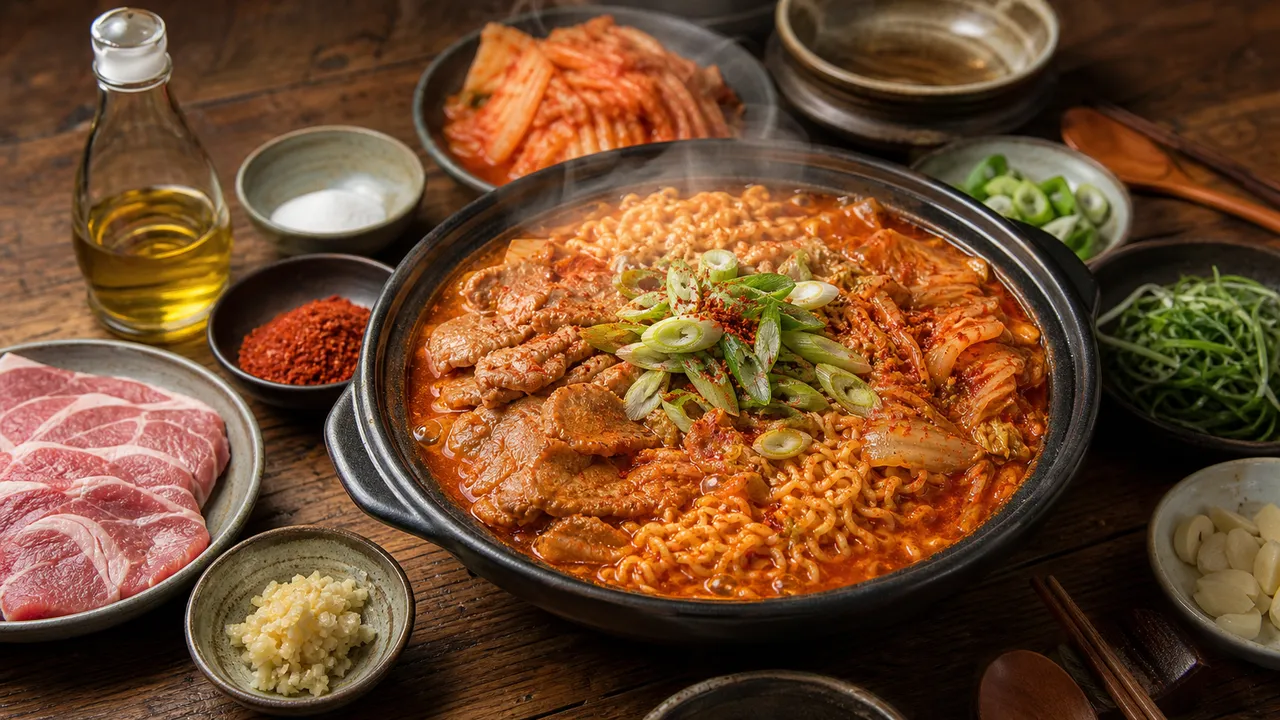
This Camping Kimchi Pork Stew and Ramen recipe captures the romance of camping in a single meal.
The spicy and rich kimchi stew, combined with savory pork, creates a deep flavor.
Using a wood stove adds a smoky aroma, making it an even more special camping dish.
It's designed as a hearty meal: first, enjoy it with rice and a fried egg, then cook ramen in the leftover broth.
With a difficulty level of low-to-medium, it's easy for camping beginners to follow and is especially suitable for chilly autumn or winter camping.
🛒 Ingredient Tips
For a delicious kimchi pork stew, choosing good ingredients is key.
First, use pork shoulder; selecting a cut with a good balance of lean meat and fat will result in a more tender and savory flavor.
Fresh pork shoulder should be reddish, firm, and odorless.
For the kimchi (김치), using aged or well-fermented kimchi (신김치) is crucial for a deep, rich stew flavor.
Aged kimchi (묵은지) or well-ripened kimchi enhances the refreshing and umami taste of the broth, so pay attention to your kimchi selection.
For the onion, green onion, and cheongyang gochu (청양고추), choose fresh and firm ones.
Particularly, green onions with more white parts and vibrant green leaves will offer a better aroma.
🔄 Substitution Guide
Instead of pork shoulder, you can use pork neck or pork belly.
Pork neck offers a more tender texture than shoulder, while pork belly provides a richer, more savory flavor.
If you have allergies or prefer to avoid pork, you can substitute with tuna kimchi stew using canned tuna, or chicken kimchi stew with chicken breast.
While the taste will differ, you can still enjoy the inherent spiciness of kimchi stew.
Instead of ramen noodles, you can also use udon noodles or rice cakes (tteok).
If you find ramen seasoning packets too strong, you can create a delicious broth by seasoning directly with gochugaru (고춧가루), salt, and guk-ganjang (국간장).
🥘 Ingredients
👨🍳 Cooking Points
The most important cooking points for this recipe are the 'stir-frying process' and the 'simmering time.' First, thoroughly stir-frying the pork shoulder with cooking oil, minced garlic, sugar, gochugaru (고춧가루), and soy sauce is crucial.
Stir-fry over medium heat for at least 5 minutes until the pork is fully cooked and well-seasoned.
This helps eliminate any gamey odor from the pork and develops a deep umami flavor.
Second, stir-frying the kimchi (김치) with the pork is also important.
Stir-fry for about 3 minutes until the kimchi and pork are well combined.
Finally, after adding water, onion, green onion, and cheongyang gochu (청양고추), let the stew simmer gently over medium-low heat for at least 10 minutes.
The sweetness of the vegetables and the sourness of the kimchi need to be fully infused into the broth to achieve the authentic taste of kimchi pork stew.
👨🍳 Directions
Place pork shoulder in a camping kettle pot and drizzle with cooking oil.
Add minced garlic, sugar, gochugaru (고춧가루), and soy sauce, then stir-fry until the pork is cooked through.
Add kimchi (김치) and stir-fry together.
Pour in enough water to cover the ingredients and bring to a boil.
Slice and add onion, green onion, and cheongyang gochu (청양고추), then let the stew simmer until thoroughly cooked.
Heat cooking oil in a separate pan and crack one egg into it.
Sprinkle a pinch of salt over the egg and fry it to your desired doneness (sunny-side up or well-done).
Place the fried egg on top of cooked rice and serve with the hot kimchi pork stew.
Add roasted seaweed (gim) on top, if desired.
💡 Tips
Using a wood stove at the campsite will add a smoky flavor, allowing you to enjoy an even richer dish.
Stir-frying the pork and kimchi thoroughly to develop deep flavors before adding water and boiling will make the dish even more delicious.
Cook the fried egg to your preferred doneness (sunny-side up or well-done) and serve it with rice.
📦 Storage & Reuse
The finished kimchi pork stew can be stored in the refrigerator for 2-3 days.
Store it in an airtight container and re-boil it thoroughly before serving.
The highlight of this recipe is cooking ramen in the leftover broth, so it's a tip to control your initial stew consumption.
If a lot of stew broth remains, you can add tofu or bean sprouts to transform it into another type of stew, or add rice to cook it like kimchi porridge.
Enjoy making the most of your leftover ingredients.
🥢 Who This Is For
This Camping Kimchi Pork Stew and Ramen recipe is highly recommended for camping trips with family or friends.
It's especially perfect when you crave a warm and spicy broth on a chilly day.
It serves as an excellent hearty meal and a great accompaniment to alcoholic beverages.
We recommend serving it with crispy seafood pancake (haemul pajeon - 해물파전) or savory potato pancake (gamja jeon - 감자전), along with refreshing makgeolli (막걸리).
The spiciness of the stew, the savoriness of the pancakes, and the coolness of the makgeolli will create a fantastic combination.
🔥 Nutrition Info
Based on an estimate for 2 servings, this recipe is expected to provide approximately 700-800 calories per serving.
You can expect to consume about 40-50g of protein from the pork, egg, and ramen; about 40-50g of fat from the pork, cooking oil, and ramen; and about 80-100g of carbohydrates from the rice and ramen.
Pork is rich in B vitamins and zinc, aiding in immune system strengthening.
Kimchi (김치) is rich in probiotics, which are beneficial for gut health, and cheongyang gochu (청양고추) contains Vitamin C, making this a nutritionally balanced meal.
However, the sodium content might be high, so please pay attention to adjusting the amount of water and soy sauce.
💬 Comments
No comments yet. Be the first to comment!