
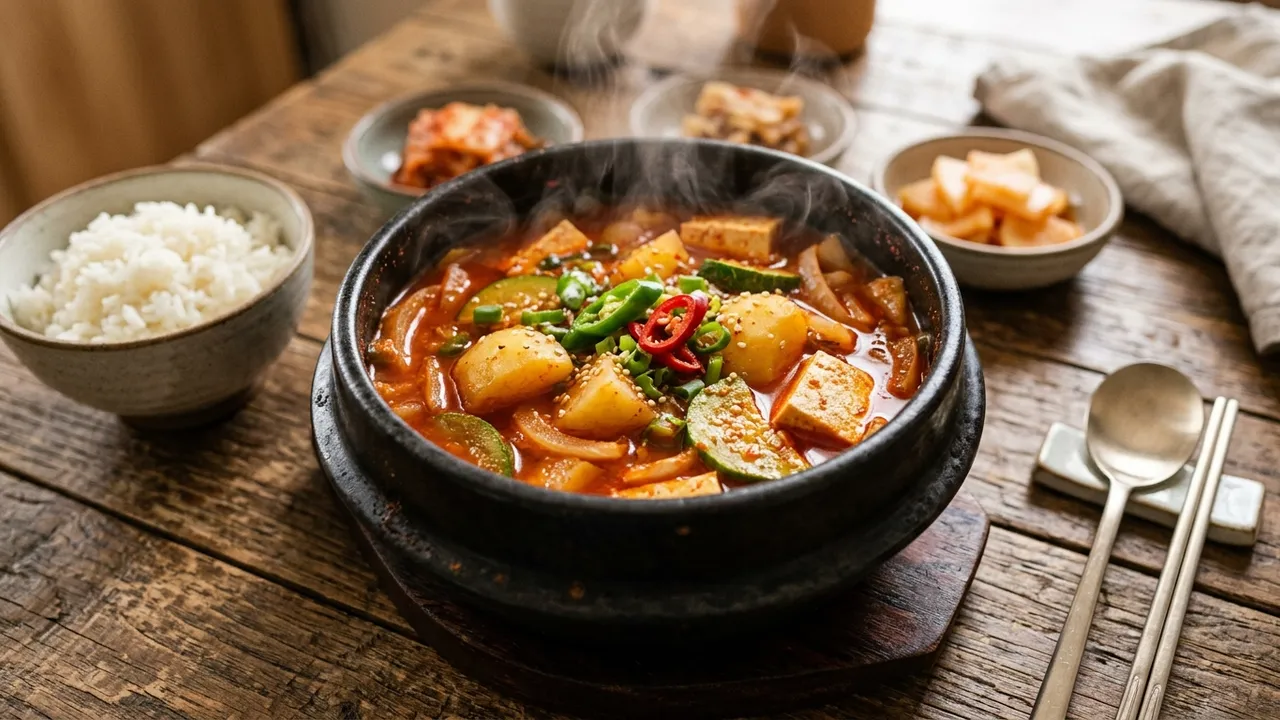
Korean Potato and Zucchini Stew (Gamja Aehobak Jjigae)
This is a recipe for a warm and spicy stew featuring potatoes and Korean zucchini (aehobak).
📝 Editor's Notes
This Korean Potato and Zucchini Stew (Gamja Aehobak Jjigae) recipe is a classic example of hearty Korean home cooking, featuring a wonderfully warm and spicy broth. The savory salted shrimp paste (saeujeot) and umami-rich tuna sauce (chamchi-aek) create a deep, refreshing flavor. Coupled with the comforting and tender texture of potatoes and Korean zucchini, it's a dish so appealing you'll find yourself finishing a whole bowl of rice in no time. The cooking process is not overly complicated, making it a medium-to-easy difficulty recipe that even beginner cooks can confidently try. It's especially perfect for chilly days when you crave a hot stew, or for a hearty meal to enjoy with the whole family.
🛒 Ingredient Tips
The key ingredients for this stew, potatoes and Korean zucchini, can greatly impact the flavor depending on their freshness. For potatoes, choose those with smooth, firm skins and no sprouts. Heavier, unblemished ones are best. They are in season from summer to fall, so they'll taste even better then. For Korean zucchini, select ones with glossy, blemish-free, firm surfaces; smaller ones tend to have fewer seeds and a softer texture. Salted shrimp paste (saeujeot) is a crucial seasoning that adds umami and a refreshing depth to the stew. It's important to use high-quality saeujeot with clear liquid, intact shrimp, and no fishy odor.
🔄 Substitution Guide
If you're looking for alternatives to salted shrimp paste (saeujeot), you can use anchovy sauce or season solely with Korean soup soy sauce (guk-ganjang). However, please note that the unique refreshing and umami flavor of saeujeot might be slightly diminished. If you don't have potatoes or prefer a different texture, try adding thinly sliced daikon radish or sweet potatoes. Daikon radish will add a cool and clear taste, while sweet potatoes will provide a sweet and tender texture. You can also use zucchini or other types of squash instead of Korean zucchini (aehobak), but the unique soft texture and subtle sweetness of aehobak might differ. If you don't have tuna sauce (chamchi-aek), making a rich kelp broth or anchovy broth can help achieve a deep flavor.
🥘 Ingredients
👨🍳 Cooking Points
There are three important points to make this Potato and Korean Zucchini Stew even more delicious. First, pre-salting the potatoes and seasoning the Korean zucchini with salted shrimp paste (saeujeot) beforehand. This allows the ingredients to absorb flavor well, and some of the potato starch will be released, resulting in a cleaner stew with better texture. Second, timing the addition of ingredients is crucial. The Korean zucchini and onion should be added after the potatoes are about half-cooked to ensure all ingredients are properly cooked and in harmony. You can expect the potatoes to cook for about 10-15 minutes over medium heat. Lastly, add the green onion at the very end to preserve its fresh aroma and vibrant color. Cooking it for too long can cause its fragrance to dissipate.
👨🍳 Directions
- 1
Peel 2 potatoes and cut them into bite-sized pieces.
- 2
Sprinkle 1/2 tbsp of salt over the cut potatoes, mix well, and set aside.
- 3
Cut 7 oz of Korean zucchini (aehobak) into half-moon shapes, add 1 tbsp of salted shrimp paste (saeujeot), mix, and set aside.
- 4
Cut 1/2 medium onion, 1 green onion stalk, 2 Cheongyang chili peppers (cheongyang-gochu), 1/2 red chili pepper, and 1/2 block of tofu into bite-sized pieces.
- 5
Heat 1 tbsp of cooking oil in a pan, add the salted potatoes, and stir-fry.
- 6
Pour in 3.4 cups of water, add 2 tbsp of Korean chili powder (gochugaru), 1 tbsp of Korean soup soy sauce (guk-ganjang), and 1 tbsp of tuna sauce (chamchi-aek). Mix well, cover, and boil until the potatoes are half-cooked.
- 7
Once the potatoes are half-cooked, add the Korean zucchini, onion, and 1 tbsp of minced garlic, then mix.
- 8
Add the tofu, Cheongyang chili peppers, and red chili pepper, and continue to boil.
- 9
Finally, add the green onion and boil for a short while longer until done.
💡 Tips
Salting the potatoes beforehand helps them absorb flavor well and improves their texture.
Adding Korean zucchini and onion after the potatoes are half-cooked ensures all ingredients are cooked through properly.
Add green onion at the very end to preserve its fresh aroma.
📦 Storage & Reuse
For best results, store leftover Potato and Korean Zucchini Stew in an airtight container in the refrigerator and consume within 2-3 days. When freezing, potatoes can become mealy upon thawing, so if you have a large amount left, it's recommended to freeze only the broth and other vegetables, excluding the potatoes. Frozen stew can be stored for up to one month. When reheating, simmer slowly over medium-low heat. Reheating too quickly over high heat can make the ingredients mushy. If the broth has reduced, add a little more water or broth and adjust seasoning to enjoy the original taste. Leftover stew is also delicious mixed with rice or boiled with instant ramen noodles.
🥢 Who This Is For
This Potato and Korean Zucchini Stew is highly recommended as a warm and hearty meal for the whole family. Its spicy yet savory broth can even help relieve stress. Served with freshly cooked hot white rice, you might not even need any other side dishes. If you wish for a more elaborate spread, simple banchan (side dishes) like savory steamed egg (gyeran-jjim), crispy roasted seaweed, or light bean sprout salad (kongnamul-muchim) would complement it beautifully, creating a richer dining experience. It's a flavor that appeals to all ages, so you'll surely receive compliments if you serve it to guests.
🔥 Nutrition Info
Based on a serving size of 2, this Potato and Korean Zucchini Stew is estimated to provide approximately 340-360 calories per serving. You can expect to consume about 45-50g of carbohydrates, 12-15g of protein, and 10-13g of fat. The main ingredient, potatoes, are rich in Vitamin C, potassium, and dietary fiber, which help alleviate fatigue and promote gut health. Korean zucchini (aehobak) contains various vitamins and minerals such as Vitamins A, C, and potassium, beneficial for strengthening immunity. Tofu provides high-quality plant-based protein and calcium, adding to the meal's heartiness. Overall, it's a healthy and balanced meal that provides carbohydrate-based energy along with vitamins and minerals from various vegetables.
💬 Comments
No comments yet. Be the first to comment!