
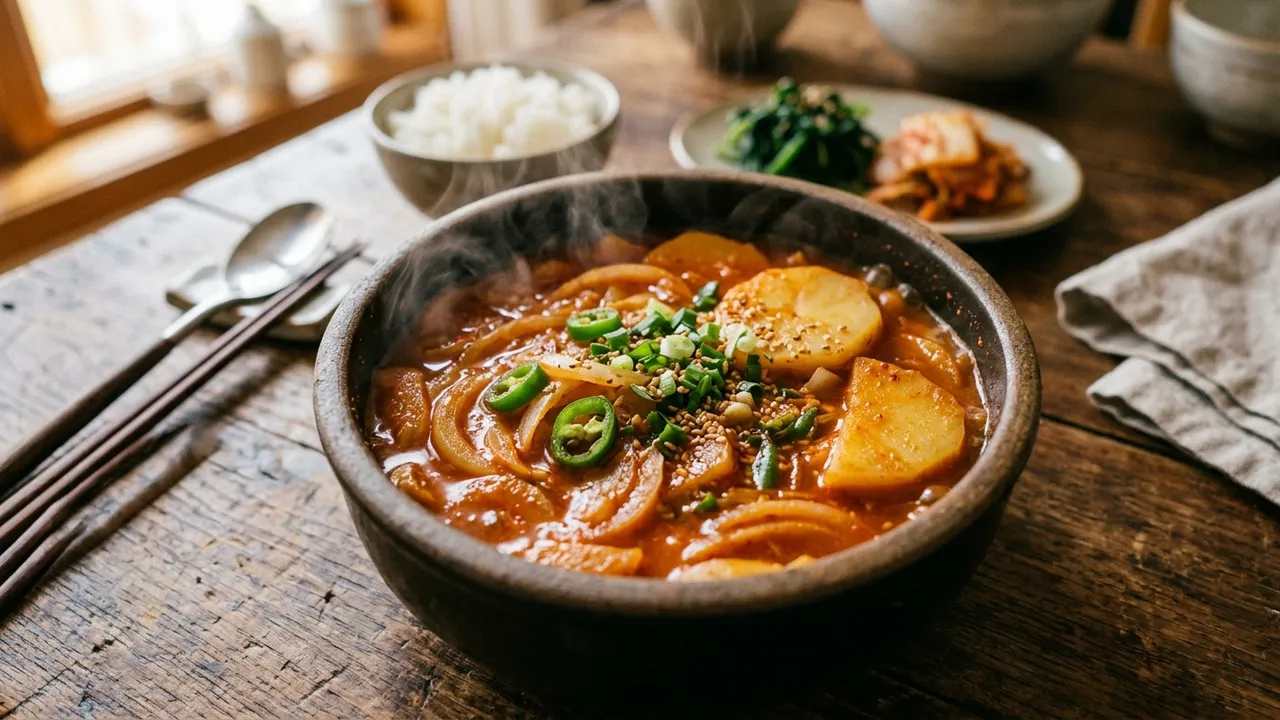
Summer Gamja-jjigae (Potato Stew)
This is a nostalgic recipe for gamja-jjigae (potato stew), a dish my grandmother used to make during potato season.
📝 Editor's Notes
This summer delicacy, Gamja-jjigae (Potato Stew), evokes the comforting taste of grandmother's cooking. It's truly the essence of Korean home cooking, offering deep flavor without elaborate techniques. The savory doenjang (Korean soybean paste) combined with fluffy potatoes in a dried anchovy and kelp broth creates a hearty and comforting dish. It's easy for anyone to make, even beginners, as it doesn't require complex ingredients or difficult steps. This dish is especially perfect for summer when potatoes are in season, on a rainy day, or whenever you crave a refreshing soup. It's a humble yet heartwarming flavor that will bring back cherished memories.
🛒 Ingredient Tips
For this gamja-jjigae, the star ingredient is potatoes, so it's best to choose fresh summer new potatoes. Look for firm potatoes with thin, smooth skin, free of blemishes or sprouts. A heavy feel indicates they are fresh and rich in moisture. For the broth, choose dried anchovies that have less fishiness, a silvery body, and are clean. For dried kelp (dashima), opt for pieces that are not too thick and have a vibrant dark color. For doenjang (Korean soybean paste), use homemade or a commercially available product that offers a deep, savory flavor. The quality of doenjang significantly influences the overall taste of the stew, so choose carefully.
🔄 Substitution Guide
You can also try using other root vegetables instead of potatoes. Sweet potatoes will make the stew sweeter and softer, though you might miss the fluffy texture unique to potatoes. Adding Korean radish (mu) will give it a refreshing and clean taste, offering a different appeal. If you don't have doenjang (Korean soybean paste), you can season with soy sauce and salt, but you'll miss the unique savory and deep umami of doenjang. If Cheongyang chili pepper (cheongyang gochu) is too spicy, use regular green chili peppers or omit it entirely and add sliced green onions (scallions) at the end for aroma. Note that substituting ingredients will alter the taste, aroma, and texture.
🥘 Ingredients
👨🍳 Cooking Points
The first key to delicious gamja-jjigae is the broth. It's crucial to simmer dried anchovies and dried kelp (dashima) over low heat for 10 minutes to extract a deep umami flavor. Remember to remove the solids after making the broth to ensure a clean taste without any fishy notes. The second point is how you cut the potatoes. As per the recipe tip, cut large potatoes in half before slicing, and slice small ones into rounds to ensure uniform size. This allows the potatoes to cook evenly and look appealing. Finally, when adding potatoes, simmer over medium-low heat for 5 minutes to achieve a fluffy texture. Check if they are tender by piercing them with a fork. Adding Cheongyang chili pepper (cheongyang gochu) at the very end is key to adding a refreshing kick.
👨🍳 Directions
- 1
Pour 1.2 L of water into a pot and bring to a boil.
- 2
Once the water starts boiling, add the dried anchovies and dried kelp (dashima).
- 3
Reduce heat to low and simmer for 10 minutes to make the broth.
- 4
After 10 minutes, remove the solids (dried anchovies, dried kelp) from the broth.
- 5
Peel the 7 potatoes with a peeler and wash them thoroughly.
- 6
Wash 1 Cheongyang chili pepper (cheongyang gochu) and remove the stem.
- 7
Peel and wash 1 onion.
- 8
Cut large potatoes in half and then slice them; slice small potatoes into rounds.
- 9
Thinly slice the onion.
- 10
Slice the Cheongyang chili pepper (cheongyang gochu) into rounds.
- 11
Add 2 tbsp of doenjang (Korean soybean paste) to the prepared broth and dissolve it.
- 12
Add 1 tbsp of minced garlic.
- 13
Add 1 tbsp of gochugaru (Korean chili powder).
- 14
Add the sliced potatoes and onion and bring to a boil.
- 15
Once it starts boiling, reduce the heat to medium-low and simmer for 5 minutes, or until the potatoes are cooked through.
- 16
After 5 minutes, check if the potatoes are cooked by piercing them with a fork.
- 17
Add the Cheongyang chili pepper (cheongyang gochu) and bring it to a quick boil again.
- 18
Turn off the heat.
💡 Tips
If potatoes are large, cut them in half before slicing; for small ones, slice them into rounds.
While simmering, check the doneness of the potatoes by piercing them with a fork.
Try making gamja-jjigae during the season when potatoes are abundant.
📦 Storage & Reuse
Store leftover gamja-jjigae in an airtight container in the refrigerator for 2-3 days. Freezing potatoes can make them mealy or mushy when thawed, so refrigeration is recommended over freezing. If you must freeze them, consider doing so when the potatoes are not fully cooked, or freeze only the broth separately. To reheat, transfer to a pot and simmer gently over low heat. If the broth has reduced too much, add a little water. Enjoying the leftover stew broth mixed with rice, or even using it to cook ramen, is a delicious way to enjoy it further.
🥢 Who This Is For
This gamja-jjigae is highly recommended for anyone craving a warm, home-cooked meal. It's a family-friendly dish that adults who remember their grandmother's cooking, as well as children who appreciate deep yet non-spicy flavors, can enjoy together. A spoonful of this stew mixed with freshly cooked white rice is incredibly satisfying, needing no other side dishes. For an even richer meal, serve it with well-fermented kimchi (baechu-kimchi), refreshing kkakdugi (radish kimchi), or simple seasoned vegetable side dishes (namul).
🔥 Nutrition Info
This gamja-jjigae, based on approximately 4 servings, is estimated to be around 250 kcal per serving. Carbohydrates are estimated at about 50g, protein at about 10g, and fat at about 3g. The main ingredient, potatoes, are rich in Vitamin C and potassium, which can help strengthen immunity and aid in sodium excretion. They also contain dietary fiber, benefiting gut health. Doenjang (Korean soybean paste) is a fermented food rich in protein and essential amino acids, not only adding deep flavor to the stew but also aiding digestion and potentially offering anti-cancer effects. The dried anchovy broth replenishes calcium and minerals, making this a nutritionally balanced meal.
💬 Comments
No comments yet. Be the first to comment!