
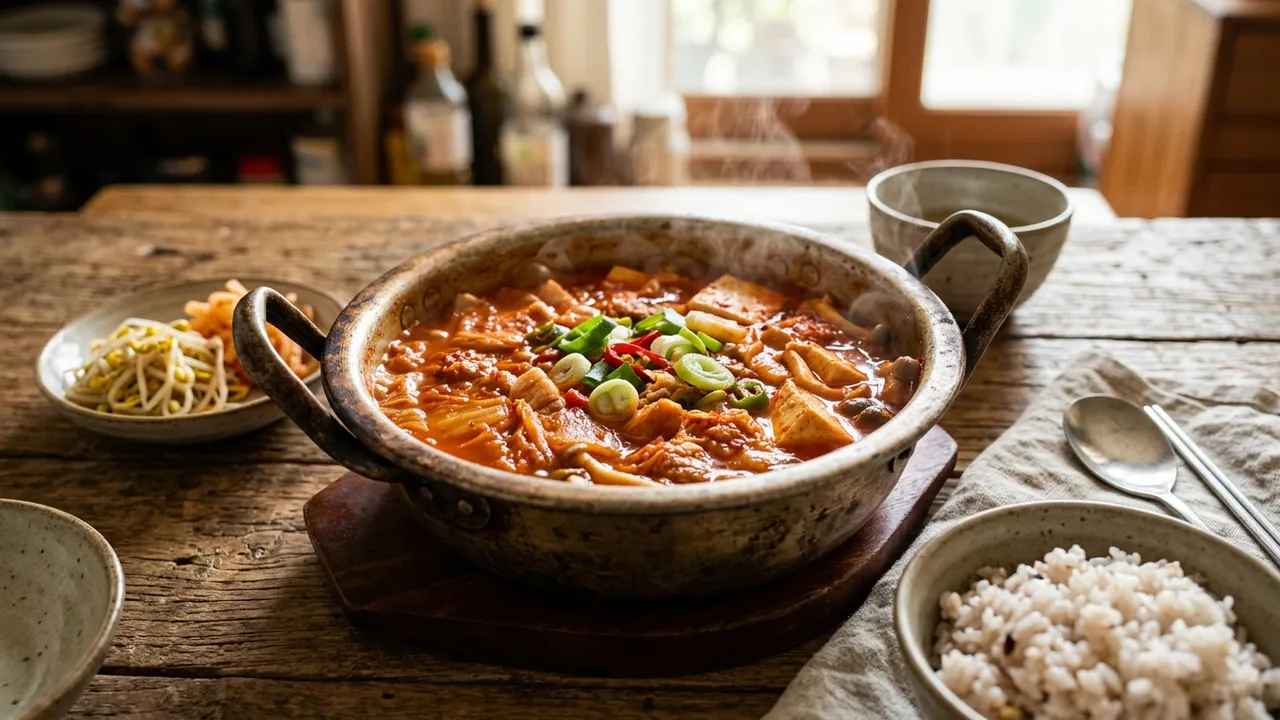
Kimchi Jjigae with a Deep Flavor
This Kimchi Jjigae recipe achieves a deep flavor by balancing the ingredients and the broth.
📝 Editor's Notes
This Kimchi Jjigae is characterized by its deep and rich flavor, achieved through a balanced combination of ingredients and dedicated simmering. The harmony of pork and well-fermented kimchi creates a savory yet spicy broth that is simply exquisite. While the difficulty level is moderate, achieving true depth of flavor requires patience and ample simmering time. It is highly recommended as a warm and hearty meal to enjoy with family, especially on chilly days. It can truly be called a soul food indispensable to the Korean table.
🛒 Ingredient Tips
The key ingredients for Kimchi Jjigae are, without a doubt, kimchi (김치) and pork. For kimchi, it's best to use well-fermented kimchi that isn't overly sour. While fully ripened kimchi develops a deep flavor, if it's too sour, you can neutralize the acidity by adding a little sugar or a bit more cooking oil when stir-frying the sour kimchi. For pork, pork shoulder (앞다리살) is recommended; the balance of fat and lean meat provides a tender texture and adds a savory richness to the broth. Fresh pork shoulder should have a vibrant red color, be firm to the touch, and have visible, moist juices to indicate good quality.
🔄 Substitution Guide
If pork shoulder (앞다리살) is unavailable, you can substitute it with pork neck (목살) or pork belly (삼겹살). Pork neck has a texture similar to pork shoulder but is leaner and milder, while pork belly, being fattier, can produce a richer and more savory flavor. However, note that using pork belly may result in a slightly oilier broth. If you need to use other ingredients instead of kimchi, Kimchi Jjigae made with canned tuna, ham, or sausage is also delicious. In this case, it's good to reduce the amount of kimchi or use less fermented kimchi instead of very sour kimchi to adjust the seasoning. If you don't have Dashida (다시다) or prefer to avoid artificial seasonings, a rich anchovy-kelp broth can be used to provide excellent umami.
🥘 Ingredients
👨🍳 Cooking Points
There are three crucial cooking points to achieve the deep flavor of this Kimchi Jjigae. First, it's important to stir-fry the pork thoroughly to lock in its juices, then stir-fry it with minced garlic to eliminate any gamey odor and enhance its flavor. Second, briefly stir-frying the kimchi (김치) with gochugaru (고춧가루) maximizes the umami of the kimchi and creates an appealing broth color – this is a secret tip! Third, the core of this recipe is to pour in water, about the same amount as the kimchi, just enough to barely cover the ingredients, and simmer it long enough for the flavors to fully meld. Simmer gently over medium-low heat for at least 20-30 minutes.
👨🍳 Directions
- 1
In a pan, stir-fry the pork (pork shoulder recommended), then sprinkle with ground black pepper and add minced garlic, stir-frying them together.
- 2
Once the pork is partially cooked, add the kimchi (김치) and stir-fry briefly.
- 3
Add 2 tbsp of gochugaru (고춧가루) and stir-fry, then add an appropriate amount of mixed sauce (gukganjang (국간장) and kkanari-aekjeot (까나리액젓)).
- 4
Season with 1.5 tbsp of Dashida (다시다), a pinch of sugar, and a small amount of gochujang (고추장).
- 5
Pour in water, about the same amount as the kimchi, just enough to barely cover the ingredients, and simmer for a long time until the flavors are fully extracted.
- 6
Add green onion (대파) according to your preference and finish.
💡 Tips
To achieve a rich flavor, do not add too much water to the kimchi jjigae, and maintain an appropriate balance between the solids and the broth.
Using pork shoulder (앞다리살) instead of hind leg (뒷다리살) makes the pork softer and more delicious.
No matter how good the seasoning, food lacks flavor without dedication. Simmering long enough is essential for the ingredients' deep flavors to emerge.
Even after seasoning, a deep flavor is achieved when the ingredients are simmered long enough for their flavors to meld together.
📦 Storage & Reuse
The finished Kimchi Jjigae can be stored in an airtight container in the refrigerator for 3-4 days. If you wish to store it longer, portion it into individual servings and freeze; it will keep well for up to a month. To reheat frozen jjigae, transfer it to the refrigerator the day before to thaw, or gently heat it over low flame. Adding a little water or broth at this time can help you enjoy a flavor similar to when it was freshly made. Leftover Kimchi Jjigae can also be used as an ingredient for fried rice the next day, or you can add ramen noodles to make another delightful meal.
🥢 Who This Is For
This deeply flavorful Kimchi Jjigae is perfect for a family dinner. It's especially excellent on chilly autumn or cold winter days when you crave something warm and hearty. Serve a ladleful over freshly cooked white rice and mix it in – it's so delicious you won't need any other side dishes. For accompanying side dishes, I recommend simple options like mild steamed egg (gyeranjjim) or crispy seasoned bean sprouts (kongnamul muchim). These will help balance the spicy flavor while stimulating your appetite.
🔥 Nutrition Info
One serving of this Kimchi Jjigae (approximately 300g) is estimated to contain around 350-450 calories. It's likely to provide approximately 25-35g of protein, 15-25g of fat, and 20-30g of carbohydrates. Pork shoulder (앞다리살) is rich in high-quality protein, B vitamins, and iron, making it good for boosting energy. Kimchi (김치) provides probiotics, dietary fiber, and vitamin C, but its sodium content can be somewhat high, so it's important to moderate your broth intake. Dashida (다시다) adds umami but also contains sodium, so please be careful not to add too much for health reasons.
💬 Comments
No comments yet. Be the first to comment!