
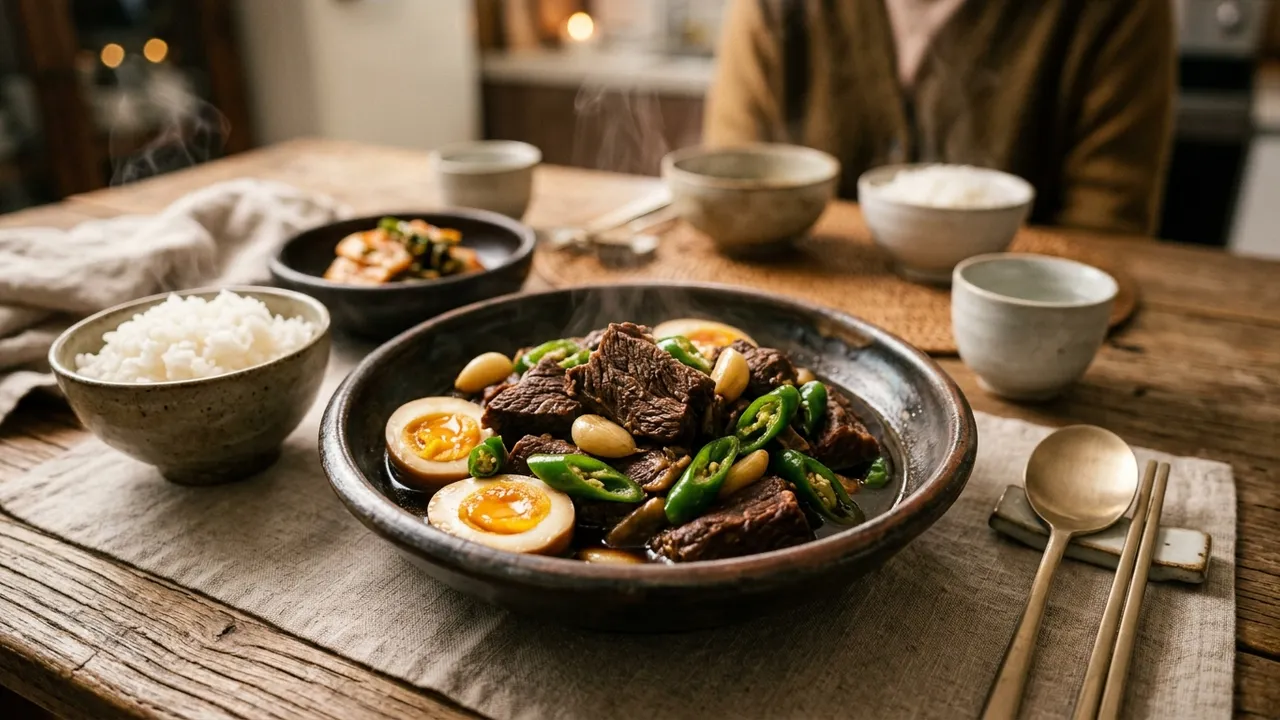
Frozen Meal Prep: Soy-Braised Beef Jangjorim (장조림) and Boiled Beef Slices
📋 2 recipes — Select to view
📝 Editor's Notes
This recipe is for frozen meal prep of Soy-Braised Beef Jangjorim (장조림) and Boiled Beef Slices, designed to provide a hearty and delicious meal even on busy days. The savory-sweet soy sauce seasoning combined with the deep umami of beef creates a flavor profile that appeals to all ages. The addition of Cheongyang chili pepper (땡초) provides a subtle spicy kick that cuts through any richness and stimulates the appetite. The cooking process is not complicated, making it easy for beginner cooks to follow, and once prepared, it can be portioned out for multiple meals, making it highly practical. It's excellent as a staple side dish for all seasons, and strongly recommended for busy professionals and homemakers.
🛒 Ingredient Tips
Using both eye of round and brisket for the beef will provide a richer flavor and texture. Eye of round is lean and shreds well along the grain, while brisket adds tenderness and richness with its moderate fat content. Fresh beef should have a bright red color, a glossy sheen, and be firm to the touch. Check for any off-smells, and cooking immediately after purchase is the best way to enjoy its freshness. Soy sauce is a key seasoning that determines the taste of this recipe, so it's best to choose a brewed soy sauce (양조간장) for a deep flavor. As tastes vary between brands, use your preferred product.
🔄 Substitution Guide
For the beef, you can use shank or top round instead of eye of round or brisket. Shank is lean and chewy, similar to eye of round, while top round is low in fat, suitable for those who prefer a cleaner taste. These cuts may also be more economical, but the tenderness and rich beef flavor typically provided by brisket might be reduced. For sweetness, instead of oligosaccharide (올리고당) or sugar, honey or jocheong (조청 - Korean grain syrup) can be used to add a more natural and profound flavor. Honey has a distinct aroma that may not appeal to everyone, and jocheong (조청) may be less sweet than sugar, so adjust the amount accordingly. Using alternative sweeteners like stevia instead of sugar can reduce calorie intake, but they may have a unique taste and might not caramelize, leading to differences in color and consistency.
🥘 Ingredients
👨🍳 Cooking Points
There are three crucial cooking points for this recipe. First, removing blood from the beef is essential for eliminating gamey odors and achieving a clean taste. Soak the beef in cold water for at least 30 minutes, changing the water once or twice. Second, when initially boiling the beef, carefully skim off any impurities (foam) that rise to the surface to ensure a clear and clean broth for the jangjorim (장조림). Third, the timing of adding the seasoning is important. Cook the beef sufficiently for 30 minutes first, then add the seasoning and simmer for another 30 minutes. Adding seasoning before the beef is fully cooked can toughen the meat, so adhering to this order is the secret to tender jangjorim (장조림). Finally, return the shredded beef to the broth and boil over high heat for 10 minutes to allow the seasoning to permeate the meat more effectively.
👨🍳 Directions
- 1
Prepare 1.5 lbs (700 g) of beef (eye of round, brisket) by soaking it in cold water for about 1 hour to drain the blood.
- 2
In a pot, combine 7.5 cups (1.8 L) of water, the blood-drained beef, garlic, whole black peppercorns, green onion, and Cheongyang chili pepper (땡초). Bring to a boil over high heat.
- 3
Once the water boils, skim off any impurities that rise to the surface.
- 4
Cover and cook over medium heat for 30 minutes.
- 5
After 30 minutes, add 1.5 cups of brewed soy sauce (양조간장), 4 tbsp of oligosaccharide (올리고당), 4 tbsp of mirin (미림), and 4 tbsp of sugar. Continue to simmer over medium heat for another 30 minutes.
- 6
After another 30 minutes, remove the beef and shred it finely.
- 7
Return the shredded beef to the seasoned broth and boil over high heat for about 10 minutes.
- 8
Let the finished jangjorim (장조림) cool completely, then portion the meat and broth into individual containers and freeze for storage.
💡 Tips
You don't need to thaw the jangjorim (장조림) separately; simply transfer it to the refrigerator the night before, and it will naturally thaw, ready to eat.
When portioning, divide into single-serving amounts for convenience.
📦 Storage & Reuse
The finished Soy-Braised Beef Jangjorim (장조림), along with its broth, can be divided into individual containers and stored in the refrigerator for 3-4 days. For longer storage, freeze it in airtight containers for up to approximately one month. For thawing, it's best to transfer it to the refrigerator the night before, as suggested in the recipe tips, for natural thawing. If you need to eat it quickly, thaw and reheat it using the 'defrost' function in the microwave, or gently warm it in a pot over low heat. Be careful not to reheat it too quickly over high heat, as this can toughen the meat. Leftover jangjorim (장조림) is also delicious mixed with warm rice and butter, or used as a filling for sandwiches or kimbap. The leftover broth can be used as a base for other soup dishes, adding depth of flavor.
🥢 Who This Is For
This frozen meal prep Soy-Braised Beef Jangjorim (장조림) is especially recommended for busy modern individuals, those living alone, and homemakers looking for side dish ideas for their children. Having it as a hearty banchan (반찬 - side dish) in the refrigerator means you can conveniently enjoy it anytime. Serve it generously over warm white rice as a jangjorim (장조림) rice bowl, or add boiled eggs to make jangjorim (장조림) eggs. Paired with gim (김 - seasoned seaweed) or other simple Korean side dishes, it makes for a more abundant meal. It also works wonderfully as a packed lunch for camping or picnics, and is an excellent light snack with drinks.
🔥 Nutrition Info
When considering this Soy-Braised Beef Jangjorim (장조림) recipe for approximately 5 servings, each serving is estimated to provide about 450 kcal. It is thought to contain approximately 35g of protein, 15g of fat, and 30g of carbohydrates. Beef is rich in high-quality protein, along with iron and zinc, which boost immunity, and essential B vitamins for energy production, making it good for fatigue recovery and boosting vitality. However, since the recipe contains soy sauce, sugar, and oligosaccharide (올리고당), the sugar and sodium content can be relatively high, so it's important to control your intake for health. It's best to enjoy it as part of a balanced meal with vegetable side dishes.
💬 Comments
No comments yet. Be the first to comment!