
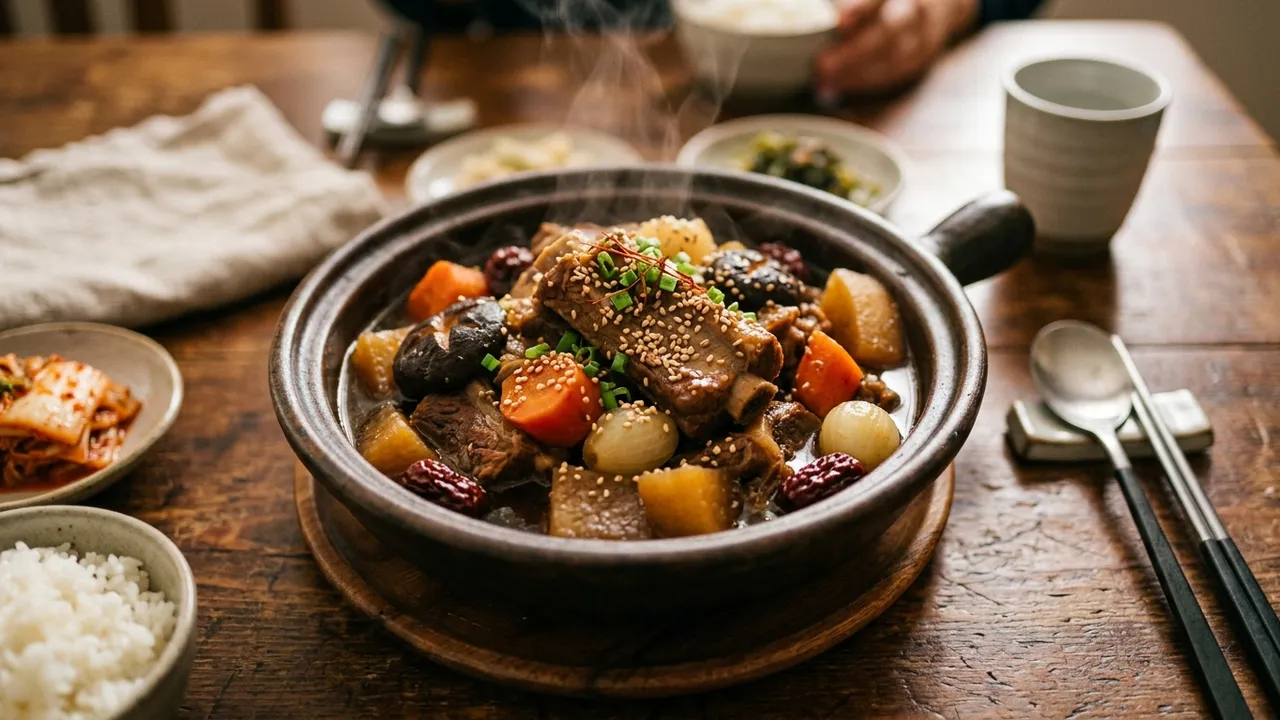
Frozen Meal Prep: Dwaeji Galbi Jjim and Gang Doenjang
📋 2 recipes — Select to view
📝 Editor's Notes
This recipe is for a meal prep Dwaeji Galbi Jjim (Braised Pork Ribs) that the whole family can enjoy generously. It's made to be frozen and enjoyed warm anytime. The savory and sweet sauce, enhanced with spicy peppers, offers a rich flavor that never gets tiring. A key feature is blending fruits and vegetables to eliminate gamey odors from the meat and make it tender. Once prepared, it can serve as a hearty main dish for busy weekday dinners or guest gatherings. While the cooking process is long, making it a medium-difficulty recipe, anyone can successfully make delicious galbi jjim by following the steps carefully.
🛒 Ingredient Tips
It's important to choose fresh pork ribs with a good balance of lean meat and fat. Too much fat can make it greasy, and too little can make it dry. Check that the bones are well-scored, and the color should be a vibrant red. Using both back ribs and pork ribs allows you to enjoy both chewy and tender textures. Fresh apples, onions, garlic, and ginger in the sauce will enhance the flavor of the galbi jjim. Especially, apples help tenderize the meat, so prepare fresh ones generously. Adjust the amount of Cheongyang chili peppers (땡초) or dried hot peppers to your preference for spiciness.
🔄 Substitution Guide
Using beef short ribs for galbi jjim instead of pork ribs can result in a more luxurious dish, but it may increase cooking time and cost. If using chicken for dakbokkeumtang (spicy braised chicken) instead, you can enjoy it like dak galbi jjim; in this case, adjust cooking time and sauce to emphasize spiciness. If you don't have fruits like apples or pears, you can use 1-2 cups of cola, as suggested in the tips, which helps tenderize the meat and adds umami. However, if using cola, it's good to reduce the amount of sugar slightly. You can also use jocheong (grain syrup) or honey instead of sugar, and corn syrup instead of oligosaccharide. If you don't have dried hot peppers, you can adjust the spiciness with Cheongyang chili peppers or gochugaru (Korean chili powder).
🥘 Ingredients
👨🍳 Cooking Points
The first and most important point is 'removing blood and pre-boiling' the pork ribs. This step might seem tedious, but it's crucial for eliminating gamey odors and achieving a clean taste. Blanch in boiling water with cheongju (청주) or soju (소주) for about 3 minutes to completely remove impurities, then rinse thoroughly with cold water. The second is 'marination time'. Marinating for at least 30 minutes allows the sauce to penetrate the meat for a deep flavor. If time permits, marinating for half a day or more will result in even more delicious galbi jjim. Finally, 'adhere to the cooking times at each stage'. After bringing to a boil over high heat, simmer over medium heat for 30 minutes, then add carrots and cook for another 20 minutes, and finally simmer for 10 minutes to reduce the sauce. This ensures the meat becomes tender and the sauce concentrates for the best flavor. Don't forget to taste and adjust seasoning in between.
👨🍳 Directions
- 1
Clean 2kg of pork ribs a couple of times. Then, blanch them in boiling water with cheongju (청주) or soju (소주) for about 3 minutes to remove any remaining blood and impurities. Rinse thoroughly with cold water.
- 2
Score the pork ribs (not back ribs), which take longer to cook, to ensure a similar cooking time for all pieces.
- 3
Prepare the ground seasoning by blending apple, onion, garlic, and ginger. To this, add 1.5 cups of soy sauce, 0.5 cups of sugar, 1 tbsp of instant coffee, 1 tbsp of black pepper, and 4 tbsp of oligosaccharide, then mix well to create the sauce.
- 4
Coat the prepared pork ribs evenly with the sauce and marinate in the refrigerator for at least 30 minutes.
- 5
Pour enough water into a pot to cover the meat. Add the marinated pork ribs and a few Cheongyang chili peppers (땡초) or dried hot peppers, then bring to a boil over high heat.
- 6
Once it comes to a boil, cover the pot and cook over medium heat for 30 minutes.
- 7
After 30 minutes, add the carrots and continue to simmer over medium heat for at least 20 minutes.
- 8
After 20 minutes, season with soy sauce and sugar to taste. Add Cheongyang chili peppers (청양고추) and green onions, then simmer over high heat for about 10 minutes until the desired consistency is reached.
- 9
Finally, sprinkle with toasted sesame seeds and sesame oil. Let cool completely, then portion and freeze for storage.
- 10
To thaw, immerse a portion in warm water for a few seconds to separate. Transfer to a plate, cover with plastic wrap, and microwave for about 6 minutes until warm. Enjoy.
💡 Tips
If you don't have fruit, it's good to add 1-2 cups of cola, adjusted to the amount of meat.
Pork ribs can be sharp due to the bones, so it's best to portion and freeze them in thick freezer bags.
Microwaving for just 6 minutes will make it as warm and delicious as freshly made galbi jjim.
📦 Storage & Reuse
It's best to let the cooked galbi jjim cool completely before portioning and freezing. Since the bones can be sharp, store in thick freezer bags or airtight containers. When frozen, it can be enjoyed fresh for about 2 weeks. Refrigeration is possible for up to 3 days, but it's recommended to consume it as soon as possible for optimal taste and freshness. To thaw, briefly immerse in warm water to separate, then microwave for about 6 minutes or gently reheat in a pot over low heat. Be careful not to overheat over high heat for too long, as the meat can become tough or the sauce might burn. The leftover galbi jjim sauce is also delicious mixed with rice, or with glass noodles or rice cakes.
🥢 Who This Is For
This Dwaeji Galbi Jjim, made in advance and frozen, will be a truly satisfying meal for busy working mothers or those who eat alone. It's also perfect as a main dish for weekend family dinners or guest entertaining. Enjoy it over warm rice like a rice bowl, or mix it with somyeon (thin wheat noodles) for a special treat. Recommended side dishes include refreshing bean sprout soup or seaweed soup, crispy geotjeori (fresh kimchi), and simple seasoned vegetable dishes. These will complement the rich flavor of the galbi jjim for a more harmonious meal.
🔥 Nutrition Info
This Dwaeji Galbi Jjim, based on 2kg (4.4 lbs) of bone-in meat, is expected to yield approximately 8-10 servings. Estimated per serving (approx. 200-250g / 7-9 oz): around 450-580 kcal, with roughly 35-45g protein, 25-35g fat, and 30-40g carbohydrates. Pork is rich in high-quality protein, iron, and B vitamins, aiding in recovery and boosting immunity. With fruits and vegetables like apples, onions, and carrots, you can also supplement vitamins and dietary fiber. However, since soy sauce, sugar, and oligosaccharide are used, sodium and sugar content may be somewhat high, so it's important to consume in moderation for health.
💬 Comments
No comments yet. Be the first to comment!