
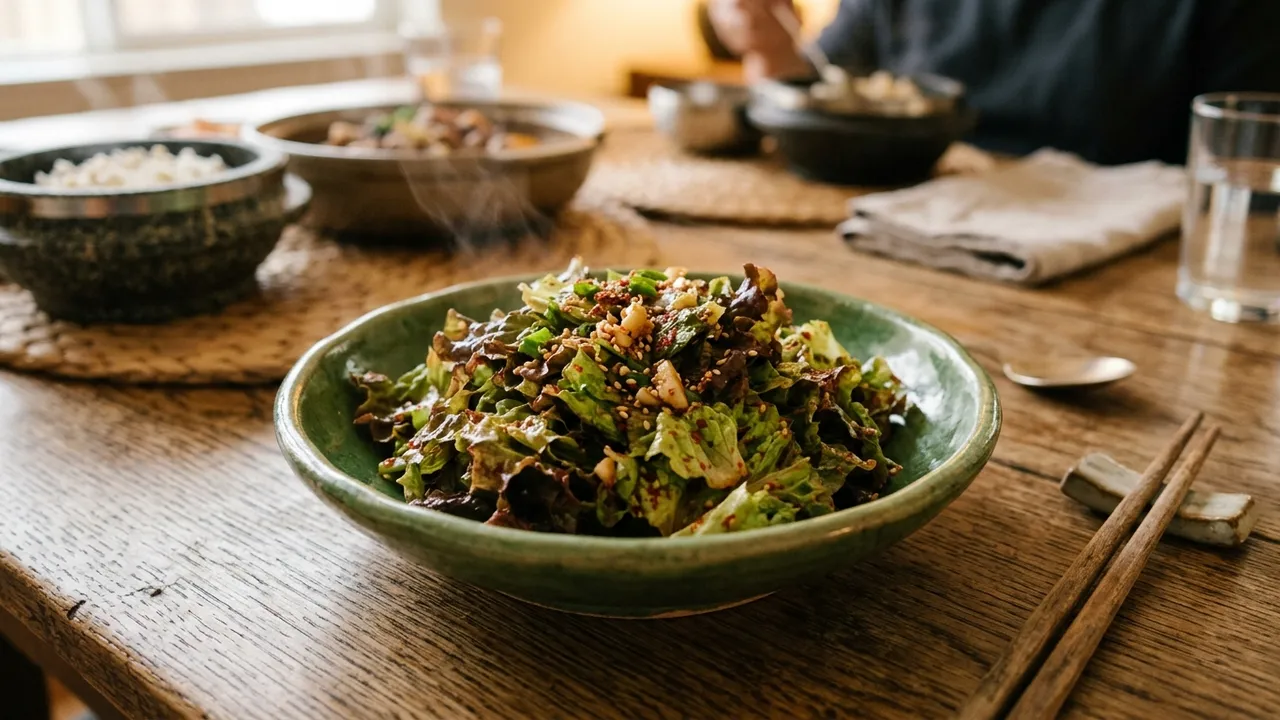
Lettuce Pickles (Sangchu Jangajji)
This easy jangajji (Korean pickled side dish) recipe utilizes leftover lettuce and doesn't require boiling the marinade.
📝 Editor's Notes
Lettuce Jangajji (Sangchu Jangajji) is a versatile side dish perfect for using leftover lettuce, easily made without boiling the marinade. Its sweet, sour, and savory flavor stimulates the appetite, and its crisp texture is appealing. This is an 'easy' level recipe, perfect for beginners, and pairs wonderfully with meat dishes or greasy foods for a clean, refreshing balance. Making it during the lettuce season will ensure you have a reliable side dish. Transform your leftover lettuce into a fantastic meal.
🛒 Ingredient Tips
When choosing lettuce, look for fresh, green leaves with firm stems. Inner leaves are generally softer than outer leaves and provide a better texture for jangajji. For soy sauce (간장), using brewed soy sauce (양조간장) will yield a deeper flavor, and apple cider vinegar (사과식초) can add a subtle aroma to the vinegar (식초). Using different colored chili peppers will also add visual appeal. Quality ingredients are fundamental to delicious jangajji.
🔄 Substitution Guide
Instead of lettuce, you can use perilla leaves (kkaennip, 깻잎), cabbage, or cucumber. Perilla leaves have a unique fragrance that pairs well with jangajji, while cabbage offers a delightful crunch. Cucumbers will add a refreshing and clean taste. For sugar, you can use oligosaccharide or honey to adjust sweetness. Honey adds its distinct aroma, and oligosaccharide is lower in calories than sugar, making it a healthier option. If soju (소주) is unavailable, you can use a small amount of mirin (미림) or cheongju (청주), or simply omit it. However, adding soju (소주) helps with preservation.
🥘 Ingredients
👨🍳 Cooking Points
The most crucial cooking point is to completely remove all moisture from the lettuce. If moisture remains, the jangajji can easily spoil or become mushy. Drain it in a colander or pat it dry thoroughly with a kitchen towel. Second, adhere closely to the marinade ratios: 1 cup each of soy sauce (간장), vinegar (식초), and water, and 1/2 cup of sugar as a base, adjusting the sugar amount to your preference. Finally, after pouring the marinade, it's essential to press down on the lettuce to ensure it's fully submerged. This helps it pickle evenly and extends its shelf life.
👨🍳 Directions
- 1
Rinse each lettuce leaf thoroughly and shake off excess water until completely dry.
- 2
If the ends of the lettuce are damaged, trim them slightly.
- 3
Layer the lettuce neatly into a suitable airtight container.
- 4
Julienne 1/2 onion, and diagonally slice the red and green chili peppers.
- 5
Pour 40 ml of soju (소주) into the container with the layered lettuce.
- 6
Prepare the jangajji marinade. Combine 1 cup of soy sauce, 1 cup of vinegar, 1/2 cup of sugar, and 1 cup of water, and mix well.
- 7
Generously pour the prepared marinade over the lettuce.
- 8
Evenly distribute the sliced onion and chili peppers over the lettuce.
- 9
Press down on the lettuce to ensure it's fully submerged in the marinade, and let it pickle until the lettuce changes color.
💡 Tips
Lactucarium, a compound found in lettuce, is known to calm nerves and aid in sleep.
This method allows you to preserve lettuce for a long time without boiling the marinade.
It offers a flavor similar to fresh lettuce salad (Sangchu Jae-raegi) often served with grilled meat, making your meal doubly delicious when enjoyed together.
📦 Storage & Reuse
Store the finished Lettuce Jangajji in an airtight container in the refrigerator. If the marinade fully submerges the lettuce, you can enjoy it fresh for about 1-2 weeks. Freezing is not recommended to maintain the crisp texture of the lettuce. Don't discard the leftover jangajji marinade! You can use it to make other jangajji with ingredients like onions, garlic scapes, or shishito peppers, or as a seasoning for meat dishes.
🥢 Who This Is For
This Lettuce Jangajji is easy to make even in a busy daily life, making it excellent for those who want to prepare healthy side dishes conveniently. It particularly complements grilled meat dishes like samgyeopsal (pork belly) or moksal (pork neck), cutting through richness and adding a refreshing tang. It's also delicious served over warm rice or as a side with simple meals like ramen. On days when you lack appetite, find revitalization with this refreshing jangajji.
🔥 Nutrition Info
Lettuce Jangajji is a light side dish, approximately 100-150 kcal per serving. It's estimated to contain about 20-30g carbohydrates, 2-3g protein, and less than 0.5g fat. You can benefit from the abundant vitamins A, K, C, and folate in lettuce, as well as lactucarium, which helps calm nerves. Additionally, its rich dietary fiber is beneficial for gut health. However, due to soy sauce (간장) and sugar, sodium and sugar content may be somewhat high, so it's advisable to consume in moderation for health.
💬 Comments
No comments yet. Be the first to comment!