
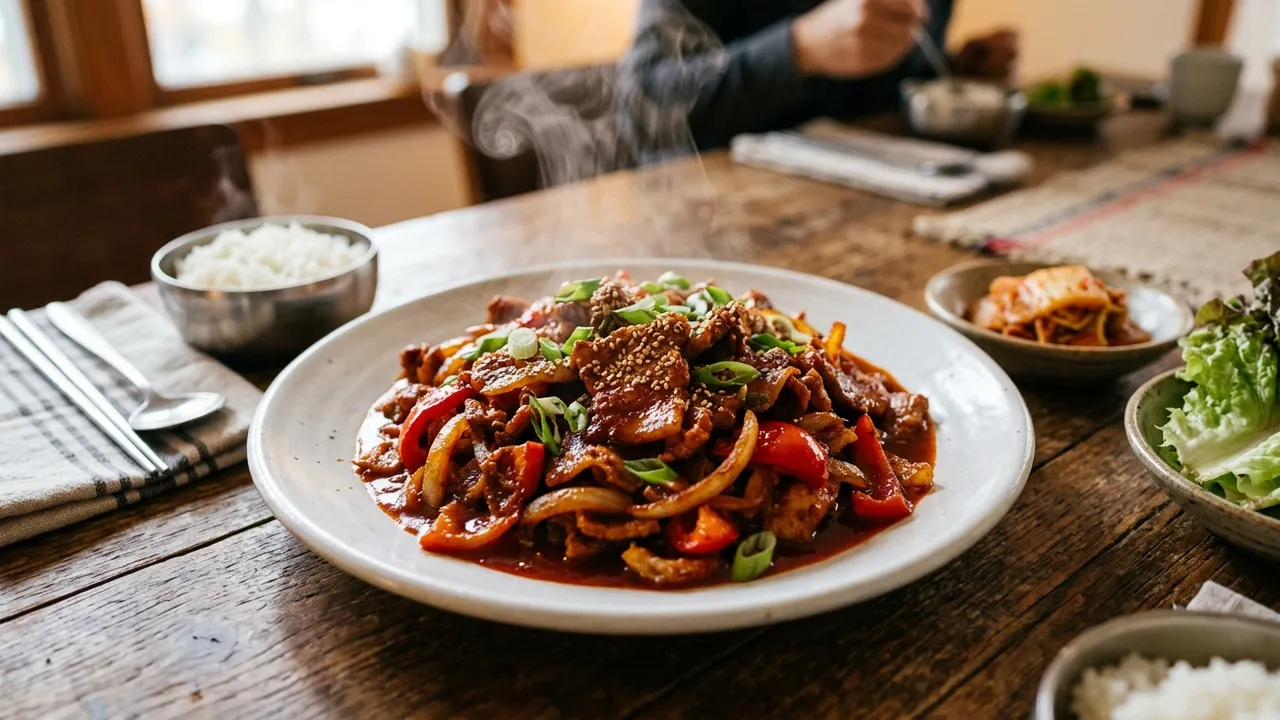
Daebak-jip Jeyuk-bokkeum (Spicy Stir-fried Pork)
This recipe is a home-sized adaptation of the large-batch spicy stir-fried pork (Jeyuk-bokkeum) from a hit restaurant, which started with an investment of 30 million won. We'll provide detailed tips on controlling sweetness and selecting the best cuts of meat.
📝 Editor's Notes
This recipe is a home-adapted version of the spicy stir-fried pork (Jeyuk-bokkeum) from a hit restaurant, originally a large-batch secret. It's characterized by a harmonious blend of deep umami and spiciness, achieved through a unique soy sauce-malt syrup base and expert tips on pork selection. The beauty of this recipe is that it allows you to recreate that authentic restaurant taste at home without needing special skills. With a medium difficulty level, it's perfect as a hearty everyday meal or for entertaining guests.
🛒 Ingredient Tips
The key to this Jeyuk-bokkeum (제육볶음) lies in the choice of pork and sweetening agents. By combining pork shoulder and pork belly in a 7:3 ratio, you get a richer flavor that balances the savory richness of fat with the lean meat. Opt for thinly sliced pork to ensure the marinade penetrates well and cooking time is reduced. The recipe specifies Haechandle Chal-gold Gochujang (고추장), and using a particular brand can help maintain consistent flavor. Remember to use yellow or white malt syrup and brown or white sugar instead of oligo syrup, as oligo syrup loses its sweetness when heated, which would compromise the deep flavor of this dish.
🔄 Substitution Guide
The main ingredient, pork, can be substituted with other cuts. If you prefer a leaner taste, pork neck can be used. For a more economical option, pork hind leg can be used, but you'll need to pay more attention to tenderizing to prevent it from becoming tough. Alternatively, using chicken thigh can create a Jeyuk-bokkeum (제육볶음) with a dakgalbi (닭갈비) feel. Instead of malt syrup and sugar, honey or jocheong (조청, rice syrup) can provide a more natural sweetness, but honey, being heat-sensitive, should be added at the end, and the flavor profile and caramelization may differ. For natural umami, consider using anchovy-kelp broth or shiitake mushroom powder instead of Beef Dashida (다시다).
🥘 Ingredients
👨🍳 Cooking Points
There are three crucial cooking points in this recipe. First, when making the soy sauce-malt syrup base, simmer it gently over low heat just once until the sugar and malt syrup are completely dissolved, then let it cool completely. If not properly dissolved, the sauce might separate or lack sufficient sweetness. Second, when marinating the pork, add grated onion and pear along with a little mirin (미림) or cola. This step tenderizes the meat significantly and adds a natural sweetness, leading to an explosion of umami. Third, when stir-frying, avoid cooking over high heat too quickly. Instead, cook over medium heat to ensure the meat is thoroughly cooked without losing too much of its juices, allowing the sauce to be well-absorbed.
👨🍳 Directions
- 1
In a pot, combine 4.5 tbsp of 701 Brewed Soy Sauce, 1/2 cup of water, 3 tbsp of Ion Malt Syrup, and 3 tbsp of sugar. Turn on the stove to low heat and bring it to a gentle boil just once to dissolve the malt syrup and sugar. Let it cool to create a soy sauce-malt syrup base.
- 2
To the cooled soy sauce-malt syrup base, add 7 tbsp of Haechandle Chal-gold Gochujang (고추장), 4 heaped tbsp of coarse red pepper flakes, 2 tbsp of minced garlic, 1/2 tbsp of Haepyo Yori Plus, and 1/2 tbsp of Beef Dashida (다시다). Mix well to create the Jeyuk-bokkeum (제육볶음) sauce.
- 3
Julienne the onion and carrot, and slice the green onion diagonally. Set aside.
- 4
Prepare pork shoulder and pork belly mixed in a 7:3 ratio. You can either marinate the sliced pork with the sauce and prepared vegetables, or stir-fry the meat first, then add the sauce and vegetables to stir-fry together.
- 5
Place the marinated meat and vegetables in a pan and stir-fry until fully cooked.
- 6
(Optional) If making Gochujang (고추장) Samgyeopsal (삼겹살), add a little more ketchup to the prepared sauce and stir-fry with pork belly or grill over charcoal.
- 7
Serve the finished Jeyuk-bokkeum (제육볶음) on a plate and enjoy.
💡 Tips
When adding sweetness, use yellow or white malt syrup and brown or white sugar, not oligo syrup. Oligo syrup loses its sweetness when heated.
For restaurant-quality taste and cost-effectiveness, use pork shoulder. Thinner slices reduce cooking time and allow the marinade to penetrate better.
Mixing pork shoulder and pork belly in a 7:3 ratio will result in a richer flavor.
When marinating the meat, grating onion and pear together with mirin (미림) or cola will add natural sweetness and tenderize the meat, making it even softer.
📦 Storage & Reuse
The finished Jeyuk-bokkeum (제육볶음) can be stored fresh in an airtight container in the refrigerator for about 3-4 days. For longer storage, it's recommended to portion it into single servings and freeze them. When frozen, it's best to consume within about one month. When reheating frozen Jeyuk-bokkeum (제육볶음), warming it gently in a pan over low heat rather than in the microwave is the secret to keeping the meat moist and delicious. Leftover sauce can be refrigerated and used for other stir-fry dishes or stews, or marinated with meat and frozen for convenient use in your next meal.
🥢 Who This Is For
This sweet and spicy Jeyuk-bokkeum (제육볶음) is an excellent choice for those seeking a satisfying meal or as a special dish for guests. I particularly recommend it to anyone who enjoys spicy flavors. It's fantastic served generously over warm white rice, or wrapped in fresh lettuce or perilla leaves (깻잎) for a truly heavenly taste. Pairing it with a refreshing bean sprout soup or soft steamed eggs can help balance the spiciness, making it even more enjoyable. It also makes an outstanding anju (안주) when paired with makgeolli (막걸리) or soju (소주).
🔥 Nutrition Info
This Daebak-jip Jeyuk-bokkeum (제육볶음), with pork as its main ingredient, is high in protein and rich in various minerals such as B vitamins, iron, and zinc. The combination of pork shoulder and pork belly also provides a balanced intake of essential amino acids. However, due to the significant amounts of soy sauce, gochujang (고추장), malt syrup, and sugar, the estimated calorie count per serving can be somewhat high, approximately 550-700 kcal. Protein is estimated at 35-45g, fat at 30-40g, and carbohydrates at 40-50g. As sodium and sugar content can be high, it is advisable to adjust the sauce quantity or add plenty of vegetables for a more balanced meal if you are conscious of your health.
💬 Comments
No comments yet. Be the first to comment!