
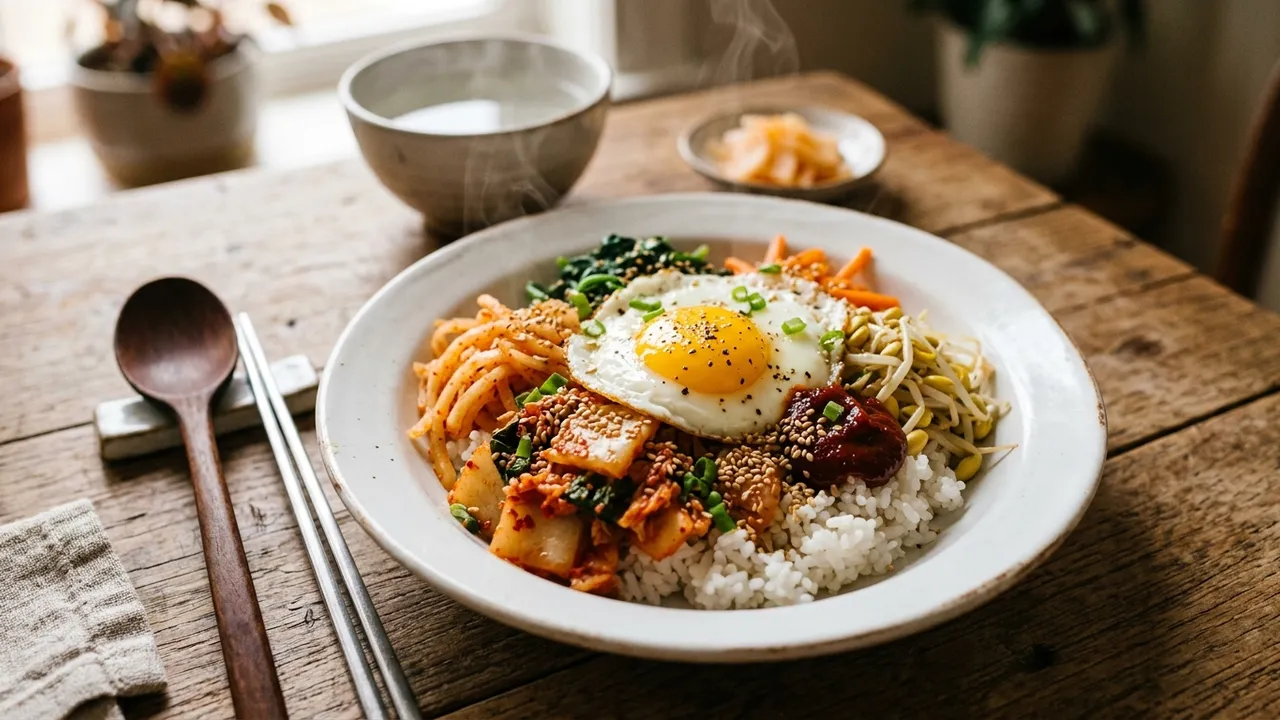
Musaengchae Bibimbap
A recipe for a hearty meal, mixing sweet and sour musaengchae (radish salad) with rice and a fried egg.
📝 Editor's Notes
Musaengchae Bibimbap is a perfect meal, combining crunchy, sweet and sour musaengchae (radish salad) with savory fried egg and hearty rice. It's simple to make without complicated steps, so even beginner cooks can easily try it. This dish is especially popular in the summer when a fresh and cool musaengchae can stimulate the appetite. You can adjust the amount of gochujang (고추장) for more spiciness or tailor the musaengchae seasoning to your preference. It's an excellent choice when you want a light yet satisfying meal.
🛒 Ingredient Tips
For this recipe's star ingredient, the radish, it's best to choose one that is firm, smooth, and heavy. Summer radishes, in particular, may lack sweetness, so it's important to taste them slightly before cooking and adjust the sugar quantity. Use fresh eggs to ensure a firm yolk and no fishy taste. A fresh egg will sink when placed in water. For gochugaru (고춧가루), mixing fine and coarse types can enhance both color and texture, but using just one type you have at home will still yield a delicious result.
🔄 Substitution Guide
If you don't have radish or prefer a different texture, you can try julienning kohlrabi or cucumber to make a similar 'saengchae' (salad). Kohlrabi offers a similar crispness to radish but with a slightly sweeter and softer taste, while cucumber will add a much lighter and more refreshing flavor. However, when using cucumber, it's best to lightly salt it and squeeze out excess water before seasoning due to its high water content. If fish sauce is too strong or not to your liking, you can substitute it with soy sauce or season solely with salt. Just remember that the unique umami flavor of fish sauce might be diminished. If you don't have the optional lemon syrup, maesil-cheong (매실청) / green plum syrup, or ginger syrup, you can adequately adjust the sweetness with sugar or oligosaccharide.
🥘 Ingredients
👨🍳 Cooking Points
The most crucial point when making musaengchae is to julienne the radish evenly. This ensures that the seasoning is distributed well and you get a consistent crunchy texture. When mixing the seasoning with the julienned radish, toss it lightly rather than kneading it too hard, to prevent the radish from getting mushy and and to maintain its crispness. After seasoning, it's essential to taste and adjust to your preference. Especially, sugar and vinegar should be added or reduced according to individual taste to make the most delicious musaengchae. Finally, for the fried egg, cook the yolk until it's slightly runny so it can be mixed into the bibimbap, enhancing its savory flavor. Be careful with heat control to achieve a moist consistency.
👨🍳 Directions
- 1
Wash the summer radish thoroughly, then use a peeler to remove any dirt or skin.
- 2
Slice the radish thinly, then cut into julienne strips.
- 3
In a bowl, combine the julienned radish with salt, fish sauce, gochugaru (고춧가루), vinegar, and sugar. Mix well.
- 4
(Optional) Add lemon syrup, maesil-cheong (매실청) / green plum syrup, or ginger syrup.
- 5
(Optional) Add minced garlic to your liking.
- 6
Taste and adjust seasonings as needed to suit your preference.
- 7
Heat cooking oil in a hot pan, crack an egg into it, sprinkle with a pinch of salt, and make a fried egg.
- 8
Place cooked rice in a bowl, then top with the musaengchae.
- 9
Add gochujang (고추장) and the fried egg, then sprinkle with toasted sesame seeds.
- 10
Mix all ingredients well and enjoy your bibimbap.
- 11
For an even better taste, add more musaengchae while eating.
💡 Tips
You can use a mix of coarse and fine gochugaru (고춧가루), or simply use whatever type you have at home.
Minced garlic can be added according to your preference.
Lemon syrup, maesil-cheong (매실청) / green plum syrup, and ginger syrup are optional; add them if you like.
Summer radishes might lack sweetness, so taste and adjust the amount of sugar accordingly.
Adding more musaengchae to your Musaengchae Bibimbap can make it even more delicious.
📦 Storage & Reuse
Due to the nature of Musaengchae Bibimbap being a mixed dish, it's most delicious when eaten immediately after preparation. Especially when rice and musaengchae are mixed, the texture of the rice can change and water from the musaengchae can alter the flavor. If you have leftover musaengchae, you can store it in an airtight container in the refrigerator for about 3-4 days. Over time, musaengchae may release more water, so it's a good idea to drain some of the liquid before serving. Leftover musaengchae can also be used the next day in other bibimbap dishes, as a filling for gimbap (김밥), or as a topping for naengmyeon (냉면).
🥢 Who This Is For
Musaengchae Bibimbap is highly recommended for those who want to prepare a quick, easy, and healthy meal in their busy daily lives. It's particularly well-suited for people who prefer fresh vegetables or desire a light yet filling meal. Its refreshing taste makes it ideal for days when you have no appetite, and combined with spicy gochujang (고추장), it can even help relieve stress. For a side dish, serving it with a clean soup like a refreshing bean sprout soup (kongnamul-guk) or seaweed soup (miyeok-guk) will complete a wonderful meal.
🔥 Nutrition Info
A bowl of Musaengchae Bibimbap, depending on ingredient quantities, can generally be estimated to contain around 400-450 kcal. This is calculated based on approximately 260 kcal for one bowl of cooked rice (approx. 200g / 7 oz), 80 kcal for one fried egg, plus the musaengchae and gochujang (고추장) seasonings. You can obtain roughly 15g of protein (about 7g from the egg, 6g from the rice), about 60-70g of carbohydrates from the rice, radish, and sugar, and about 8-10g of fat from the egg yolk and cooking oil. Radish is rich in Vitamin C and dietary fiber, aiding digestion and benefiting gut health. Eggs are a complete protein source, providing various vitamins and minerals, making this a nutritionally balanced meal.
💬 Comments
No comments yet. Be the first to comment!